
This post may contain affiliate links. If you buy through links on this page, we may earn a commission at no extra cost to you.
As an Amazon Associate I earn from qualifying purchases.
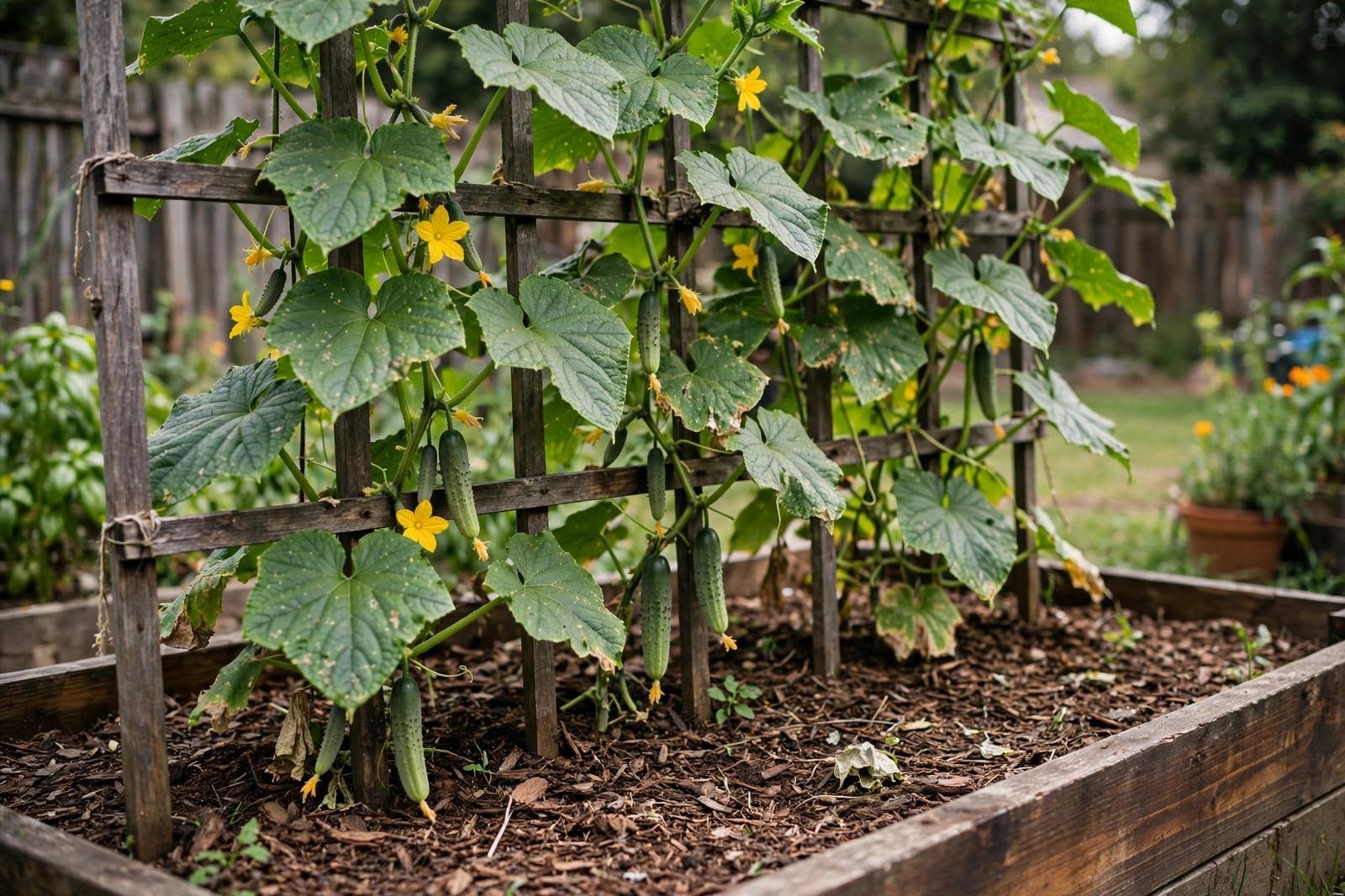
Cucumbers grow with real speed once warmth arrives. A spring planting can move from seed to first harvest in about two months, and healthy vines keep producing as long as we pick often and roots stay evenly moist. The crop suits salads, pickling jars, and quick summer snacks, and a trellis lifts vines off the ground so even a small bed can carry a useful harvest without sprawling over every path.
Our guide covers the full routine in steady steps. We walk through direct sowing and transplant timing based on local frost dates, trellis choices that save space, watering habits that help prevent bitter fruit, feeding that supports flowers without pushing excess leaf, and harvest size for slicing and pickling types. Troubleshooting follows, with plain checks for yellowing leaves, poor fruit set, mildew, and cucumber beetles. With warm soil, support in place early, and frequent picking, cucumbers become one of the most generous summer crops in a home garden.
| Light | Full sun, 6 to 8 or more hours of direct light each day |
|---|---|
| Soil | Loose, well-drained soil rich in compost, pH near 6.0 to 6.8 |
| Water | Steady and deep, about 1 to 1.5 inches per week, more during fruiting |
| Sow seeds | Outdoors after last frost when soil reaches about 60°F, or indoors 3 to 4 weeks before transplant |
| Spacing | 12 inches apart on a trellis, or hills 36 inches apart on the ground |
| Support | Trellis, netting, or fence 4 to 6 feet tall for vining types |
| Days to harvest | About 50 to 70 days from sowing for many varieties |
| Common problems | Bitter fruit from water stress, powdery mildew, cucumber beetles, poor pollination |
Why Grow Cucumbers at Home
Freshness is the first reason. A cucumber picked in the morning and sliced at lunch has crisp texture and clean flavor that stored fruit rarely matches. Plants also yield heavily over a short window, so a few vines can supply daily salads plus enough extra for quick pickles.
Choice matters as well. Seed lists include long slicing types, short pickling types, round lemon cucumbers, and compact bush varieties for containers. Heat, disease pressure, and space shape the best pick. A trellised row suits narrow beds, while bush types fit large pots and small yards. Gardeners building a first vegetable bed often place cucumbers beside other fast summer crops, and our overview in how to start a vegetable garden helps plan bed layout, sun, and watering access before sowing. For more first-bed options, our list of easiest vegetables to grow for beginners gives good companion choices.
When to Plant Cucumbers
Cucumbers need warm soil and warm nights. Seeds rot or stall in cold wet ground, and young plants suffer when frost touches tender leaves. Soil near 60°F gives steady germination, and warmer soil near 70°F speeds sprouting to a few days. Air temperature matters too, because a late cold snap after sprouting can set plants back even when roots survive.
Plan from local dates rather than a preset calendar page. Use your local frost dates and regional planting guidance — not your USDA hardiness zone alone — to choose planting dates. Direct sow one to two weeks after the average last spring frost once soil has warmed, or start seed indoors three to four weeks before the planned transplant date and set plants out after frost risk passes. Regional extension planting calendars give county-level windows and note soil temperature cues for warm-season crops.
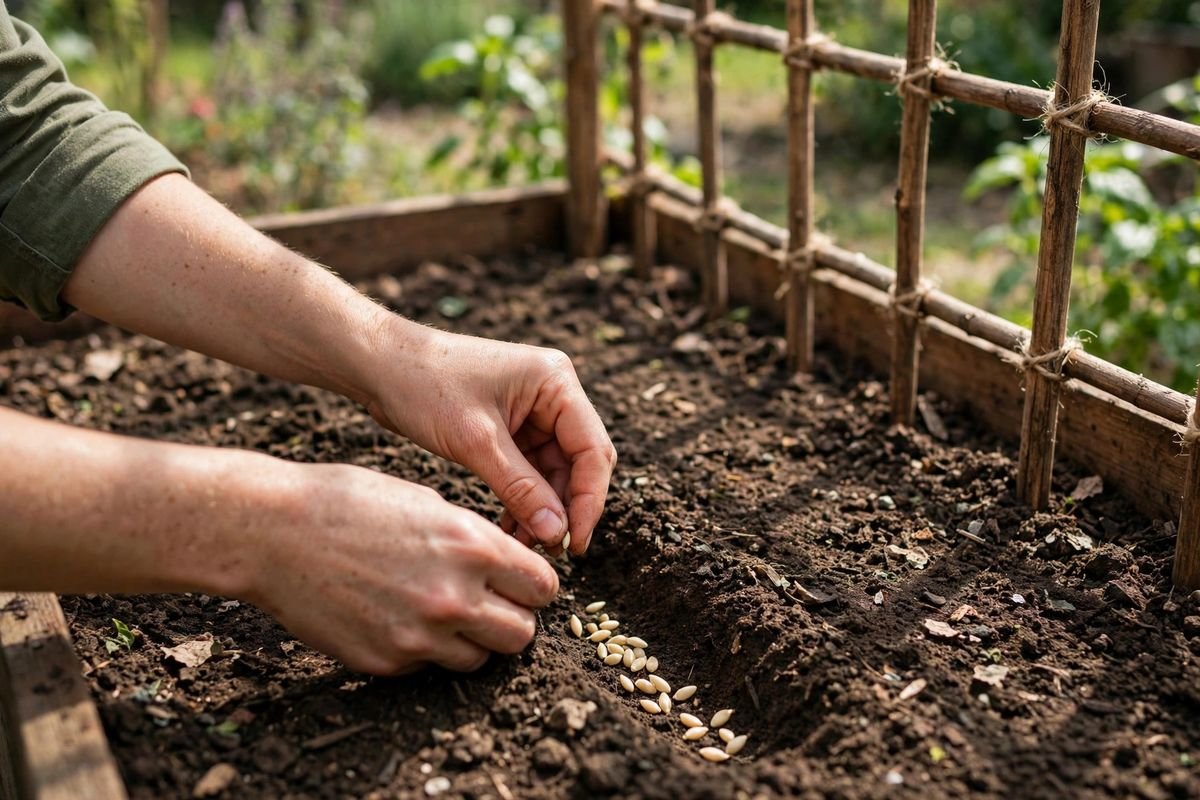
Succession sowing keeps harvest steady. A second sowing three to four weeks after the first replaces older vines as production slows and disease pressure builds late in summer. In long-season areas, a midsummer sowing can carry into fall until frost. In short-season areas, one early planting of a faster variety usually gives the best return, with transplants gaining a helpful head start when spring stays cool.
How to Plant Cucumbers
Direct Sowing in the Bed
Direct sowing is the simplest and often the strongest route, because cucumbers dislike root disturbance. Sow seeds about one inch deep. For trellis rows, place seeds every six inches and thin to one plant every twelve inches once seedlings show true leaves. For ground culture, sow four or five seeds in a low hill, then thin to two or three plants per hill. Water gently after sowing so seeds stay in place, and keep the top inch moist until sprouts emerge.
Soil preparation pays off fast. Work compost into the top six to eight inches before sowing, and rake the surface smooth so seeds sit at even depth. In heavy soil, a raised row or low mound warms sooner and drains better after rain.
Starting Transplants Indoors
Transplants help where spring arrives late. Sow one seed per biodegradable or large cell pot three to four weeks before setting out, because roots grow quickly and dislike tight pots. A biodegradable seed starting pot is one option gardeners use to reduce root disturbance at planting time. Keep pots in bright light and warm room conditions, and water evenly so mix stays moist without staying soggy.
Harden off seedlings for five to seven days before planting. Set the whole pot into the soil at the same depth, water deeply, and shade for the first afternoon if sun runs strong. Handle stems gently, since young cucumber stems bruise easily. A calm evening transplant gives roots a night to settle before heat returns.
Spacing and Support for Cucumber Vines
Support changes how cucumbers grow and how easy harvest becomes. Vining types climb readily when given netting, a fence, or a sturdy trellis four to six feet tall. Training vines upward improves air flow, keeps fruit clean and straight, and makes pale fruit easier to spot against green leaves. Install the trellis before sowing or transplanting so roots stay undisturbed and young tendrils find support right away.
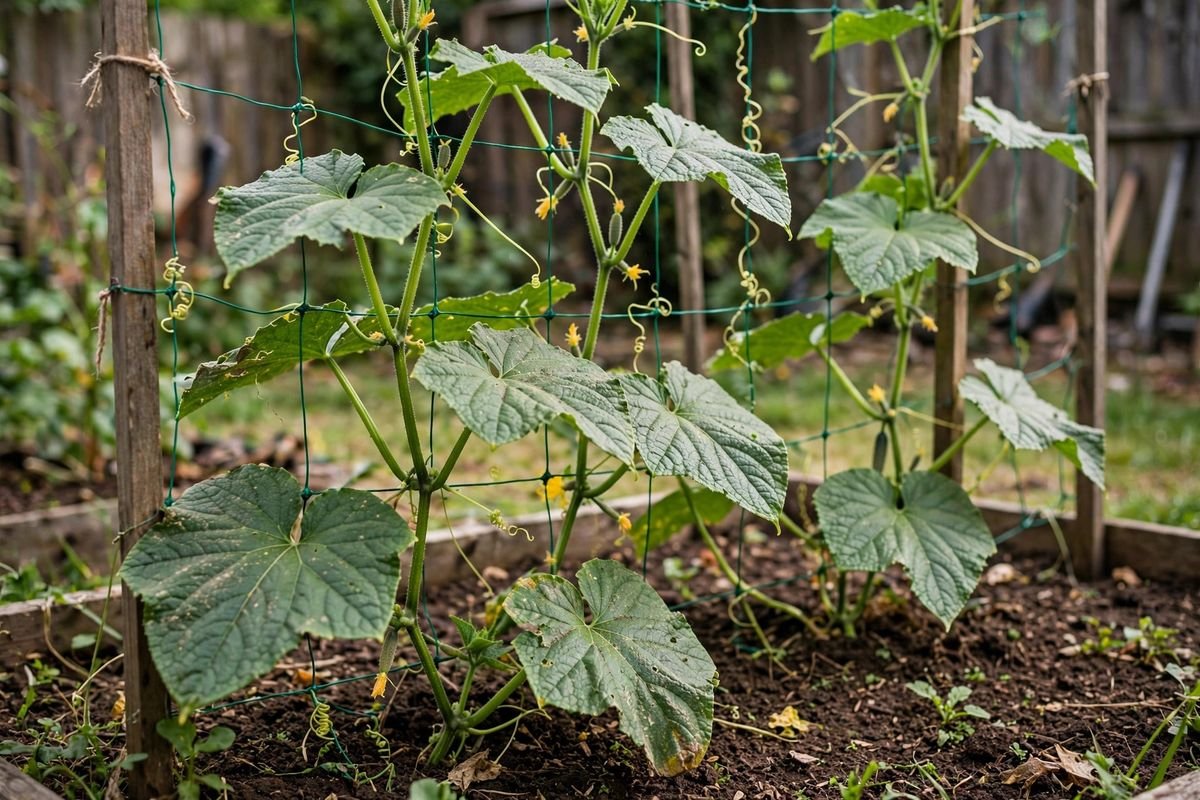
Guide main stems onto the support once vines reach about twelve inches. Tendrils do much of the work after that, with a loose tie here and there to direct growth. Bush varieties stay compact and need no trellis, though a small cage can keep fruit off damp soil. Ground-grown vining types need more room, often three feet between hills, plus a mulch layer under fruit to reduce rot and soil splash. Spacing on a trellis can stay near twelve inches between plants in fertile soil with steady water. Crowding raises mildew risk and hides fruit until size passes the best stage.
How to Care for Cucumbers
Watering for Crisp, Mild Fruit
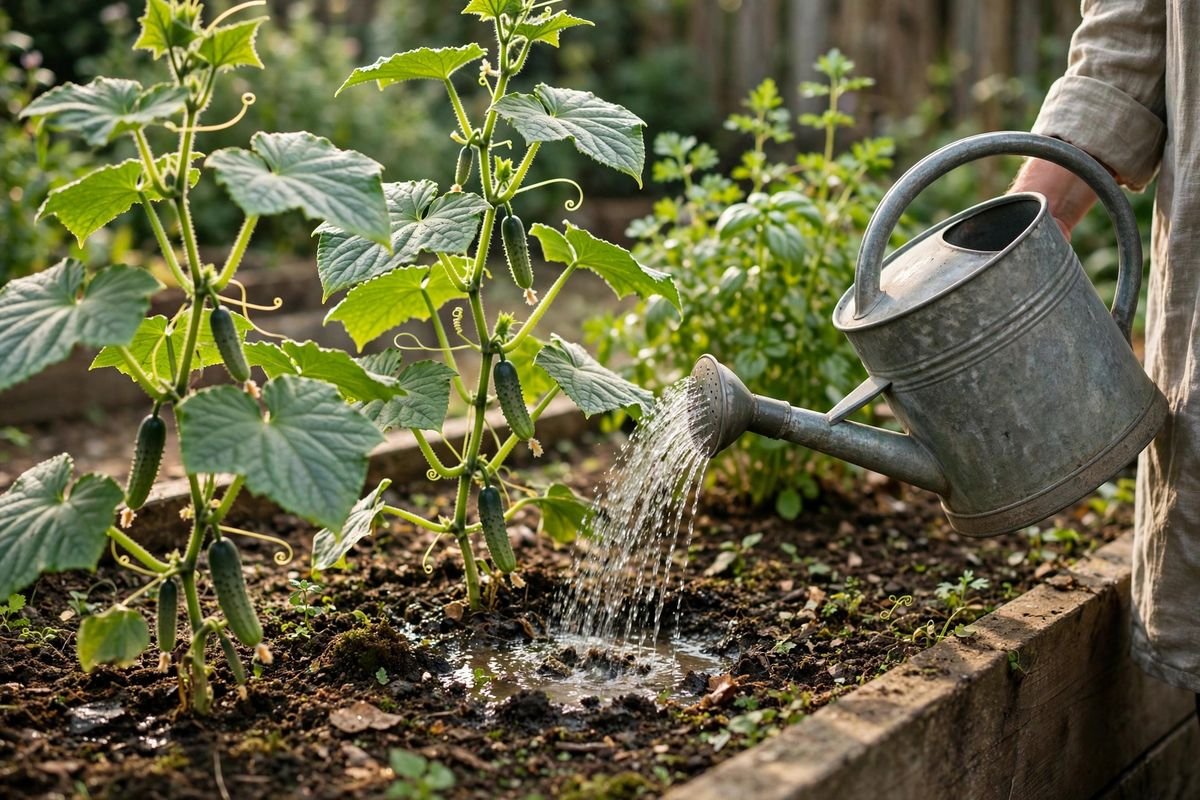
Steady water is the core cucumber habit. Roots are relatively shallow, and fruit carries high water content, so dry swings stress plants quickly. Aim for deep watering that soaks the root zone, about one to one and a half inches per week, adjusted for rain, heat, and soil type. Sandy soil needs smaller, more frequent drinks, while compost-rich loam holds moisture longer between soakings.
Water at the base in the morning. Keeping leaves dry lowers mildew pressure, and morning watering lets any splash dry in sun. Mulch two to three inches deep around plants, kept a few inches from stems, holds moisture and keeps fruit clean. A finger check helps timing: if the top inch feels dry and leaves look slightly dull in the morning, water that day. Plants still wilted at sunrise need water right away.
Feeding and Mulch Through the Season
Cucumbers feed steadily once vines run and flowers open. Compost worked in before planting covers early growth. At flowering, a balanced vegetable fertilizer applied per label directions supports fruit set, and a second light application three to four weeks later can help in lean soil or containers. Excess nitrogen produces long vines and many leaves with fewer female flowers, so measured feeding beats heavy doses.
A balanced vegetable fertilizer offers a straightforward choice when soil fertility runs low. Side-dress by scattering granules a few inches from stems and watering in, keeping product off leaves. In large pots, liquid feeding on a regular schedule works well because watering washes nutrients through mix faster than in ground soil. Weeding stays gentle. Shallow roots spread near the surface, so hand pull small weeds or cut weeds at the soil line rather than hoeing deep near vines.
Best Cucumber Varieties to Try
Slicing cucumbers grow long and smooth, bred for fresh eating. Many modern types carry disease resistance and produce mostly female flowers, which raises yield in small plantings. Look for notes on resistance to powdery mildew and cucumber mosaic where those issues appear each year. Burpless types suit gardeners who prefer milder skin and fewer seeds, though flavor and texture vary by variety and harvest size.
Pickling types stay shorter, with firm flesh and thin skin that takes brine well. Harvest size runs small, often two to four inches, and picking needs to stay frequent during warm weather. Bush pickling types fit containers and small beds while still giving enough fruit for small-batch pickles. Match variety to space first. Vining types yield most per plant on a trellis. Bush types trade some yield for compact habit. Parthenocarpic types, which set fruit without pollination, help in screened areas or seasons with low bee activity, and packet descriptions state this trait clearly. A mix of one slicer and one pickling type covers most home use without crowding the trellis.
When and How to Harvest Cucumbers
Harvest size decides texture and keeps vines producing. Slicing types usually taste best at six to eight inches, before seeds harden and skin toughens. Pickling types come off at two to four inches for whole pickles or slightly larger for spears. Check vines every day or two in warm weather, because fruit can move from perfect to oversized in a short span, and one hidden large fruit signals the vine to slow new fruit set.
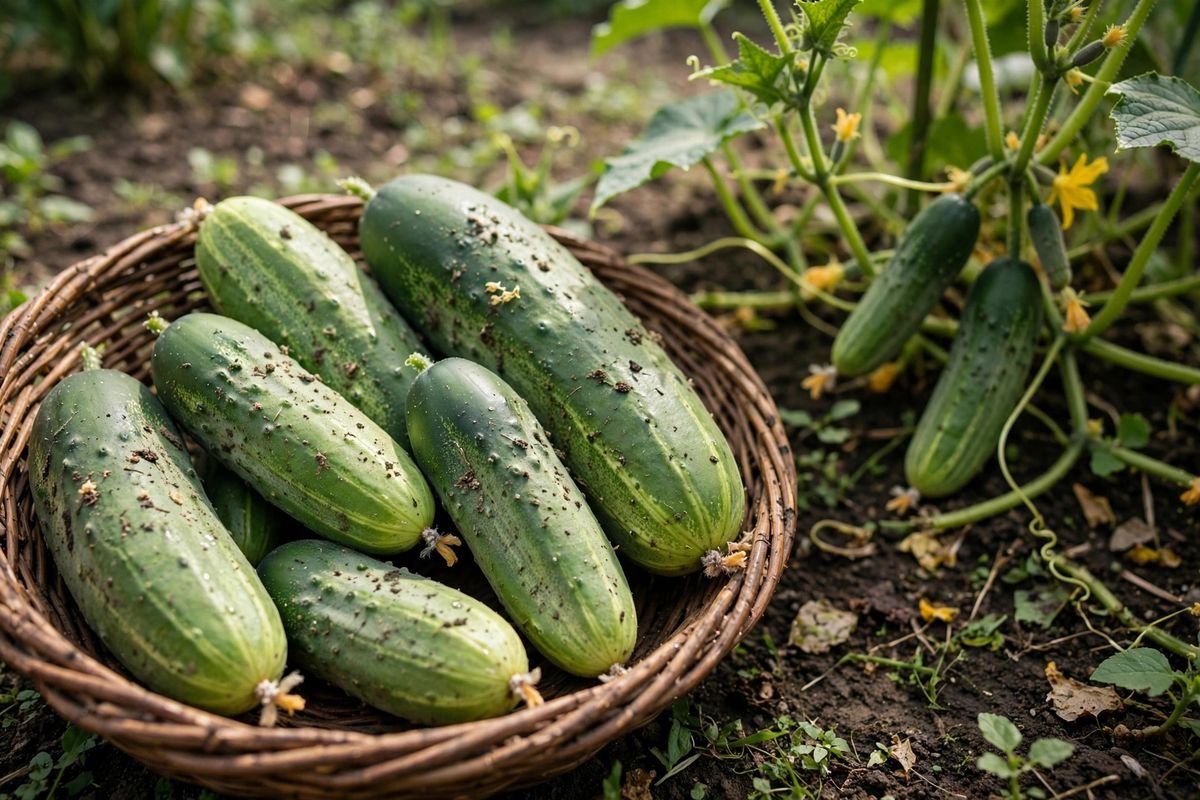
Cut fruit from the vine with scissors or pruners, leaving a short stem. Pulling twists the vine and can damage tendrils and nearby young fruit. Morning harvest gives the crispest texture. Fruit feels firm, skin color looks even for the type, and the blossom end stays rounded. Yellowing on a standard green type means the fruit stayed too long. Store cucumbers in the refrigerator crisper and use within several days for best crunch.
Troubleshooting Common Cucumber Problems
Why does fruit taste bitter?
Bitterness rises with plant stress, most often uneven water, heat spikes, and low fertility. Steady watering, mulch, and regular harvest reduce stress. Cutting away the stem end and peeling can salvage mildly bitter fruit, while strongly bitter fruit belongs in the compost.
Why are leaves turning yellow?
Yellow leaves can point to water stress, low nitrogen, poor drainage, or disease. Check soil moisture first, then look at pattern. Overall pale growth suggests feeding needs, while yellow spots with angular edges suggest a leaf disease favored by wet foliage. Remove badly affected leaves, water at the base, and improve air flow.
How do we handle powdery mildew?
Powdery mildew shows white patches on leaves during warm days and cool nights. Space plants for air, water at soil level, and remove the worst leaves to open the canopy. Resistant varieties help the next planting. Severe spread late in the season often signals time for succession plants to take over.
What eats holes in leaves and wilts vines?
Cucumber beetles chew leaves and flowers and can spread bacterial wilt. Row cover from sowing until flowering, removed when female flowers need pollinators, protects young plants during the highest-risk stage. A vine that wilts despite wet soil and shows no recovery overnight may carry bacterial wilt and should be removed to limit spread.
Why do small cucumbers shrivel or fail to grow?
Poor pollination is a common cause outdoors. Female flowers carry a tiny fruit behind the bloom and need pollen transfer from male flowers. Low bee activity during rain or cold and very hot weather reduce set. Avoiding sprays during bloom and planting flowers nearby supports better fruit set.
Frequently Asked Questions About Growing Cucumbers
How long do cucumbers take to grow?
Many varieties reach harvest about 50 to 70 days after sowing. Direct-sown plants in warm soil move quickly, while transplants can bring first harvest a bit earlier in short seasons. Packet days to maturity give a useful comparison between varieties.
Do cucumbers need a trellis?
Vining types do not require a trellis, yet trellising saves space and keeps fruit clean, straight, and easy to find. Bush types grow without support in beds and large containers.
How often should cucumbers be watered?
Water deeply when the top inch of soil dries, rather than on a fixed daily schedule. During fruiting and hot weather, that rhythm can mean several deep waterings per week in sandy soil and fewer in compost-rich loam. Pots need closer checks and often daily water at peak summer.
Why are cucumbers misshapen?
Uneven water and incomplete pollination cause narrow waists, curved fruit, and tapered ends. Steady moisture and good pollinator activity during bloom improve shape. Fruit resting against a trellis can also bend, so gentle repositioning while fruit is young helps slicers grow straight.
Sources & Further Reading
- University of Minnesota Extension — Growing cucumbers in home gardens, spacing, trellis, and harvest guidance (extension.umn.edu)
- Iowa State University Extension and Outreach — Growing cucumbers, soil temperature, sowing depth, and succession planting (extension.iastate.edu)
- University of Maryland Extension — Cucumbers, variety types, watering, and common disease notes (extension.umd.edu)
- Utah State University Extension — Cucumbers in the garden, frost sensitivity, fertility, and beetle management (extension.usu.edu)
Keep growing:
- How to Grow Tomatoes for another warm-season crop that shares trellis and watering habits.
- Container Gardening for Beginners for growing bush cucumbers in large pots.
Sow into warm soil, set the trellis early, and pick before fruit gets large. Cucumbers respond to that simple rhythm with fast, generous harvests through summer. Will our first trellis carry a classic slicer, a pickling type for jars, or a mix of both?