
This post may contain affiliate links. If you buy through links on this page, we may earn a commission at no extra cost to you.
As an Amazon Associate I earn from qualifying purchases.
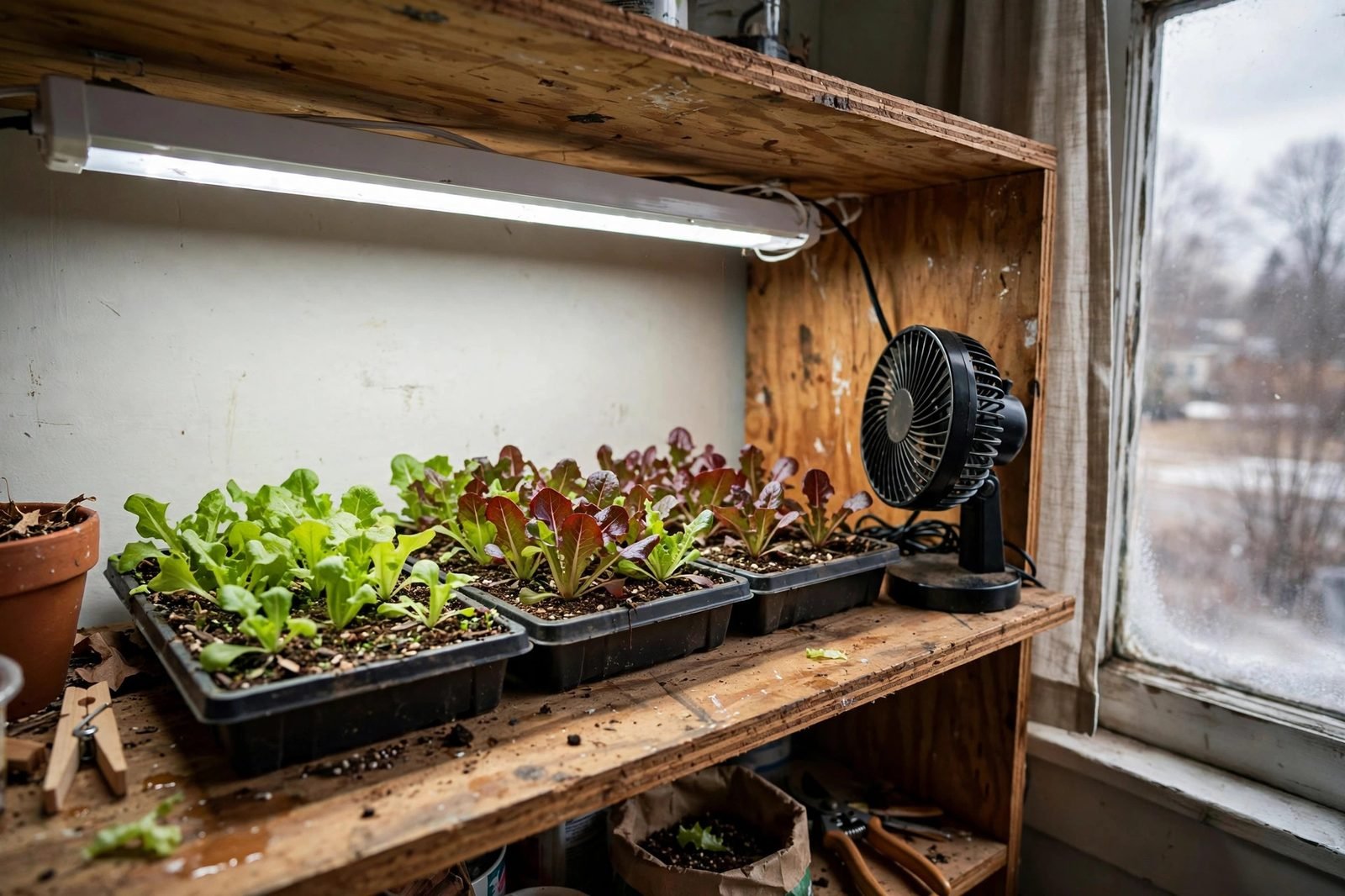
A fresh salad in January feels like a small luxury, and lettuce is one of the easiest vegetables to make that happen indoors. It grows fast, needs little depth, and prefers the cooler temperatures of a winter home over summer heat. With a shallow container, a bright light, and steady moisture, we can cut outer leaves for weeks from a single planting.
Many of us assume salad greens need a garden bed and long days. Indoors, we control both. Roots stay shallow, leaves stay clean without rain splash, and we harvest at baby size or as loose heads depending on space. This guide covers the varieties that behave best inside, the light and temperature they want, and a simple sowing rhythm that keeps fresh leaves coming instead of one big harvest that overwhelms the fridge. If we can keep a houseplant alive, we can grow winter lettuce.
| Need | What Works Indoors |
|---|---|
| Light | 12-16 hours under LED lights 2-6 inches above leaves; bright south window can work |
| Temperature | 60-70°F ideal; cooler nights improve flavor |
| Soil | Fine, moisture-retentive potting mix, 4-6 inches deep |
| Water | Keep evenly moist; never let mix dry out completely |
| Spacing | Baby leaf: scatter thinly; heads: 6-8 inches apart |
| Days to Harvest | 25-30 days for baby leaves; 45-55 days for loose heads |
| Feeding | Half-strength balanced fertilizer every 2 weeks |
Why Grow Lettuce Indoors in Winter
Lettuce is a cool-season crop that bolts and turns bitter in heat. Winter indoors flips the usual problem: we give lettuce exactly the mild temperatures it likes. Indoor leaves stay remarkably clean, too. Without soil splashing up in rain, a quick rinse is all they need, and we skip most of the slugs and flea beetles that chew outdoor plantings.
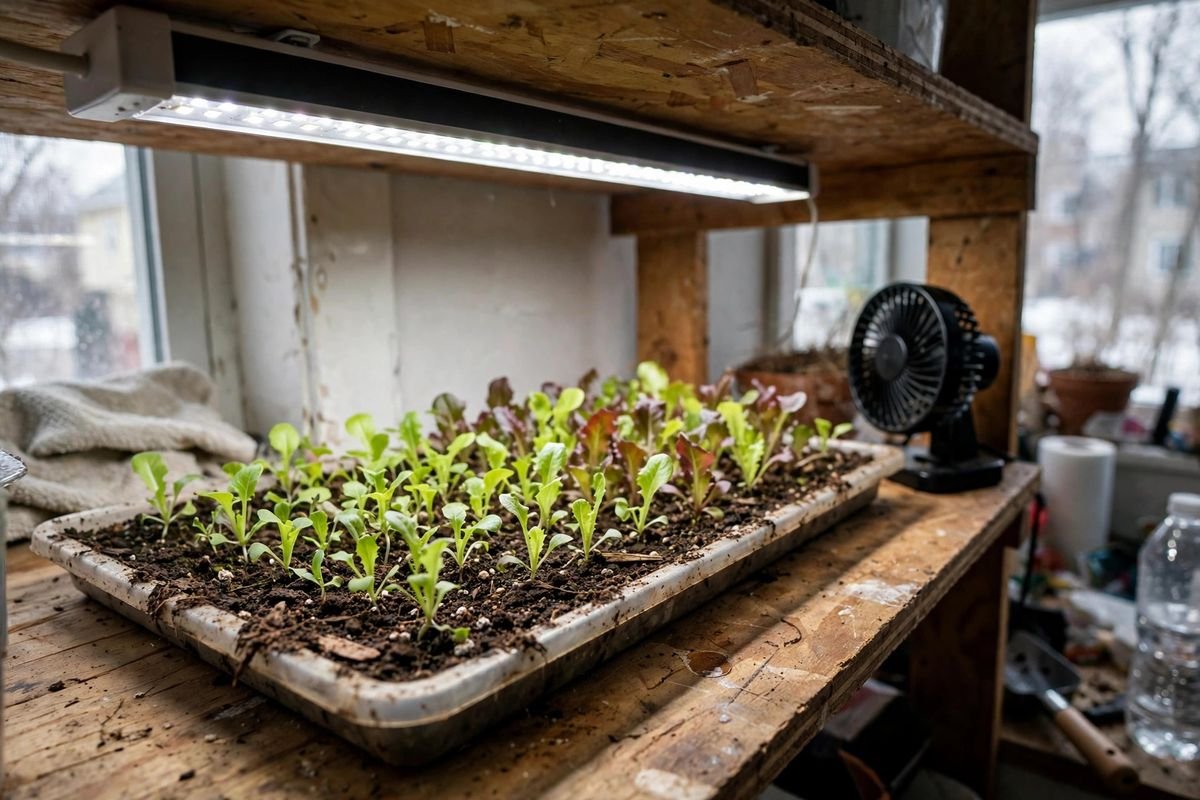
Speed is the other reward. Baby lettuce can be ready to cut in under a month, one of the fastest fresh foods we can grow on a shelf. The same lights serve herbs beside it, so a small indoor area earns its keep all winter. A steady, modest harvest also beats store-bought salad mixes that wilt before the bag is finished.
What You Need to Get Started
Lettuce asks for very little equipment: a container, potting mix, seeds, water, and light. Because roots stay in the top few inches, shallow trays, window boxes, and repurposed containers at least 4 inches deep all work, as long as they drain.
Containers and Mix
We like wide, shallow containers because roots spread sideways and we can sow a small salad patch rather than a single plant. A window box or standard nursery tray with drainage works well. Fill it with fine-textured potting mix that holds moisture evenly; a mix with coco coir or vermiculite helps between waterings, since lettuce dislikes drying out.
Light That Keeps Leaves Sweet
Lettuce needs less intense light than fruiting plants, but winter days are short, so total hours matter. Twelve to sixteen hours of LED light per day gives compact, sweet leaves. Hang lights 2 to 6 inches above the canopy and raise them as leaves grow. Our comparison of LED grow light versus a sunny window helps judge when window light alone is enough; for most of us in December and January, a simple bar removes the guesswork. Browse LED grow light bars for indoor lettuce on Amazon and match the bar length to our container.
When to Sow Lettuce Indoors
We can sow lettuce indoors any week of winter. Use your local frost dates and regional planting guidance — not your USDA hardiness zone alone — to choose planting dates. That rule matters most for spring, when indoor starts may move outside, but the habit is worth building now. For purely indoor growing, timing is about succession: sow a small batch every 10 to 14 days so new leaves come on as older plants finish. One large sowing gives a glut, then nothing. Lettuce seed germinates best at 60 to 70°F and may struggle above 75°F. Most varieties emerge in 4 to 10 days in a cool room away from heating vents.
How to Plant Lettuce Indoors Step by Step
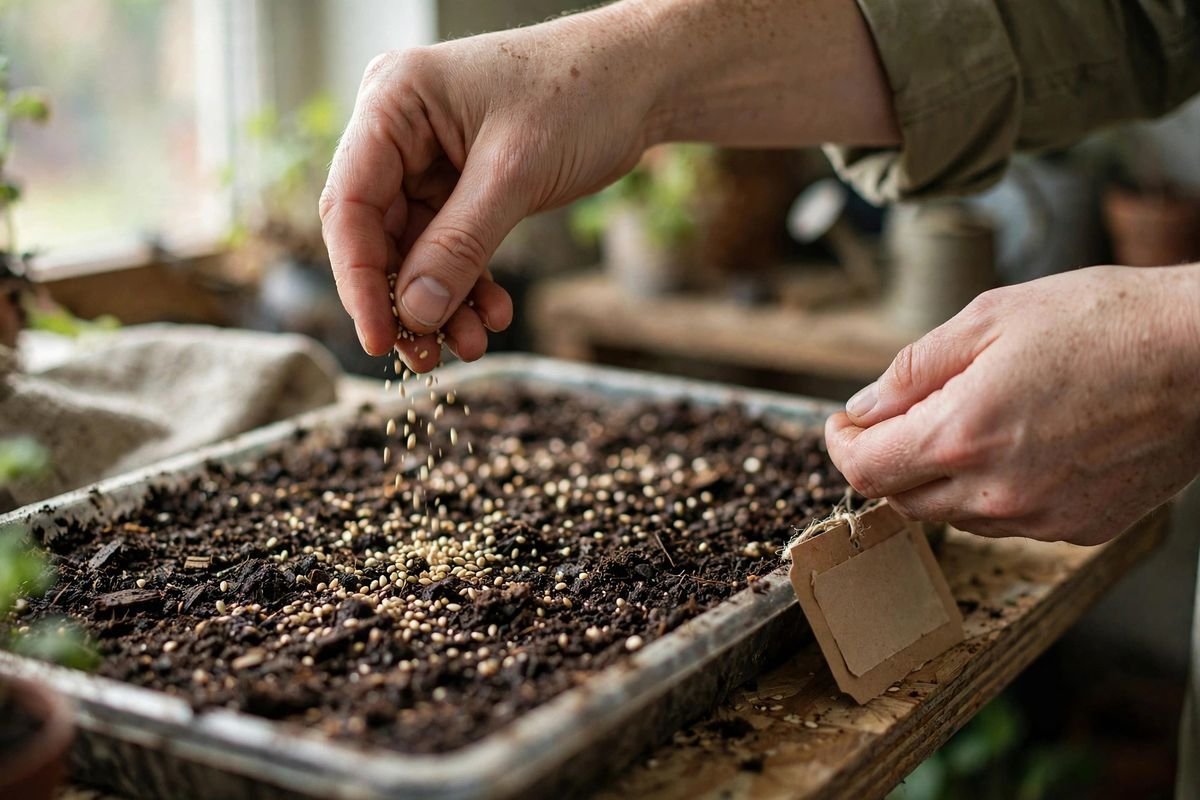
- Fill and moisten the container. Add mix to within half an inch of the rim and water before sowing. Moist mix, like a wrung-out sponge, helps tiny seeds sprout evenly.
- Sow shallowly. Lettuce seeds germinate best with light, so scatter them on the surface and press gently, covering with no more than an eighth of an inch of fine mix or vermiculite. For baby leaf, sow thinly across the tray. For heads, place seeds 6 to 8 inches apart, two or three per spot.
- Keep the surface moist. Cover with a clear lid or plastic wrap until sprouts appear, then remove it at once. Mist the surface daily if it starts to dry.
- Move under lights immediately. As soon as green shows, set seedlings 2 to 4 inches below the lights. Delay here is the main cause of leggy, floppy lettuce.
- Thin with scissors. At two true leaves, snip extras at the soil line rather than pulling them. For head lettuce, thin to one strong plant per spot. The snips make a tiny first salad.
- Start the succession rhythm. Sow the next tray about two weeks after the first, so a fresh batch is always sizing up as another is cut.
Spacing depends on our goal. Baby leaf lets us sow densely and cut everything at 3 to 4 inches tall. Cut-and-come-again harvesting, where we take outer leaves and let the center grow, needs wider spacing. Both approaches work on the same shelf.
Caring for Indoor Lettuce
Lettuce care indoors is mostly consistency. Leaves are largely water, so steady moisture and moderate temperatures matter more than fertilizer or fancy amendments.
Light and Temperature
Run lights 12 to 16 hours daily on an outlet timer so the schedule holds on busy days. Leaves that stretch or pale need more light or a shorter distance to the bulbs. Room temperature between 60 and 70°F grows the sweetest leaves, and cooler nights down to about 45°F can deepen color in red varieties. Warm rooms above 75°F push plants toward bitterness and early bolting, so we keep trays away from heat vents. A tidy shelf layout, like the one in how to set up grow lights on a shelving unit, makes adjusting light height simple.
Watering for Tender Leaves
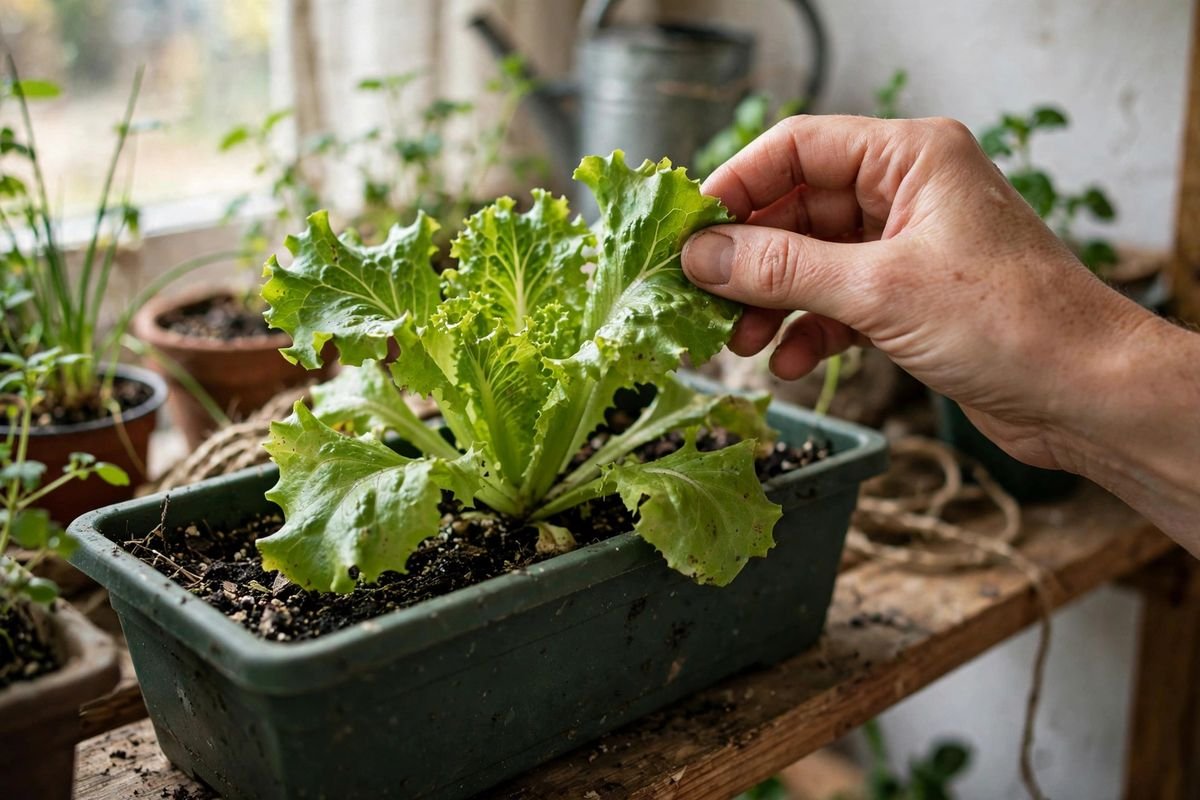
We keep the mix evenly moist at all times. Lettuce wilts fast when dry and recovers if caught early, but repeated wilting toughens leaves. Bottom watering works best: set the container in a shallow tray of water for 15 to 20 minutes, then drain the excess. Leaves stay dry, disease pressure drops, and roots grow downward. If we often miss a day, look at self-watering planter trays for indoor lettuce on Amazon.
Feeding and Airflow
Lettuce is a moderate feeder. Once plants have true leaves, a half-strength balanced liquid fertilizer every two weeks keeps leaves a healthy green. Too much nitrogen pushes soft growth that aphids love and can taste sharp. A small fan on its lowest setting, moving air gently across the leaves a few hours a day, strengthens stems and discourages the damp stillness where mildew starts. We aim for leaves that sway slightly, not a wind tunnel.
Best Lettuce Varieties for Indoor Winter Growing
Loose-leaf varieties are the indoor workhorses. They mature faster than heading types, tolerate cut-and-come-again harvesting, and forgive imperfect spacing. Crisphead or iceberg lettuce is the hardest indoors, since it needs a long, cool run to form a tight head.
Reliable Loose-Leaf Picks
Black Seeded Simpson is fast and tolerant of varied light. Oakleaf types stay tender and compact on a shelf. Red Sails and Lollo Rosso add color that deepens under LED light and cool nights. A mesclun mix blends several types in one sowing for varied texture, though varieties in a mix grow at different rates.
Compact Romaine and Butterhead
Little Gem forms small, sweet romaine hearts that fit indoor spacing. Tom Thumb butterhead makes tiny heads with soft leaves, a small-space favorite for generations. Butterheads want steady moisture and gentle handling; we harvest with scissors since leaves bruise easily.
What to Avoid Indoors
Full-size iceberg and large romaine usually disappoint inside. They take more weeks and more light while occupying space that could grow three rounds of loose-leaf. We save them for the outdoor spring garden. When spring planning starts, container gardening for beginners is a helpful bridge from shelf growing to outdoor pots.
How to Harvest Indoor Lettuce
Harvest method decides how long a planting lasts. For cut-and-come-again, take outer leaves at 4 to 6 inches, cutting at the base and leaving the center crown untouched. A plant harvested this way can produce 4 to 6 weeks indoors. We rotate through plants and never take more than one-third of the leaves at once.
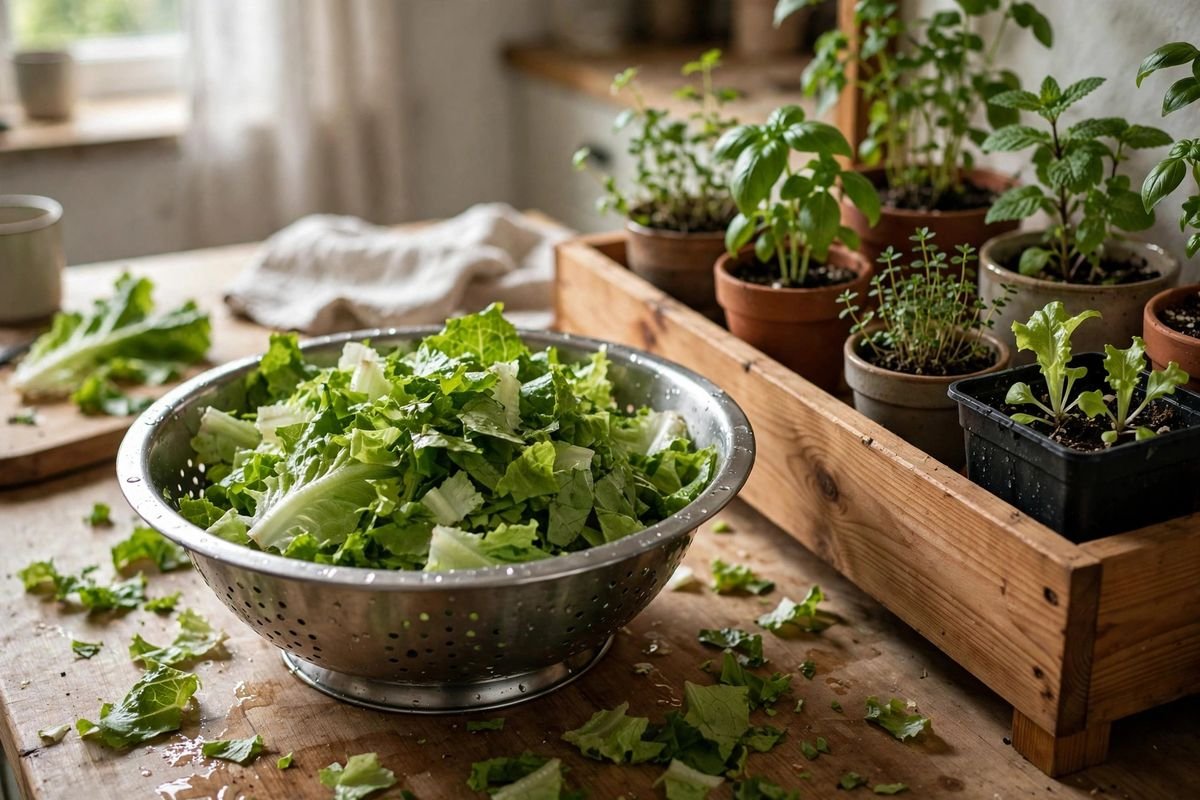
For baby leaf trays, cut the whole patch about an inch above the base at 3 to 4 inches tall. Many trays regrow for a second, smaller cut; after that, growth slows and flavor strengthens, which signals it is time to refresh the mix and sow again. Lettuce tastes best the day it is cut, though dry-stored leaves in a sealed container keep 3 to 5 days in the fridge.
Troubleshooting Indoor Lettuce Problems
Leggy, Pale Seedlings
Stretched seedlings need light, fast. Move lights within 2 to 4 inches of leaves and extend the day to 14 to 16 hours. Seedlings that have already flopped rarely recover; the honest fix is a fresh tray with the light distance set correctly from day one. A gentle fan helps new seedlings grow stockier.
Bitter Leaves
Bitterness usually means heat, age, or water stress. Keep temperatures at or below 70°F when we can, harvest young, and do not let the mix dry out. Succession sowing keeps most of our harvest in the sweet, young window.
Tipburn on Inner Leaves
Brown, papery edges on inner leaves, called tipburn, relate to uneven watering and rapid growth. Steady moisture and gentle airflow reduce it. Outer leaves are often fine, and consistent bottom watering helps more than extra fertilizer.
Aphids on Leaves
Check leaf undersides weekly. A firm rinse in the sink knocks most aphids off, and badly infested leaves go in the trash. Since we eat these leaves raw, we rely on water, hand removal, and airflow rather than sprays, and we isolate an infested tray until it clears.
Mold or Damping Off
Seedlings that collapse at the base and fuzzy mold on the surface point to excess moisture and still air. Sow into moist, not soggy, mix, remove covers at germination, space trays for airflow, and water from the bottom.
Plants Bolting Indoors
Bolting — the center shooting upward as leaves turn bitter — comes from heat, light days beyond 16 hours, or an aging plant. Keep the day length in range and the room cool. With succession sowing, a bolting tray is an inconvenience, not a lost season.
FAQ
Can we grow lettuce indoors with just a window?
In late winter, a bright south window can grow decent loose-leaf lettuce, especially in sunny climates. In midwinter at northern latitudes, days are too short and light too weak, and a simple LED bar makes results far more reliable. Many of us start at a window and add a light after the first leggy tray.
How long does indoor lettuce take from seed to salad?
Baby leaves are ready in about 25 to 30 days. Loose heads for cut-and-come-again harvest take 40 to 55 days depending on variety, light, and temperature. Cooler rooms slow growth slightly but improve flavor.
How many plants do we need for regular salads?
One 10-by-20-inch tray of baby leaf, rotated with a second tray coming along, covers side salads for two people. Households wanting main-dish salads several times a week usually run three or four trays in succession across one shelf. Starting small lets us find our level without waste.
Does indoor lettuce need fertilizer?
Potting mix carries some nutrients, but lettuce grows fast and uses them up. Half-strength balanced liquid fertilizer every two weeks keeps leaves green. Pale, slow growth often signals hunger once light hours are adequate.
Can indoor lettuce plants move outside in spring?
Yes. Young lettuce transplants well. We harden plants off over 5 to 7 days, starting with a few hours of outdoor shade and increasing sun gradually, guided by local frost dates. Lettuce tolerates light frost but not a hard freeze in a small pot left out overnight.
Sources & Further Reading
- University of Minnesota Extension — indoor salad greens guidance on light, temperature, and succession sowing (extension.umn.edu).
- Cornell Cooperative Extension — growing lettuce indoors and in containers, variety selection for small spaces (cals.cornell.edu).
- University of New Hampshire Extension — indoor greens, lighting duration, and moisture management (extension.unh.edu).
- Utah State University Extension — indoor vegetable gardening notes covering lettuce and leafy greens (extension.usu.edu).
- Penn State Extension — container vegetable basics including soil depth and feeding for greens (extension.psu.edu).
More Indoor Growing Guides
For the fastest indoor harvest of all, see how to grow microgreens indoors, ready in 7 to 14 days on the same shelf. Are we team baby-leaf tray, cutting a fresh handful every few days, or do we prefer loose heads and harvesting outer leaves — and which variety gets our first winter sowing?