
This post may contain affiliate links. If you buy through links on this page, we may earn a commission at no extra cost to you.
As an Amazon Associate I earn from qualifying purchases.
Once you decide to start seeds under lights, the next question arrives fast: long LED bars that mount under a shelf, or individual bulbs you can screw into a clamp light or a shop fixture? Both grow good seedlings. Both have frustrated plenty of gardeners who picked the wrong one for their shelf, their trays, or their budget. The difference is less about which technology is “better” in the abstract and more about coverage, height, and how you actually grow.
Here is the practical comparison we give readers who are outfitting a seed-starting shelf: how bars and bulbs each deliver light to a tray, where each setup wastes light (and money), how to size either one to your shelves, and the small details — timers, cords, raising and lowering — that decide whether a setup is a pleasure to use for eight weeks or a daily annoyance. Use your local frost dates and regional planting guidance — not your USDA hardiness zone alone — to choose planting dates, then work backward to your indoor sowing dates so the lights are ready when the first trays are.
| Best for | Bars: full trays and multi-tray shelves where even coverage matters. Bulbs: one or two trays, tight budgets, or improvised setups. |
|---|---|
| Coverage shape | Bars light a long, even rectangle that matches a tray or shelf. Bulbs light a circle — bright in the center, dim at the edges. |
| Height needed | Bars mount close to the shelf above and work in as little as a few inches of vertical space. Bulbs in reflectors need more headroom above the plants. |
| Cost pattern | Bars: higher cost per shelf, lower hassle. Bulbs: low cost to start, more fixtures needed as you add trays. |
| Adjusting height | Bars raise on chains, cords, or shelf position. Bulbs move by re-clamping or raising the fixture — quick but less precise. |
| Our usual pick | Bars for a dedicated seed-starting shelf; bulbs for a single tray or a temporary setup. |
How Each Light Actually Covers a Tray
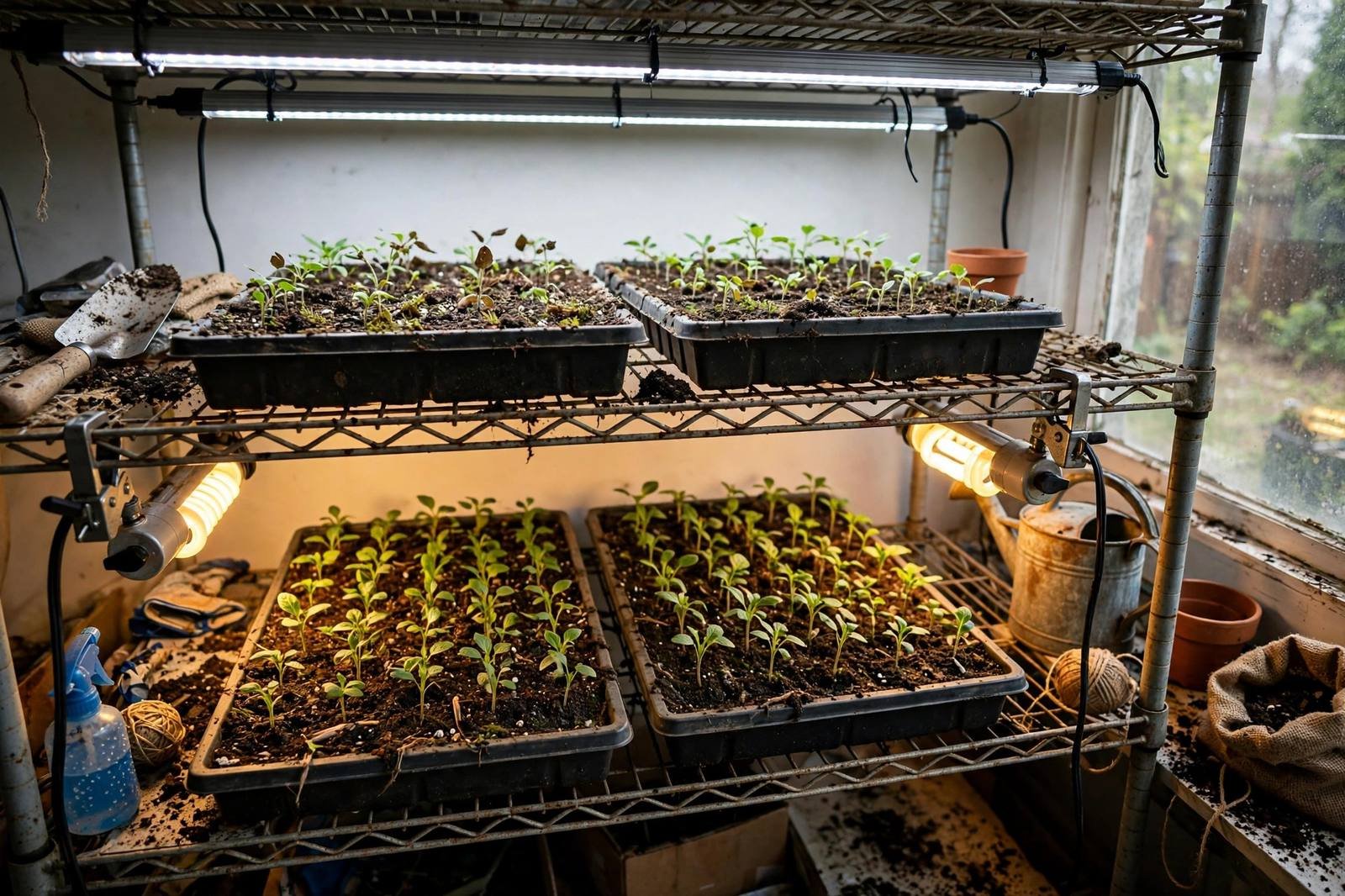
A standard seed tray is a rectangle, roughly ten by twenty inches, and a typical home shelf holds two to four of them side by side. Light bars are shaped for exactly that geometry. A two- or four-foot LED bar (or a pair of shorter bars) mounted under the shelf above throws a long, fairly even band of light down the full length of the trays below. Seedlings at the tray ends get nearly the same light as seedlings in the middle, so the whole flat grows at a similar rate and you transplant a uniform batch.
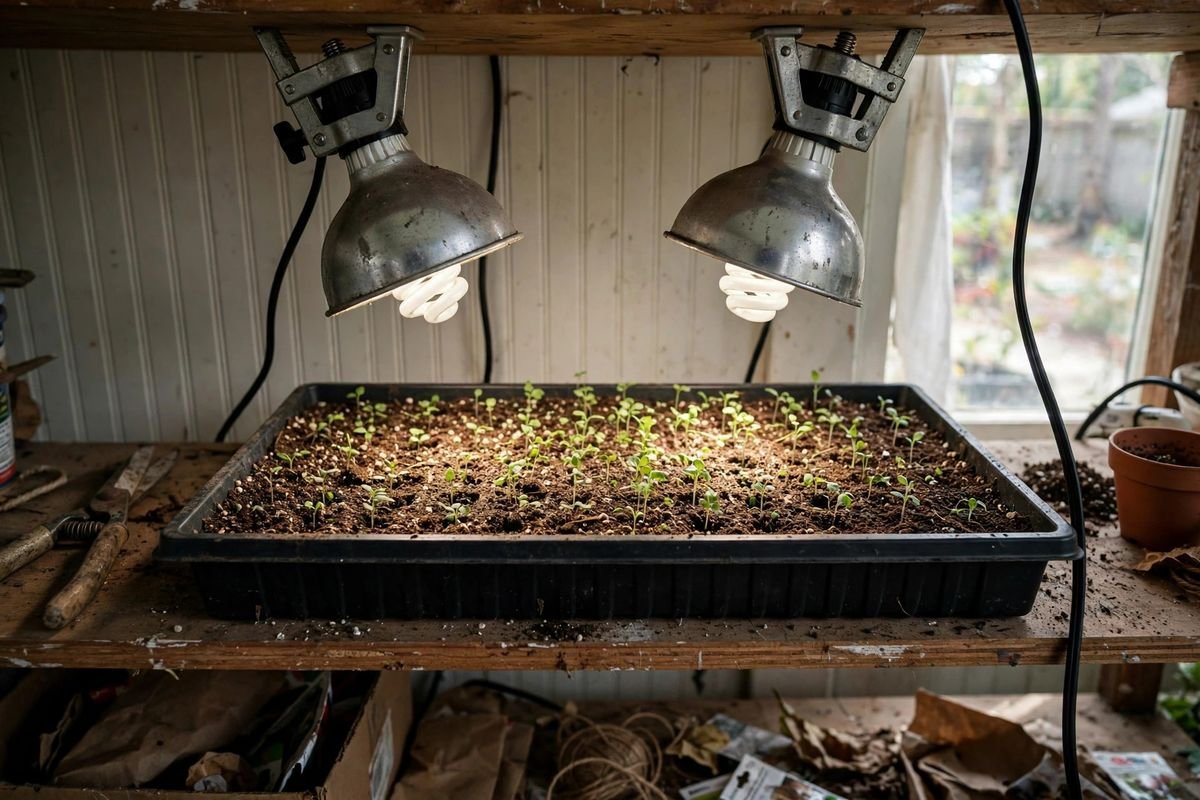
Bulbs — whether LED bulbs in a reflector or the older spiral CFL style many of us started with — throw a cone of light from a point. Directly under the bulb, light is strong; a few inches to the side, it falls off quickly. One bulb over one small tray can work if you keep the tray centered and rotate it. One bulb asked to cover a full shelf leaves the ends dim, and seedlings there stretch toward the center while the middle plants may sit in more light than they need. The usual fix is more bulbs — two or three fixtures across a shelf — at which point you have rebuilt the bar’s coverage with individual pieces, plus extra cords and clamps.
Neither shape is wrong; they just match different layouts. If your growing footprint is one tray on a table, a bulb in a clamp reflector is a neat, complete answer. If your footprint is a four-foot wire shelf holding four trays, bars match the footprint without a puzzle of overlapping cones. Our guide to setting up grow lights on a shelving unit shows both layouts with shelf spacing that gives you room to raise lights as plants grow.
Light Bars: Strengths and Trade-Offs
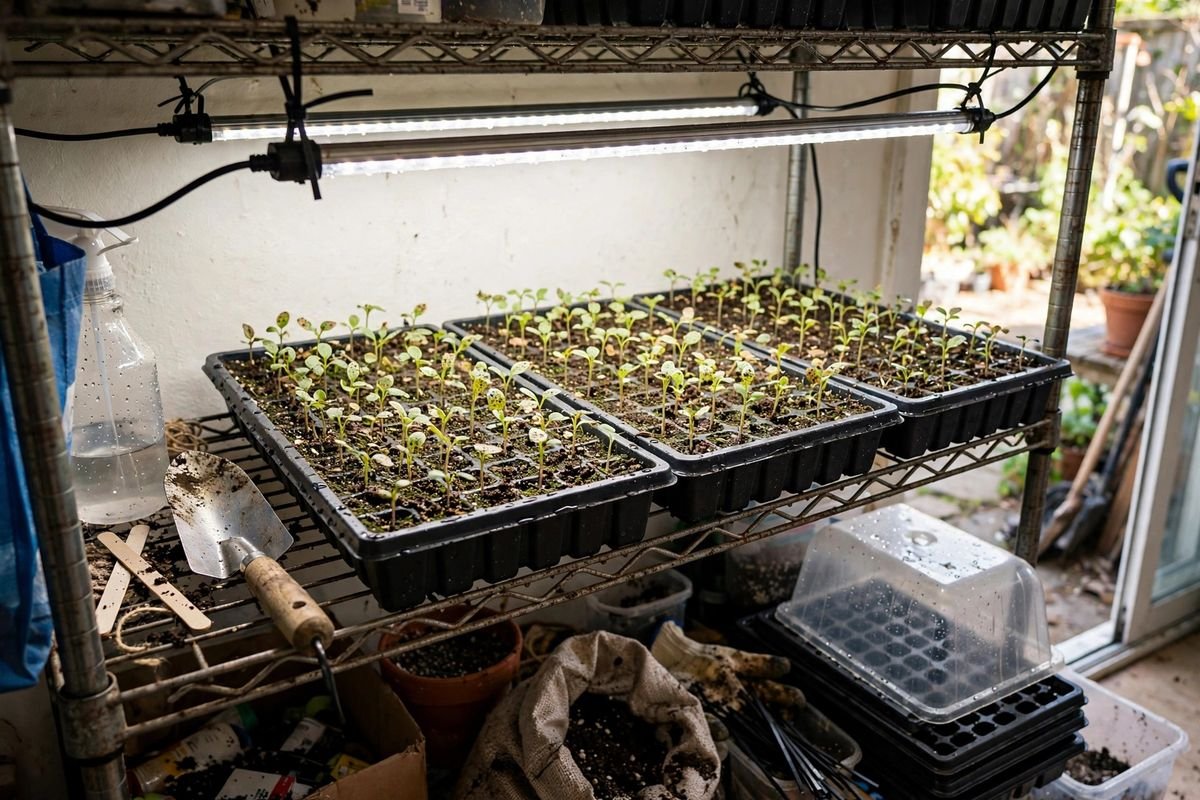
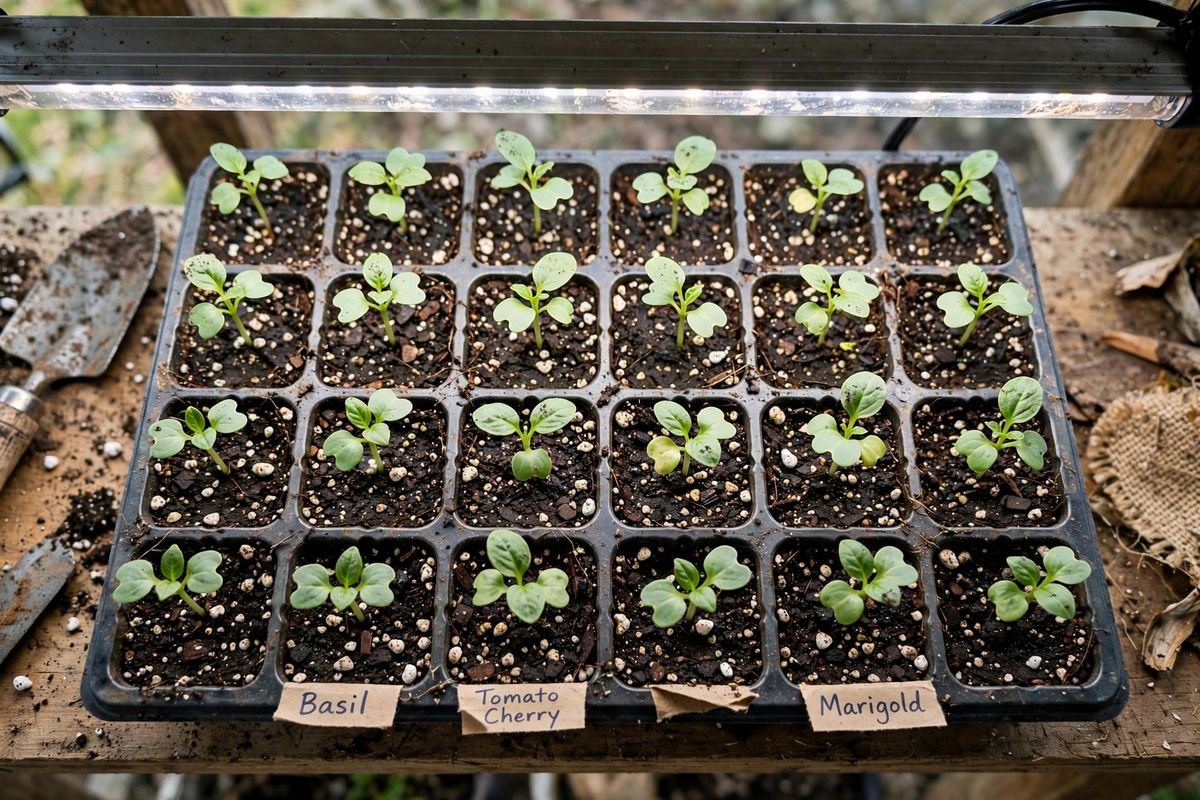
The bar’s first strength is evenness. Because the diodes spread along the length of the fixture, the light band is consistent end to end, and seedlings grow upright instead of leaning toward a bright center. That evenness matters most for crops you grow in full trays — onions, leeks, herbs, flowers, and the brassicas — where you want every cell in the tray to produce a usable transplant, not just the middle row.
Bars are also thin. A typical seed-starting LED bar is an inch or less thick and mounts flat under the shelf above, so it takes almost no vertical space. On a wire shelf with sixteen to eighteen inches between levels, that leaves the full working height for seedlings plus the few inches of light-to-leaf distance. Bars usually link end to end or share a single power cord, so a whole shelf often runs from one outlet and one timer, which keeps cords tidy — a real quality-of-life point when you are watering daily. A search for linkable LED grow light bars shows the common two- and four-foot options; match total bar length to your shelf length so the trays are lit end to end.
Where Bars Are Less Flexible
Bars commit you to a layout. They work best at a fixed tray footprint — if you suddenly need light over a single small pot in a different corner, a bar is an awkward tool for the job. Quality also varies: very cheap bars can be dim for their size, with coverage that fades at the ends despite the shape, so wattage and honest coverage claims matter more than the number of diodes in the listing. And when a bar eventually fails, you replace the whole fixture, whereas a bulb setup lets you swap a single bulb.
Bulbs: Strengths and Trade-Offs
Bulbs win on flexibility and starting cost. A clamp reflector and a daylight-spectrum bulb — the classic hardware-store seed-starting rig — costs little, sets up in minutes on a chair back, a shelf edge, or a small stand, and moves wherever the plants are. For a single tray of tomatoes on a table, or a few pots of peppers you are holding for a friend, it is hard to beat. Bulbs also let you upgrade in pieces: start with one fixture, add a second when you add a tray, and replace a single bulb if one underperforms. A basic clamp light reflector and a daylight LED bulb suited to plant use is the usual starting pair; confirm the bulb’s brightness and spectrum are appropriate for seedlings rather than choosing by wattage alone.
Bulbs are also forgiving about shelf height. A bar needs a shelf above it to mount to (or a stand); a clamp light can hang from a simple frame, a tension rod, or the back of a chair for a truly temporary setup. Renters and small-space gardeners who cannot install shelving often start here, and many keep a clamp light as a supplement for the far end of a shelf or a tray that outgrows the main setup.
Where Bulbs Make You Work Harder
The cone shape is the tax. To cover a full tray evenly you generally need two bulbs per tray area, positioned and angled with care, and seedlings still tend to lean toward the brightest spot unless you rotate trays. Reflectors take vertical space — a clamped dome above a tray eats several inches of headroom, so on tight shelves you run out of room to raise the light as plants grow, right when tomatoes start gaining an inch a day. Heat is another consideration with older bulb types: CFLs run warm and incandescent bulbs run hot, so distance to leaves needs more margin and more checking than with a cool LED bar. Each added fixture also adds a cord and a clamp to work around while watering, and a multi-bulb shelf on separate cords can outgrow a single timer strip quickly if you are not deliberate about the layout.
Height, Distance, and Daily Use
Both setups obey the same rule: seedlings want light close — typically a few inches above the leaf tops for LED bars and most LED bulbs, a bit more for warmer bulb types — raised steadily as plants grow. The difference is how gracefully each fixture adjusts. Bars on chains, adjustable hangers, or a shelf you can reposition move in small, even increments across the whole tray at once. Bulbs move one fixture at a time, and re-clamping at a new angle can change coverage in ways you only notice a few days later from leaning seedlings.
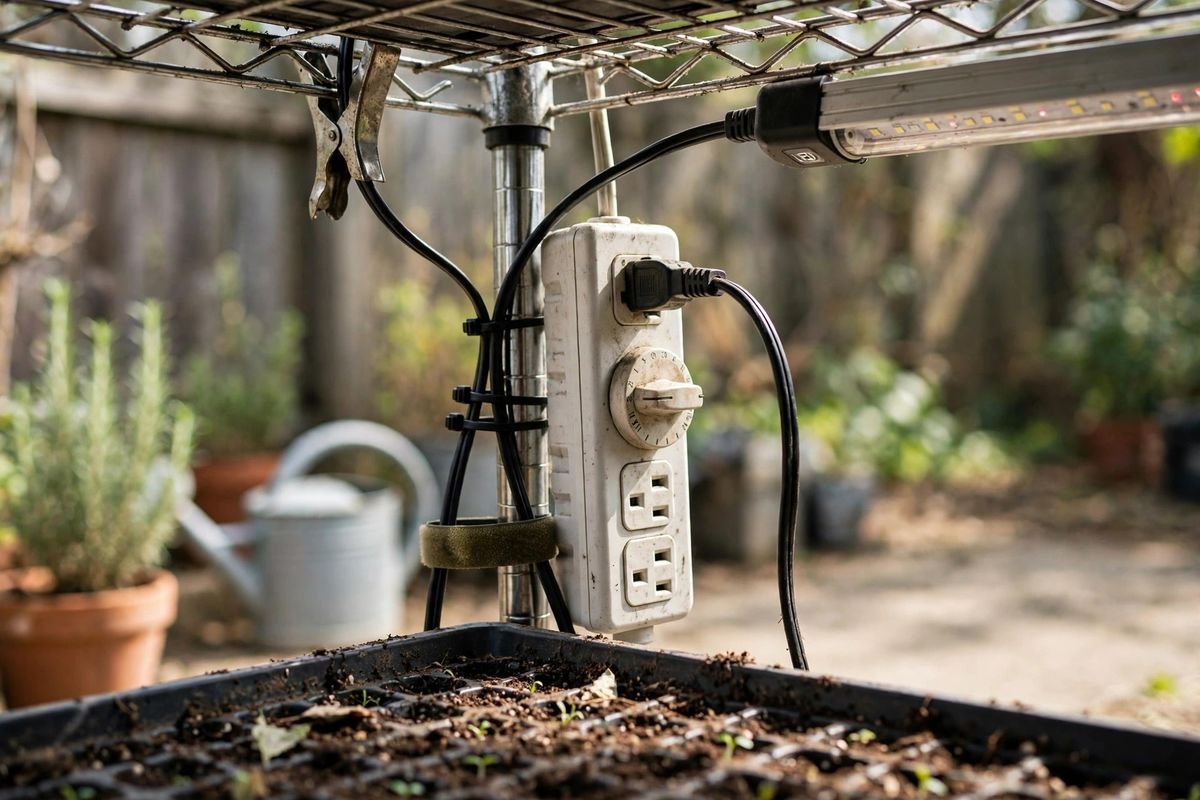
Daily use favors whichever setup keeps cords out of the watering path and runs from a single timer. Bars usually win that contest on a multi-tray shelf: one cord run, one timer (a simple outlet timer handles the 14- to 16-hour day), and nothing to bump while sliding trays in and out for bottom watering. Bulb setups stay pleasant at one or two fixtures; past that, a power strip with a built-in timer and a few minutes spent routing cords along the shelf leg keeps things sane. Whichever you run, keep electrical connections off the shelf surface where water collects, route cords with a drip loop, and keep the whole setup where a leaking tray cannot reach an outlet.
Cost Over One Season and Over Five
For a single tray, bulbs are cheaper by a clear margin: one reflector, one bulb, done. For a full shelf, the math narrows. Covering a four-foot shelf evenly with bulbs usually means two to three fixtures with reflectors, plus the bulbs themselves, plus the strip and timer to run them — a total that approaches the cost of a pair of linkable LED bars that cover the same shelf with one cord and even light. Electricity for either LED-based setup is modest; older CFL bulbs use more power for the same usable light, and any bulb you run warm also asks for more distance, which wastes some of the light you paid for.
Over several seasons, durability and storage tip the scale. Bars store flat, stack with the shelves, and have no loose bulbs to protect. Bulb rigs store in pieces anywhere, double as household lights in the off-season, and let you replace the cheapest part when something fails. Gardeners who start seeds as one small project each spring often stay happily with bulbs for years; gardeners who fill a shelving unit every February, plus fall trays of kale and broccoli, usually migrate to bars one shelf at a time and keep a clamp light as the flexible backup. Both paths are legitimate; the honest question is how many trays you will really run, which our rundown of the best seed starting kits can help you size before you buy lights to match.
Which Should You Buy First?
Buy bulbs first if you are starting one or two trays, your setup is temporary or borrowed space, or you want to learn seed starting before committing to shelves. Keep the tray centered under the light, rotate it every couple of days, and keep the bulb as close as its heat allows. Graduate when tray two becomes tray six, or when edge seedlings stretching inward becomes a pattern you are tired of correcting.
Buy bars first if you are setting up a dedicated shelf, starting four or more trays, or growing full flats of small-cell crops where even coverage decides how many usable transplants you get. Size the bars to the shelf, mount them so you can raise them in small steps, and run the shelf from one timer. You will spend a bit more on day one and noticeably less time rotating, re-aiming, and rescuing stretched corners. For the full station layout — shelf spacing, tray sizes, and where the fan and timer live — our guide on LED grow light vs sunny window pairs well with the shelf setup linked earlier, and our note on how deep seed starting cells should be helps match tray choice to the light footprint you are planning.
Troubleshooting Common Problems
Center seedlings are sturdy but edge seedlings stretch
This is the signature bulb-coverage problem, and it can happen with an undersized bar too. Center the tray under the fixture, add a second bulb or a longer bar to cover the tray ends, and rotate the tray 180 degrees every few days until coverage is fixed. If edges stretch every run, the light footprint is smaller than the tray — size up the fixture, not the hours.
Seedlings lean toward each other or toward one spot
Plants lean toward the brightest point in their world. With bulbs, re-aim reflectors so cones overlap evenly and straighten the tray position. With bars, confirm the tray is centered under the bar and the bar runs the full tray length. Daily gentle air movement from a small fan also reduces leaning by encouraging sturdier stems.
Leaves look bleached or curled at the top
The light is likely too close for its type, or a warm bulb is heating the canopy. Raise the fixture a few inches, check leaf temperature with the back of your hand (leaves should feel near room temperature, not warm), and confirm you are following the distance guidance for that specific fixture.
Algae or fungus gnats on the soil surface
More light on the soil surface plus constant moisture grows a green film and invites gnats in either setup. Water from the bottom, let the surface dry slightly between waterings, keep air moving, and avoid leaving trays sitting in standing water. Light choice does not cause this; wet surface soil does.
FAQ
Can I mix bars and bulbs on the same shelf?
Yes, and many gardeners do — bars over the main trays, a clamp bulb over an overflow tray or a heat-loving pot at the end. Keep the daily hours the same across the shelf (one timer is easiest) and watch the bulb-lit tray for center-weighted growth that asks for rotation.
What color spectrum do seedlings need?
Seedlings grow well under full-spectrum or daylight-balanced white light in the roughly 4000K–6500K range. Dedicated seed-starting bars are usually sold as full-spectrum; for bulbs, choose daylight-spectrum options with brightness suited to plants rather than a warm household bulb.
How many bars do I need for a four-foot shelf?
It depends on bar width and output, but the working rule is to cover the tray footprint end to end with light a few inches above the canopy. Many four-foot shelves run one wide bar or two narrower linkable bars side by side; check the coverage guidance for the model you choose against your tray layout.
Are old fluorescent shop lights still okay?
They grew generations of seedlings and still work if you already own them, kept close to the canopy with fresh tubes. Most gardeners replacing a setup choose LEDs for lower power use, cooler operation, and slimmer fixtures that fit tight shelf spacing.
Do bulbs or bars need a timer?
Both benefit from one. Fourteen to sixteen hours a day on a consistent schedule is the target for most seedlings, and a timer delivers it without daily switching or forgotten evenings that leave trays stretching in dim room light.
Sources & Further Reading
- University of Minnesota Extension — starting seeds indoors, lighting options, and light distance guidance
- University of Maryland Extension — indoor seed starting and preventing leggy transplants
- University of Wisconsin–Madison Extension — fluorescent and LED lighting for indoor seed starting
- USDA Agricultural Research Service — light quality and photoperiod resources for home-scale growing
Keep reading:
- How to Set Up a Seed Starting Station
- Best Seed Starting Trays for Home Gardeners
Bars light the rectangle your trays actually are; bulbs light a circle you arrange trays around. Pick the shape that matches your shelf and your tray count, keep the light close, run it long, and either system will hand you sturdy transplants when your frost-date window opens.