
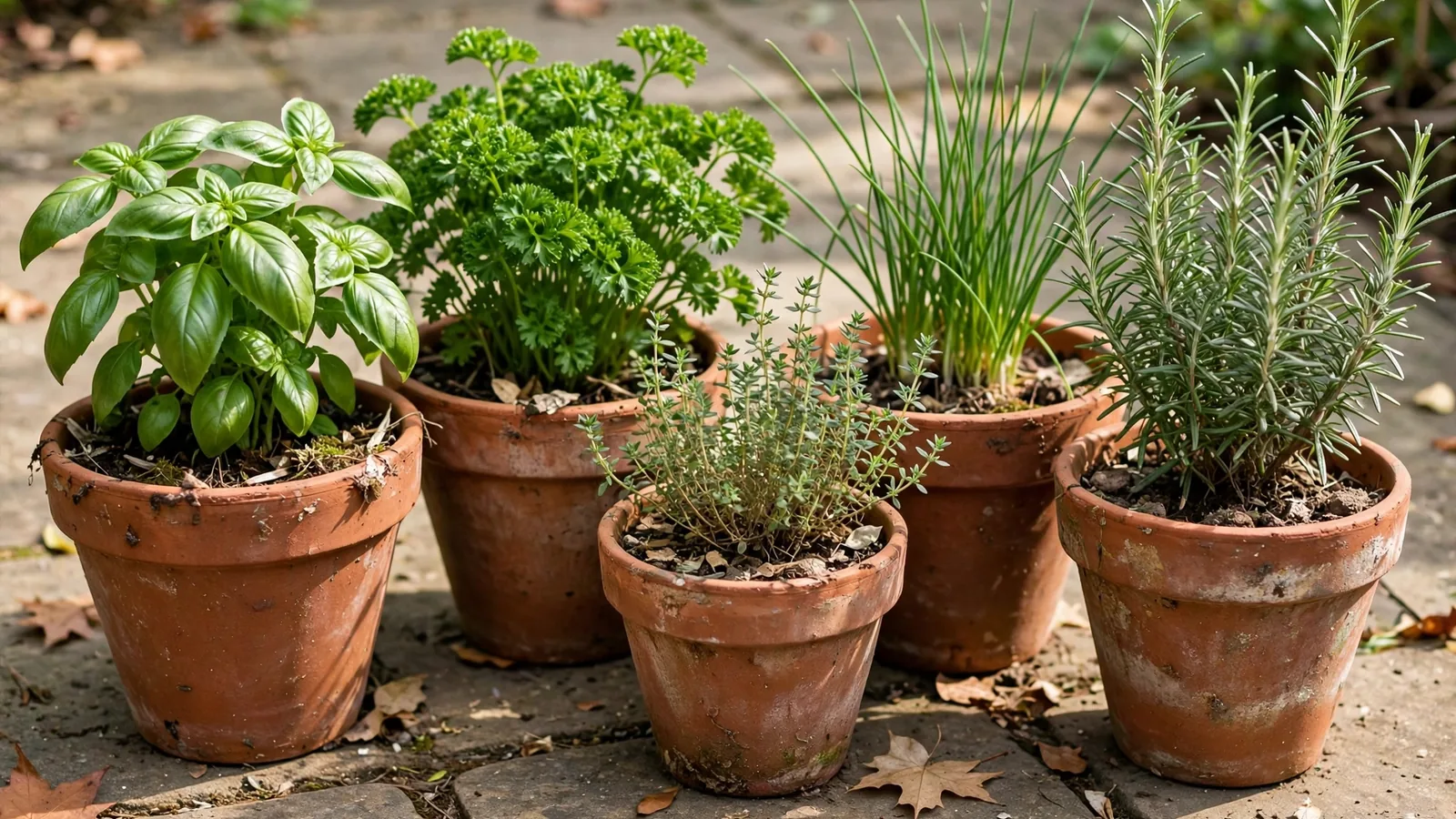
Fresh herbs are the highest-value thing a small garden can produce. A $4 packet of basil seed becomes months of pesto; a $5 rosemary plant pays for itself the first time you skip the $3 plastic clamshell at the store. This plan fits six culinary herbs into five pots on a patio, balcony, or doorstep — arranged so the flavors you reach for most are closest to the kitchen door.
This is a planning guide, not a grow log. The layout diagram and header image are AI-generated illustrations (labeled as such) — they show the arrangement, not a real patio.
Who this setup is for
Anyone who cooks and has a sunny outdoor spot — even just a doorstep. This is also the ideal first garden: herbs are forgiving, harvests start fast, and nothing here needs a trellis, a cage, or a soil thermometer. If vegetables feel like a commitment, start here.
Space required
About 12 square feet — a 3×4-foot corner of patio. Five pots in a loose cluster, with walking room around them. Herbs don’t need a bed; they actually prefer the sharp drainage of individual pots.
Sun requirements
6+ hours of direct sun for rosemary, thyme, and oregano — they’re Mediterranean natives and sulk in shade. Basil and parsley want full sun too but tolerate a little afternoon shade in hot climates. Mint is the exception: it grows in part shade happily. If your spot gets under 4 hours of sun, grow just the mint, parsley, and chives, and read our shady patio plan for the full shade strategy.
The layout
Cluster the pots with the tallest (rosemary) at the back and the trailers (thyme, oregano) at the front edge where they can spill over. Mint gets its own pot, always — it spreads by runners and will strangle its neighbors in a shared container.
- Back: Pot A (rosemary) — the anchor, 12-inch pot
- Middle left: Pot B (basil) — 12-inch pot
- Middle right: Pot C (parsley + chives) — 12-inch pot, shared
- Front left: Pot D (thyme + oregano) — 10-inch pot, shared
- Front right: Pot E (mint) — 8-inch pot, solo
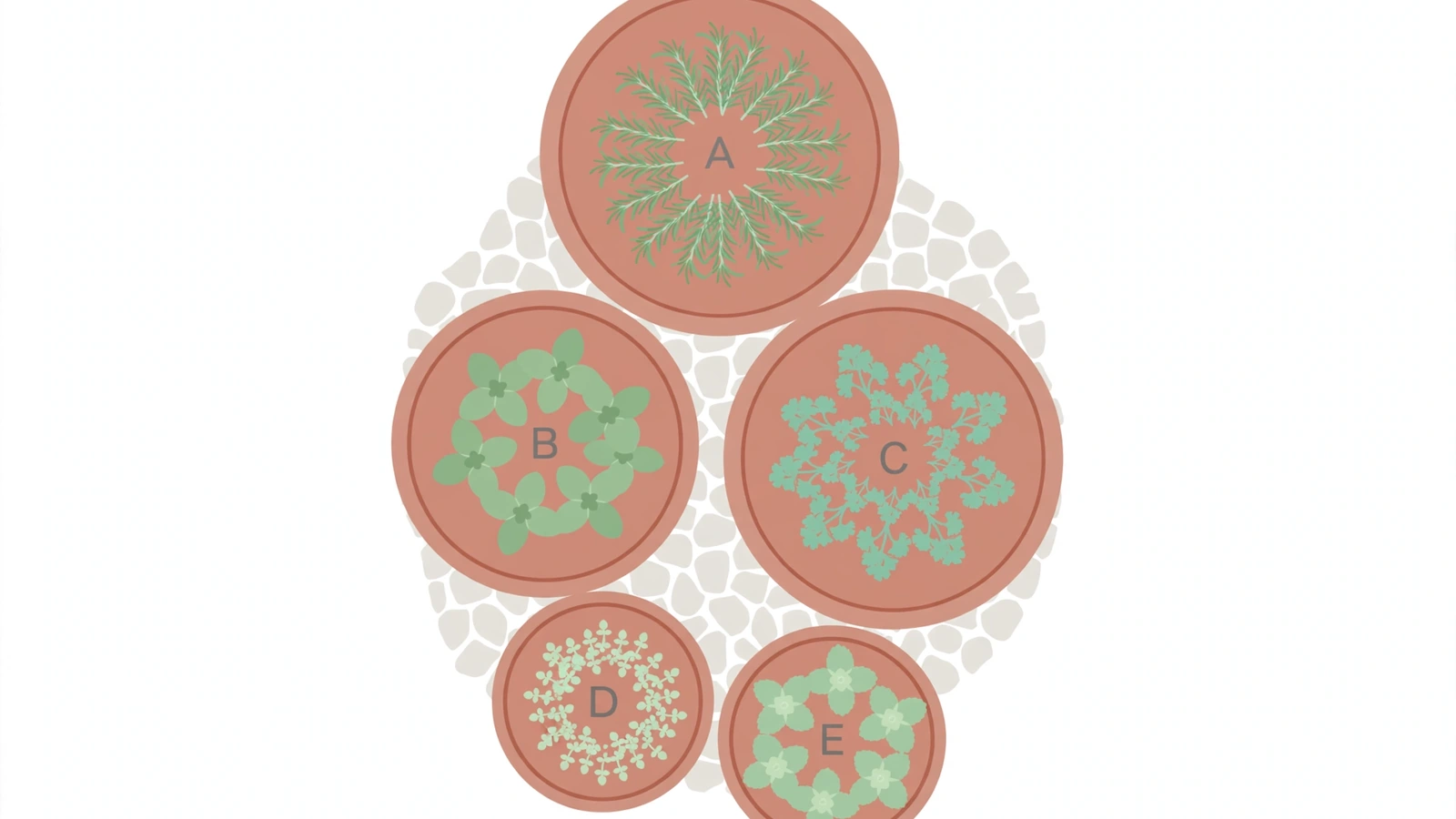
Illustration: overhead diagram of five labeled pots on a patio — rosemary at back, basil and parsley-chives in the middle, thyme-oregano and mint in front.
What to plant: specific varieties
Buy herbs as small transplants (4-inch pots), not seeds — a $4 plant gives you harvests this week; seeds give you harvests in two months. The exception is basil, which germinates fast and grows quickly from seed.
| Pot | Herb | Variety | Notes |
|---|---|---|---|
| A | Rosemary | ‘Tuscan Blue’ (upright) | Perennial in Zones 8+; bring indoors for winter in colder zones |
| B | Basil | ‘Genovese’ | Sow seed directly; pinch flower heads relentlessly |
| C | Parsley | ‘Italian Flat Leaf’ | Biennial — plant fresh each spring; much stronger flavor than curly |
| C | Chives | Common chives | Perennial; snip with scissors, they regrow |
| D | Thyme | ‘English’ | Tiny leaves, big flavor; hates wet feet — the sandiest pot |
| D | Oregano | Greek oregano | The culinary one (Origanum heracleoticum); ornamental types taste like nothing |
| E | Mint | Spearmint | Solo pot, non-negotiable — it will escape anything shared |
One honest warning: that “Italian seasoning” blend in your head needs these exact species. Decorative oregano and curly parsley look nice and taste like lawn.
Containers, soil, and the math
Herbs want drainage over richness — soggy soil kills thyme and rosemary faster than any drought. Use standard potting mix cut with a handful of coarse sand or perlite per pot for the Mediterranean herbs (rosemary, thyme, oregano). Terracotta is the classic choice because it breathes; plastic works fine and waters less often.
Soil volume — 1 gallon = 0.134 cubic feet:
- Pot A (12 in ≈ 2.5 gal): 2.5 × 0.134 = 0.34 cu ft
- Pot B (12 in ≈ 2.5 gal): 0.34 cu ft
- Pot C (12 in ≈ 2.5 gal): 0.34 cu ft
- Pot D (10 in ≈ 1.5 gal): 1.5 × 0.134 = 0.20 cu ft
- Pot E (8 in ≈ 1 gal): 1 × 0.134 = 0.13 cu ft
Total: 1.35 cubic feet. One 1.5-cu-ft bag of potting mix covers it, with a little left over. Add a small bag of perlite ($6) for the Mediterranean pots.
Watering
Here’s where herb gardens die: people water everything the same. Split your pots into two groups:
- Thirsty (basil, parsley, mint, chives): water when the top inch is dry — usually daily in summer.
- Drought-tolerant (rosemary, thyme, oregano): water when the top 2 inches are dry. They’d rather be thirsty than soggy.
Morning watering is best. And the golden rule of herbs: harvest often. Cutting basil weekly makes it bushier; ignoring it makes it flower and turn bitter.
Equipment list
- 3 × 12-inch pots, 1 × 10-inch pot, 1 × 8-inch pot (all with drainage holes + saucers)
- 1.5 cu ft potting mix + small bag of perlite
- 6 herb transplants + 1 packet basil seed
- All-purpose liquid fertilizer (half-strength, monthly — herbs need less than vegetables)
- Small scissors or snips for harvesting
Estimated budget
Typical US retail, September 2026:
| Item | Est. cost |
|---|---|
| 5 pots + saucers (terracotta or plastic) | $35 |
| 1.5 cu ft potting mix | $14 |
| Perlite (small bag) | $6 |
| 6 herb transplants | $24 |
| Basil seed packet | $4 |
| Liquid fertilizer | $10 |
| Harvest snips | $8 |
| Total | ~$101 |
Must buy / Nice to have / Skip
Must buy: pots with drainage, potting mix, the actual culinary varieties (not ornamental lookalikes). A mislabeled oregano is the most common herb-garden disappointment.
Nice to have: a small watering can with a narrow spout (control matters in small pots), plant markers — you’ll forget which thyme is which by August.
Skip: “herb garden kits” with tiny compressed-soil pods (the pots are decorative thimbles), pre-mixed “herb soil” at double the price (potting mix + perlite is the same thing), and growing cilantro in summer heat — it bolts in weeks; sow it in fall or spring instead.
What changes the plan
- You cook mostly Asian food? Swap oregano and thyme for Thai basil, lemongrass (needs a big pot), and more mint. The layout logic is identical.
- Zone 7 or colder? Rosemary won’t survive your winter outdoors. Grow it in the pot, bring it inside before first frost, and put it in your brightest window.
- Only a windowsill? Chives and mint survive indoors; rosemary and basil merely endure. This plan really wants outdoor sun.
- Want to dry herbs? Add a second oregano and thyme — they’re the best dryers. Basil and parsley are best fresh or frozen, not dried.
- Going away for a week? Cluster the thirsty pots (basil, parsley, mint, chives) together in the shade and set them in a shallow tray with an inch of water — a crude wicking bed that buys you 4–5 days. The Mediterranean pots will be fine on their own.
For timing your first planting and succession sowings of basil, check Garden Pulse or build a calendar in Start Seeds.
Related guides and tools
- Container Garden Builder — match pots, plants, and care to your space
- Raised Bed Builder — plan a bed if the herb habit expands
- Start Seeds — sowing dates for basil and parsley by ZIP code
- All garden tools — browse every free tool
- Garden Pulse — what to do in your garden right now
- Garden Inbox — your planting windows, tracked week by week