
This post may contain affiliate links. If you buy through links on this page, we may earn a commission at no extra cost to you.
As an Amazon Associate I earn from qualifying purchases.
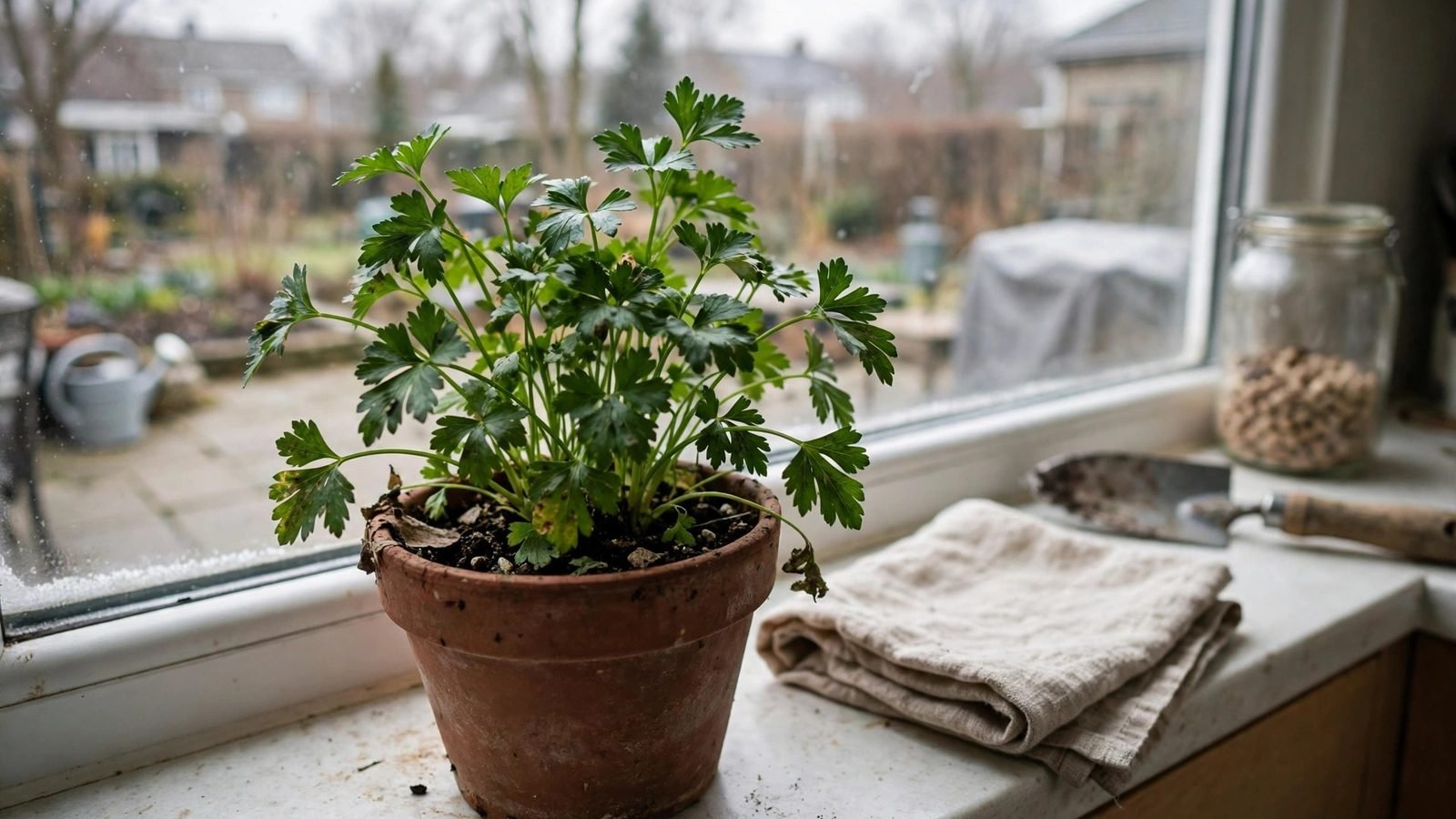
Parsley is a patient herb. It grows slowly from seed, takes weeks to sprout, and then settles into steady growth that can supply a kitchen all winter. A single pot on a bright windowsill gives you fresh leaves for soups, salads, and garnish from January through spring.
The hard part is the start. Parsley seed is slow to germinate, often taking two to four weeks, and many gardeners give up on a pot that looks empty and sow something else over it. Give the seed warmth, steady moisture, and time, and it will come. For the general indoor herb routine, see how to grow herbs indoors in winter.
This guide is research-based, written from published growing guidance and standard herb practice, and it does not claim hands-on trials we did not run. It covers seed starting, pot size, light, watering, feeding, and harvest, plus our own germination-to-first-cut timeline math so you can plan when to sow for winter cutting.
Flat-leaf or curly: pick before you sow
Two types of parsley grow in pots, and they taste different. Flat-leaf parsley, often sold as Italian parsley, has a stronger flavor and flat leaves that chop cleanly, which makes it the better pick for cooking. Curly parsley has a milder flavor and frilled leaves, and it is the classic garnish, though many cooks find it less useful in the pan.
For an indoor winter pot, flat-leaf is the usual pick, since you grow parsley to eat it, not to look at it. Curly parsley grows a little more slowly and stays more compact, which can suit a small pot. Either type grows the same way indoors, so the choice is about flavor and use, not about care. If you are buying seed, this search for flat-leaf parsley seeds shows the usual packet sizes. Buy fresh seed: parsley seed loses its ability to sprout faster than most herb seed, and old seed is the most common reason a sowing fails.
Sowing: slow germination and how to help it along
Sow parsley seed about a quarter inch deep in moist potting mix, then cover the pot with a clear lid or a sheet of plastic wrap to hold moisture in while the seed sprouts. Keep the pot warm, around 65 to 70 degrees, and keep the mix damp but not wet. Germination takes 14 to 28 days, and the first leaves to appear are small and plain, not the divided leaves you know from the store. The true parsley leaves come next, a week or two later.
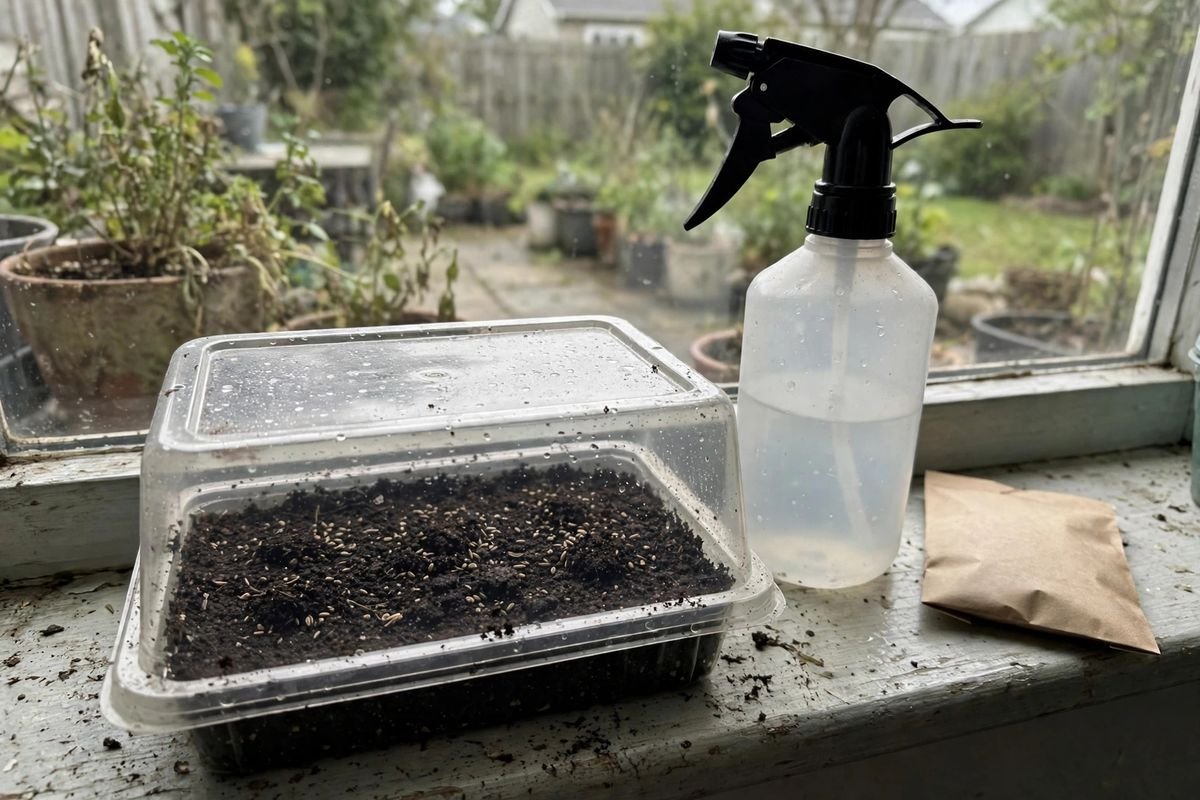
Soaking the seed overnight in lukewarm water before sowing is standard advice in published growing guides, and it can shorten the wait by a few days. The seed coat is hard, and soaking softens it so water reaches the seed inside. Pour off the water, sow the seed the same day, and do not let the soaked seed dry out before it goes into the mix.
Thin the seedlings once they have two sets of true leaves. A pot that starts with twenty seedlings and ends with three plants will give you more parsley than a pot crowded with twenty thin plants fighting for light. Snip the extra seedlings off at soil level with scissors rather than pulling them, which disturbs the roots of the plants you keep.
Pot size: parsley grows a taproot
Parsley grows a taproot, a single thick root that runs straight down, so the pot needs depth more than width. Choose a pot at least 8 inches deep and 8 inches across, with drainage holes in the bottom. A shallow pot gives you a stunted plant with yellow leaves, no matter how much you water and feed it. A deeper pot, 10 inches, is better still if you have the windowsill space for it.
Fill the pot with a free-draining potting mix, the bagged kind sold for containers, not garden soil from outside, which packs down and stays wet in a pot. Plant three seedlings in an 8-inch pot, spaced a few inches apart, so each plant has room to grow without crowding its neighbors. Set the pot on a saucer and empty the saucer after watering, so the roots never sit in water.
A nursery-bought parsley plant is a fair shortcut if you do not want to wait out the slow germination. Buy a healthy plant with bright green leaves and no yellow at the base, and move it into the 8-inch pot at the same depth it grew in its nursery pot. You will be cutting leaves within two to three weeks.
Light: six hours of sun or a grow light
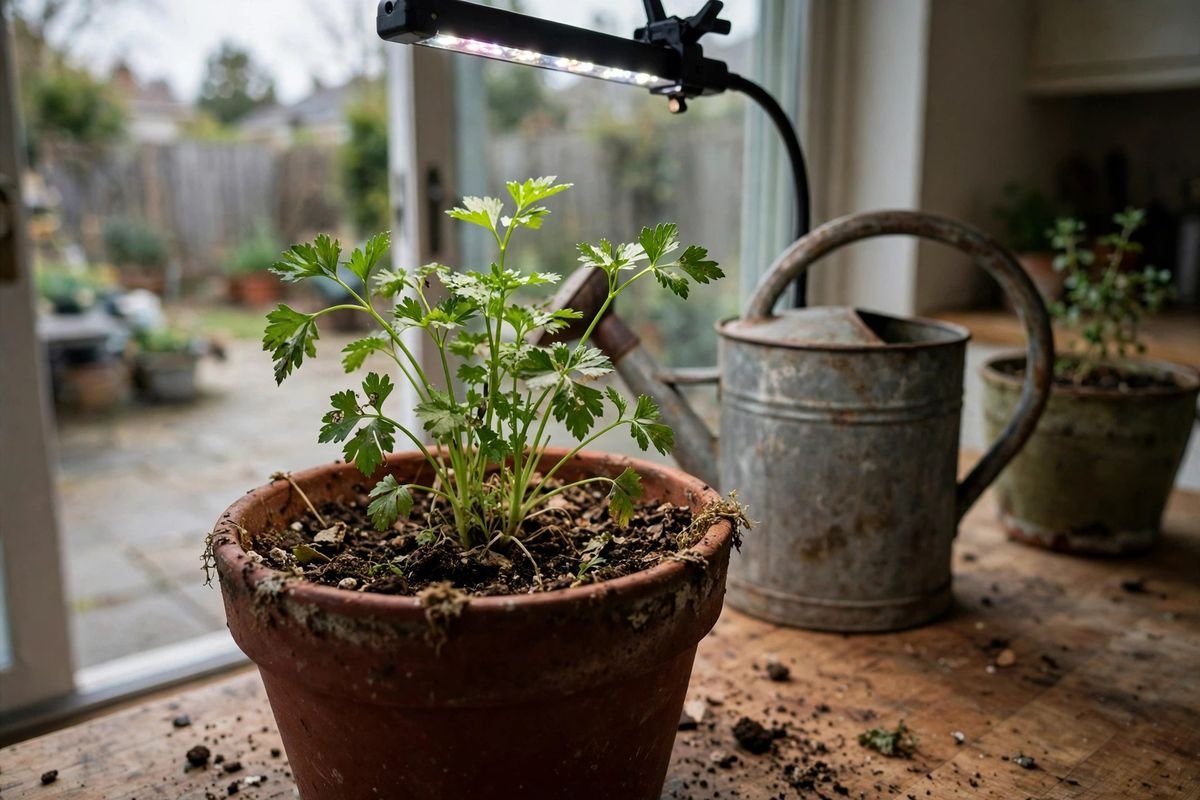
Parsley needs about six hours of direct sun a day, or 12 to 14 hours under a grow light. A south-facing window is the best indoor spot in winter, with a west-facing window as the second choice. Turn the pot a quarter turn every few days so the plant does not lean hard toward the glass. If the stems stretch long and pale with small leaves, the light is too weak, and moving the pot closer to the window will do more than any feed.
A small LED grow light is the fix when no window gives six hours of sun. Hang or clip the light about 6 to 12 inches above the leaves and run it 12 to 14 hours a day on a timer, so the plant gets a steady day length even when the real days are short. If you need one, this search for small LED grow lights for herbs shows the clip-on and bar lights that fit a windowsill. Keep the light close: a light hung two feet above the pot is mostly lighting the ceiling. For a fast herb to grow beside it, see how to grow cilantro, and for a leafy crop that shares the same window, see how to grow lettuce indoors in winter.
Watering and feeding
Water when the top inch of soil feels dry to the touch. In a warm kitchen that is usually once or twice a week; in a cool room, less often. Water until a little runs out of the drainage holes, then empty the saucer. Parsley likes steady moisture, and leaves will wilt fast if the pot dries out, but roots sitting in water will rot, and the first sign is leaves that yellow from the base up.
Feed lightly. A half-strength liquid feed once a month through winter is plenty for a pot that gets cut often. Too much feed grows soft, pale leaves with weak flavor, so skip the feed if the plant is growing well without it. Dry indoor air in winter can brown the leaf edges; a saucer of water with pebbles under the pot raises the humidity a little around the plant.
Harvest: cut the outer stems first
Start cutting once the plant has several stems with full divided leaves, usually when it stands about 6 inches tall. Cut the outer stems first, snipping each stem at the base near the soil, and leave the young leaves in the center to keep growing. Never strip the whole plant at once: leave at least a third of the leaves on the plant after each cut, so it has green leaf left to feed regrowth.
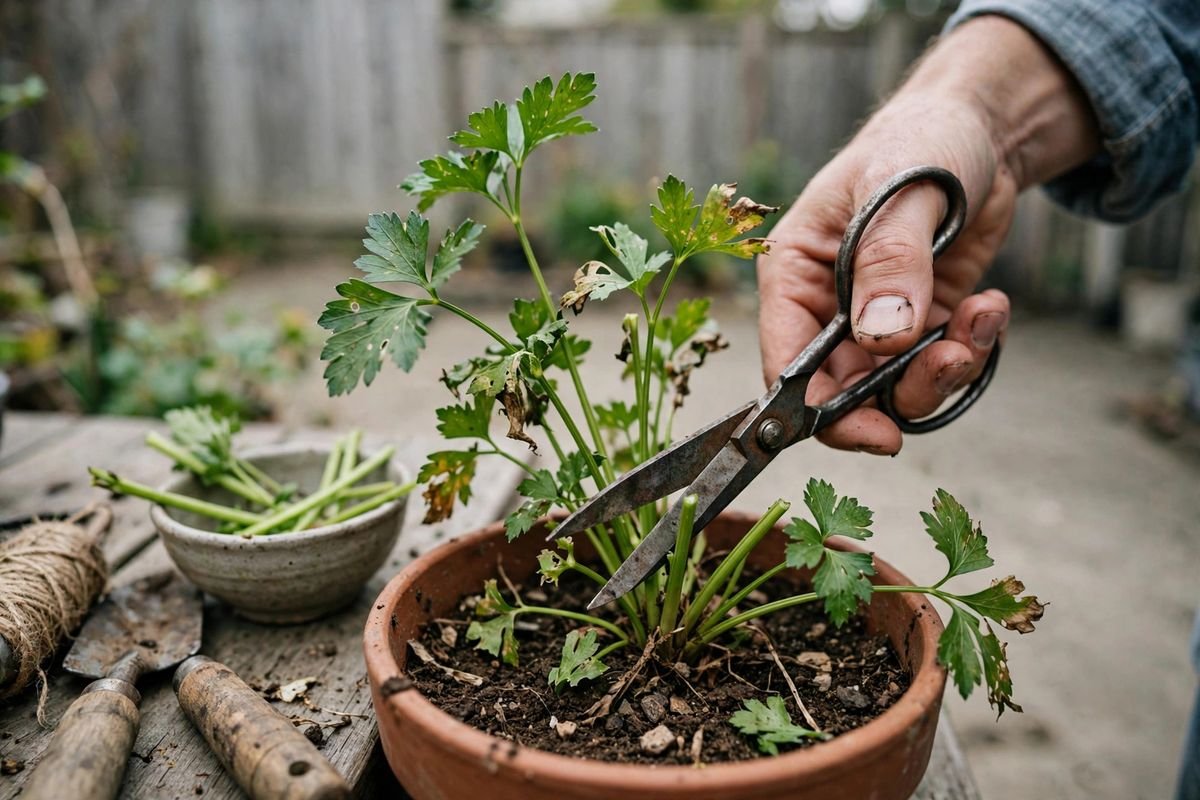
Cut in the morning, when the leaves are firm and full of flavor, and use them the same day. Parsley keeps for a few days in the fridge if you stand the cut stems in a jar of water and slip a bag over the top. For longer storage, chop the leaves and freeze them in an ice cube tray with a little water; frozen parsley suits cooked dishes, where the soft texture after thawing does not matter.
A healthy indoor plant can be cut every week or two through winter. If growth slows, the cause is usually light or a pot that has run out of room. Check the drainage holes: roots poking out of the bottom mean the plant needs a bigger pot or a division into two pots.
Worked example: germination to first cut
The figures below are our own workings from stated assumptions, not measured results. Germination times vary by seed age, temperature, and variety, so treat the numbers as a planning guide, then adjust them to what your own sowing actually does.
The assumptions
You sow on November 1. Germination takes 14 to 28 days; take 21 days as the middle of that range. Seedlings need about 5 more weeks after sprouting to grow true leaves and reach cutting size, about 6 inches tall. Each plant in the pot gives about 8 to 10 outer stems per cut, and a cut stem weighs about 2 to 3 grams of leaves.
The timeline
Sow on November 1. Sprouts appear around November 22, at 21 days. True leaves follow over the next two weeks, and the plants reach cutting size about 5 weeks after sprouting, around December 27. The first cut falls just after Christmas, about 8 weeks after sowing. A nursery plant bought the same week skips the whole wait: planted November 1, it is ready for a light first cut around November 22, about five weeks sooner than seed.
Yield per pot
One 8-inch pot holds three plants. A weekly cut of 8 to 10 stems per plant gives 24 to 30 stems, or roughly 50 to 90 grams of leaves a week at full growth. Over 10 weeks of winter cutting, from late December to early March, that is roughly 500 to 900 grams of parsley from one pot, far more than a household uses fresh each week, so one pot is enough for most kitchens. If your first cut lands later than December 27, the seed was probably old or the pot was too cool, and a fresh sowing with new seed is the faster fix than waiting on the old one.
What the numbers say
Seed is cheap but slow: eight weeks from sowing to first cut is a long wait, so sow in early November if you want parsley for the winter kitchen. A nursery plant costs more but cuts five weeks sooner, which is worth it if you are starting late. Either way, one 8-inch pot is enough for a household, and a second pot is only worth it if you cook with parsley every day.
Troubleshooting indoor parsley
Seeds that never sprout are usually old seed or dry soil. Buy fresh seed, soak it overnight, keep the mix damp under a clear lid, and keep the pot warm. If nothing appears after four weeks, sow again with new seed rather than waiting longer.
Leggy, pale stems mean low light. Move the pot to the brightest window or add a grow light 6 to 12 inches above the leaves. Yellow leaves at the base usually mean wet roots: let the soil dry out more between waterings and check that the drainage holes are not blocked. Small white flies around the pot are usually fungus gnats, which breed in wet soil; let the top inch dry out between waterings and the gnats will fade on their own.
Parsley is a biennial, which means it grows leaves in its first year and flowers in its second. An indoor plant kept through a second year will send up a tall flower stalk and the leaves will turn bitter. Start a fresh pot from seed each autumn and you will always have a first-year plant in leaf.
Frequently asked questions
Can I grow parsley from a bunch bought at the store?
Not reliably. Store bunches are cut stems with no roots, and they will not root in water. Buy seed or a nursery plant with roots instead. A nursery plant is the fastest way to a cutting-size plant indoors.
Flat-leaf or curly parsley for indoors?
Flat-leaf for cooking, curly for garnish. Flat-leaf has the stronger flavor and chops cleanly, so it is the usual pick for a kitchen pot. Curly grows a little more slowly and stays compact. Both grow the same way indoors, with the same light, pot, and watering.
How long before I can cut parsley grown from seed?
About eight weeks from sowing to first cut, with germination taking 14 to 28 days and growth to cutting size taking about five more weeks. Sow in early November for a first cut just after Christmas. A nursery plant cuts about five weeks sooner.
Does parsley need a cold period to grow?
No. Parsley grows fine at normal indoor temperatures, around 60 to 70 degrees, all winter. Cold is not required for leaf growth, and a plant kept in a cold, dark spot will simply stop growing until it warms up again.
Related reading: How to Grow Herbs Indoors in Winter, How to Grow Lettuce Indoors in Winter, How to Grow Cilantro, How to Grow Basil, How to Start a Vegetable Garden
By the Pot and Plot Team