
This post may contain affiliate links. If you buy through links on this page, we may earn a commission at no extra cost to you.
As an Amazon Associate I earn from qualifying purchases.
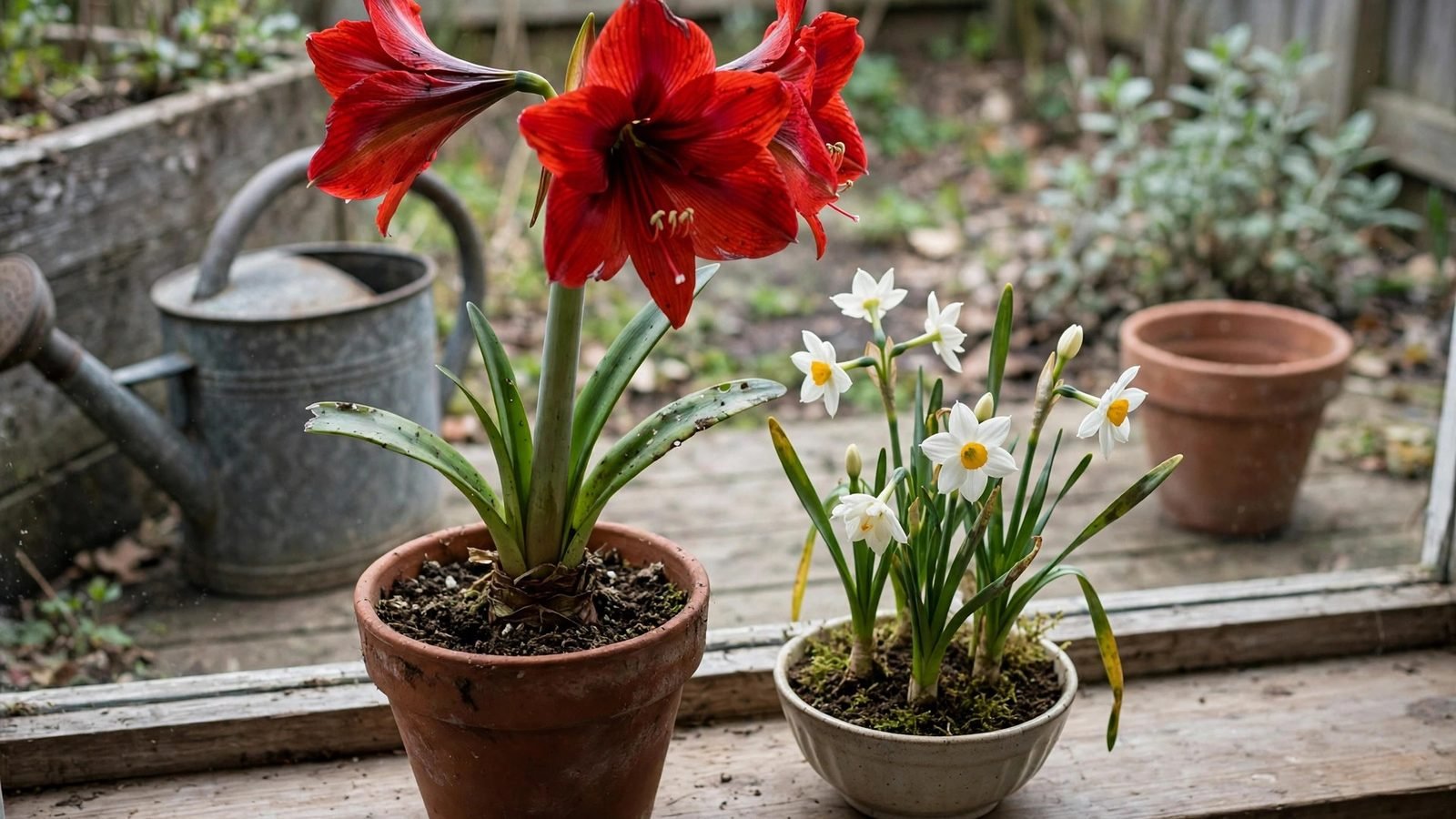
Two bulbs can fill a winter windowsill with flowers, and they ask for very different things in return. Amaryllis grows one or two tall stems topped with large trumpet flowers. Paperwhites grow a cluster of thinner stems carrying small white flowers with a strong scent. Both bloom indoors in midwinter, and neither one needs a cold period before planting, which sets them apart from tulips and hyacinths.
The choice comes down to bloom time, flower size, scent, cost, and what happens after the flowers fade. Amaryllis gives you a few large flowers on a tall stem and a bulb you can keep for another year. Paperwhites give you many small flowers fast and cheap, and the bulb is usually done after one round. Our full forcing guides cover each bulb step by step: how to force amaryllis bulbs indoors and how to force paperwhite bulbs indoors.
We have not run side-by-side forcing trials in our own home, and this guide does not claim otherwise. It compares the two bulbs on published growing guidance and packet numbers, plus our own cost and calendar math, so you can pick the bulb that fits your window, your nose, and your budget.
The two bulbs at a glance
| Amaryllis | Paperwhites | |
|---|---|---|
| Chilling needs | None; plant straight from the bag | None; plant straight from the bag |
| Time to bloom | About 6 to 8 weeks after planting | About 3 to 5 weeks after planting |
| Flower size | Large trumpets, about 6 to 8 inches across | Small star flowers, about 1 inch across, in clusters |
| Scent | Light or none on most varieties | Strong and sweet; too much for some rooms |
| Cost per bulb | Higher; one large bulb per pot | Lower; sold by the dozen for the price of one amaryllis |
| Effort | Plant, water, stake the tall stem | Plant, water, prop stems that flop |
| Rebloom | Yes, with a year of leaf growth after bloom | Almost never indoors; bulbs are usually composted |
| Best for | A single showy pot and a gift that lasts | Fast color, classrooms, and filling a wide windowsill |
Amaryllis: one tall stem, large flowers
An amaryllis bulb is the size of a small onion, and it carries everything the plant needs for its first bloom. Plant it in a pot just a little wider than the bulb, with the top third of the bulb above the soil line, then water once and set the pot in a warm, bright spot. Roots form first, then a thick stem rises fast, sometimes an inch a day once it gets going. Expect bloom about 6 to 8 weeks after planting, so a bulb planted in early November flowers around Christmas.
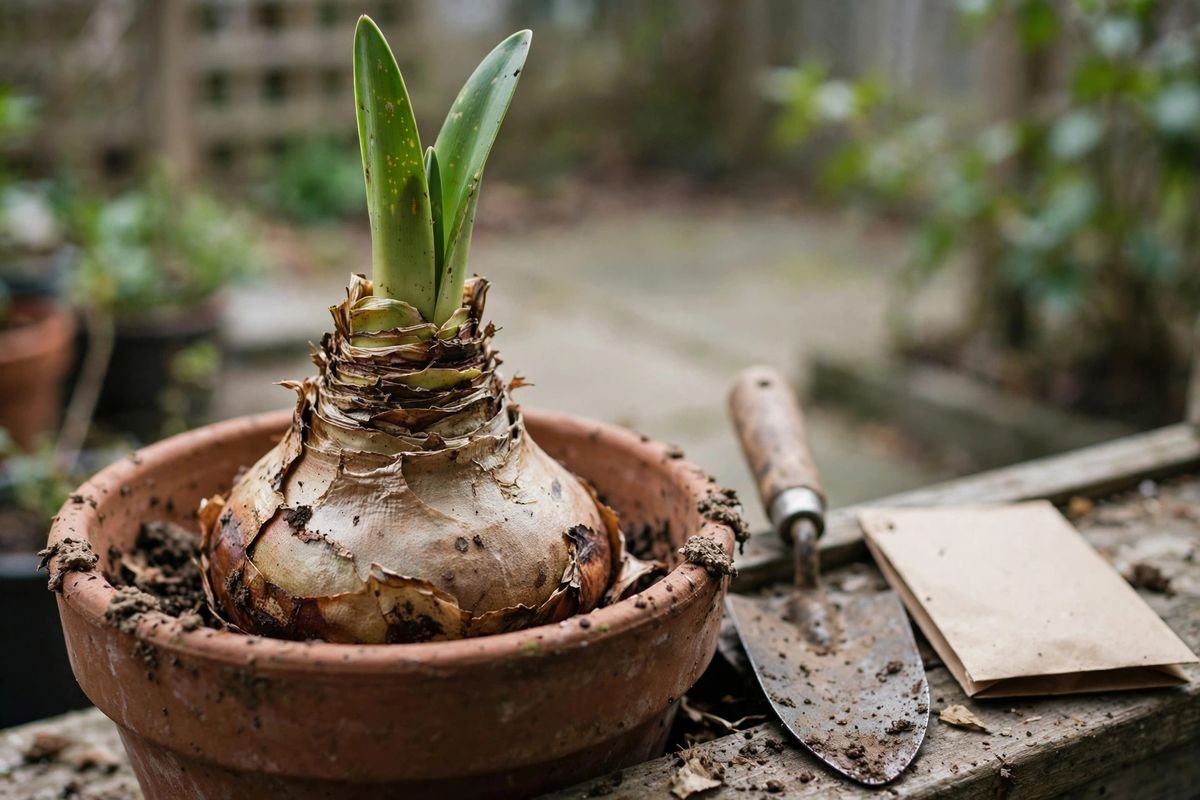
Most bulbs send up two stems, each carrying three or four flowers that open over a week or two. The flowers last longer in a cool room than in a warm one, and a tall stem often needs a slim bamboo stake tied loosely with twine, since the heavy flowers can tip the pot. If you are shopping for bulbs, this search for amaryllis bulbs for indoor forcing shows the range of colors and bulb sizes on offer. Choose a firm, heavy bulb with no soft spots or mold.
Pros of amaryllis
The flowers are the largest of any common forced bulb, and they open in red, pink, white, and striped forms that read clearly from across a room. No chilling period means you can plant on any date you like and count forward 6 to 8 weeks to bloom. One bulb fills a pot on its own, so a single pot makes a finished gift with no extra planting. After bloom, the bulb can be kept growing as a houseplant, fed through spring and summer, and brought back into bloom another year.
Cons of amaryllis
One bulb gives you one or two stems, so the flower count is low even though each flower is large. The stem grows tall and top-heavy, and an unstaked plant can flop or pull its pot over. Bulbs cost more than paperwhites, so filling a wide windowsill with amaryllis gets pricey fast. Rebloom takes patience: the leaves must grow for months after flowering to feed the bulb, and a bulb that is forced again too soon may bloom weakly or skip a year.
Paperwhites: many small flowers, fast
Paperwhites are a tender type of narcissus, and they are the fastest bulb to force. Plant them shallow in soil or set them in a bowl of pebbles with water just touching the base of the bulb, then keep them in a cool, bright spot. Roots form in days, stems follow, and flowers open about 3 to 5 weeks after planting. A bulb planted in late November flowers in time for Christmas with room to spare.
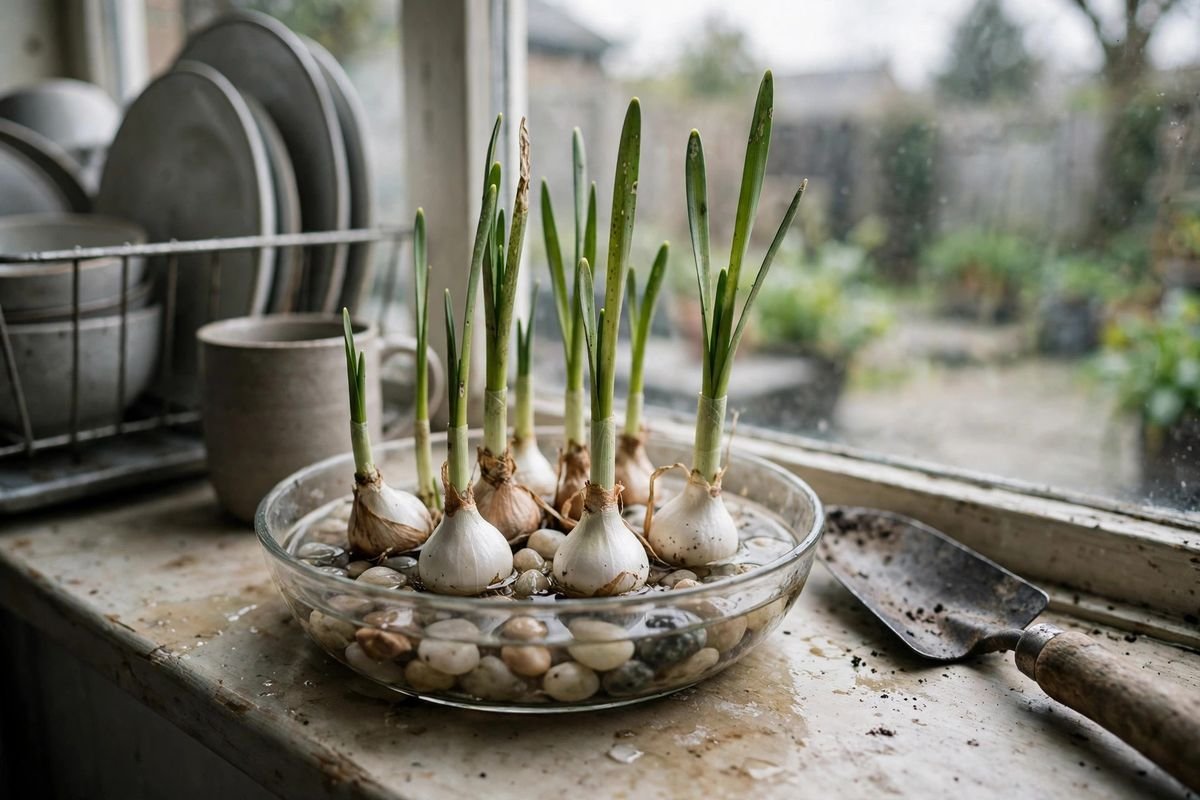
Each bulb sends up several stems, and each stem carries a cluster of small white flowers. The scent is strong and sweet, and in a small room one bowl can perfume the whole space. Some people love it; others move the bowl to a hallway or a larger room. If you need a bag of bulbs, this search for paperwhite bulbs for forcing shows the usual bag sizes. Pick firm bulbs with no mold, and plant them the same week you buy them.
Stems often grow tall and flop under the weight of the flowers, which is the most common complaint with paperwhites. Published guidance from Cornell Extension describes watering with a weak alcohol solution, about 4 to 5 percent, once roots form, which keeps stems shorter and sturdier without harming the flowers. A simpler fix is to keep the bulbs in a cool spot, around 60 degrees, and give them as much light as you can, which also keeps growth compact.
Pros of paperwhites
Paperwhites bloom faster than any other forced bulb, about 3 to 5 weeks from planting, so a late start still gives you flowers for the holidays. Bulbs are cheap, often sold by the dozen, so one bag fills several bowls or one wide planter. They grow in pebbles and water with no soil at all, which makes them a clean choice for a kitchen counter or a classroom. One bulb gives several stems and dozens of small flowers, so the display looks full from the day the first buds open.
Cons of paperwhites
The scent divides people: in a small room it can feel overpowering, and there is no unscented paperwhite. Stems flop unless you keep the bulbs cool and bright or use the alcohol-water method. The flowers last about a week to ten days, a shorter show than amaryllis. And the bulbs do not rebloom indoors in any practical way; once the flowers fade, most gardeners compost them and buy fresh bulbs next year.
Worked example: cost per flower and a bloom calendar
The figures below are our own workings from stated assumptions, not store prices or lab measurements. Prices vary by seller and season, so treat the numbers as a way to compare the two bulbs, then redo the math with the prices on the listings you actually buy from.
The assumptions
One amaryllis bulb costs $12 in this example and opens 6 flowers across two stems. One bag of 12 paperwhite bulbs costs $18, which is $1.50 per bulb, and each paperwhite bulb opens about 20 small flowers. Both bulbs are planted on November 15. Amaryllis takes 7 weeks to bloom in this example; paperwhites take 4 weeks.
Cost per flower
Divide bulb cost by flower count. Amaryllis: $12 divided by 6 flowers gives $2.00 per flower. Paperwhites: $1.50 divided by 20 flowers gives about $0.08 per flower. By this math, one amaryllis flower costs about the same as 25 paperwhite flowers. The comparison is not quite fair, since an amaryllis flower is far larger and lasts longer, but it shows why paperwhites are the cheap way to fill a room with bloom.
The bloom calendar
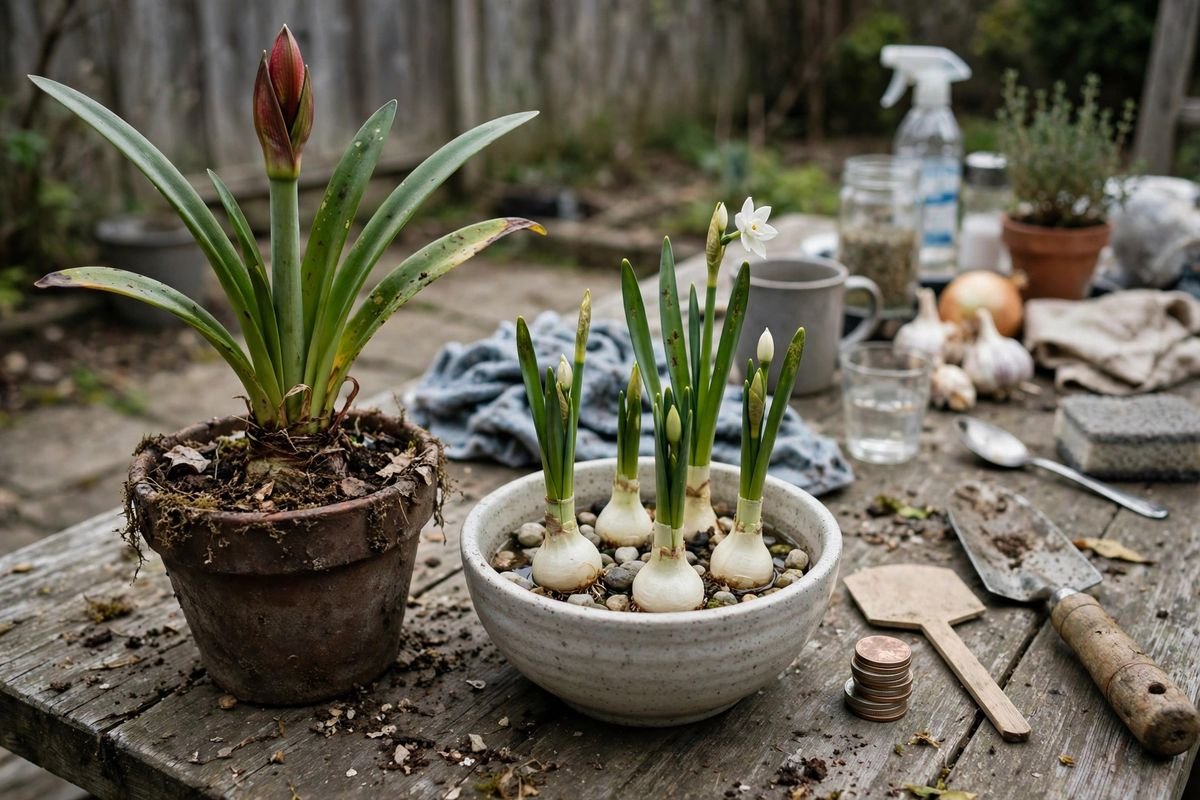
Plant both bulbs on November 15. Paperwhites bloom about 4 weeks later, around December 13, and the flowers last about 10 days, so the show runs to about December 23. Amaryllis blooms about 7 weeks later, around January 3, and its flowers last about two weeks, into mid-January. Planted on the same day, the two bulbs barely overlap. To get both in bloom at Christmas, plant the amaryllis around November 1 and the paperwhites around November 25. Staggering the planting dates by three to four weeks lines the two bloom windows up.
What the numbers say
Paperwhites win on speed and on cost per flower, and they are the better pick when you need a lot of bloom for little money. Amaryllis wins on flower size, bloom length per flower, and the chance to keep the bulb for another year. If you want flowers at Christmas and you are starting in late November, paperwhites are the only one of the two that can still make it.
Scent, pets, and aftercare
Scent is the one difference you cannot see in a photo. Paperwhite scent fills a room, so try one bowl before you plant five. Amaryllis scent is light, and many varieties have almost none, which makes amaryllis the safer pick for a bedroom or a small flat. Both bulbs are toxic to cats and dogs if eaten, so keep pots out of reach of pets that chew plants, and keep spare bulbs in a closed box rather than an open bowl on the floor.
After bloom, the two bulbs part ways. Keep an amaryllis growing as a houseplant: cut the flower stalk after the flowers fade, leave the leaves, water when the top inch of soil dries, and feed lightly through spring and summer. The leaves feed the bulb for next year. Paperwhites have no such second act indoors. Once the flowers fade, cut the stems, compost the bulbs, and start fresh next winter. For a third forced bulb to compare, our guide to how to force hyacinth bulbs indoors covers a bulb that does need a chilling period, which is the part amaryllis and paperwhites skip.
The verdict
Choose amaryllis if you want a few large flowers, a long bloom per flower, little or no scent, and a bulb you can keep and rebloom. It is the better pick for a gift pot, a dining table, a bedroom, and anyone who likes to tend one plant through the year.
Choose paperwhites if you want fast flowers, a lot of bloom for little money, and a no-soil display for a kitchen counter or classroom. It is the better pick for holiday timing on a late start, for filling a wide windowsill, and for anyone who does not mind a strong scent and a one-season bulb.
Many gardeners grow both: paperwhites for early December color, amaryllis for the weeks after Christmas. Plant the amaryllis first and the paperwhites three to four weeks later, and the two bloom windows meet in the middle.
Frequently asked questions
Do amaryllis bulbs need a chilling period before forcing?
No. Amaryllis bulbs sold for forcing have already had any cold treatment they need, and they bloom about 6 to 8 weeks after planting at room temperature. The same is true of paperwhites. Bulbs that do need chilling, such as tulips and hyacinths, say so on the packet.
Can paperwhite bulbs rebloom next year?
Almost never indoors. A forced paperwhite bulb uses up its stored energy on one flush of flowers, and it does not rebuild enough strength in a pot to bloom again. In mild-winter areas some gardeners plant spent paperwhites outside, but in cold-winter areas the usual end is the compost bin.
Why do my paperwhites fall over?
Warmth and low light make stems grow tall and weak. Keep the bulbs in a cool spot, around 60 degrees, with as much light as you can give them. Published guidance from Cornell Extension also describes watering with a weak alcohol solution, about 4 to 5 percent, once roots form, which keeps stems shorter. Staking with thin bamboo sticks works as a last resort.
How do I keep an amaryllis bulb for next year?
Cut the flower stalk after bloom, leave the leaves, and treat the plant like a houseplant: bright light, water when the top inch of soil dries, and light feeding through spring and summer. The leaves feed the bulb. In late summer, stop watering, let the leaves dry, and rest the bulb in a cool, dark spot for about eight weeks before planting it again.
Sources and further reading
Related reading: How to Force Amaryllis Bulbs Indoors, How to Force Paperwhite Bulbs Indoors, How to Force Hyacinth Bulbs Indoors, What to Plant in December
By the Pot and Plot Team