
This post may contain affiliate links. If you buy through links on this page, we may earn a commission at no extra cost to you.
As an Amazon Associate I earn from qualifying purchases.
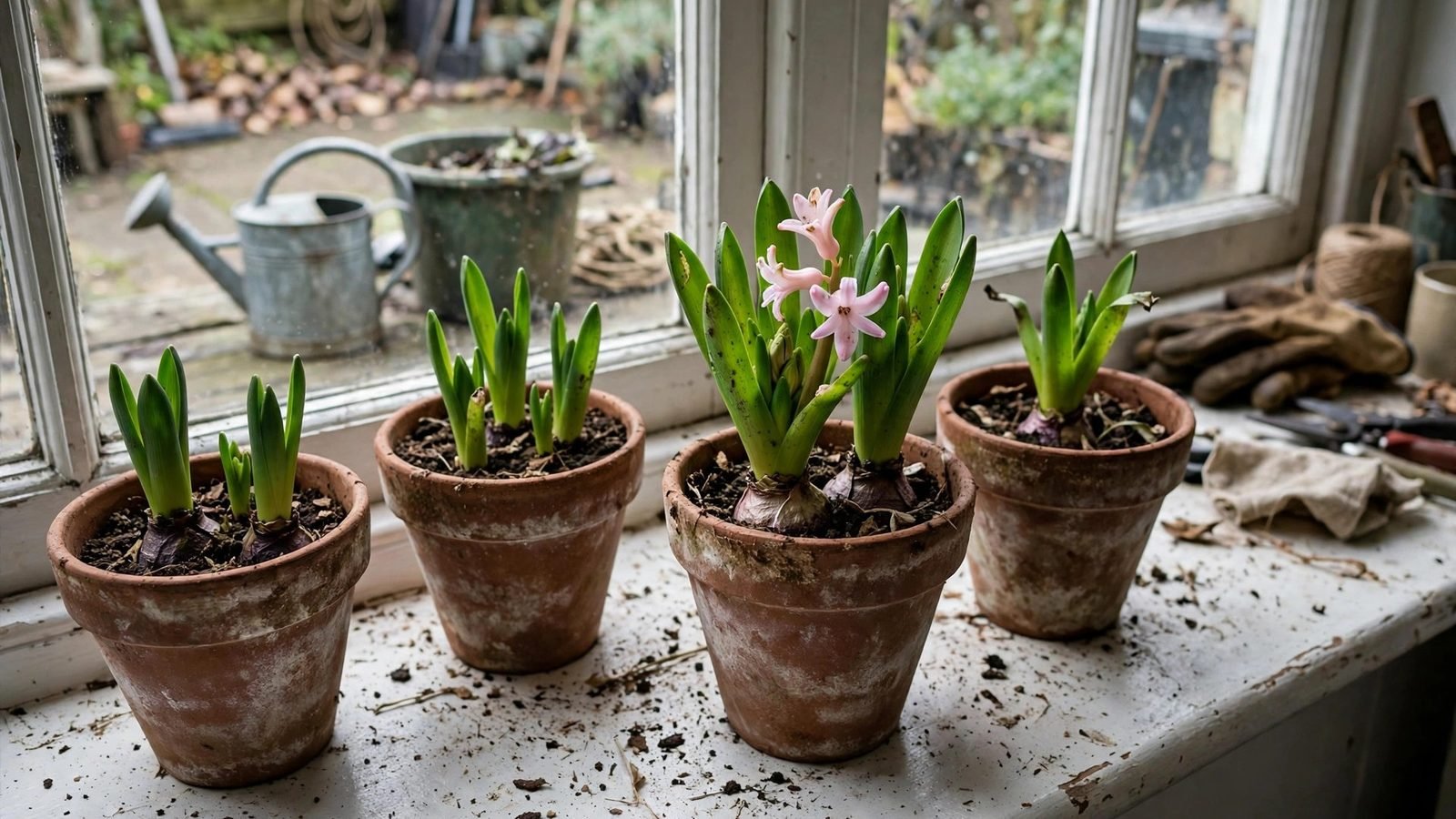
A hyacinth in bloom in February smells like spring arrived. The flowers are dense and the scent fills a room, and the whole display comes from a bulb that spent the fall in the cold. Forcing hyacinths indoors is simple, but timing is strict: the bulb needs 12 to 14 weeks of cold before it will flower, and no warmth or water makes up for a short chill.
This guide walks through the full process, from buying bulbs to aftercare, and it includes a worked calendar that counts back from a February 14 bloom date, so you can run the same math for any date you want flowers. For a bulb that skips the chill entirely, see our guide on how to force paperwhite bulbs indoors.
What forcing a hyacinth means
Forcing is the name for making a spring bulb bloom indoors, ahead of its outdoor season. A hyacinth bulb holds a flower bud that formed during the summer, but that bud only opens after the bulb has been through a long cold period, the same cold it would get in the ground over winter. Indoors, the gardener supplies that cold in a refrigerator, an unheated garage, or a cold frame, then moves the potted bulb into a warm, bright room.
The chill runs 12 to 14 weeks, and the warm forcing stage runs 2 to 3 weeks after that, for a total of about 15 to 17 weeks from cold to flowers. That length is why the calendar matters most: a bulb started in mid-November will not bloom for Valentine’s Day, and the worked example below shows why.
Choosing bulbs for forcing
Start with the largest, firmest hyacinth bulbs you can find. A big bulb holds more stored food, which becomes a taller flower spike with more florets. Squeeze each bulb before you buy it: it should feel solid, with no soft spots, no mold, and no long pale shoots. A dry, papery outer skin and a firm base plate mean it is in good shape.
Most hyacinth varieties force well. Shorter varieties flop less once the spike opens, while tall ones may need a stake. Pink, white, blue, and purple all force the same way, so pick the color you want on the windowsill.
Ordinary hyacinth bulbs need the full 12 to 14 weeks of cold. Pre-chilled bulbs, sometimes sold as “prepared” bulbs, have already had part of that cold treatment at the grower, and the package gives a shorter chilling time, often 8 to 10 weeks. Follow the package directions for those bulbs rather than the numbers in this guide. If you want to browse bulbs, you can search hyacinth bulbs for forcing on Amazon. We have not tested the products linked here, and we give no current store prices. Check each listing for current bulb counts and sizes.
Buy bulbs in fall, as soon as they appear in stores, because the best sizes sell out early. A 6-inch pot holds three hyacinth bulbs, and a 10-inch pot holds five or six. Pot a second batch two weeks after the first so the flowers follow in sequence.
The chilling step: 12 to 14 weeks of cold
The chill decides whether the project works. Hyacinth bulbs need 35 to 48 degrees Fahrenheit for 12 to 14 weeks, and university extension guides advise holding that range the whole time. Above 48 degrees the cold does not count, and a bulb that gets too little cold often sends up a short spike that opens while still tucked inside the leaves.
The refrigerator is the easiest cold spot in most homes. Put the potted bulbs in the fridge, or loose bulbs in a paper bag, and leave them alone for the full chill. A paper bag keeps the bulbs dark and lets air move around them, which keeps mold from starting. Do not store bulbs in a sealed plastic bag, because trapped damp air invites rot. Keep ripening fruit, especially apples, out of the same fridge: fruit gives off ethylene gas, which can damage the flower bud inside the bulb.
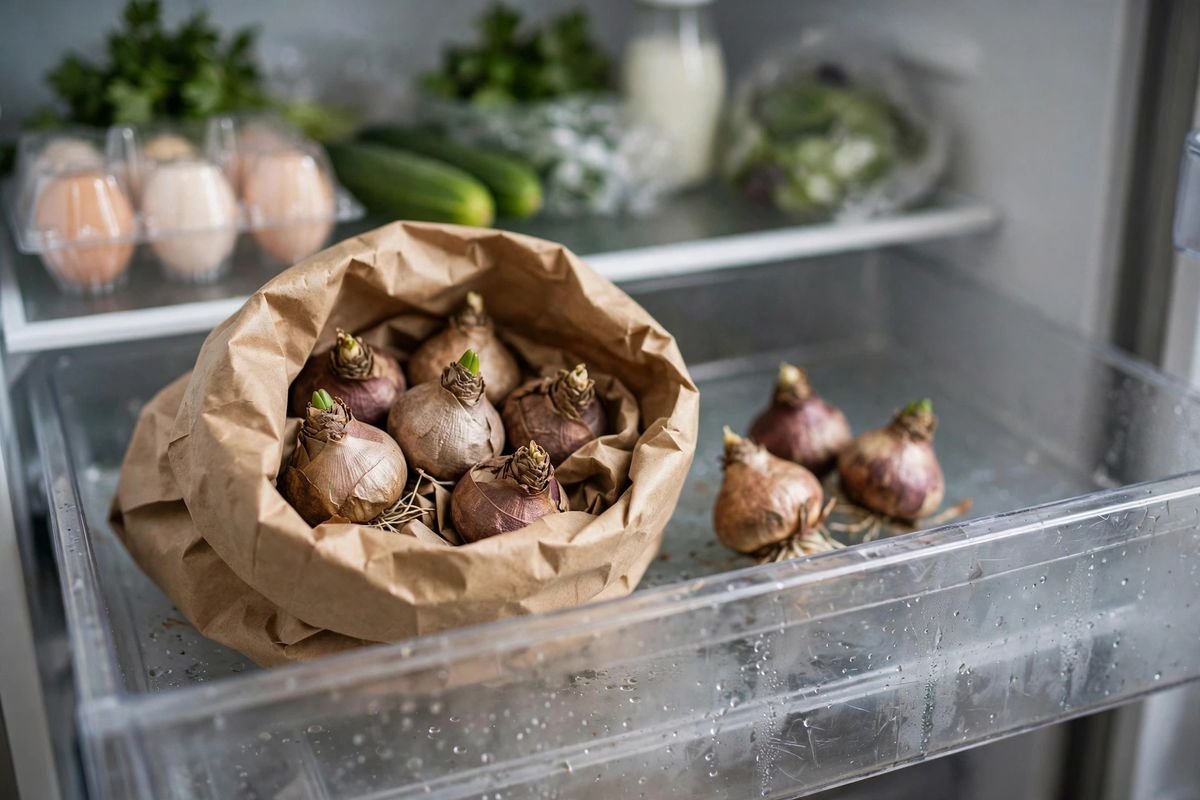
An unheated garage, a cold basement, or a cold frame also works if the temperature stays in the 35 to 48 degree range and the bulbs never freeze. Skip a garage that swings from freezing at night to 60 degrees on sunny afternoons, because warm spells break the chill.
Water the potted bulbs lightly when they go into the cold, just enough to dampen the mix, and check once a month. The mix should stay barely damp: wet mix rots the bulb, and dry mix shrivels it. A light watering every three to four weeks is usually enough in a cold spot.
Longer than 14 weeks is fine, and most bulbs tolerate extra chilling time, so a pot that sits in the fridge for 16 weeks will still flower. Shorter than 12 weeks is the mistake to avoid. When in doubt, add a week to the chill rather than taking one away.
Potting the bulbs
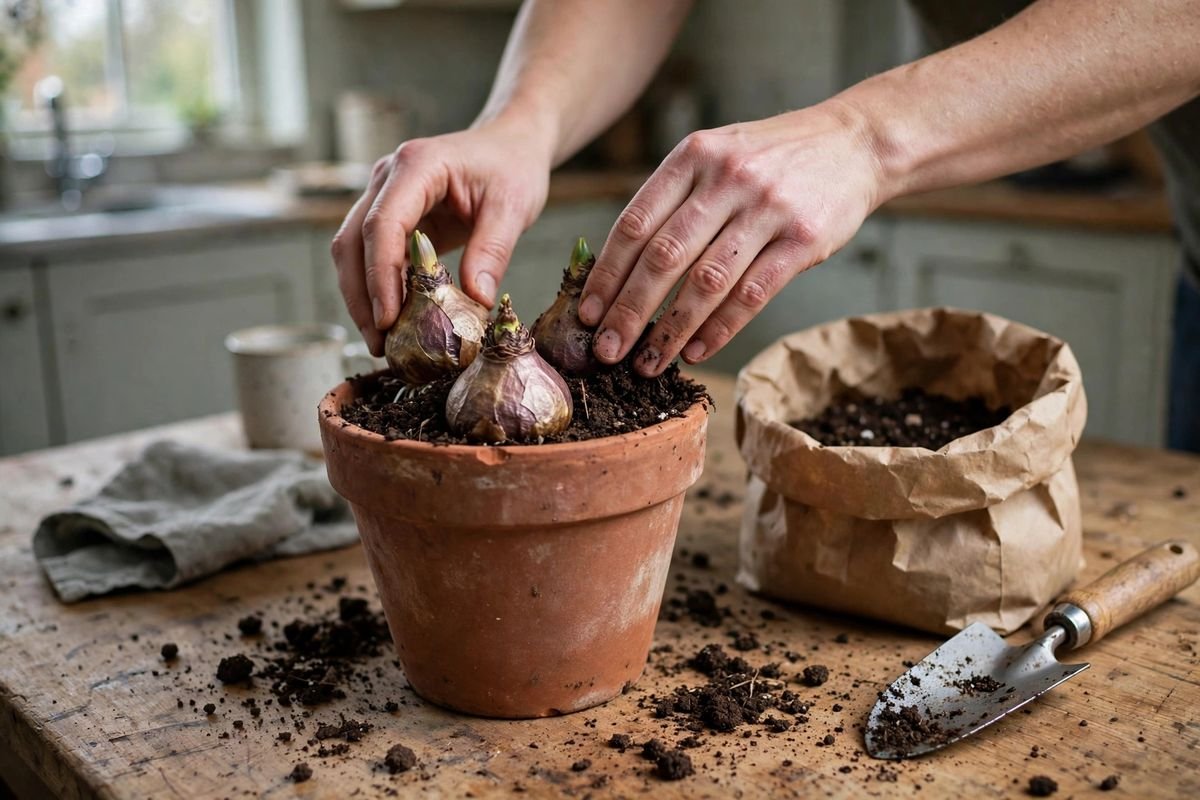
Pot the bulbs before the chill starts, because they grow roots during the cold period, and those roots support the flower spike later. Use a pot with drainage holes and a loose potting mix that drains well. Bagged potting mix works; garden soil is too heavy and holds too much water in a pot.
Set the bulbs pointed end up and flat base plate down, close together but not touching. Three fit a 6-inch pot, with the tips just at or slightly above the mix surface and only the lower two-thirds buried. Fill mix in around them and water until water runs out of the drainage holes.
Our worked example: counting back from February 14
Here is the chilling calendar for a gardener who wants hyacinth flowers open on February 14. These are our own computed numbers, with the assumptions stated in the table: the chill lasts 13 weeks, and the warm forcing stage lasts 3 weeks. Count the forcing stage back from the bloom date first, then count the chill back from that date.
| Step | Length | Dates |
|---|---|---|
| Start the chill | Day 1 | October 25 |
| Cold period, 35 to 48 degrees | 13 weeks | October 25 to January 24 |
| Bring pots into a cool, bright room | Day 1 of forcing | January 24 |
| Warm forcing, 50 to 65 degrees | 3 weeks | January 24 to February 14 |
| Flowers open | Target date | February 14 |
The table shows why a bulb started on November 17 cannot bloom on February 14. November 17 to February 14 is 89 days, about 12 weeks and 5 days, which is shorter than the 13-week chill plus the 3-week forcing stage combined. Here is what a November 17 start actually gives, using the same 13-week chill and 3-week forcing stage:
| Step | Length | Dates |
|---|---|---|
| Start the chill | Day 1 | November 17 |
| Cold period, 35 to 48 degrees | 13 weeks | November 17 to February 16 |
| Bring pots into a cool, bright room | Day 1 of forcing | February 16 |
| Warm forcing, 50 to 65 degrees | 3 weeks | February 16 to March 9 |
| Flowers open | Target date | March 9 |
A November 17 start gives flowers around March 9. Pot a second batch two weeks later, on December 1, and its flowers will open around March 23. Three pots started two weeks apart flower from early March into early April.
To run the same math for your own date, count back 3 weeks from the day you want flowers to find the day the pots come out of the cold, then count back 13 weeks from that day to find the day the bulbs go into the cold. If that start date falls before you bought the bulbs, buy pre-chilled bulbs and follow the shorter chill on the package, or pick a later date.
Forcing in soil or in water
Most hyacinths are forced in soil, and soil is the more forgiving method. The mix holds the bulb steady, keeps the roots damp, and gives the plant something to draw on while the flower spike grows. A pot is also easier to move to a cool spot at night to stretch the bloom.
Water forcing uses a special glass vase with a narrow waist that holds the bulb above the water while the roots grow down into it. Set the bulb in the top of the vase with the base just above the water line, and keep the vase in a cool, dark place for the same 12 to 14 week chill. Top up the water as it drops, change it every week or two, and move the vase to a bright window once roots fill the lower half and a shoot rises.
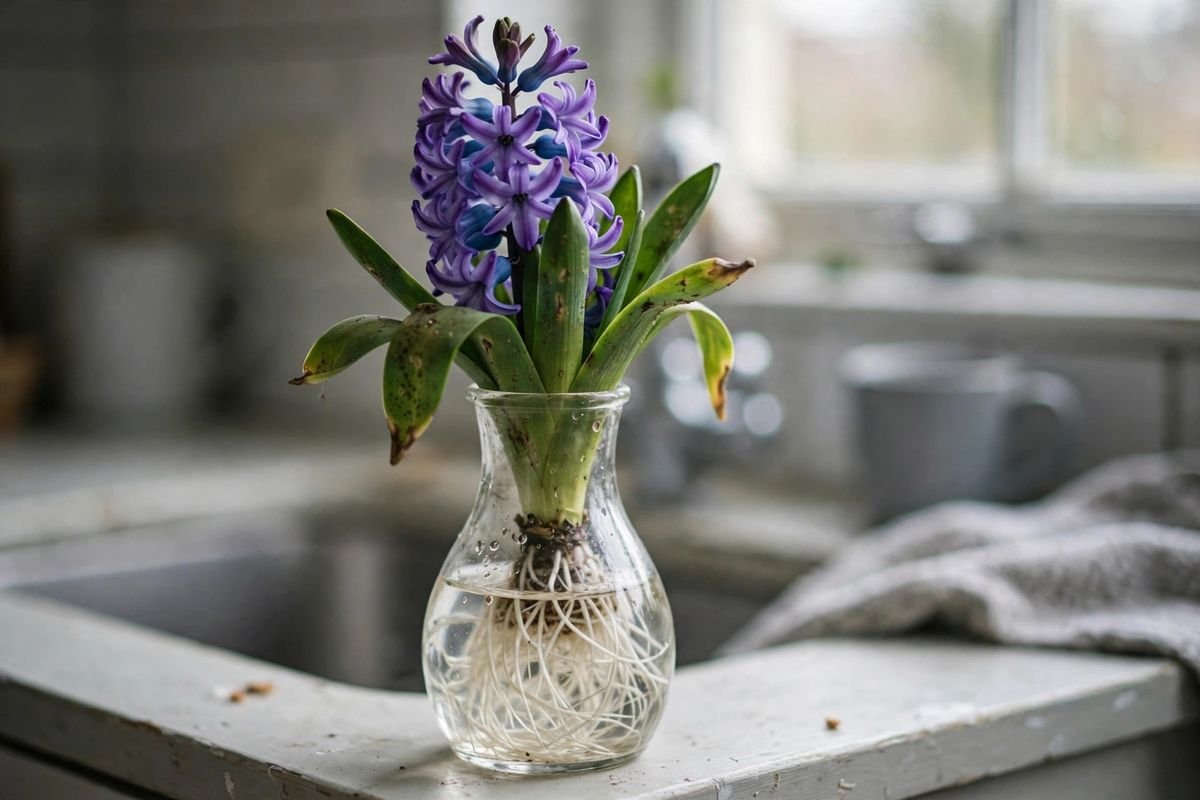
If you want a forcing vase, you can browse hyacinth forcing vases on Amazon. We have not tested the products linked here, and we give no current store prices. For a bulb that also forces in water and skips the chill, see our guide on how to force paperwhite bulbs indoors.
Bringing pots into warmth and caring for the bloom
When the chill ends, check the bottom of the pot. Roots should show through the drainage holes, and yellow-green shoots should rise from the bulbs. If the shoots are already 2 to 3 inches tall, the pot is ready; with no roots yet, give it another week or two in the cold.
Move the pot into a cool, bright room first, at 50 to 60 degrees, for the first week, so the flower spike does not stretch too fast and go leggy. After the leaves have opened and the spike is rising, move the pot to a bright windowsill out of direct sun at 60 to 65 degrees. Warmer rooms push the flowers open fast and cut the bloom short, so a cool room gives the longest display.
Water when the top inch of mix feels dry, until a little runs out of the drainage holes, then empty the saucer so the pot does not sit in water. Indoor air in winter is dry, and a hyacinth in bloom loses water fast through its leaves. For more on keeping indoor plants watered through the dry months, see our guide on how to water indoor plants in winter, and for dry air, see our guide on how to raise humidity for houseplants in winter.
Turn the pot a quarter turn every two or three days so the spike grows straight instead of leaning toward the window. A spike that leans far enough will flop, and a thin bamboo stake tied loosely to the stem is the fix. Move the pot to a cool spot each night, if you have one, to stretch the bloom a few days longer. A hyacinth in bloom usually lasts 2 to 3 weeks.
After the flowers fade
Once the flowers fade, cut the flower spike off at the base and keep watering the leaves for a few weeks, while they feed the bulb and rebuild its stores. When the leaves turn yellow on their own, stop watering and let the foliage dry down.
Most forced hyacinth bulbs will not flower well again, and extension guides generally advise discarding them after flowering, because the bulb has spent its stored food on one early bloom. The exception is a bulb forced in soil: plant it in the garden in spring, let the leaves feed it through the summer, and it may flower again in two or three years, though often with a smaller spike. Bulbs forced in water are spent and go on the compost pile.
For the same dry, cool, labeled storage habits that keep planting stock in good shape through the cold months, see our guide on how to store seeds over winter, and for fresh green leaves on the windowsill, see our guide on how to grow herbs indoors in winter.
Troubleshooting
The flower spike is short and opens inside the leaves
A short spike that blooms while still tucked in the leaves got too little cold, or it came into a warm room too fast. Give the full 12 to 14 weeks of chill, and start the forcing stage in a cool room at 50 to 60 degrees. A paper cone over the plant for a few days can draw the spike up, but the flower stays shorter than a properly chilled bulb gives.
The bulb is soft or moldy in the pot
A soft, moldy bulb sat in wet mix during the chill: the mix was too wet, the pot had no drainage, or the bulb was stored in a sealed bag that trapped damp air. Remove the bad bulb and let the mix dry out. Start with firm, healthy bulbs, a pot with drainage holes, and a paper bag rather than plastic for storage.
The flower spike leans and flops over
A leaning spike grew toward the light and got top-heavy once the flowers opened. Turn the pot every two or three days, keep the plant in a cool room so the stem stays short and sturdy, and tie a leaning spike loosely to a thin bamboo stake. Shorter varieties flop less, so pick those next time.
Frequently asked questions
Can I force hyacinth bulbs without chilling them?
No, unless the bulbs are sold as pre-chilled. Ordinary hyacinth bulbs need 12 to 14 weeks at 35 to 48 degrees before they will flower properly. Without the chill, the bulb may send up leaves but no flower, or a short spike that opens inside the leaves. Paperwhites and amaryllis flower with no chill.
How long do forced hyacinths bloom?
A hyacinth in bloom usually lasts 2 to 3 weeks. A cool room, around 60 to 65 degrees, stretches the bloom, and moving the pot to a cool spot at night adds a few more days. Warm rooms cut the display short.
Can I plant forced hyacinth bulbs outside after they bloom?
Yes, if they were forced in soil. Cut off the spent spike, keep watering the leaves until they yellow, then plant the bulb in the garden in spring. It may take two or three years to flower again, and the spike is often smaller. Bulbs forced in water are spent and should be composted.
Sources and further reading
- University of Illinois Extension, Bringing Spring Indoors: How to Force Bulbs to Bloom in Winter
- Virginia Cooperative Extension, Fooling Mother Nature: Forcing Flower Bulbs for Indoor Bloom
- University of Minnesota Extension, Forcing Bulbs for Indoor Beauty in Winter
- Washington State University Extension, Forcing Bulbs
Related reading: How to Force Amaryllis Bulbs Indoors, How to Force Paperwhite Bulbs Indoors, How to Water Indoor Plants in Winter, How to Grow Herbs Indoors in Winter, How to Grow Lettuce Indoors in Winter
By the Pot and Plot Team