
This post may contain affiliate links. If you buy through links on this page, we may earn a commission at no extra cost to you.
As an Amazon Associate I earn from qualifying purchases.
A trellis holds the structure, but clips and ties do the daily work of holding the plant to it. A good tie keeps a stem close to its support without cutting into it, stays put through wind and rain, and comes off clean at the end of the season so the plant can be pulled without a fight. A bad tie cuts a stem, slips down the post, or holds so tight that the plant grows around it. The difference is usually the material and the width, not the price, and the right pick depends on the plant, the trellis, and how long the tie has to last.
This guide covers the common types sold for home gardens, what each one does well, where each one falls short, and how many ties a real trellis run needs. We have not hands-on tested these products as a lab, and we do not quote prices or specs from listings, because both change often. The links below go to Amazon search pages for each type, so you can compare current options and read recent buyer reviews before choosing.
How to pick a clip or tie
Start with the stem. A soft, fast-growing stem such as a young tomato or cucumber needs a wide, soft tie that spreads the pressure, because a thin wire or a tight string can cut into the stem in a week of growth. A woody stem such as a rose cane or a grape vine can take a firmer clip, because the bark protects it. A heavy fruiting stem needs a tie that will not stretch and drop the fruit, so a fixed clip or a firm twist tie beats a stretchy tie that sags by August.
Then think about how long the tie has to last. A tie for a spring pea vine only needs to hold for 8 to 10 weeks, so twine or a paper twist tie is enough. A tie for a tomato that will grow all summer needs to hold for 4 to 5 months through sun, rain, and watering, so plastic, coated wire, or hook-and-loop ties are the safer pick. Finally, think about removal: a tie you have to cut off at the end of the season costs time on every plant, while a clip that snaps open comes off in seconds and can be washed and used again next year.
Width matters more than most people expect. A tie about half an inch wide spreads its grip over more stem than a thin string, so it is less likely to cut in as the stem thickens. Check ties every week or two as plants grow fast, and loosen or move any tie that has started to press into the stem. A tie left tight through a growth spurt can girdle a stem, which cuts off water flow and kills everything above it.
Plastic snap clips
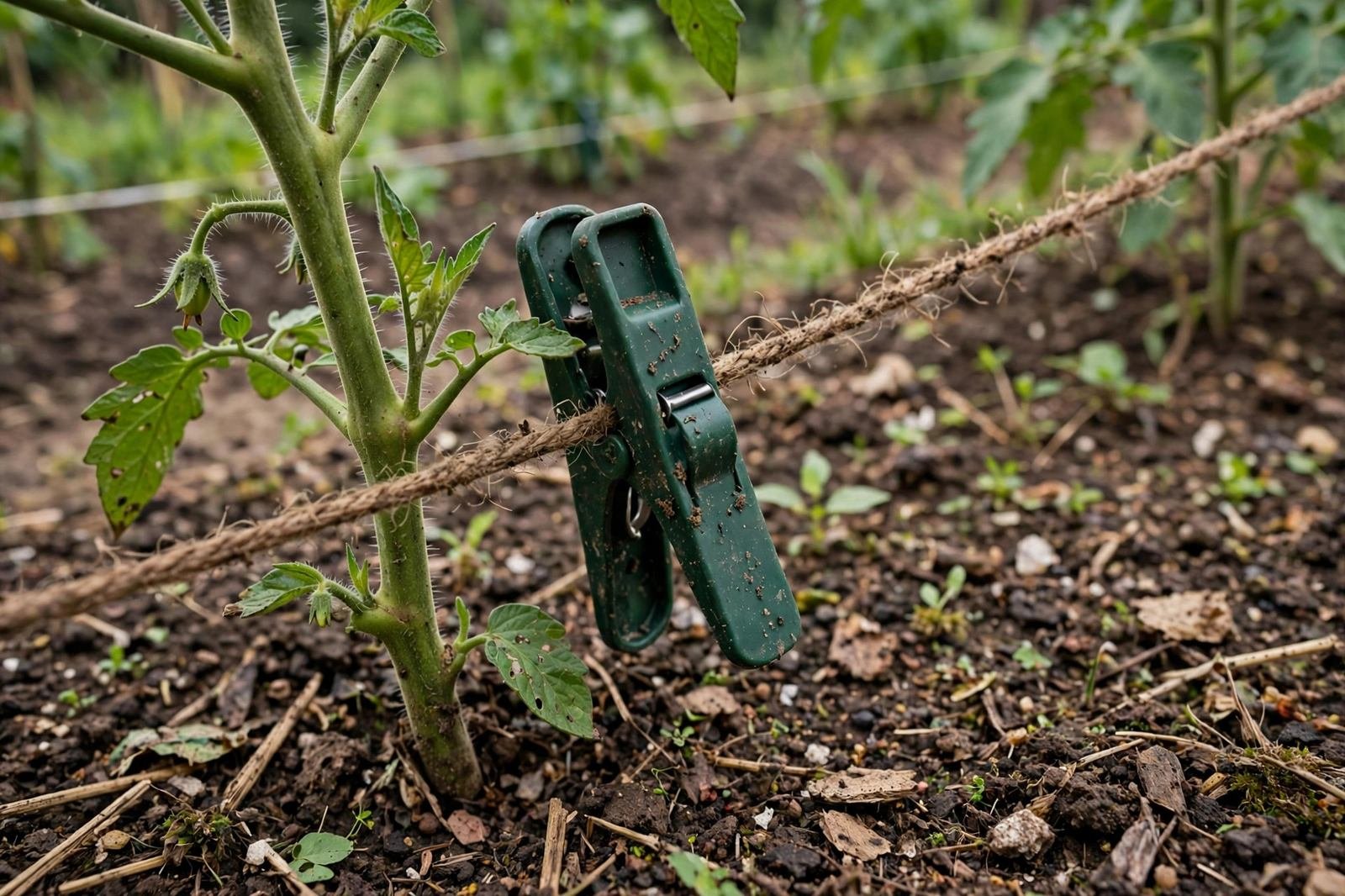
Plastic snap clips, often sold as tomato clips, are small hinged rings that snap around the stem and the trellis string or wire. They go on fast with one hand, which matters when you have a row of plants to tie, and they come off just as fast at the end of the season. They hold well on upright stems and on the vertical strings used in a trellis, and they are easy to reuse for several seasons if they are washed and stored out of the sun.
Their weak point is size. A clip that fits a young tomato stem in May will be too small for the same stem in July, so the plant can outgrow the clip and the clip can press into the stem. Buy a size that fits the stem at its mature width, not its width on the day you clip it, and plan to move clips up the stem as the plant grows rather than leaving one clip in place all season. Cheap clips can also turn brittle after a summer in full sun, so check them when you reuse them and throw out any that crack when flexed. Search for tomato plant clips on Amazon
Metal spring clips
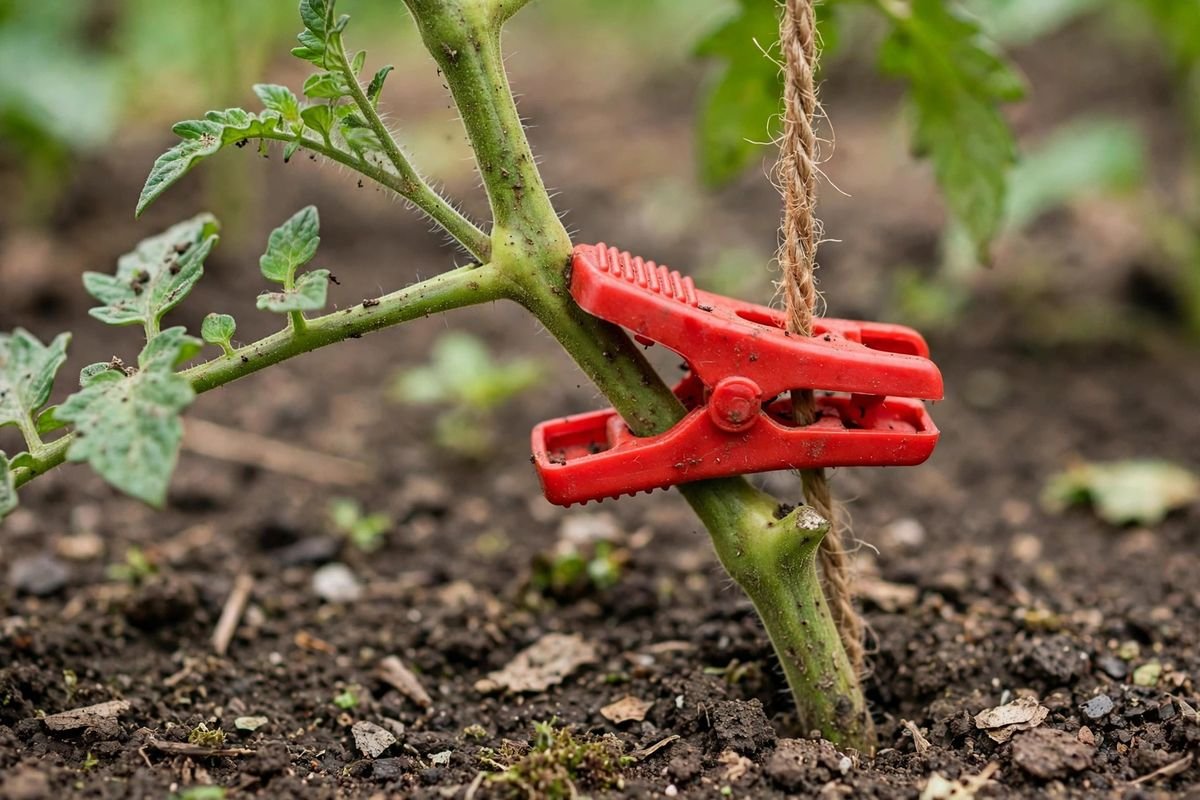
Metal spring clips grip with a small spring, like a wide clothespin made for plants. They hold firmly on thicker stems and on wire trellises, and they work well for roses, raspberries, and grape vines, where the stem is woody and the clip needs to stay put in wind. They are reusable for years, and a rust-resistant coating helps them last outdoors.
The tradeoff is pressure. A spring clip grips harder than a snap clip, so it can bruise a soft stem if it is clipped too tight or left in one spot while the stem grows. Use them on woody stems and on stems that have already hardened, not on soft new growth. They also cost more per piece than plastic clips, so they suit a small number of permanent plants better than a long row of annual vegetables. Search for metal plant clips for trellis on Amazon
Hook-and-loop plant ties
Hook-and-loop ties, sold in rolls or pre-cut strips, wrap around the stem and the support and fasten to themselves. They are soft, wide, and easy to adjust, which makes them the most forgiving tie for soft stems and for plants that grow fast. You can peel one open, move it up the stem, and fasten it again in seconds, and the same strip can be cut to length for a thick stem or a thin one.
The tradeoff is grip in wet weather. A hook-and-loop tie can loosen when it gets soaked and then dries, so check it after heavy rain, and use a double wrap on heavy stems. The rolls also need cutting and a little practice to get the tension right: snug enough to hold, loose enough to leave a finger-width of space for the stem to grow. For tomatoes and peppers, our guide to how to grow tomatoes covers staking and tying timing, and our guide to how to grow peppers covers the same for pepper plants. Search for hook-and-loop plant ties on Amazon
Soft twist ties and garden wire
Soft twist ties are wire coated in plastic or paper, sold in rolls or pre-cut lengths. They are the cheapest tie per piece, they work on almost any stem, and they are easy to carry in a pocket. Twist them once around the stem and once around the support, leave a loose loop for growth, and the job is done. They suit peas, beans, and young vines, where many small ties are needed and the plant will be pulled at the end of the season anyway.
The tradeoff is that they are mostly single-season. The coating can split after a summer outdoors, the wire inside can rust, and a tie twisted too tight will cut into a growing stem. They are also slow to remove in bulk: every tie has to be untwisted or cut off, which adds up across a long row. Use them where the count is high and the plant is short-lived, and save the reusable clips for plants that stay up all season. Search for garden twist ties on Amazon
Jute twine and natural fiber ties
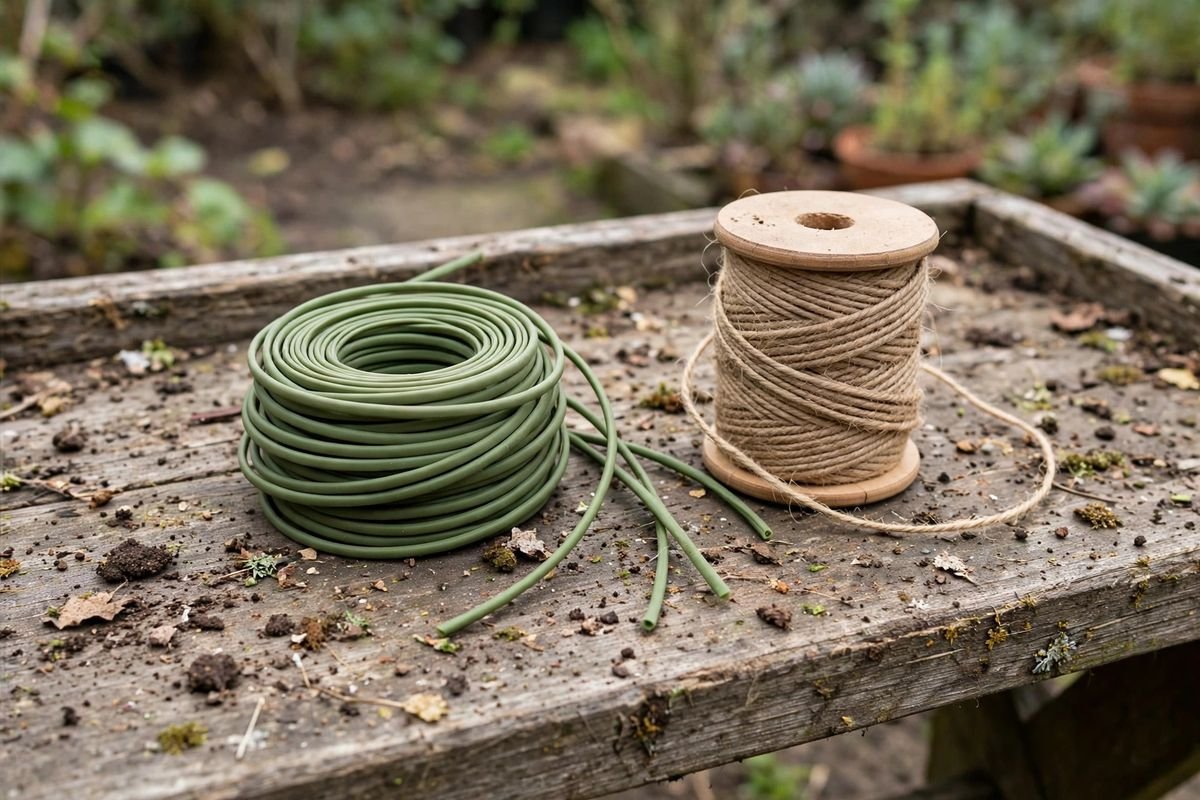
Jute twine is the old standby for tying plants, and it still works well for beans, peas, and cucumbers on a trellis. It is cheap, it composts at the end of the season, and it ties in a knot that holds without slipping. A figure-eight loop, with one loop around the stem and one around the support, keeps the stem from rubbing on the trellis while still holding it close.
The tradeoff is life span. Jute weakens when it stays wet, so a twine tie on a plant watered daily can rot and snap by midsummer, dropping a loaded stem. It also takes longer to tie than a clip, which matters across a long row. Use twine for short-season vines and for plants that will be cut down with the tie still on them, and check twine ties after rain. For cucumbers on a trellis, see our guide to how to grow cucumbers. Search for jute twine for plants on Amazon
A worked example: ties per plant for a real trellis run
Here is the count for a common setup: one 8 foot long trellis row of 6 indeterminate tomato plants, spaced about 16 inches apart, trained up vertical strings, with the plants expected to reach about 6 feet tall by late summer. Inputs: 6 plants, 6 feet of growth each, one tie every 10 to 12 inches of stem as it grows, plus one tie at the base to hold the young plant to the string.
At one tie per foot of growth, each plant needs about 6 ties along the stem, plus the base tie, for 7 ties per plant. Six plants at 7 ties each comes to 42 ties for the row. Add a spare 20 percent for ties that break, slip, or need moving, which is about 8 extra ties, for a total of about 50 ties. That number is the reason a bag of 50 or 100 clips is the practical buy for a tomato row, while a small pack of 20 leaves you short by July.
The same arithmetic scales down for other plants. A 6 foot cucumber vine tied every 12 inches needs about 6 ties, and a row of 4 vines needs about 24 ties plus spares, for about 30 in all. A pea vine on a 5 foot trellis needs about 4 to 5 ties per plant, and a short row of 10 plants needs about 50 small ties, which is where a roll of twist ties or twine is cheaper than clips. Count the ties before you buy, not after the plants are already flopping over, because the second order always arrives a week late.
What to buy for common trellis jobs
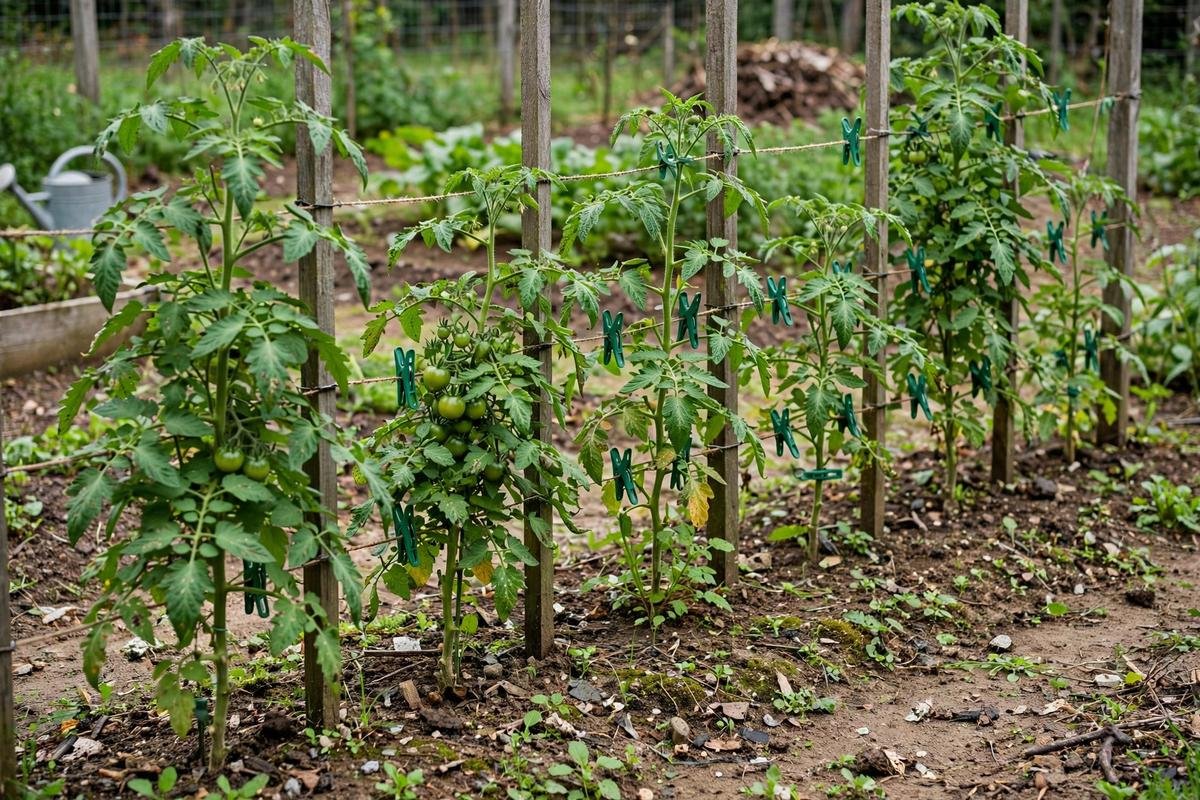
For tomatoes on a string trellis, plastic snap clips or hook-and-loop ties are the easy pick: they go on fast, they adjust as the plant grows, and they come off clean. For roses or raspberries on a wire trellis, metal spring clips hold better on woody stems and last for years. For peas and beans, twist ties or twine are cheap enough for the high count, and the plants are pulled with the ties on. For heavy vines such as winter squash trained up a strong trellis, use wide hook-and-loop ties or soft cloth strips, because a thin tie will cut into a heavy stem under the weight of the fruit.
Whatever type you pick, buy one size up from what the young stem needs, leave room for growth in every tie, and check the row weekly through the fast growth of early summer. A tie is a small thing, but a row of ties checked on time is the difference between a trellis that holds through August and a row of plants lying on the ground after the first summer storm.
Sources & Further Reading
University of California Agriculture and Natural Resources
Cornell Cooperative Extension
North Carolina State University Extension