
This post may contain affiliate links. If you buy through links on this page, we may earn a commission at no extra cost to you.
As an Amazon Associate I earn from qualifying purchases.
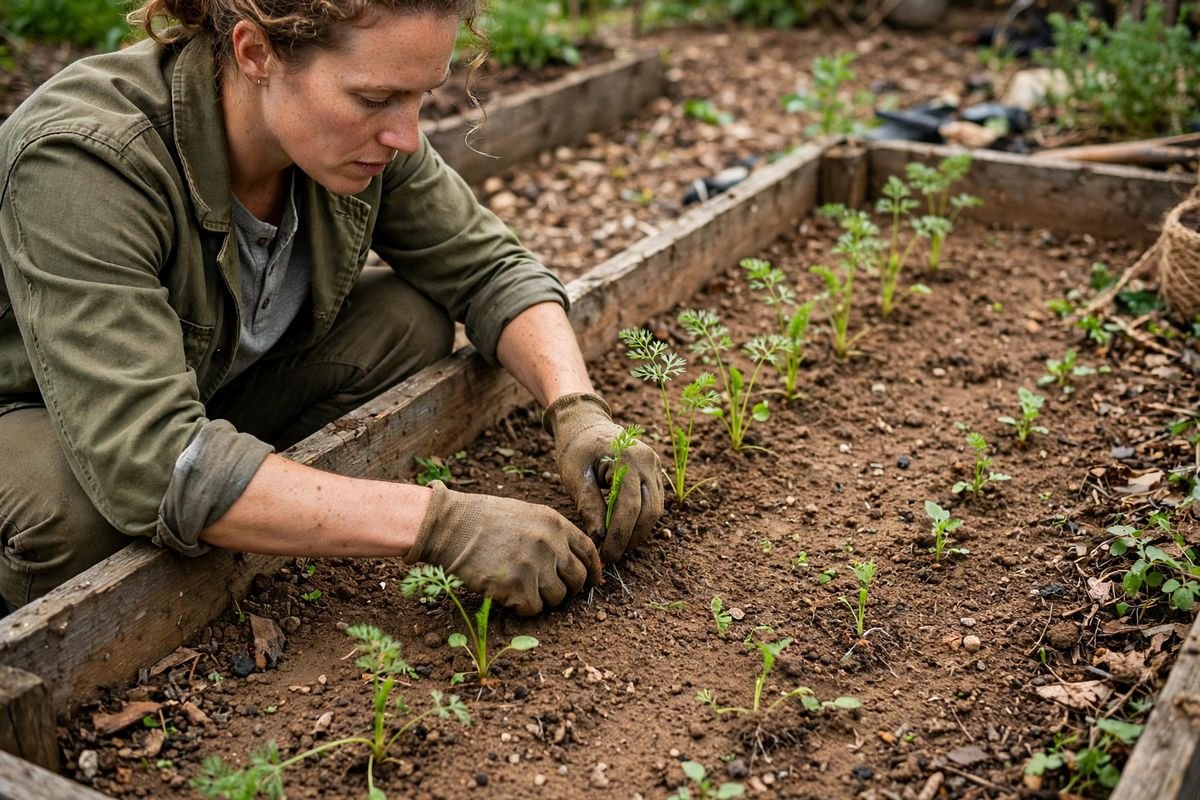
Spacing in a raised bed is a plan, not a guess. Plants spaced too close compete for light and air, grow leggy, and invite disease. Plants spaced too far apart waste soil that could have fed another row. A simple plan, drawn on paper before sowing, fits more plants into the same bed than planting by eye, because it accounts for mature plant size instead of seedling size.
We have not tested the products linked here, and we give no current store prices. The links below go to search pages for bed types, so you can compare current options, sizes, and prices at the time you shop.
Plan from mature size, not seedling size
A tomato seedling is 6 inches tall in May and 6 feet tall in August, and spacing must suit August, not May. Check the seed packet or plant tag for mature width, then space plants so their mature canopies just touch, not overlap heavily. A tomato with a mature width of 24 inches needs 24 inches of space in the row, while lettuce with a mature width of 8 inches fits three across the same row length.
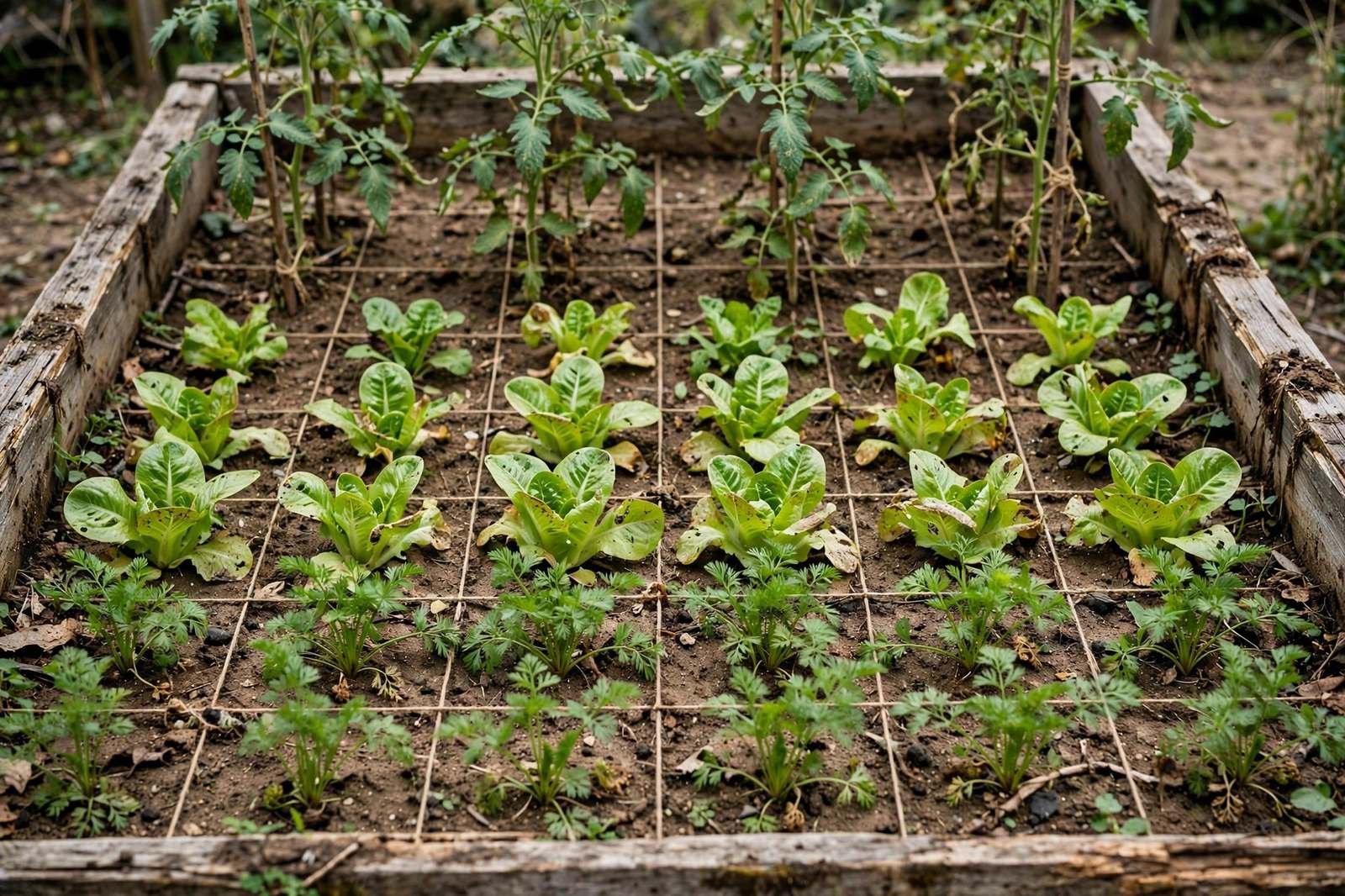
Square-foot spacing turns this into simple math. Divide the bed into 1-foot squares and plant each square by the crop spacing: one tomato per 4 squares (2 by 2 feet), four lettuce per square, nine spinach per square, sixteen radishes per square. This method works best in beds 4 feet wide or less, where every square stays within reach, and it wastes less space than row spacing copied from farm guides meant for tractor rows.
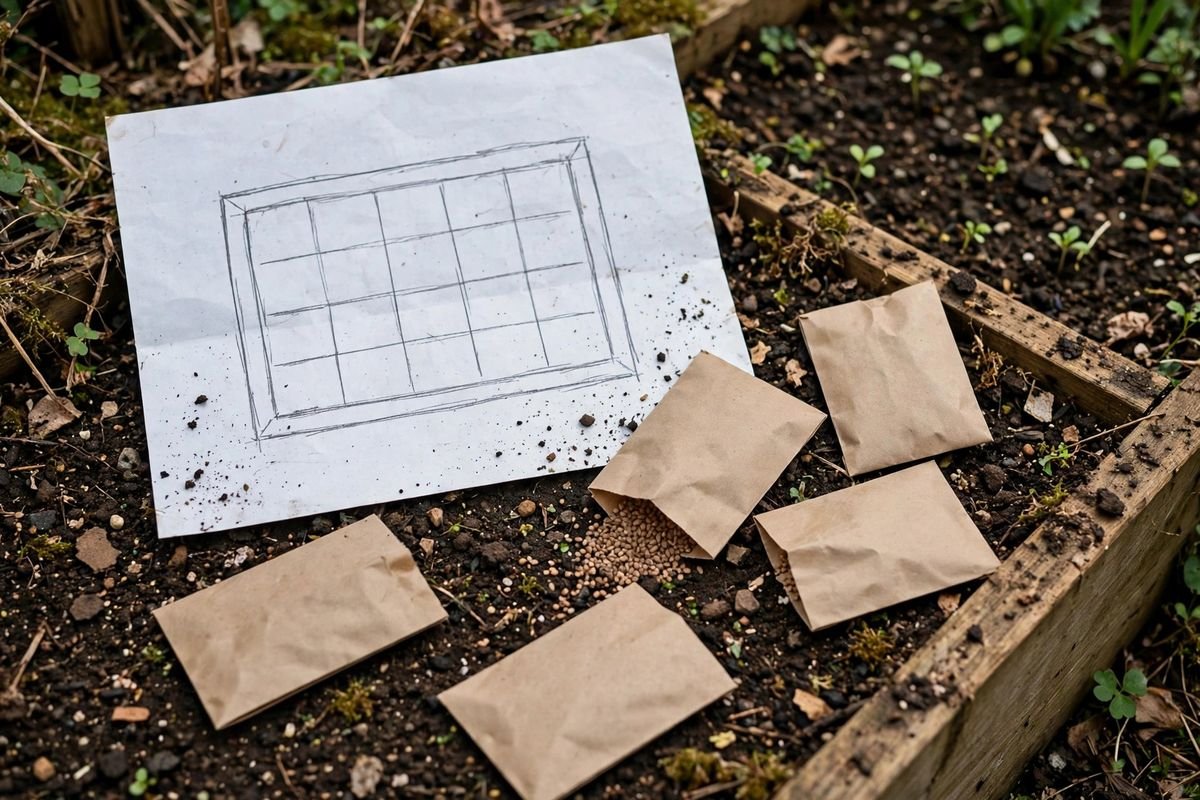
A worked example: planning one 4 by 8 foot bed
Take a bed 4 feet wide and 8 feet long, or 32 square feet, and plan it in three zones. The north end, one 4 by 2 foot zone (8 square feet), holds trellised tomatoes: two plants spaced 24 inches apart in the row, with a trellis at the north end. The middle, a 4 by 4 foot zone (16 square feet), holds square-foot crops: four squares of lettuce (16 plants), four squares of carrots (64 plants at 16 per square), four squares of beans, and four squares of spinach (36 plants at 9 per square).
The south end, a 4 by 2 foot zone (8 square feet), holds herbs and flowers: basil between the tomatoes, marigolds at the corners for color, and parsley along the edge where it can be picked without stepping in. Count the plan before you sow: 2 tomatoes, 16 lettuce, 64 carrots, plus beans, spinach, basil, and parsley, from 32 square feet, with every plant reachable from the paths.
Leave one empty square in the plan for succession. When the lettuce finishes in early summer, that square takes a second sowing of beans or a fall green, so the bed never sits empty for a month while you decide what to plant next. For bed width and reach rules that shape any plan, see how wide should a raised garden bed be and raised bed gardening for beginners.
Common spacing mistakes
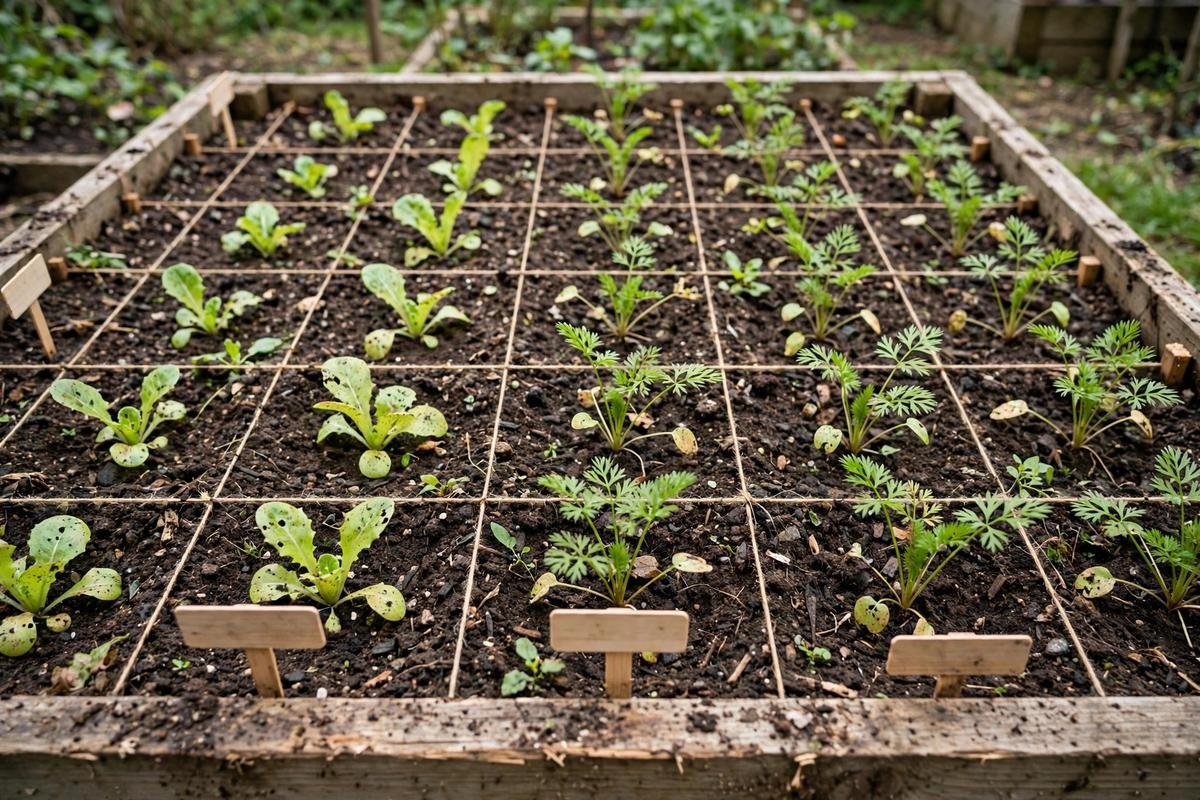
The most common mistake is planting the whole packet. A packet of 200 lettuce seeds sown at once gives 200 seedlings fighting in a space meant for 16, and thinning feels wasteful, so most gardeners skip it and end up with weak plants. Sow only what the plan calls for, plus a few extra for gaps, and save the rest of the packet for succession sowings.
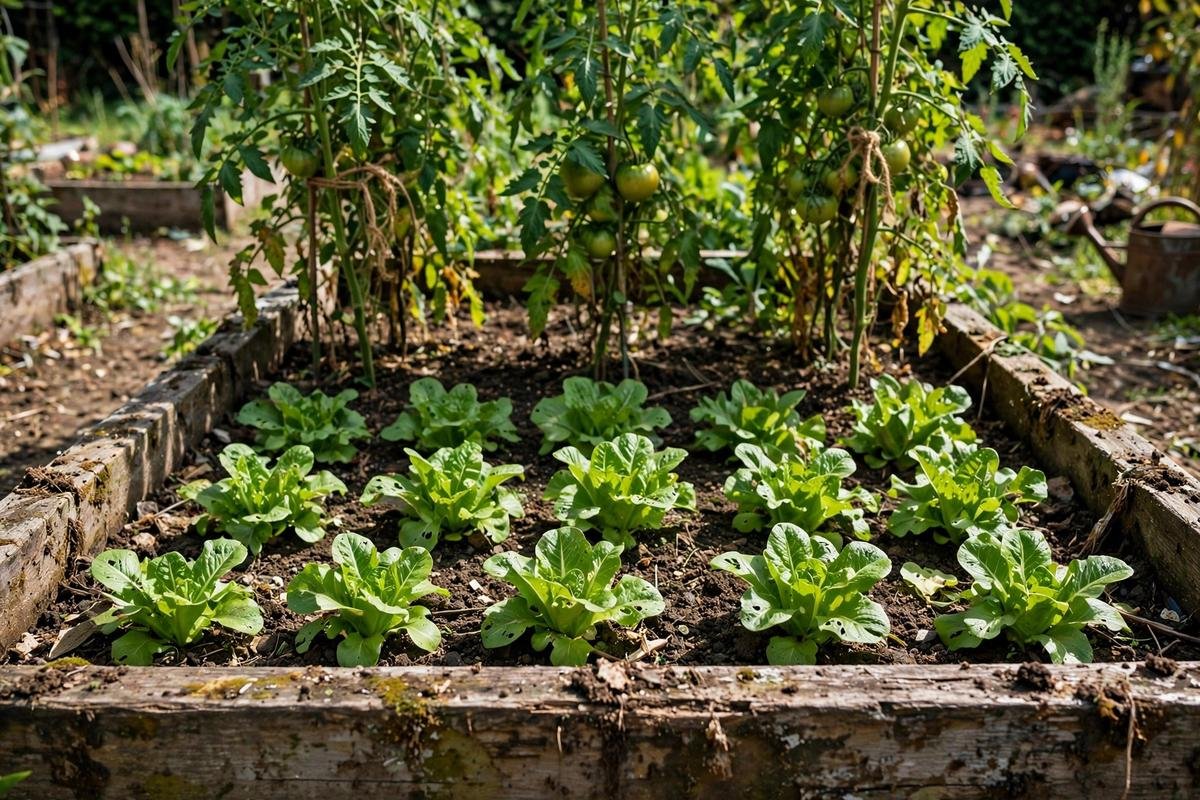
The second mistake is ignoring height. Tall crops at the south end shade everything behind them, so short crops there grow pale and slow. Put tall crops at the north end, medium crops in the middle, and short crops at the south edge, and the whole bed gets sun through the day.
The third mistake is forgetting paths. A plan that fills every square to the frame edge leaves no place to stand while picking the middle, so the gardener steps into the bed and compacts the soil. A bed 4 feet wide needs paths on both sides, and a bed wider than 4 feet needs a stepping stone or a middle path, or the middle squares go unpicked.
What to check before you sow
Check the plan against the sun. Stand at the bed at midday and note which end gets sun first and which end stays shaded by a fence or tree. A plan drawn for full sun fails on a bed that gets only morning sun, since crops that need 6 to 8 hours will fall short.
To compare current options, search for square foot garden planting grids and plant labels for raised beds. Compare grid size first, since a grid that matches your bed width saves measuring, then label durability, since paper labels wash out in the first rain.
Questions
Can you mix crops in one square? Yes, for crops with different root depths: shallow lettuce over deep carrots in the same square works, since they use different soil layers. Two crops with the same root depth in one square compete and both suffer.
How do you adjust spacing for a small bed? Use the same mature-size math on a smaller grid. A 2 by 4 foot bed holds 8 squares, which fits one tomato with trellis plus a few squares of lettuce, or eight squares of mixed greens. The math scales down cleanly; only the crop list shrinks. Use your local frost dates and regional planting guidance, not your USDA hardiness zone alone, to time succession sowings after the first crop finishes.