
This post may contain affiliate links. If you buy through links on this page, we may earn a commission at no extra cost to you.
As an Amazon Associate I earn from qualifying purchases.
By late August, most summer gardens are running on fumes. The tomatoes are slowing, the lettuce bolted weeks ago, and the beds look tired. It’s easy to assume the fresh-greens part of the year is over — until next spring, anyway.
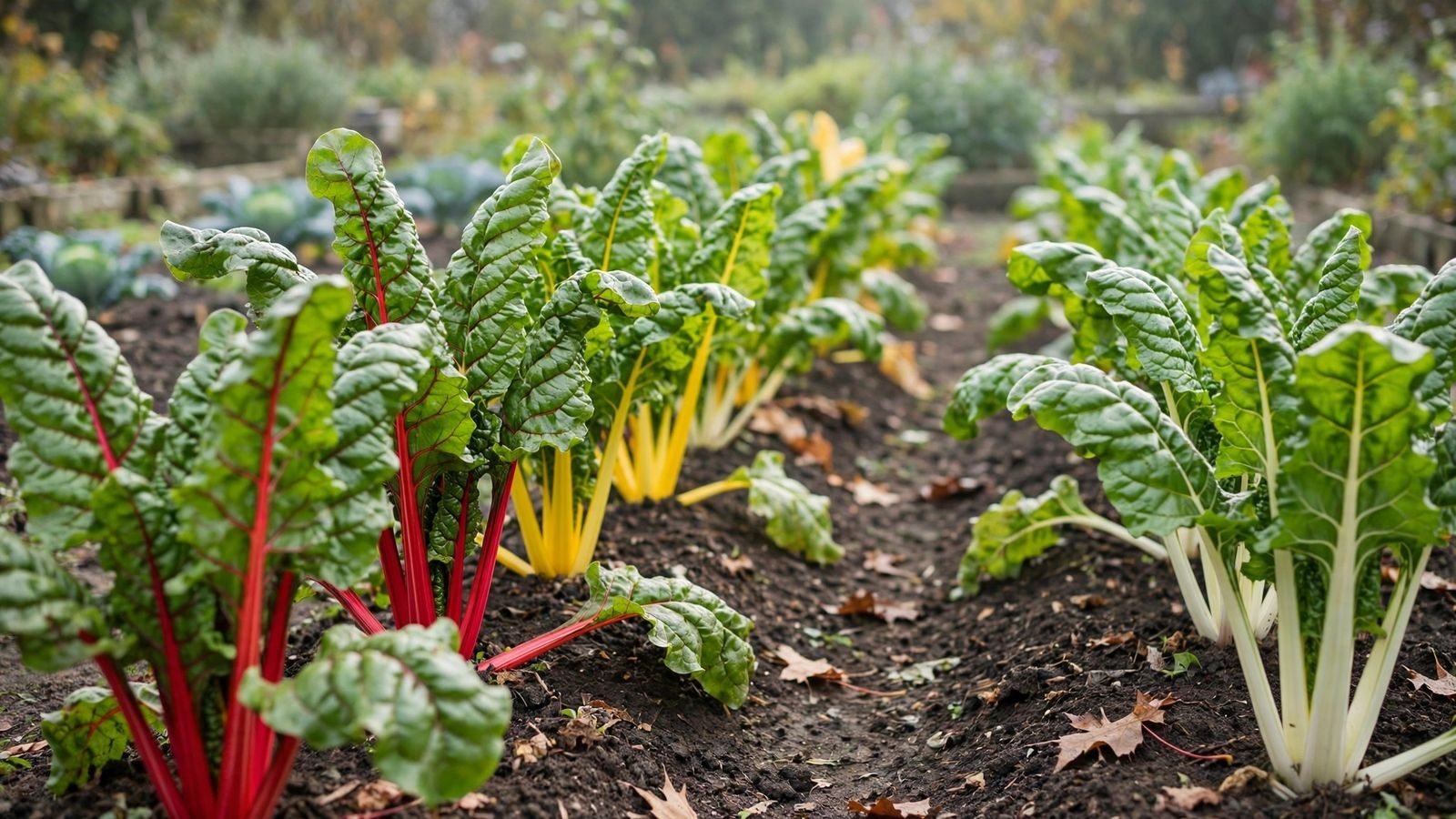
Swiss chard says otherwise. It’s one of the few leafy greens that genuinely prefers fall: sowed in late summer, it grows steadily through the cooling weeks, shrugs off the light frosts that kill tender crops, and — thanks to its cut-and-come-again habit — a single row can keep handing you armfuls of leaves for weeks on end.
County extension offices across the country list chard as a top-tier fall crop, and the advice is remarkably consistent. None of it is complicated. Fall chard mostly asks for good timing and a little space.
In this guide you’ll learn when to plant Swiss chard in fall based on your first frost date, how to sow and space it for full-size leaves, the simple care routine that keeps it productive, the best varieties for the season, and exactly how to harvest it so the plant keeps producing instead of quitting.
Quick Care Overview
| Scientific name | Beta vulgaris subsp. cicla (same species as beets) |
| Sow depth | 1/2 inch |
| Spacing | 4–6 inches apart (thinned); rows 12–18 inches apart |
| Germination temperature | 50–85°F; fastest around 70–80°F |
| Days to maturity | 50–60 days from seed (about 30 days for baby leaves) |
| Light | Full sun to part shade |
| Soil | Rich, well-drained; pH 6.0–7.0 |
| Water | About 1 inch per week |
Why Grow Swiss Chard in Fall?
Chard earns its spot in the fall garden for a few solid reasons — and not all of them are about flavor.
- Cut-and-come-again harvests. Most fall greens are one-and-done. Chard isn’t. Pick the outer leaves and the center keeps growing, so one sowing feeds you for weeks — sometimes for months in mild climates.
- Real frost tolerance. Light frosts don’t faze it. A hard freeze will damage the outer leaves, but in many regions the crown survives and pushes fresh growth. It buys you the longest harvest window of any common fall green.
- It looks good doing it. Rainbow-stemmed varieties turn a tired September bed into something genuinely pretty. Fall gardens can look bleak; chard fixes that for free.
- Fewer pest problems. The leaf miners and flea beetles that hammer spring greens have mostly peaked by late summer. Fall chard usually grows cleaner with less intervention.
- Beginner-proof sowing. The “seeds” are big, easy to handle, and germinate reliably in warm late-summer soil. If you’ve ever struggled with dust-fine seeds, chard will feel like a relief.
When to Plant Swiss Chard in Fall
Timing is the whole game with fall crops, and chard’s math is forgiving. Count back 50 to 60 days from your area’s average first fall frost date, then sow about two weeks earlier than that. The extra two weeks — gardeners call it the “fall factor” — compensates for the shorter, cooler days that slow growth as autumn deepens.
In practice, that means sowing 6 to 8 weeks before your first expected frost. For much of the country that lands in August, which feels early — but remember, warm late-summer soil is exactly what chard seeds want for fast germination. Related Post: What to Plant in October covers what to sow even later in the season.
A few timing notes by season length: in mild-winter areas where first frost arrives in November or later, you can sow from late August well into September, and chard often overwinters with a layer of mulch. Where frost arrives in mid-to-late October, aim for early to mid-August — full-size plants by October, harvests into November or later. Where frost comes in early October, sow in late July to early August and pick fast varieties, with floating row cover on cold nights. In the shortest-season northern gardens, it’s tight but doable — sow by late July, choose a quick variety like ‘Bright Lights’, and plan on row cover for October.
If a heat wave is sitting on your sowing week, don’t wait it out — just keep the seedbed evenly moist and give it light afternoon shade until seedlings emerge. Dry, crusty soil is what actually kills germination, not heat alone.
How to Plant Swiss Chard in Fall
Chard’s seed clusters are each about the size of a peppercorn, and every cluster can sprout two or three seedlings. Sow them a little thick and thin later — that’s easier than wishing you’d sown more.
Step 1: Pick the spot. Full sun is ideal, but fall sun is weaker than summer sun, so give chard the sunniest bed you have left. It tolerates part shade — growth is just a little slower.
Step 2: Feed the soil. Work about 2 inches of finished compost into the top 6 inches of the bed. Chard isn’t a heavy feeder, but it grows noticeably faster in soil with some organic matter in it.
Step 3: Sow 1/2 inch deep. Draw a shallow furrow, drop seed clusters 2 to 3 inches apart, cover with soil, and firm it down. If you’re starting with Swiss chard seeds, one packet covers a surprisingly long row.
Step 4: Water gently and keep it moist. A light watering right after sowing settles the soil around the seeds. Keep the top inch of soil consistently moist until seedlings appear — usually 5 to 10 days in warm soil.
Step 5: Thin to 4–6 inches. When seedlings have two or three true leaves, thin each cluster to the single strongest seedling, spaced 4 to 6 inches apart. The thinnings are perfectly edible — toss them in a salad.
Spacing: The Mistake That Shrinks Your Harvest
The most common chard mistake is skipping the thinning. Crowded plants stay small, their stems stay thin, and the whole row underperforms. It feels wasteful to pull healthy seedlings, but each mature chard plant wants a footprint of roughly a foot across. Give it that, and the leaves get big enough to actually cook with.
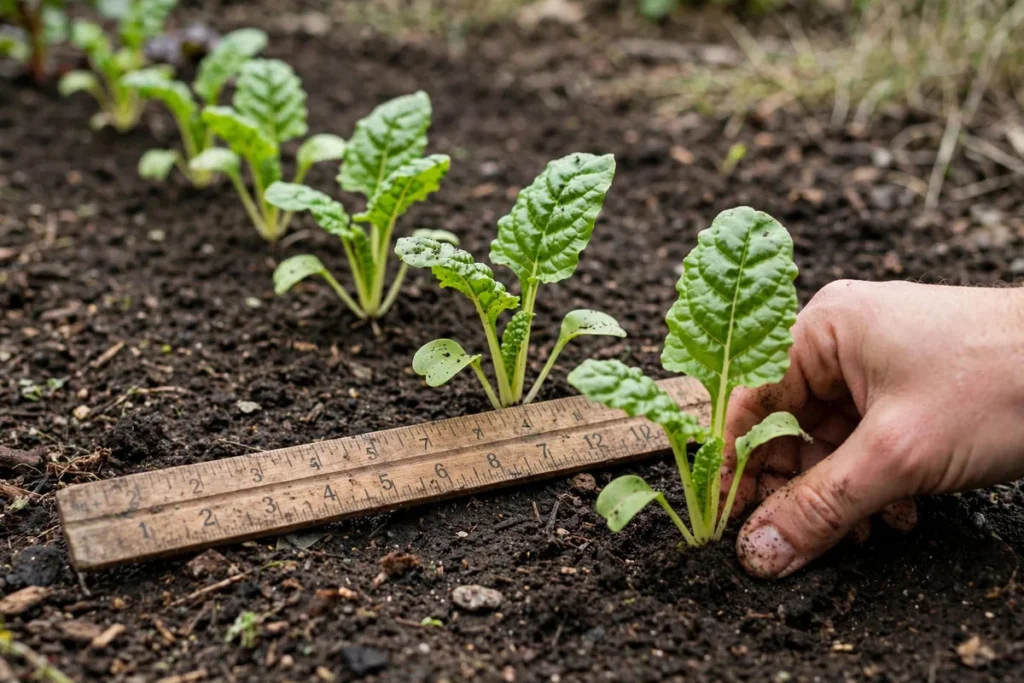
If you’re growing chard for baby leaves instead of full-size stalks, the rules change: sow thickly, skip the thinning, and start snipping leaves when they’re 3 to 4 inches tall. Baby-leaf rows can be sown two to three weeks later than full-size plantings since they need less time.
Caring for Fall Chard
Once chard is up and thinned, the care routine is short. Fall does half the work for you.
Water
Aim for about an inch of water a week, from rain or the hose. Inconsistent watering — a dry spell followed by a soak — is what turns leaves tough and stems stringy. A deep watering once a week beats a daily sprinkle, and fall’s cooler air means the soil holds moisture longer than it did in July.
Mulch
When plants are 4 to 6 inches tall, tuck 2 to 3 inches of straw or shredded leaves around them, keeping it a couple of inches back from the stems. Mulch steadies soil moisture, suppresses the weeds that germinate in fall rains, and insulates the crown against early frosts.
Feed
Compost at planting time is usually enough for the whole fall season. If older leaves start yellowing while the center stays green, the plants are asking for nitrogen — side-dress with a balanced organic vegetable fertilizer and water it in. One feeding mid-season is plenty; chard that gets too much nitrogen grows soft, floppy leaves.
Best Swiss Chard Varieties for Fall
All chard handles fall well, but some varieties earn their place faster. Grouped by what they do best:
Rainbow and ornamental mixes
‘Bright Lights’ — The classic rainbow mix: red, gold, pink, orange, and white stems on one row. Fast-growing and reliable, and widely recommended as the variety to pick when your planting window is short. ‘Peppermint Stick’ — Red-and-white striped stems that look like candy canes. Slightly smaller plants, but a fun pick for beds near the front walk.
Classic white ribs
‘Fordhook Giant’ — The old standard: big, vigorous plants with broad white ribs and savoyed green leaves. It’s the most productive variety for sheer leaf volume. ‘Argentata’ — Sometimes sold as “Swiss chard” proper. Wide silver-white ribs, notably heat-tolerant, and holds well into late fall.
Bold colors
‘Ruby Red’ (often sold as ‘Rhubarb Chard’) — Deep crimson stems with dark green leaves. The color holds up in cooking better than most. ‘Golden Sunrise’ — Bright gold-to-yellow stems that practically glow in October light. A strong grower that stands out in mixed rows.
Compact picks
‘Barese’ — A smaller Italian variety with white ribs, good for tight beds or 12-inch-plus containers. Matures a touch faster than the big whites, which helps in short-season zones.
Harvesting: The Cut-and-Come-Again Method
Here’s where chard pays you back. Start harvesting when the outer leaves are 8 to 12 inches tall — usually 7 to 8 weeks after sowing for fall plantings.
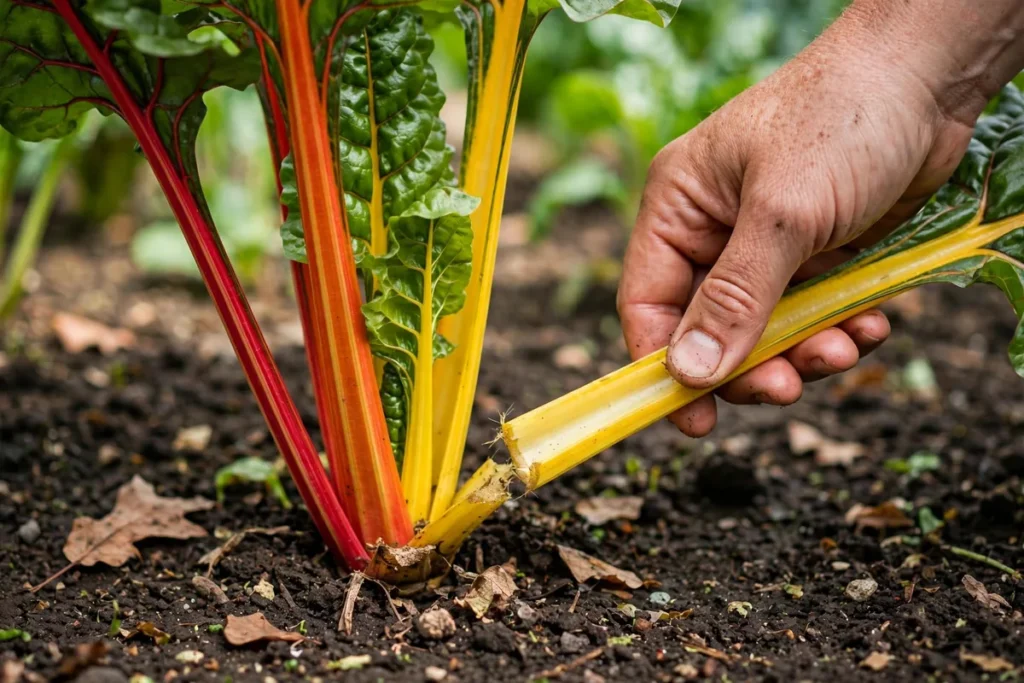
The technique is simple: always pick the outer leaves first, cutting each stalk at its base with a knife or sharp scissors. Leave the young leaves in the center alone — they’re the plant’s engine room, and as long as the center rosette stays intact, new leaves keep coming.
Take no more than about a third of the plant at a time. On a healthy fall plant, that means a solid handful of leaves every week or two, and the row can keep producing until a hard freeze finally stops it — often November or later, depending on your zone.
For storage, treat it like any leafy green: refrigerate unwashed leaves in a loosely closed bag and use them within a week. The stems stay crisp longer than the leaves, so if you can’t cook everything at once, use the leaves first. In the kitchen, the two parts want different cooking times — add chopped stalks a few minutes before the leaves, since stalks behave more like celery.
Troubleshooting Common Fall Chard Problems
Bolting (going to seed)
Rare in fall, but a late heat wave combined with dry soil can push plants to bolt. If a center stalk starts shooting up and leaves turn bitter, pull that plant — it won’t recover. Steady watering during hot spells is the prevention.
Leaf miners
These leave winding pale trails inside the leaves. Fall pressure is usually much lower than spring, but check the undersides of leaves when you harvest. Pick off and discard affected leaves (don’t compost them). Heavy infestations are uncommon in fall plantings.
Slugs
Damp fall weather is slug weather. They chew ragged holes, mostly at night. Handpick after dark, keep mulch pulled back slightly from stems, and avoid watering late in the evening so the bed surface dries before nightfall.
Frost-damaged leaves
After a hard freeze, outer leaves may turn watery and collapse. Trim off the damaged leaves — the crown underneath is often fine and will push new growth if temperatures rebound. A floating row
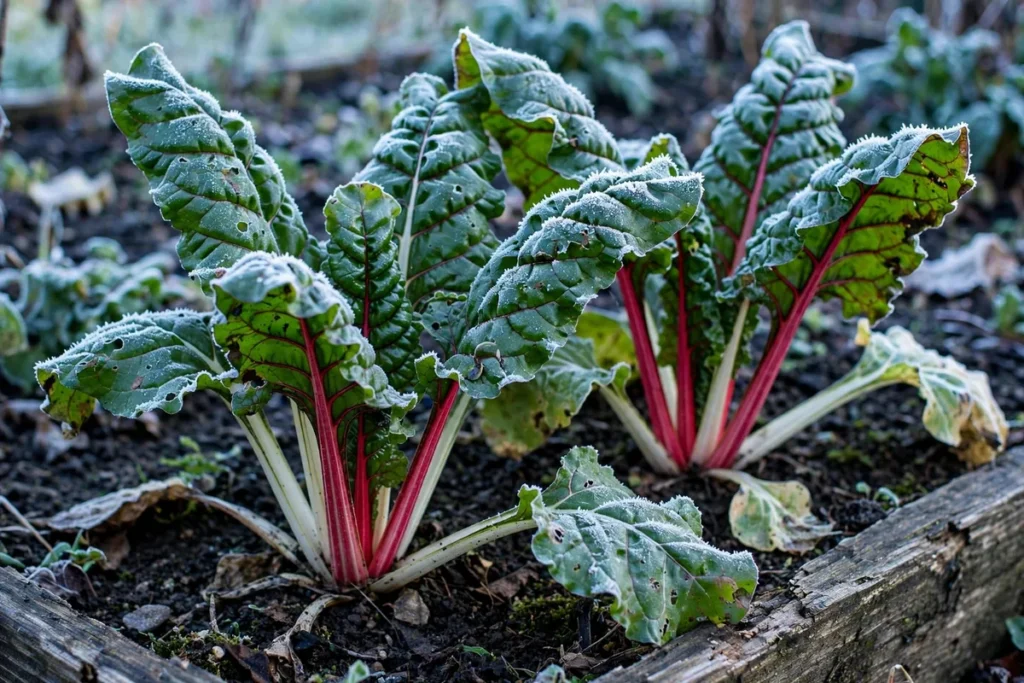
cover draped over the row before a cold night adds several degrees of protection and is the cheapest season-extender you can buy.
FAQs About Growing Swiss Chard in Fall
Can Swiss chard survive winter?
It depends on your zone. Chard is a biennial grown as an annual — in zones 7 and warmer, established fall plants often survive winter with a thick mulch and regrow in spring. In colder zones, treat it as a fall annual and harvest until a hard freeze ends the season.
How many seeds should I plant per hole?
Each chard “seed” is actually a cluster that can produce two to three seedlings. Sow one cluster every 2 to 3 inches, then thin to one strong seedling every 4 to 6 inches once true leaves appear.
Why are my chard leaves small?
Almost always one of three things: plants are too crowded (thin them), the soil dried out during a critical growth stretch, or the sowing was late and short days slowed everything down. Check spacing first — it’s the most common cause.
Can I grow Swiss chard in containers in fall?
Yes. Use a pot at least 12 inches deep and wide, one plant per pot (or sow thickly for baby leaves), and keep it watered — containers dry out faster than beds. Compact varieties like ‘Barese’ are a natural fit for pots.
Is Swiss chard really cut-and-come-again?
Yes — it’s one of the best cut-and-come-again vegetables for fall. Harvest outer leaves and leave the center rosette intact, and the plant keeps producing new leaves for weeks. Just don’t take more than about a third of the plant at once.
More fall vegetable growing posts to explore:
- How to Grow Broccoli in Fall — another frost-tough fall crop with its own harvest trick: side shoots after the main head.
- What to Plant in October — 15 vegetables you can still get in the ground this fall.
- Fall Garden Cleanup: 12 Things to Do Before Winter — put the beds to bed properly once harvests wind down.
Fall Swiss chard is about as close to a sure thing as the autumn garden offers: easy seeds, a forgiving planting window, real frost tolerance, and a harvest method that keeps paying out for weeks. Sow it in August, thin it once, mulch it in September — and you’ll be cutting leaves long after the rest of the garden has called it a year.
Are you sowing chard this fall — and which stem color is going in your bed?
Sources & Further Reading
- How to Grow Swiss Chard in Your Garden — Utah State University Extension. Supports germination temps, spacing, fall planting timing, and frost tolerance.
- Chard – Home Gardening Series (FSA6065) — University of Arkansas Division of Agriculture. Supports cut-and-come-again harvest and varieties.
- Swiss Chard — Texas AgriLife Extension Service. Supports seeding depth, spacing, and days to harvest.