
This post may contain affiliate links. If you buy through links on this page, we may earn a commission at no extra cost to you.
As an Amazon Associate I earn from qualifying purchases.
A tomato plant in a raised bed will outgrow a small cage by midsummer. Left alone, it sprawls across the bed, shades its neighbors, and drops fruit on the soil where slugs find it first. A trellis gives the plant a straight path up, keeps fruit off the ground, and leaves the bed open for watering and picking. The best trellis for a raised bed is the one that fits the bed, holds the plant at full weight, and lets you reach every tomato without stepping on the soil.
We have not tested the products linked here, and we give no current store prices. The links below go to search pages for trellis types, so you can compare current options, sizes, and prices at the time you shop.
What a tomato trellis has to do
A trellis for tomatoes has three jobs. It must hold a plant that can reach 6 feet tall and carry several pounds of fruit. It must stay upright in wind when the plant is loaded with leaves. And it must keep the plant accessible, so pruning and picking do not turn into a wrestling match. A trellis that fails any one of these jobs costs more time than it saves.
Height matters more than looks. Indeterminate tomatoes, the kind that keep growing all season, need 6 to 7 feet of support. Determinate types, which stop at a set height, usually manage with 4 to 5 feet. Check the variety description before you buy. A 4-foot trellis under a 7-foot plant is a plant waiting to flop. Our guide to how to grow tomatoes covers indeterminate and determinate habits in plain terms.
Trellis types that work in raised beds
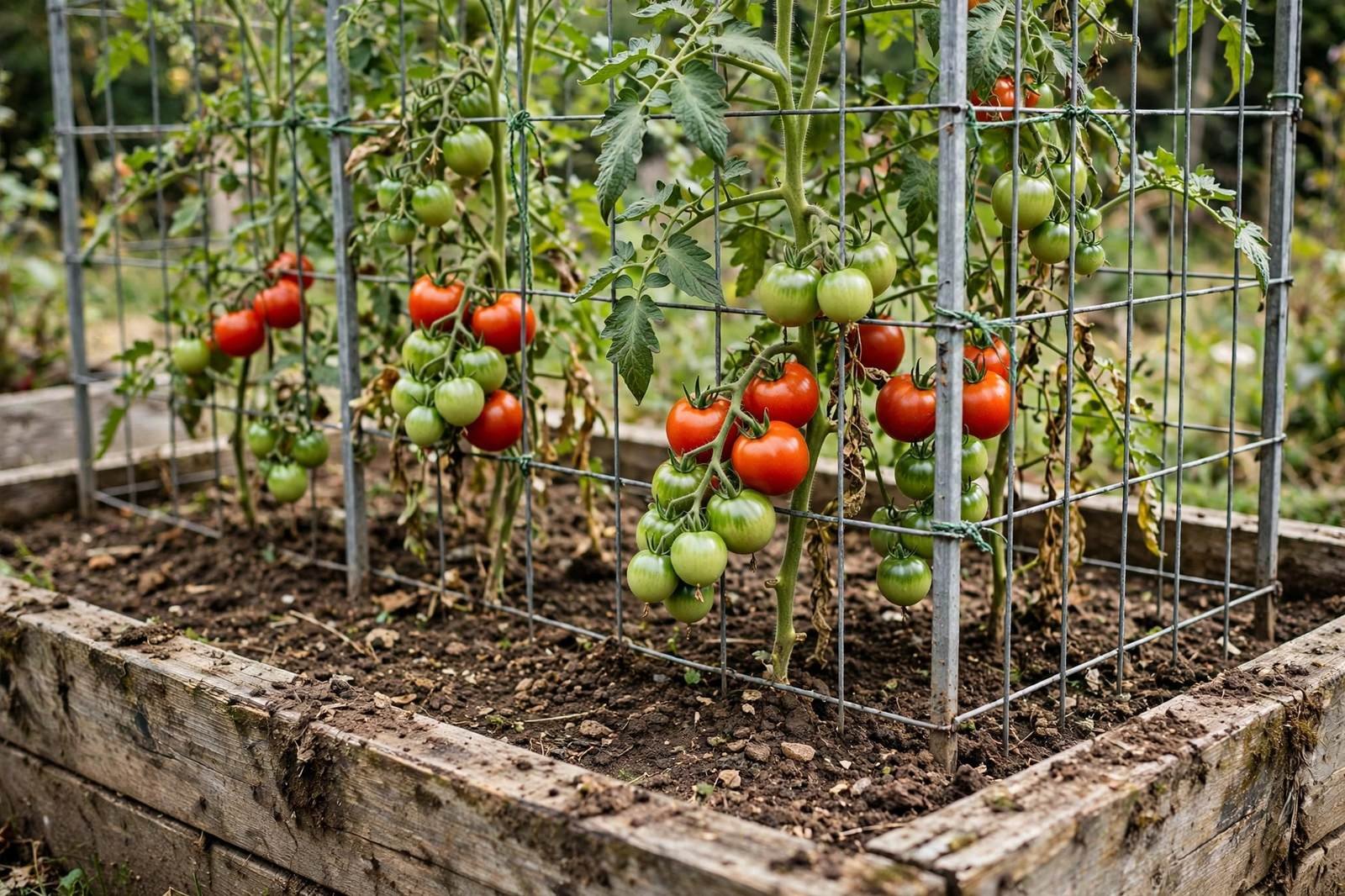
A cattle panel trellis is a stiff wire grid, usually 16 feet long and 50 inches wide, bent into an arch or fixed flat against posts. It holds heavy plants without bending, and the wide grid openings let hands and fruit pass through. The drawback is size: a full panel is awkward to carry and cut, and it needs solid end posts set into the bed frame or the ground beside it.
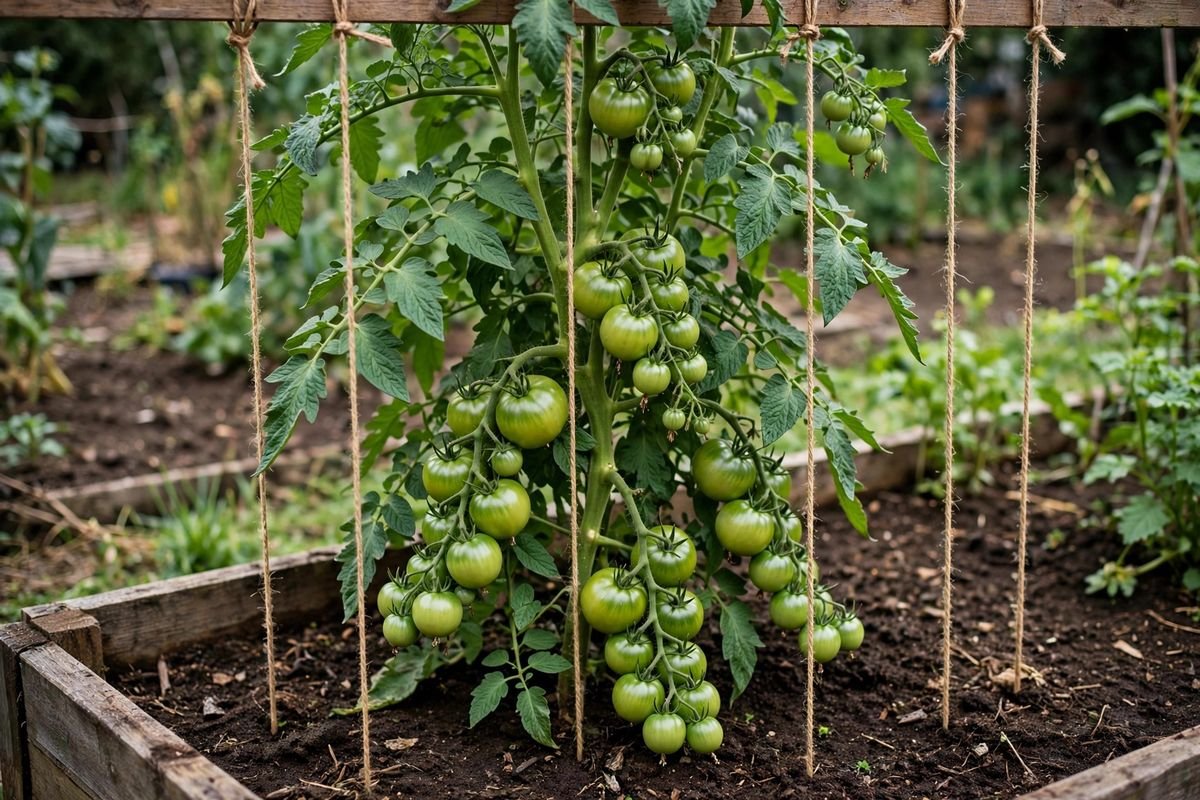
A string trellis runs vertical twine from a top wire or bar down to the base of each plant. The plant climbs the string as you wind the stem around it through the season. It costs little, takes almost no storage space in winter, and suits a long row of plants in a 4 by 8 foot bed. It needs a strong top support, since the full weight of the row hangs from one bar.
A Florida weave runs twine between stakes on both sides of a row, weaving back and forth as the plants grow. It supports a row of plants with little material, and it works well for determinate varieties that stay shorter. It takes regular attention: new twine goes on every 8 to 10 inches of growth, or the plants push through the weave and lean.
A tower or cage trellis is a heavy wire cylinder or a square tower that stands around one plant. It is the simplest option for one or two plants, and it needs no tying at the start. The drawback is access: fruit inside a dense tower is hard to reach, and a tall indeterminate plant will grow out the top and flop over the side.
A worked example: one 4 by 8 foot bed, eight plants
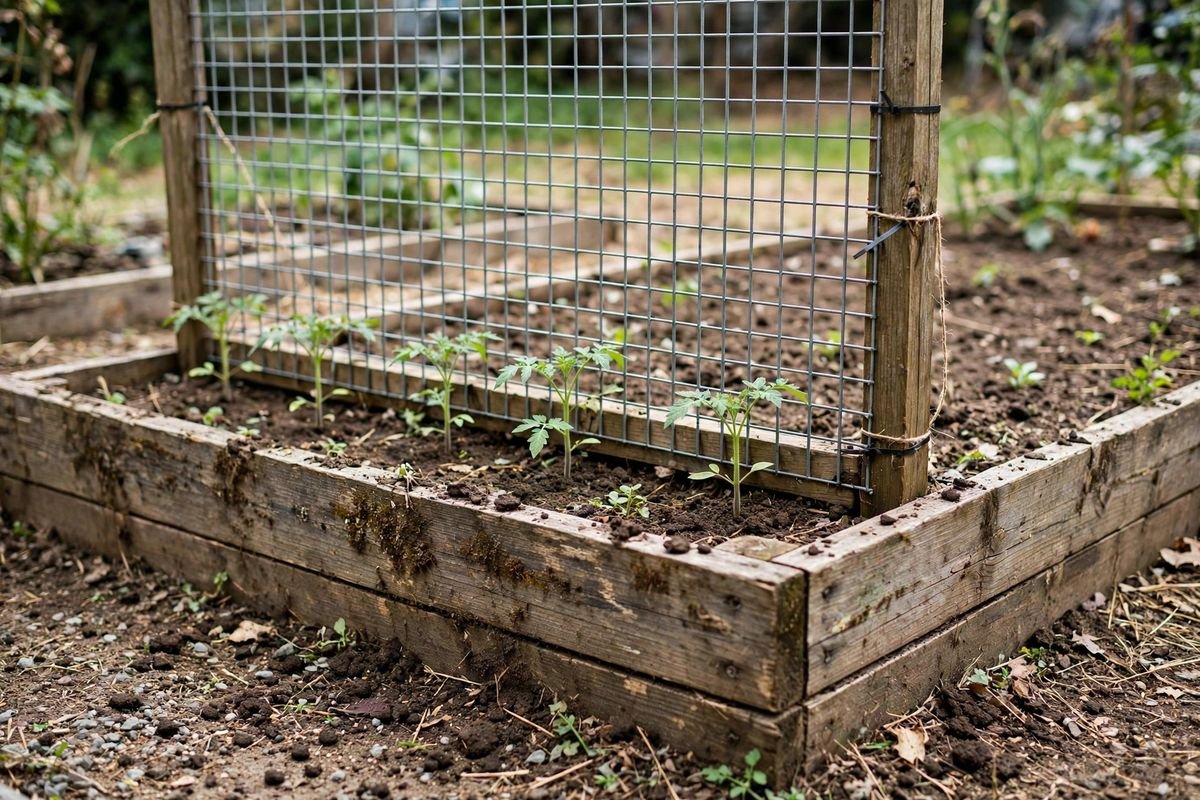
Take a 4 by 8 foot raised bed with eight indeterminate tomato plants in two rows of four, spaced 2 feet apart in the row. Treat each plant as needing 6 feet of vertical support. A flat cattle panel fixed along the middle of the bed, 8 feet long and 6 feet tall, gives each plant a climbing face and leaves both sides open for picking.
Now add weight numbers, with assumptions stated plainly. Suppose each plant carries 12 pounds of fruit at peak, plus 4 pounds of stem and leaves. That is 16 pounds per plant, or 128 pounds across eight plants, not counting wind load. A trellis rated for light flowers will bend under that load. Anchor the end posts to the bed frame or drive them 12 inches into firm ground, and check the ties after the first heavy rain, when wet soil and wet leaves add weight.
Soil volume matters for a bed this size, and our post on raised bed gardening for beginners walks through depth and fill. A bed 4 by 8 feet and 11 inches deep holds about 29 cubic feet of mix, which is roughly 1.1 cubic yards. That volume supports the root systems of eight plants, but it also means the bed itself is heavy and should sit where the trellis posts can be anchored without shifting the frame.
How to match the trellis to the plant
For one or two determinate plants, a sturdy tower or a short string trellis is enough, and it keeps the setup simple. For a row of indeterminate plants, a cattle panel or a string trellis on a top bar is the safer pick, since both hold height and weight through the season. For a small bed where you also grow peppers or cucumbers, a flat panel on one side leaves the rest of the bed free, while an arch over a path gives shade and a picking tunnel but shades whatever grows under it.
Spacing decides how much trellis you need. Plants 18 inches apart need more tying and more airflow care than plants 24 inches apart, and tight spacing in a humid summer invites leaf disease. Give each plant its own string or its own section of panel, and prune to one or two main stems on indeterminate varieties so the trellis does not turn into a solid wall of leaves. Airflow matters as much as support: a wall of wet leaves dries slowly after rain.
What to check before you buy
Check the grid opening size. Openings smaller than 4 inches make picking hard, since a ripe tomato will not pass through them. Check the wire thickness and the post plan: a panel that stands on its own in a catalog photo may need two posts per end in a real bed. Check storage too. A folding A-frame stores flat against a shed wall, while a fixed arch stays up all winter and needs to handle snow load in cold regions.
To compare current options, search for cattle panel tomato trellises, tomato string trellis kits, and heavy duty tomato towers. Compare height first, then grid opening, then how the trellis anchors to a bed frame. A trellis that fits your bed and your variety will last longer than a taller one that wobbles.

Questions
Can one trellis serve tomatoes and cucumbers in the same bed? Yes, if the panel is tall enough and each plant gets its own section, but the two crops grow at different speeds. Cucumbers fill a panel fast and can shade slow tomatoes. Put the faster crop on the north side of the bed when you can, so it does not shade the rest.
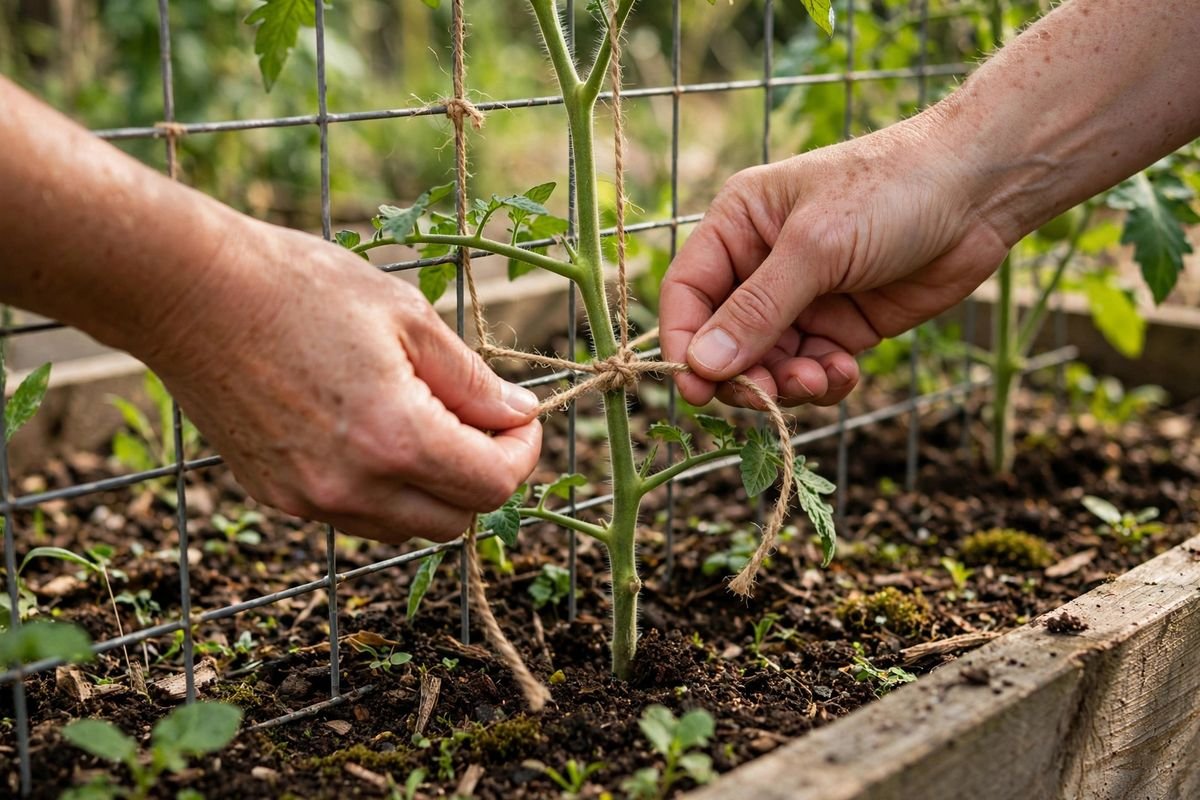
When should ties go on? Start when the plant is about 12 inches tall, and add a tie every 8 to 10 inches of new growth. Soft twine or cloth strips work well. Wire ties cut into stems as the stem thickens, so avoid them on main stems.