
This post may contain affiliate links. If you buy through links on this page, we may earn a commission at no extra cost to you.
As an Amazon Associate I earn from qualifying purchases.
A pot can leave a mark on concrete in a single wet season. Water drains out, minerals and soil color travel with it, and a brown or rust-colored ring stays behind after the pot moves. The fix is simple and cheap: keep pots off the concrete and catch the drainage before it reaches the slab. A saucer, a set of risers, or both together stop most stains before they start, and a quick rinse routine handles the rest.
We have not tested the products linked here, and we give no current store prices. The links below go to search pages for saucers, risers, and pot feet, so you can compare current options, sizes, and prices at the time you shop. This guide covers why stains form, how saucers and risers work, a worked setup for six pots, and what to do about a stain that is already there.
Why pots stain concrete
Concrete looks solid, but its surface holds tiny pores. When water drains from a pot, it carries dissolved minerals from tap water, fertilizer salts, and fine soil particles. That water spreads under the pot, dries slowly in the shade of the pot wall, and leaves its load behind. Terracotta adds its own tint, since salts can pass through the pot wall and dry on the outside, then wash down onto the slab in rain.
Heat and shade shape the mark. A ring forms where the pot edge traps moisture against the slab, so the stain often matches the pot outline. Fertilizer salts leave white crusts, while soil and algae leave brown or green marks. A pot that sits flat on the slab, with no air under it, stains fastest, since water has nowhere to go except outward across the concrete.
Stains form faster under large pots and pots that drain often. A tomato pot watered daily in summer sends far more mineral-laden water onto the slab than a small herb pot watered twice a week. That difference matters when you decide where to spend effort, since the heavy drinkers deserve the best protection.

Saucers that catch the drip
A saucer sits under the pot and catches drainage before it touches the slab. Pick a saucer at least as wide as the pot base, with a rim high enough to hold a normal watering without spilling. A saucer that is too small overflows at the first deep watering, and the stain problem returns.
Saucers need emptying. Standing water in a saucer breeds mosquitoes, draws roots down into the saucer, and keeps the pot base wet. Empty the saucer after watering and after rain. In a rainy spell, tip saucers out every day or two, and check that the pot still drains freely instead of sitting in its own runoff.
Light-colored saucers show soil marks fast, which reminds you to rinse them.

Risers and pot feet that lift the pot
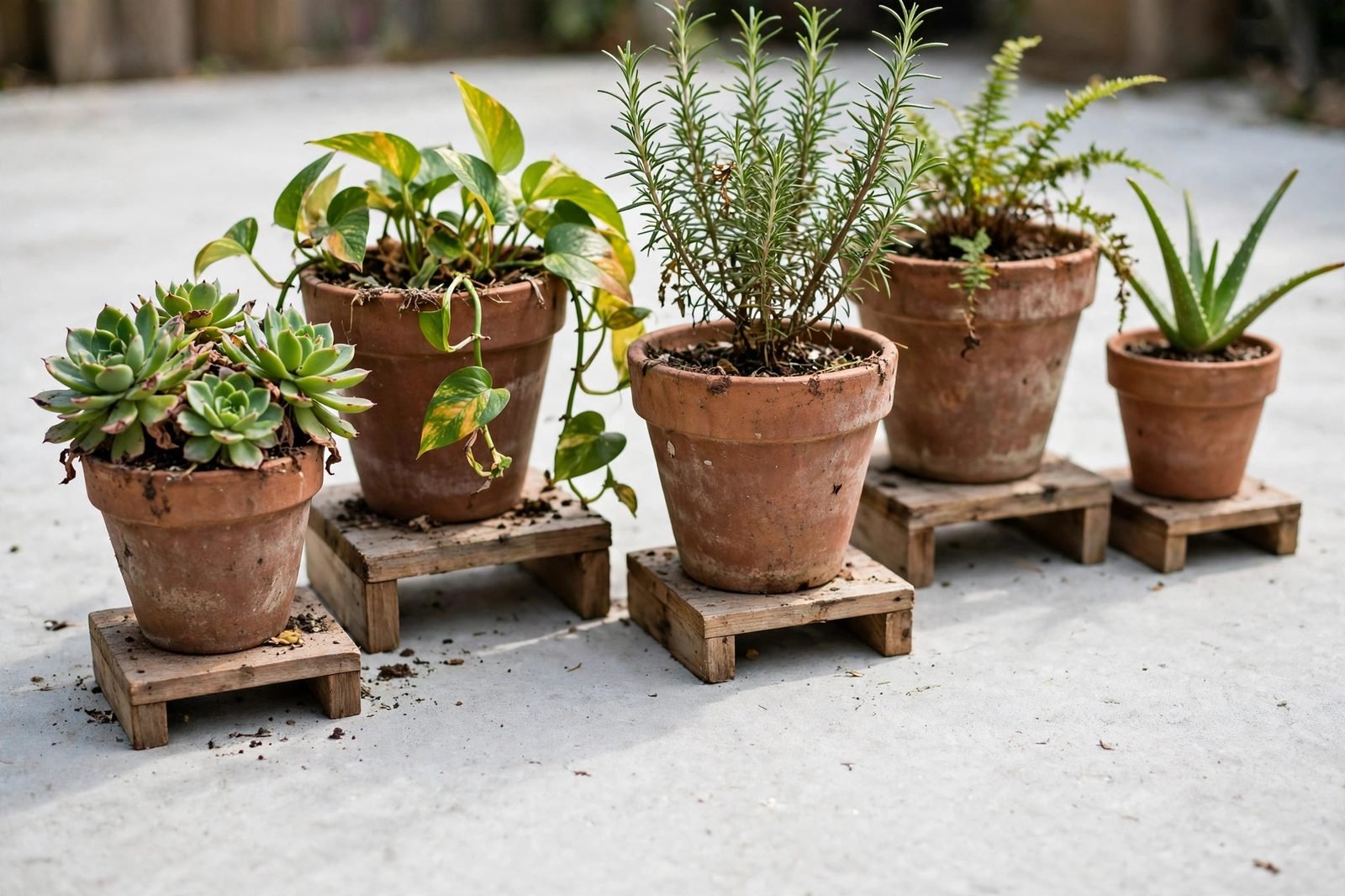
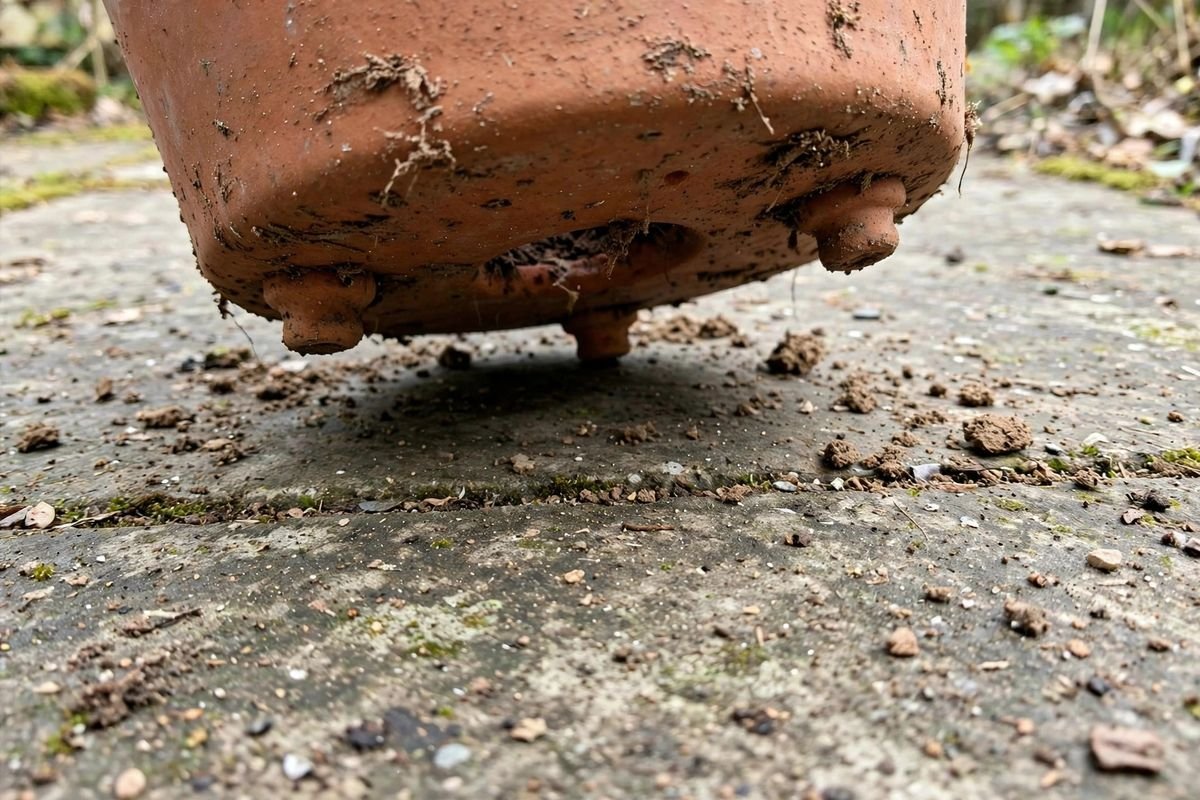
Risers and pot feet lift the pot an inch or more above the slab, so air moves under the pot and drainage dries instead of pooling. Three or four feet under a round pot give a stable lift, while a full riser ring suits square planters. Lift alone helps, but lift plus a saucer works better, since the saucer still catches the drip while air dries the slab under it.
Stability comes first with a lifted pot. A tall tomato plant in a lifted pot catches more wind, so use feet wide enough to grip the pot base and set the pot where wind is broken by a wall or railing. Check the lift after heavy rain, since feet can sink into soft soil or shift on a sloped slab.
For a balcony or a small patio, risers also protect the surface below a deck or a painted floor as well as bare concrete. Our guide to how to arrange pots on a small balcony covers weight and spacing for tight spaces. To compare current options, search for plant pot saucers, pot risers for outdoor plants, and terracotta pot feet. Match the saucer diameter to the pot base and the foot height to the drainage holes.
A worked example: setting up six pots
Take a patio with six pots: three large tomato pots and three medium herb pots. The protection plan uses one saucer per pot, so six saucers in total. Each large pot gets four riser feet, and each medium pot gets three feet, which adds up to 21 feet across the six pots. Buying by count, rather than by pot, keeps the shopping list clear: six saucers and 21 feet, plus one spare foot for a pot that wobbles.
Compare the three setups by what each pot needs. A saucer alone needs one item per pot and one emptying step after watering. Risers alone need three or four feet per pot and no emptying, but drainage still reaches the slab. A saucer plus risers needs four or five items per pot and one emptying step, and it gives the best protection, since drainage is caught and air dries the slab. For the three heavy-drinking tomato pots, the full setup is worth the extra pieces. For the three herb pots, a saucer alone may be enough, since they drain less often.
For six pots, as a planning estimate, a weekly saucer rinse of about two minutes per saucer adds up to about 12 minutes a week, and a monthly sweep of the slab takes about 15 minutes. That routine catches salt buildup while it is still easy to rinse away.
Large pots deserve a note of their own. A big planter holds more water and drains more slowly, so its saucer must be deeper and its feet sturdier. Our guide to best large planters for outdoor vegetables covers sizes for vegetable pots, and self-watering pots vs regular pots explains a pot type that drains less often and may stain less in the first place.
If a stain is already there
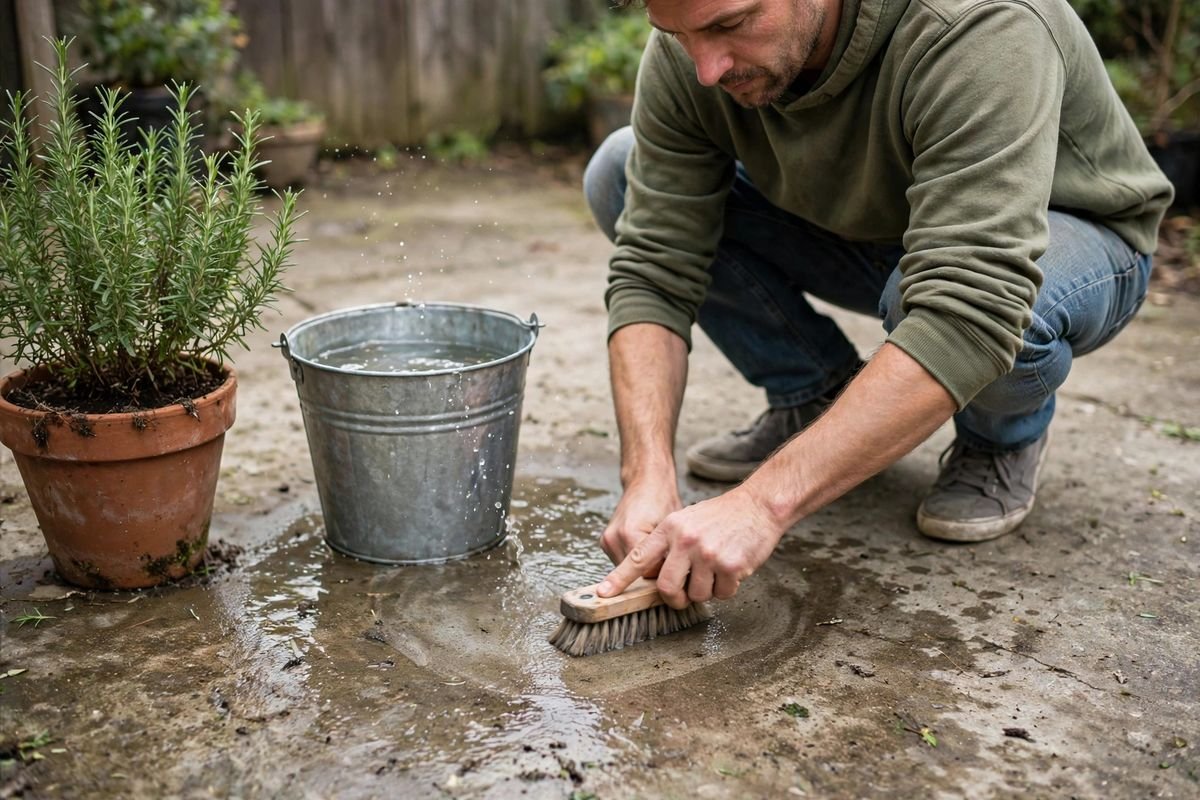
Start with water and a stiff brush. Wet the stain, scrub in circles, and rinse. Many fresh soil marks lift with that alone. For a white salt crust, the same scrub after a good soak often breaks the crust apart, though thick crusts may need a second scrub the next day.
For a stain that survives plain scrubbing, wash the area with warm water and a small amount of dish soap, scrub again, and rinse well so soap does not leave its own film. Avoid harsh acids and bleach on a patio near plants, since runoff reaches soil and roots. Work on a cool day or in shade when you can, since cleaning solutions dry too fast on hot concrete and leave marks of their own.
Prevention still beats cleaning. Once the slab is clean, put the saucer and risers back before the pot returns, so the same ring does not form again by midsummer. A pot that sat flat on the slab for a year may leave a faint outline even after scrubbing, and that outline fades over time with sun and rain once drainage stops reaching the slab.
Questions
A saucer does not harm a plant when it is emptied after watering. Trouble starts only when a saucer stays full, since roots sit in water and rot follows. Empty saucers after every watering and after rain, and the plant gets the drainage it needs without the wet feet it does not.