
This post may contain affiliate links. If you buy through links on this page, we may earn a commission at no extra cost to you.
As an Amazon Associate I earn from qualifying purchases.
Seed starting indoors fails most often from weak light. A sunny windowsill looks bright to our eyes, yet it gives seedlings far less light than they need on short winter days, and plants stretch toward the glass, grow thin stems, and flop over. A budget grow light fixes that gap without a large outlay, as long as we match the fixture to our seed trays and accept what a low price leaves out.
This guide compares three budget tiers: a shop light, a bulb set, and a small panel. We have not tested the products linked here, and we do not present any price below as a current store price. Fixture prices here are planning figures we chose so we can compare tiers on the same basis.
Three budget tiers at a glance
| Tier | Assumed fixture price | Watts | Coverage | Cost per season |
|---|---|---|---|---|
| Shop light | $25 | 40 | One standard seed tray | About $15 |
| Bulb set | $20 | 30 total | One small tray or a few pots | About $12 |
| Small panel | $60 | 60 | One to two seed trays | About $27 |
Cost per season combines electricity and a share of the fixture price, spread over an assumed service life. The cost section later in this guide shows every step of that math, with all assumptions stated in plain text.
Shop light tier
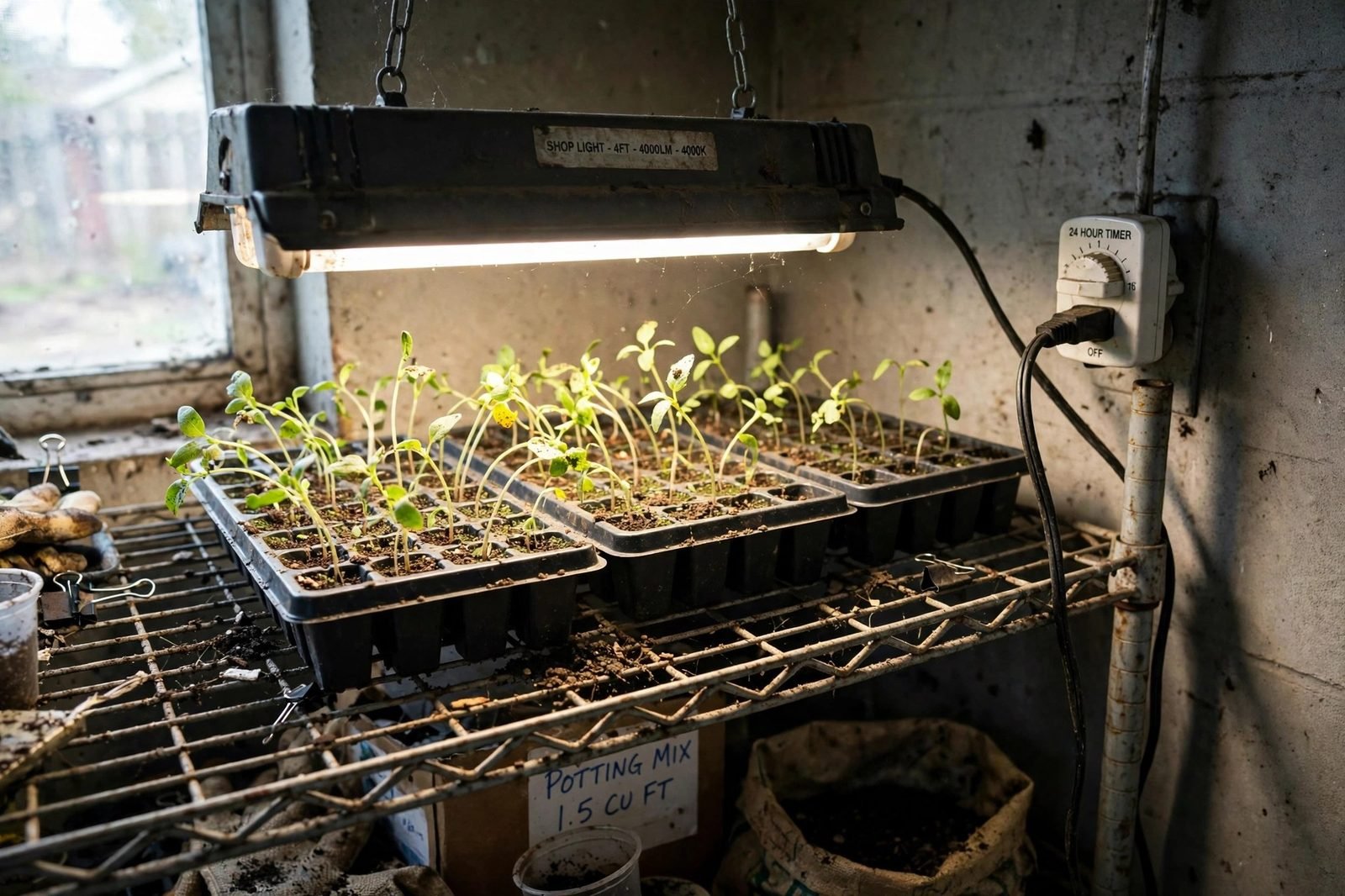
A shop light is a long tube fixture, often sold with two tubes, that hangs by chains above a seed tray. It suits one or two standard trays on a wire shelf, and it spreads light fairly evenly across the tray because the tubes run the full length of the fixture. Hanging height is easy to adjust by shortening or lengthening the chains, and replacement tubes are widely sold. Our general guide to best grow lights for seedlings covers how tube fixtures sit beside other light types for a first indoor setup.
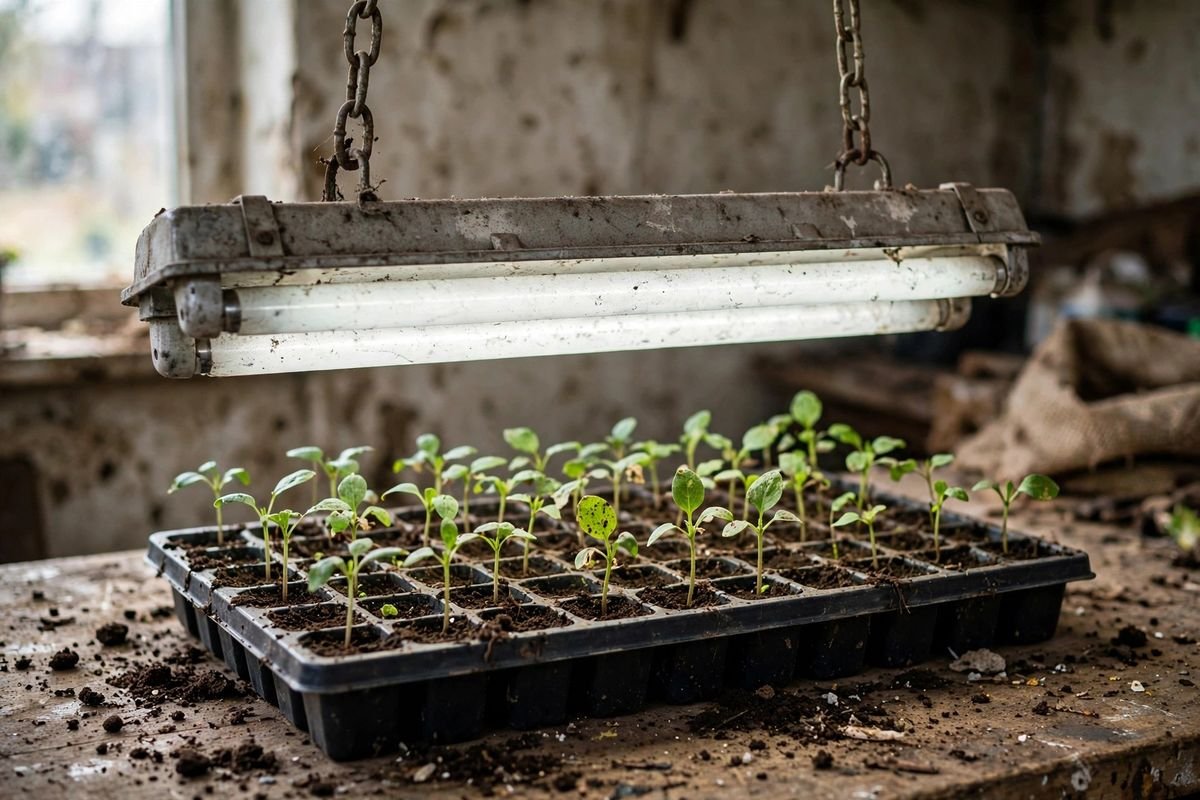
The tradeoffs are size and glare. A shop light needs headroom for the fixture, the chains, and the tray below, and it lights a rectangle, so pots placed outside that rectangle get little benefit. The tubes also put out visible glare in a living room, so a garage corner or spare room suits this tier better than a kitchen counter. Search listings for a shop light for seedlings and confirm tube length, cord length, and whether tubes are included, since listings differ on those points.
Bulb set tier
A bulb set pairs two or more screw-in grow bulbs with clip-on fixtures, and it suits a few pots rather than full trays. We can point each bulb at one pot, move a bulb when a plant leans, and start with a small outlay. That flexibility helps on a crowded shelf where a long fixture would not fit. The comparison in grow light bars vs bulbs explains how point sources differ from long fixtures in coverage and shadows.

The tradeoff is uneven coverage. Each bulb lights a cone, so the edges of a tray sit dimmer than the center, and seedlings at the edge may lean toward the nearest bulb. Bulb sets also need a separate clamp for each bulb, so cords multiply as we add lights. For two to six pots, a bulb set stays simple and cheap to run, which is why it wins the lowest cost per season in our table despite its limits. Search listings for a clip-on grow light bulb set and confirm socket type, cord length, and whether bulbs are included.
Small panel tier
A small panel is a flat LED board that hangs above one or two trays and puts out more light per square foot than the other two tiers. It suits a gardener who wants stronger light for stocky seedlings and who plans to start seeds every year, since the higher fixture price spreads over more seasons. Panels also run with a single cord in many listings, which keeps a shelf tidier than several clamp fixtures. Our notes on LED grow light vs sunny window explain why that extra light matters on cloudy days.
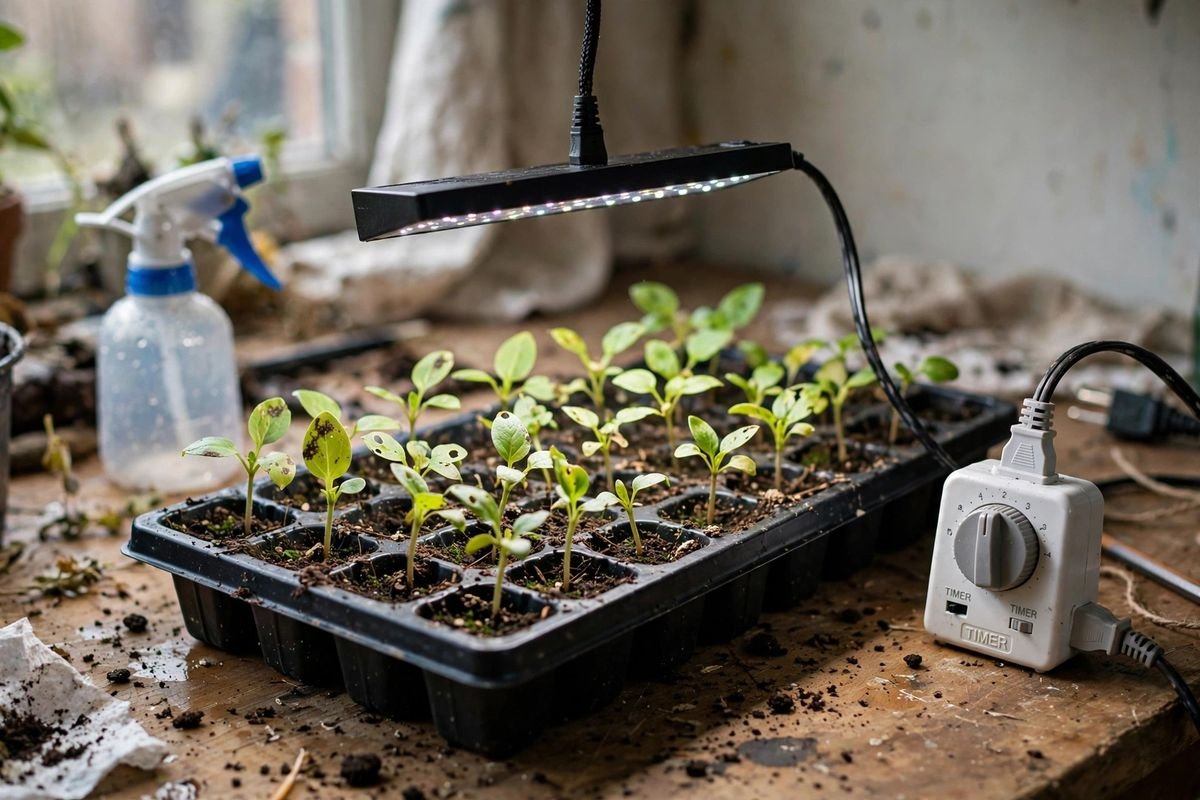
The tradeoff is price and heat in a tight space. A panel costs more up front, and some panels run warm enough that we need to watch the gap between the panel and the seedlings. A panel also lights a fixed rectangle, so we still need to center trays under it and rotate them so edge plants do not lag. Search listings for a small LED grow light panel and confirm panel size, hanging hardware, and timer controls included in the listing.
Cost per season, worked out
We used the same assumptions for all three tiers so the comparison stays fair. Electricity costs $0.17 per kilowatt-hour, lights run 16 hours a day, and the season lasts 90 days. A kilowatt-hour figure equals watts divided by 1,000, multiplied by hours, so readers can redo this math with a local electricity rate.
Shop light, 40 watts: 40 divided by 1,000 equals 0.04 kilowatts. Multiply by 16 hours and 90 days to get 57.6 kilowatt-hours. At $0.17 per kilowatt-hour, electricity costs $9.79 for the season. A $25 fixture spread over 5 seasons adds $5 per season. Total cost per season comes to about $15.
Bulb set, 30 watts total: 30 divided by 1,000 equals 0.03 kilowatts. Multiply by 16 hours and 90 days to get 43.2 kilowatt-hours. At $0.17 per kilowatt-hour, electricity costs $7.34 for the season. A $20 fixture set spread over 4 seasons adds $5 per season. Total cost per season comes to about $12.
Panel, 60 watts: 60 divided by 1,000 equals 0.06 kilowatts. Multiply by 16 hours and 90 days to get 86.4 kilowatt-hours. At $0.17 per kilowatt-hour, electricity costs $14.69 for the season. A $60 fixture spread over 5 seasons adds $12 per season. Total cost per season comes to about $27. If a panel lasts longer than 5 seasons, its per-season share falls, and if a bulb set fails early, its per-season share rises. Treat service lives above as assumptions for planning, not as promises from any maker.
Height, hours, and setup notes
Height and hours matter as much as fixture type. Seedlings do best with light close above them, and the gap changes as plants grow, so check the gap each time we water. Our guide to how high grow lights should be above seedlings covers starting gaps and how to raise a fixture as plants grow. Our guide to how long grow lights should stay on for seedlings covers daily hours and why a timer beats switching lights on and off by hand.
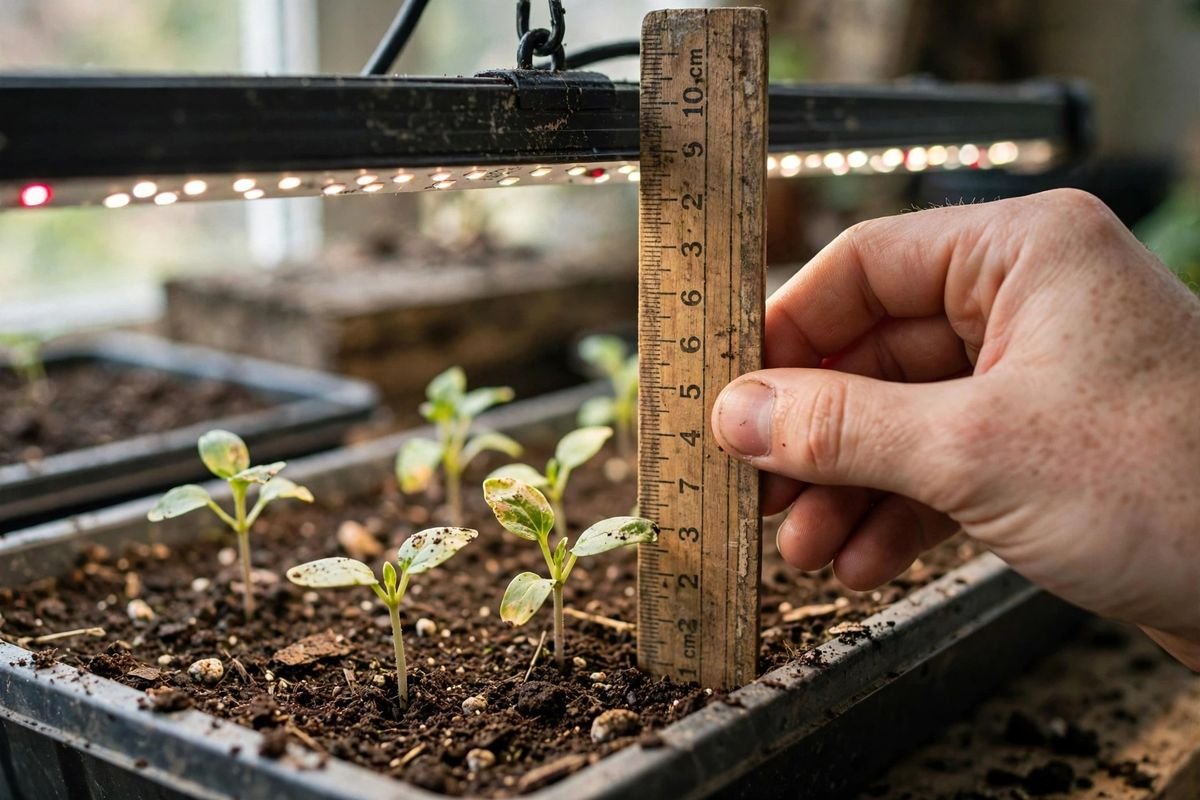
Place a timer where we can reach it without moving trays, and route cords so water cannot drip onto plugs or power strips.
How to choose
Choose a shop light if we run one or two standard trays on a wire shelf, want even light across a full tray, and have headroom for chains and a tube fixture. Choose a shop light if the shelf sits in a garage or spare room where glare will not bother anyone in the evening.
Choose a bulb set if we grow only a few pots, need to aim light at individual plants, or work on a crowded shelf where a long fixture will not fit. Choose a bulb set if the lowest cost per season matters most and we accept uneven coverage at tray edges.
Choose a small panel if we want stronger light for stocky seedlings, plan to start seeds every year, and can accept a higher entry price in exchange for a tidier shelf. Choose a panel if we run one or two trays and want room to expand to a second tray later without buying a second fixture type. Start with the tier that fits our current tray count, not the tier we might need in three years.
Sources & Further Reading
University of Minnesota Extension, Starting seeds indoors: https://extension.umn.edu/planting-and-growing-guides/starting-seeds-indoors
North Carolina State Extension, Extension Gardener Handbook Chapter 13 Propagation: https://content.ces.ncsu.edu/extension-gardener-handbook/13-propagation