
This post may contain affiliate links. If you buy through links on this page, we may earn a commission at no extra cost to you.
As an Amazon Associate I earn from qualifying purchases.
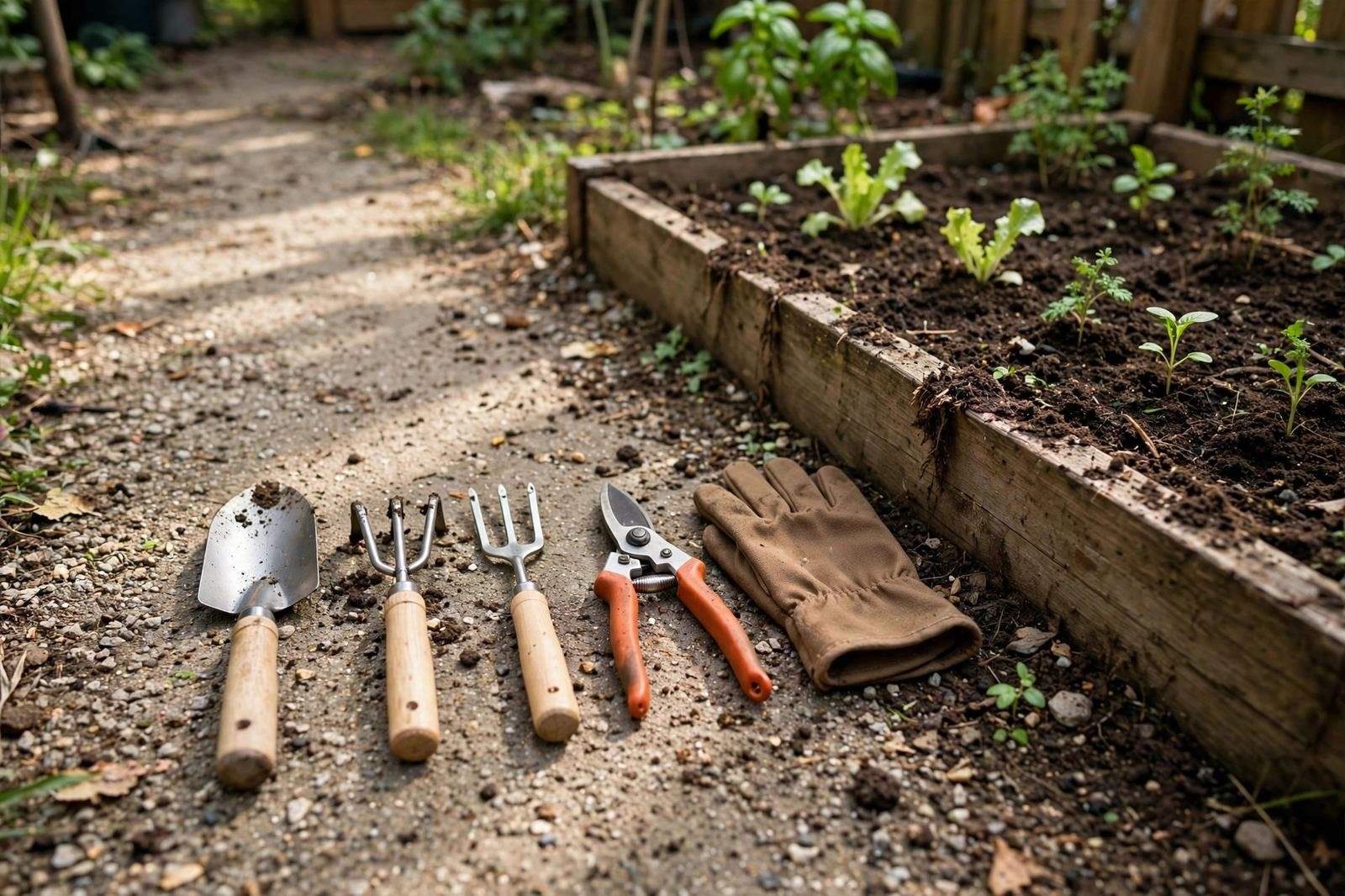
Walk into any garden center as a new gardener and the tool wall can feel like a test you didn’t study for. Dozens of specialized gadgets promise to make some narrow job easier. Here’s the honest truth: a beginner needs five core tools to start a real garden, and everything else can wait until a specific job asks for it. Buy those five in decent quality, and you’ll handle planting, weeding, watering, and basic pruning for seasons to come.
Below we’ll lay out the minimal kit, show a quick table of what each tool does, and walk through a simple budget example with the math shown. We’ll also cover the nice-to-have tier, and the popular purchases we’d suggest skipping at first because they solve problems most beginners don’t have yet.
The Five Core Tools at a Glance
| Core tool | Main job | What happens if you skip it |
|---|---|---|
| Hand trowel | Digging planting holes, transplanting seedlings, scooping soil and compost | You’ll dig with a kitchen spoon or your hands, which is slow, messy, and rough on roots |
| Bypass pruners | Clean cuts on stems, deadheading, harvesting, trimming small branches | You’ll tear stems with scissors or snap them by hand, which invites disease and ragged growth |
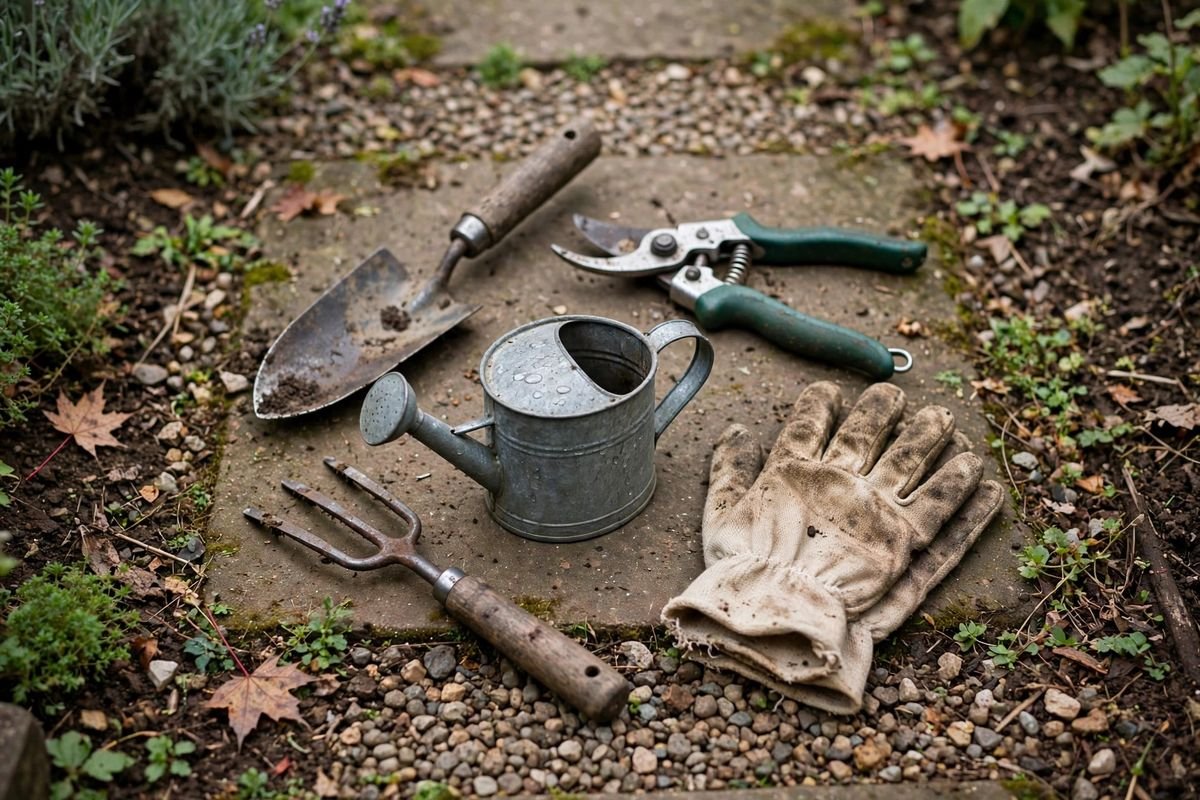
| Watering can or wand | Gentle, targeted watering at the base of plants | You’ll blast seedlings with a hose nozzle or under-water from too far away |
| Hand fork or cultivator | Loosening soil, working in compost, prying out small weeds | Compacted soil stays compacted, and weeds come out in pieces instead of whole roots |
| Garden gloves | Protecting hands from blisters, thorns, and rough soil | Sore, scraped hands after the first long session — and a real risk with thorny plants |
The Minimal Kit, Tool by Tool
1. Hand Trowel
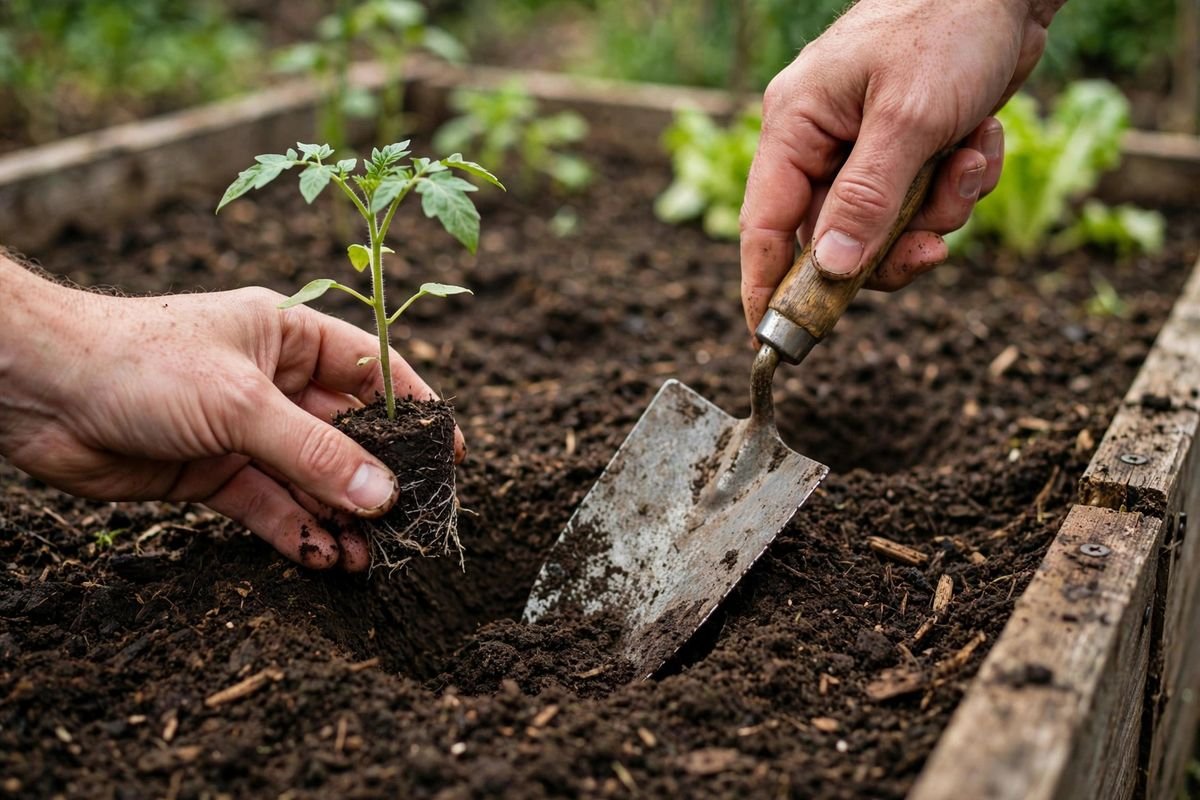
This is the tool you’ll reach for more than any other. A good hand trowel sets seedlings into beds, digs holes for bulbs and transplants, and scoops compost exactly where you want it. Look for a blade that won’t bend the first time it meets rocky soil and a handle that fills your hand comfortably. One sturdy trowel beats a drawer full of flimsy ones. Our guide to the best hand trowels for gardening walks through blade materials and handle shapes in detail.
2. Bypass Pruners
Bypass pruners work like scissors, with two curved blades passing each other for a clean cut on living stems. That clean cut matters. Crushed or torn stems heal slowly and give disease an easy entry point. Use your pruners for deadheading flowers, trimming herbs, harvesting vegetables with tough stems, and tidying small shrubs. Anvil pruners, which crush against a flat pad, have their place on dead wood, but bypass is the right first pair for a beginner. Our roundup of the best pruning shears for home gardeners explains sizing and spring types if you want to compare before you buy.
3. Watering Can or Wand
Young plants need water delivered gently at soil level, not blasted from above. A watering can with a detachable rose head, or a watering wand on a hose, gives you that soft, controlled flow. A can is simpler if your garden is small or far from a spigot. A wand earns its keep when you have several beds to cover. Either way, water the soil, not the foliage, and give roots a deep drink rather than a light sprinkle.
4. Hand Fork or Cultivator
A hand fork loosens crusted soil around plants, mixes compost into the top layer, and pops out small weeds with their roots attached. If your soil is heavy or clay-like, it will save your trowel from a job it wasn’t built for. A three-prong cultivator covers similar ground; either one earns its spot in the starter kit.
5. Garden Gloves
Gloves won’t dig a single hole, but they’re the difference between a pleasant afternoon and a painful one. A well-fitting pair protects against blisters, guards your palms from thorns, and keeps soil out of small cuts. Look for a snug fit that still lets you handle seedlings. Owning two pairs helps — one can dry while the other works.
Putting the Five to Work
With just these five, you can prepare a small bed, set out transplants, keep them watered, weed around them, and prune what’s needed through a full first season. If you’re planning your first beds alongside your first tools, our guide on how to start a vegetable garden pairs well with this kit.
A Worked Budget Example: What the Starter Kit Costs
Tool prices swing widely, so let’s be transparent about what we’re doing here. The numbers below are illustrative example prices drawn from typical search-result price ranges at the time of writing. They are not prices we tested or guarantees of what you’ll pay today. The point of the example is to show how a beginner can think about cost per season, not to quote a specific product.
Assumptions: A five-tool starter kit bought in two ways — a budget path choosing the lower end of typical search ranges, and a mid-tier path choosing the middle of those ranges. We assume the kit lasts five seasons with basic care, which is a fair expectation for decent tools that are cleaned and stored dry.
Budget kit example: Hand trowel $10 + bypass pruners $16 + watering can $14 + hand fork $9 + gloves $13 = $62 total.
Mid-tier kit example: Hand trowel $18 + bypass pruners $32 + watering can $28 + hand fork $17 + gloves $23 = $118 total.
Cost per season over five seasons: Budget kit: $62 ÷ 5 seasons = $12.40 per season. Mid-tier kit: $118 ÷ 5 seasons = $23.60 per season.
That framing changes the buying decision. The mid-tier kit costs about $11 more per season, spread across months of garden work. For tools you’ll hold every single session — pruners and a trowel especially — that small per-season difference often buys a noticeably better grip, a blade that holds its edge, and a hinge that doesn’t loosen by July. Gloves and a watering can are the forgiving spots to save money. If you’re comparing starter sets, browsing current beginner garden tool set search results shows how sets bundle these five pieces versus buying them one at a time. Another useful check is a focused beginner garden tool set search sorted by your own priorities, since bundle quality varies and sometimes the separate picks above come out ahead.
The Nice-to-Have Tier
Once your five core tools feel like old friends, a second tier opens up. None of these are required on day one, but each solves a real job when it appears:
- Kneeling pad or garden kneeler: saves your knees during long weeding sessions and makes bed work far more comfortable.
- Long-handled spade or fork: worth it when you move from containers and small beds into digging larger areas.
- Hoe: efficient for clearing weeds between rows in a bigger vegetable plot.
- Soil knife or weeding tool: a narrow blade that slips out deep-rooted weeds like dandelions cleanly.
- Harvest basket or trug: a simple way to carry produce, tools, and pulled weeds in one trip.
Add from this tier one piece at a time, when a repeated chore tells you exactly what’s missing. That approach keeps your shed honest and your spending tied to real needs.
What to Skip Buying First
Some popular purchases can wait, and skipping them early frees budget for better versions of your core five.
Large multi-piece tool sets with dozens of gadgets. Sets advertising twenty or thirty pieces usually pad the count with specialty items a beginner rarely touches, and the core tools inside are often the weakest part. Five good tools outperform twenty mediocre ones.
Electric or battery-powered tools. Hedge trimmers, electric tillers, and powered pruners make sense for large properties. In a starter garden, they’re cost and maintenance without a matching job. Hand tools teach you the feel of soil and stems, and that feel is worth more than speed in your first seasons.
Specialty single-job tools. Bulb planters, elaborate weed pullers, and novelty gadgets each do one narrow thing. A trowel and a hand fork already cover most of those jobs. Buy the specialty tool later, only if you repeat that one task every week.
Decorative tool sets. Floral handles and matching boxes look charming, but spend on blade quality and comfortable grips first. The prettiest tool in the shed is no comfort when it bends in hard soil.
Storing Your Starter Kit
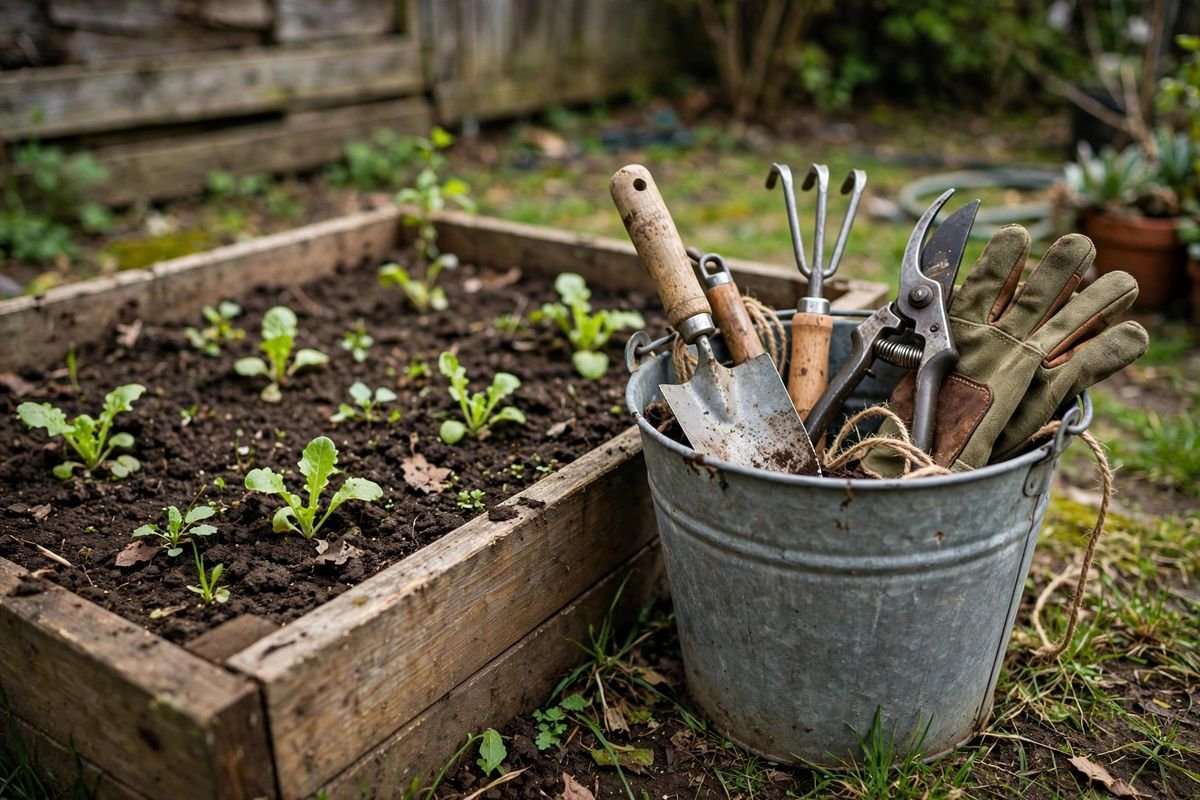
Five tools don’t need a custom shed system. A bucket, a small tote, or a wall hook strip keeps the whole kit together and portable. Clean soil off blades before storing, keep everything dry, and your trowel and pruners will be ready the moment you are. That simple habit also protects your investment in the per-season math above — tools that are stored wet and dirty rarely make it to season five.
Troubleshooting Beginner Tool Frustrations
Your Trowel Bends in Tough Soil
Thin, stamped-metal blades flex under pressure. Use your hand fork to loosen hard soil first, and when you replace the trowel, choose a thicker single-piece blade.
Pruners Leave Ragged, Crushed Cuts
You may be cutting stems that are too thick for the pruners, or using an anvil-style tool on living wood. Bypass pruners handle soft and medium stems cleanly. Save thick branches for loppers, which belong in the later tier for most beginners.
Everything Feels Uncomfortable After an Hour
Grip size is usually the culprit. Tools that are too large or too small for your hands force extra squeezing. Hold the tool before you buy when you can, and don’t underestimate gloves with a snug fit.
Frequently Asked Questions
If we can only afford three tools, which three come first?
Start with the hand trowel, bypass pruners, and a watering can or wand. Those three cover planting, cutting, and watering — the daily essentials. Add the hand fork and gloves as soon as the budget allows.
Are tool sets ever a good deal for beginners?
They can be, when the set covers the core five without padding and the blade quality is solid. Compare the set price against the worked example above. If a set costs far less than the budget path, expect thinner metal and shorter life.
Should beginners buy the most expensive tools right away?
Not necessarily. Mid-tier versions of the two tools you hold constantly — pruners and a trowel — are a smart splurge. Save on gloves and watering gear at first. The cost-per-season math shows the difference is modest either way, so comfort and durability should guide you more than the lowest sticker price.
Sources & Further Reading
- University cooperative extension guidance for beginning vegetable gardeners on essential hand tools
- State extension publications on selecting bypass pruners and caring for garden hand tools
- USDA-affiliated beginner gardening resources on basic tool kits for small home gardens
Five tools, honestly chosen, will start a garden and teach you what good equipment feels like. Spend where your hands notice the difference, skip the gadgets until a real chore asks for them, and let your kit grow with your garden.