
This post may contain affiliate links. If you buy through links on this page, we may earn a commission at no extra cost to you.
As an Amazon Associate I earn from qualifying purchases.
A hand trowel looks simple until the blade bends in hard soil or the handle loosens midway through planting day. The shape, the steel, and the way the blade joins the handle decide whether a trowel feels like an extension of your hand or a tool you replace every other spring. Our guide sorts those differences so you can match one trowel to the work you do most.
This is a spec-based research roundup. We compared blade shapes, materials, and construction patterns across common trowel types, and checked general tool-care guidance from extension sources. We did not run hands-on product trials here, and we do not claim test results. Check each listing for blade material, tang style, and handle size before you buy. If you are building a first kit, our overview of what garden tools a beginner actually needs puts the trowel in context with the other basics.
Quick Comparison: Three Trowel Shapes
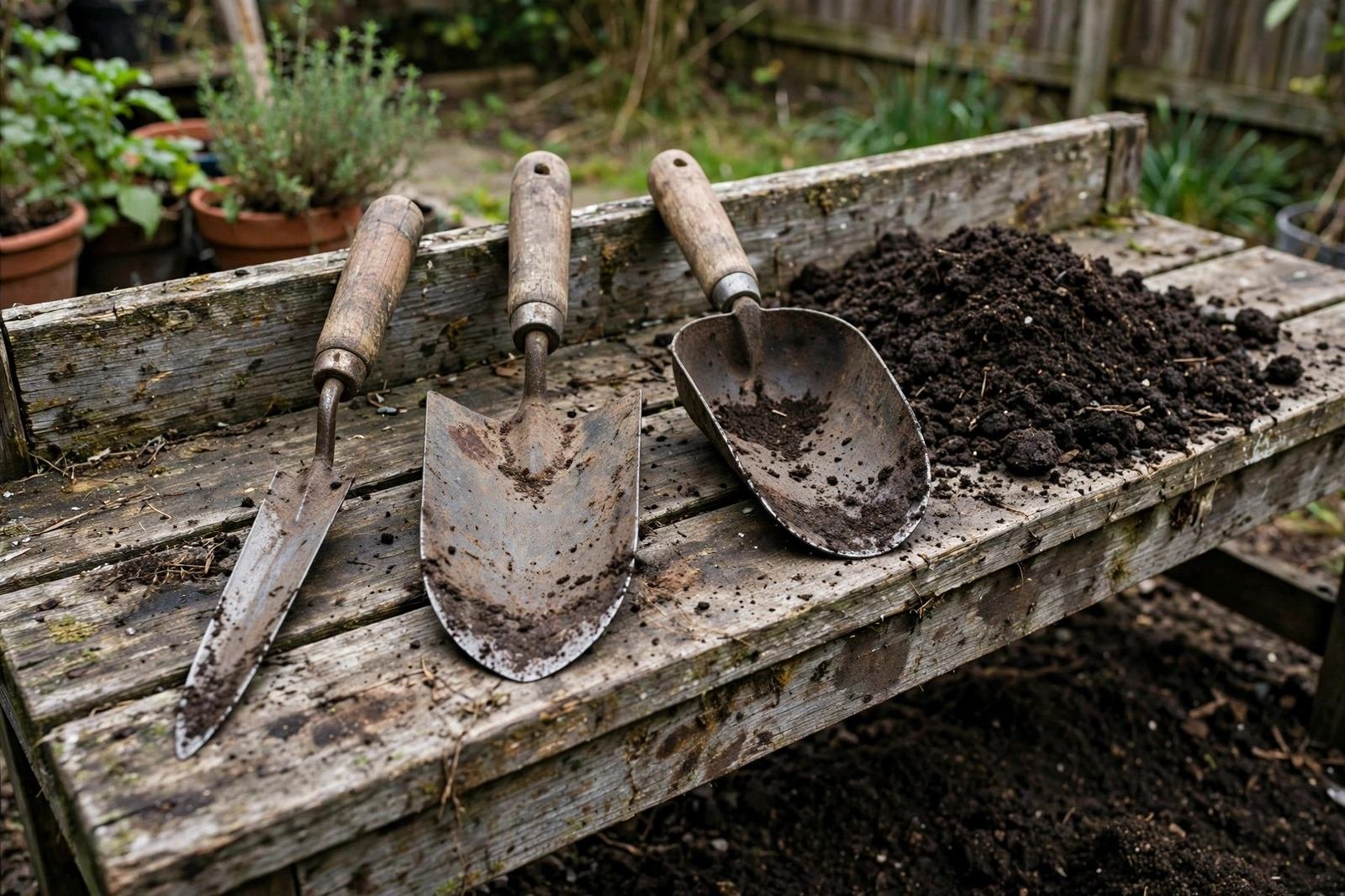
Most hand trowels fall into three shapes. The table gives the short answer; the sections after it explain materials and construction. Pick the shape by the job you repeat most often, not by a job you might do once.
| Trowel type | Blade | Best for | Watch out for |
|---|---|---|---|
| Narrow transplant trowel | Long, slim blade, often with depth marks etched along the spine | Planting seedlings and bulbs at a set depth, slipping roots out of cell packs, working between close-spaced plants | Moves little soil per scoop; a thin blade can flex in rocky or compacted ground |
| Traditional wide-blade trowel | Broad, slightly cupped blade that meets the handle at a short neck | Digging planting holes, mixing amendments into a hole, general bed work in loose to medium soil | Too wide for tight spacing; a weak neck joint bends under prying |
| Scoop or soil trowel | Deep, rounded scoop shape that holds a heaped load | Moving potting mix, compost, and granular fertilizer from bag or bin to pot | Poor digging edge; the deep cup is clumsy for slicing into firm soil |
Read the “watch out for” column as a durability clue. Flex, bending, and loose joints show up at the neck and tang first, long before a blade wears out. Shape gets you to the right shelf; construction decides how long the tool stays there.
Three Blade Shapes, Three Different Jobs
A narrow transplant blade slides into a cell pack and under a root ball without tearing neighboring roots. Its slim profile also fits between plants already growing, which helps when you tuck late seedlings into a full bed. A wide blade does the opposite work: it opens a planting hole in one or two scoops and leaves room to set a root ball, add amendment, and firm soil around the stem. A scoop blade barely digs at all. Its job is volume, moving mix from a bag to a pot with less spilling.
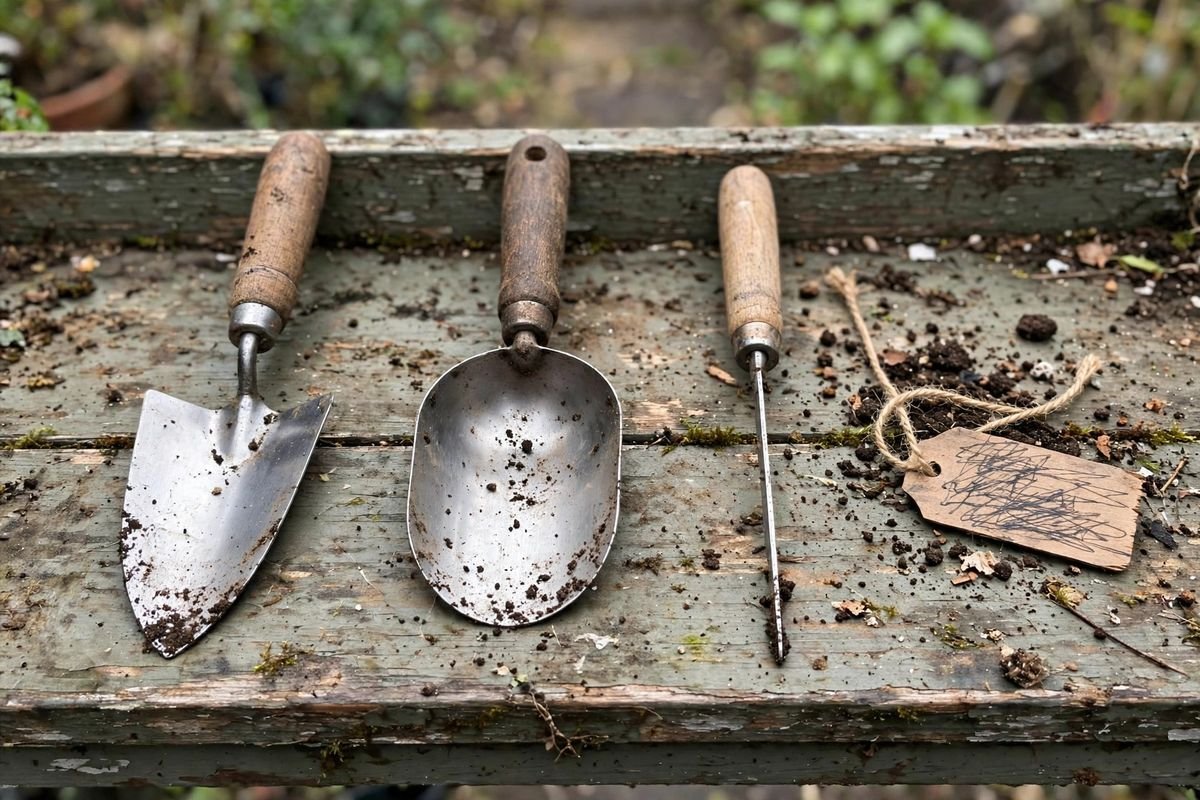
Many gardeners end up with two of the three. A wide-blade trowel handles most bed work, and a narrow transplant trowel covers seedlings and bulbs. Add the scoop only if you pot up often. That pairing also fits the planting steps in our guide to how to start a vegetable garden, where most hand work is holes for transplants and tucking between rows.
Blade Materials: Stainless, Carbon Steel, and Aluminum
Listings name the blade material near the top of the specifications, and each option trades edge life, weight, and upkeep in a different way. No material wins on every point, so match the material to your soil and your storage habits.
Stainless Steel
Stainless blades resist rust in a damp bucket or humid shed, and soil slides off the polished surface with a quick rinse. The tradeoff is edge and stiffness for the price: lower grades can feel softer and may flex more than comparable carbon steel. For gardeners who clean tools in batches rather than after every use, stainless keeps upkeep forgiving.
Carbon Steel
Carbon steel takes and holds a keener digging edge, and it tends to feel stiffer when you lever a root ball or cut into firmer soil. It also rusts if it stays wet or soil-caked in storage. A wipe with a dry cloth and a light coat of oil before winter storage keeps the surface sound. If you store tools dry, carbon steel rewards that habit.
Aluminum
Cast aluminum blades keep weight low, which helps during long planting sessions. Aluminum resists rust, yet it is softer than steel. In stony soil, an aluminum edge can chip or bend sooner, and a thin casting may not tolerate prying. Treat it as a light-duty tool for loose soil, containers, and raised beds rather than a lever for rocks.
Browse hand trowels on Amazon and compare the material line beside the blade shape. A listing that hides its material or tang style is asking you to guess at the two details that decide service life.
Forged One-Piece vs Welded Tang: Where Trowels Break
The tang is the part of the blade that extends into or under the handle. In a one-piece forged trowel, blade and tang come from a single piece of metal, shaped under heat and pressure. There is no joint at the neck, so the flex that snaps lesser trowels has no weak seam to attack. In a welded or stamped design, a separate blade joins a metal shank, and that joint carries every prying load. A clean weld can serve well in loose soil, but the joint remains the first place to check for play.
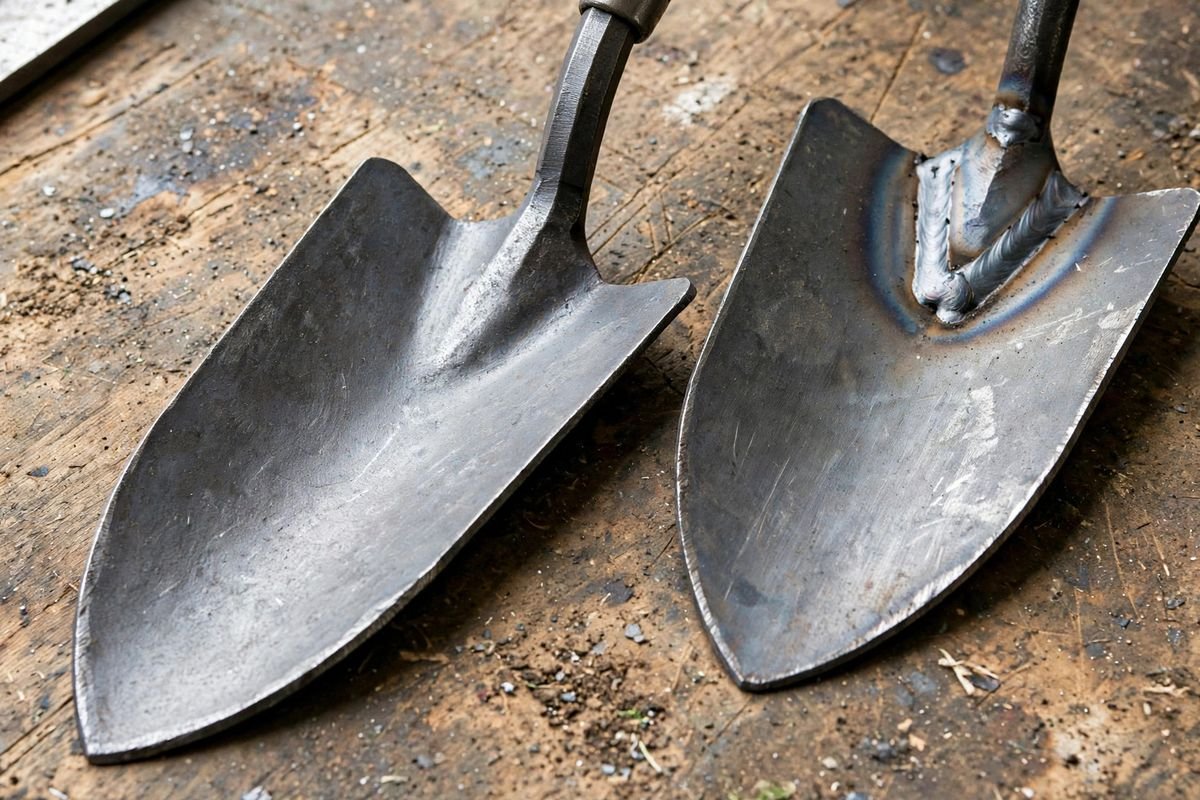
To judge construction from a listing photo, look at the neck. A smooth, continuous flow from blade into handle suggests a forged or one-piece build. A visible seam, a rivet pattern at the neck, or a thin flat shank that disappears into a hollow handle suggests a joined build. Neither style is automatically wrong for light work. The question is how often you pry, twist, or dig in compacted ground. Frequent heavy use points to the one-piece option.
Handle Fit and Depth Marks in Daily Use
Handle fit decides whether a well-built blade stays comfortable past the tenth planting hole. A handle that is too slim concentrates pressure in your fingers; one that is too thick forces a loose grip and extra forearm work. Look for a handle long enough for your whole hand, with a slight swell at the end so the tool does not slide forward in wet soil. Wood, composite, and molded grips all work. Shape and diameter matter more than grip material alone.
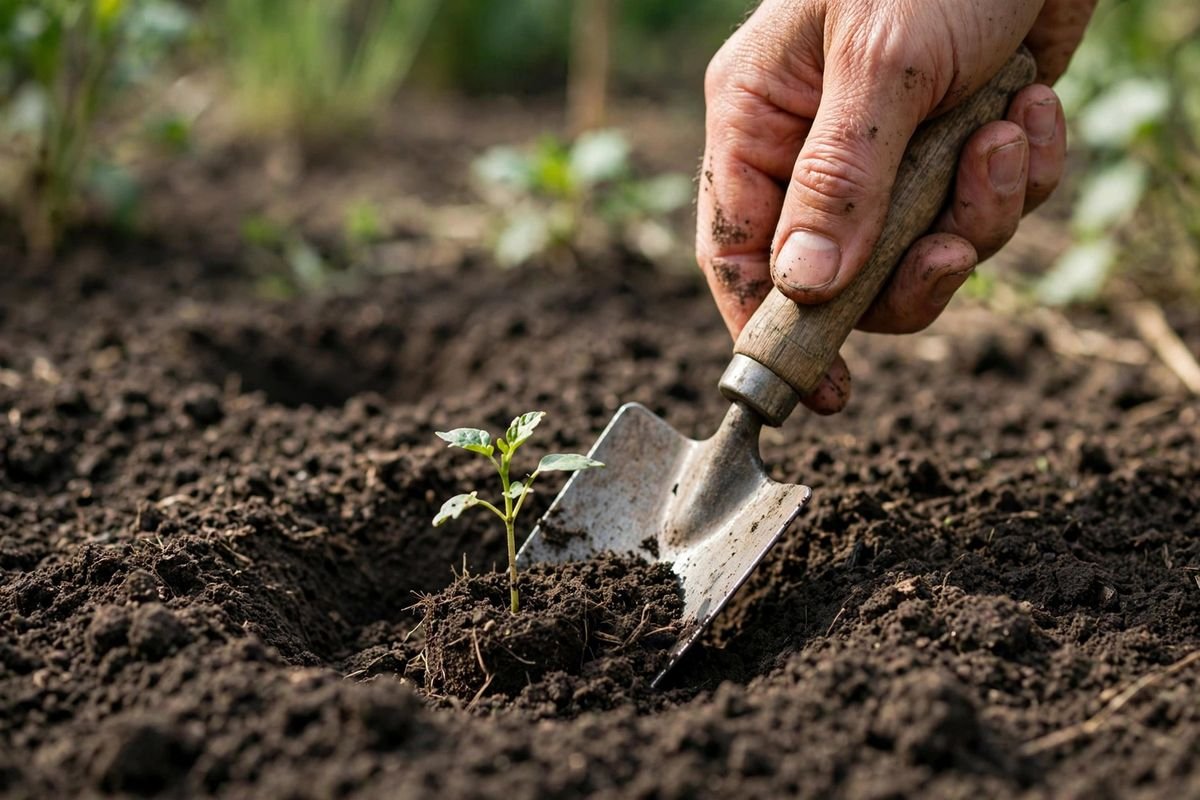
Depth markings are the quiet feature on a transplant trowel. Etched or stamped inch marks along the blade let you set bulbs and seedlings at a consistent depth without fetching a ruler. Printed marks wear off with soil abrasion, so etched or stamped marks hold up longer. If you plant bulbs in batches or set transplants at a uniform depth for even watering, choose the narrow blade with durable marks. If most of your work is scooping and mixing, depth marks matter far less than blade volume.
Cost Per Season: A Worked Example
Price tags compare poorly across tools that last different lengths of time. Cost per season gives a fairer view, as long as the assumptions stay visible. Here is the arithmetic with simple, stated inputs.
Assumptions. A one-piece forged trowel costs $18 and stays in service for 8 seasons. A stamped trowel costs $7 and needs replacement every 2 seasons. Both see the same garden work, and we ignore shipping and price changes so the comparison isolates service life.
Forged trowel. $18 ÷ 8 seasons = $2.25 per season. Over 8 seasons you buy one tool and spend $18 in total.
Stamped trowel. $7 ÷ 2 seasons = $3.50 per season. Over the same 8 seasons you buy four tools: 4 × $7 = $28 in total, which is also $3.50 per season.
The difference. The forged option costs $28 − $18 = $10 less across 8 seasons, or $3.50 − $2.25 = $1.25 less per season. That gap widens if the stamped tool fails sooner, and it shrinks if the forged tool is lost or left out to rust. Losing tools is its own cost, so a bright handle or a habit of returning the trowel to one bucket can protect the math better than any specification.
Our Picks by Job
We do not rank specific models here, because listings change and we have not run hands-on trials. Use these job-based patterns to read any listing.
Choose a narrow transplant trowel if… your season runs on seedlings, bulbs, and tucking plants into tight spacing. Prioritize etched depth marks and a blade stiff enough that it does not flex when you lift a root ball.
Choose a traditional wide-blade trowel if… you dig planting holes in beds and mix amendments at the hole. Prioritize a one-piece or well-joined neck and a handle that fills your grip.
Choose a scoop trowel if… you pot up often and move a lot of loose mix. Prioritize cup volume and a smooth interior that sheds damp mix cleanly.
Choose stainless if… tools live in a damp shed and get cleaned in batches. Choose carbon steel if… you want a stiffer edge and you store tools dry. Choose aluminum if… low weight matters most and your soil is loose and stone-free.
Round out the kit with the right cutting tool for stems. Our roundup of the best pruning shears for home gardeners uses the same spec-based approach, so the trowel and shears can share one buying logic: construction first, claims second.
Care That Keeps a Trowel Working
Knock soil off the blade before storage, rinse only when needed, and dry the metal before the tool goes back in the bucket. A light wipe of oil on carbon steel before winter storage limits rust. Check the neck each spring: grip the handle, press the blade tip against a board, and feel for any click or wobble at the joint. Store trowels out of standing water, in one home spot, so the cost-per-season math survives real habits.
Compare current listings for forged transplant trowels on Amazon by blade material and tang style first, then by handle shape. The right trowel matches your most repeated job and is built well at the joint where trowels actually fail.
Sources & Further Reading
- Cooperative Extension System resources (extension.org) for general garden tool selection, care, and storage guidance.
- United States Department of Agriculture (USDA) resources on soil preparation and planting depth for transplants and bulbs.
- Land-grant university extension publications on hand tool materials and maintenance, available through state extension offices.