
This post may contain affiliate links. If you buy through links on this page, we may earn a commission at no extra cost to you.
As an Amazon Associate I earn from qualifying purchases.
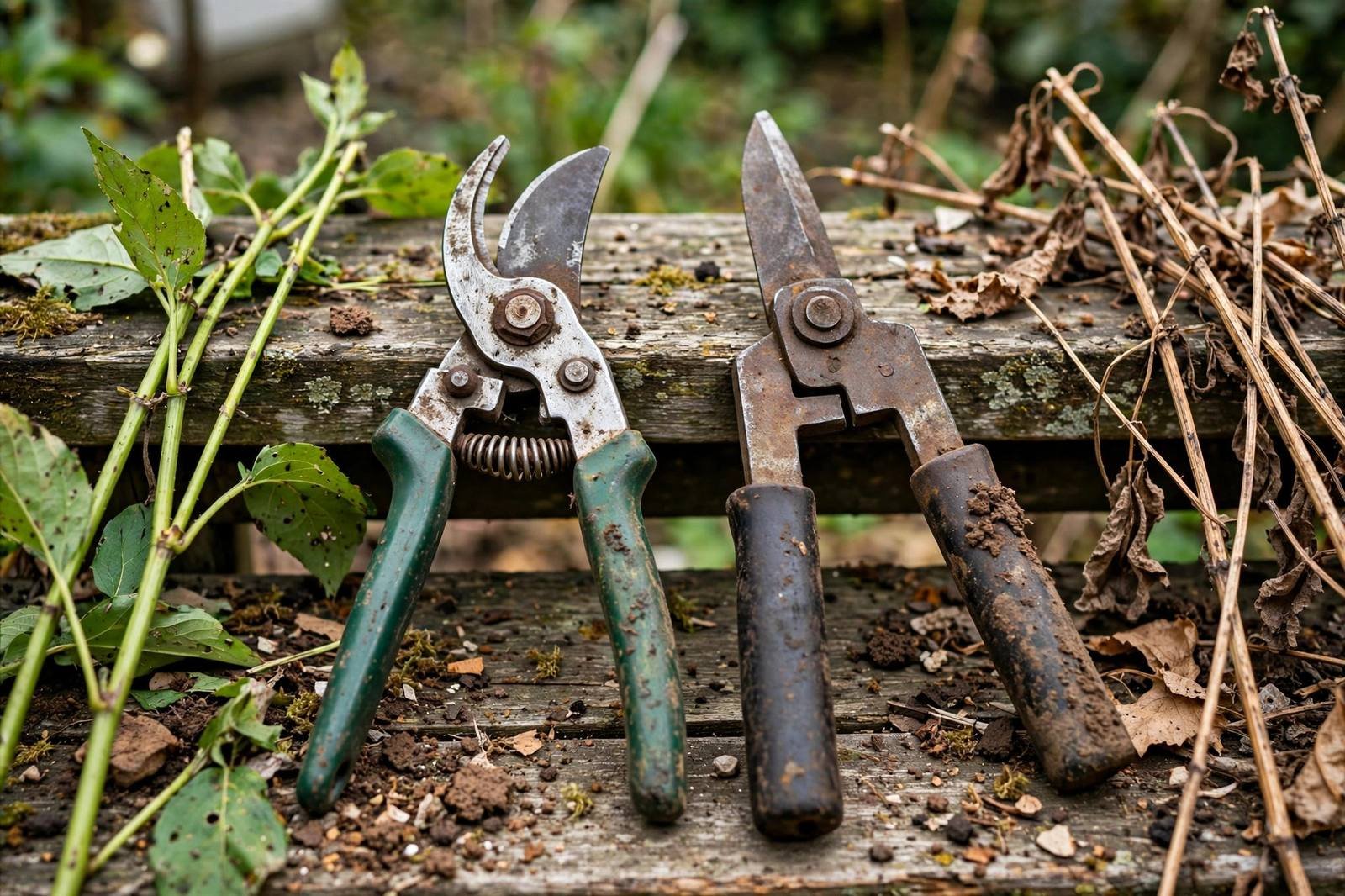
Two hand pruners can look alike and still leave very different wounds. A bypass pruner slices with two curved blades that pass each other like scissors. An anvil pruner drives one straight blade onto a flat pad. That one difference decides which tool protects live tissue and which tool powers through dry, dead wood.
Our team built this comparison from extension guidance and listing capacity patterns. We have not run hands-on product trials for the tools linked here, and we do not claim test results. Check each listing for cut capacity and replacement parts. For a wider shortlist, see our guide to the best pruning shears for home gardeners.
Quick Comparison
The table gives the short answer. Detail follows, because a live rose cane and a dead lilac stem ask for different things.
| Feature | Bypass pruners | Anvil pruners |
|---|---|---|
| Cutting action | Two curved blades slide past each other and slice | One straight blade presses the stem against a flat pad |
| Cut quality on live wood | Clean, close cut with little tearing when sharp | More likely to compress live tissue during the cut |
| Best stem types | Live, green stems that need to heal cleanly | Dead, dry, brittle stems and cleanup wood |
| Max stem diameter pattern | Often near 5/8 to 3/4 inch; the listing rating controls | Often near 3/4 inch; the pad helps finish dry cuts |
| Blade upkeep | Sharpen the beveled blade only; keep blades snug | Sharpen the straight blade; replace the pad as it wears |
| Crushing risk | Low on live wood when sharp and sized right | Higher on live wood; low concern on dead wood |
Read the diameter row as a pattern, not a promise. Extension guides commonly place hand pruners at stems up to about 3/4 inch. Dry hardwood resists far more than a green stem, so any cut that needs a twist signals loppers or a saw.
How Each Tool Actually Cuts
Bypass Pruners: A Slicing Cut for Live Wood
A bypass head pairs a thin, curved cutting blade with a thicker hooked blade. The stem rests in the hook and the cutting blade slides tightly past it. The edge slices rather than presses, so the cut surface stays smooth and the bark edge stays attached. On living plants, that clean wound closes faster and leaves fewer ragged entry points for decay. A sharp bypass tool also cuts close to a branch collar without leaving a long stub.
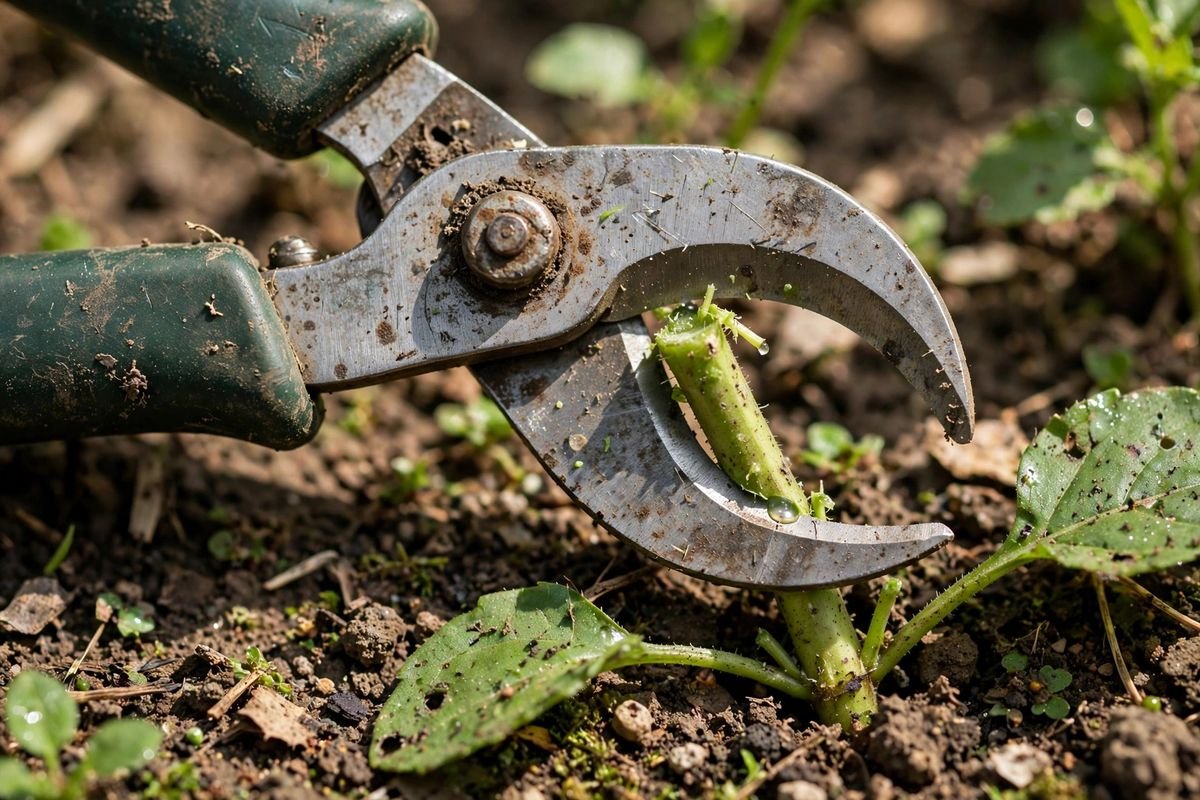
We use bypass pruners on green growth: tomato suckers, soft perennial stems, rose canes that stay on the plant, and young fruit wood. Our notes on how to grow tomatoes cover that sucker work. The tradeoff is upkeep. A dull edge or loose pivot can push the blades apart and turn a slice into a chew.
Anvil Pruners: One Blade Against a Pad
An anvil head lands a straight blade on a flat pad of plastic, composite, or soft metal. The pad supports the stem from below, so force goes straight down. Dry stems that might roll in a bypass hook often sit still on the pad and finish with a clean snap.
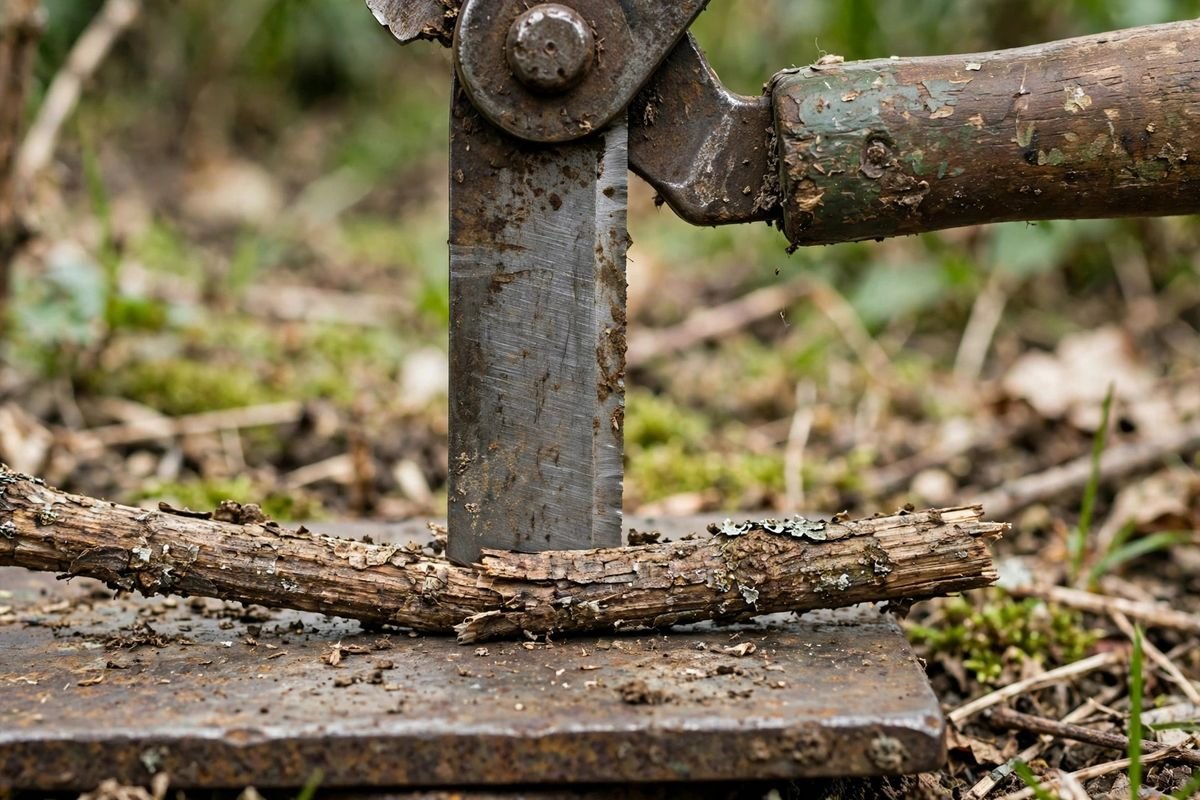
On a live stem, that support becomes the limit. The pad side compresses soft tissue while the blade works through, leaving a pinched edge that heals less evenly. The tip also tends to sit bulkier, so tight work inside a crowded shrub takes more care. For wood that leaves the plant for good, the pinch carries little weight. For a cane that stays and must callus over, it matters.
Pros and Cons for Each Side
Bypass Pruners
Pros:
- Cleanest cut on live, green, growing stems.
- Cuts close to a main stem or branch collar.
- Low crushing risk when sharp and sized right.
- Good control for selective cuts inside shrubs.
Cons:
- Dead hardwood can jam the blades or nick the thin edge.
- Needs careful sharpening and a snug pivot.
- Oversize cuts can bend blade alignment.
Browse bypass pruners on Amazon and check cut capacity, blade material, and replacement blade availability.
Anvil Pruners
Pros:
- Strong finish on dead, dry, brittle stems.
- Straight blade is simple to sharpen; pads often replace.
- Less likely to jam on dry cleanup wood.
- Handy for cutting removed wood into shorter lengths.
Cons:
- Higher crushing risk on live stems.
- Harder to place for a close, flush cut.
- A grooved pad can fold a stem instead of supporting it.
Compare anvil pruners on Amazon and check whether the pad is replaceable, since the pad decides how long the tool cuts well.
Stem-Size Worked Examples: Matching the Tool to the Cut
Assumptions. We use standard hand-pruner guidance, not invented test results: hand pruners suit stems up to about 3/4 inch, the listing rating controls for each model, green wood cuts more easily than dead hardwood at the same diameter, and any cut that needs twisting signals loppers or a saw. Sharpness, wood species, and hand strength shift the result.
Green tomato stem, about 1/4 inch. Size fits either tool. Cut quality decides. The stem stays on a living plant and must heal in warm weather, so bypass pruners get the call for a smooth face and an intact bark edge.
Live rose cane, about 1/2 inch. Size fits a standard hand pruner, and the cane stays on the plant. Use bypass pruners, placed just above an outward-facing bud or at the base. An anvil tool can finish the cut, yet the pad can pinch a cane that needs to callus cleanly.
Dead hardwood stem, about 3/4 inch. A dry lilac stem sits at the top of the range, and dry fibers resist more than green ones. If the model rates that diameter, an anvil pruner often finishes with less drama because the pad keeps brittle wood from rolling. If the blade stalls, move to loppers rather than forcing the handles.
Mixed cleanup pile, 1/8 to 1/2 inch. Sorting first saves both tools. Green living stems go to the bypass side; dry stalks and dead tips go to the anvil side. The sort prevents two common errors: crushing live wood on a pad and chipping a bypass edge on dry hardwood.
That habit fits fall garden cleanup, where removed material gets cut down for compost, brush, or disposal. Cleared beds often make room for the next planting, and our steps for how to plant garlic in fall start right after cleanup in many gardens. Use your local frost dates and regional planting guidance — not your USDA hardiness zone alone — to choose planting dates.
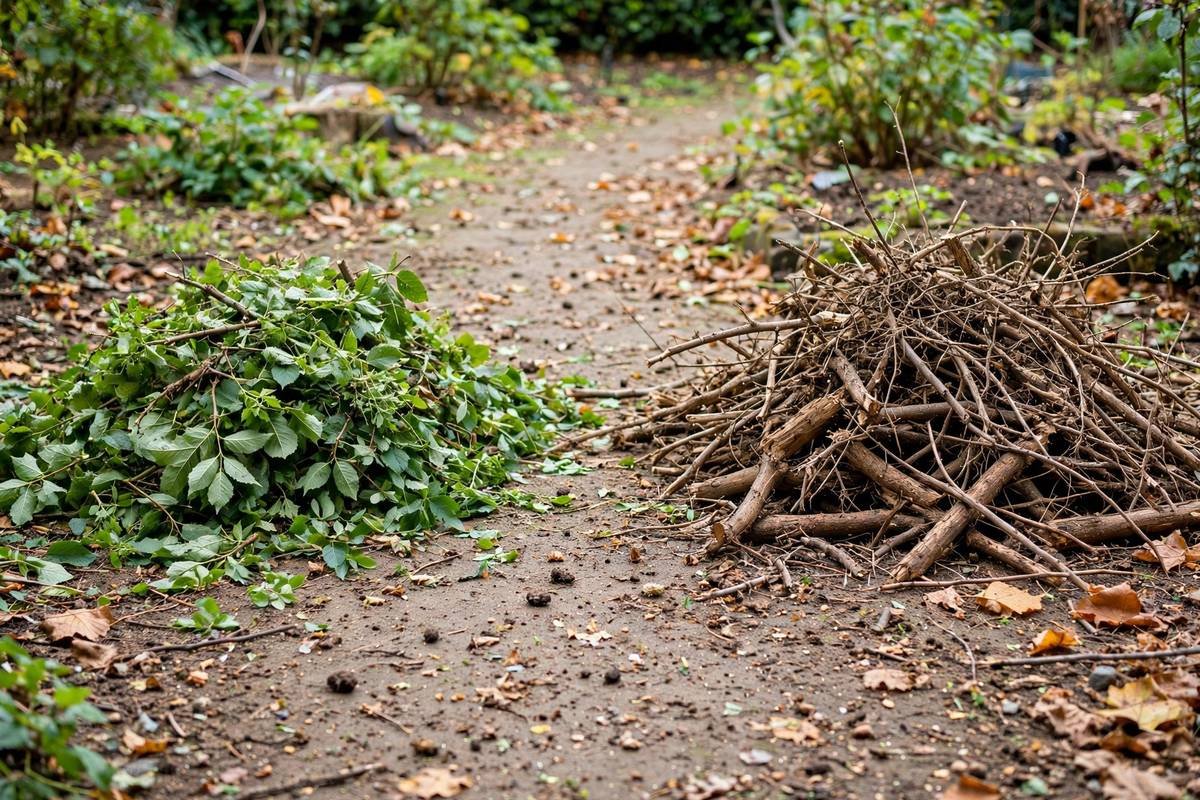
The two piles tell the decision at a glance. Material alive at the cut benefits from a slice. Material already dead benefits from support and force. Diameter refines the call; it does not replace it.
Blade Upkeep and Clean Cuts Between Plants
A sharp tool of either type beats a dull tool of the preferred type. We wipe blades after a session and dry them before storage. On a bypass pruner, sharpen only the beveled side and keep the flat side flat, so the blades keep passing tightly. On an anvil pruner, sharpen the straight edge evenly and inspect the pad for a deep groove.
Cut just outside the branch collar or just above a bud, without leaving a long stub. When disease is a concern, extension guidance recommends cleaning and disinfecting tools between plants. Rinse and dry tools after any bleach-based disinfectant, since bleach corrodes metal.
Common Pruning Mistakes With Each Tool
Anvil tool for finish cuts on live shrubs. The cut completes, yet the pad side stays pinched. Save that tool for wood that leaves the plant.
Bypass tool as a deadwood chopper. Dry hardwood can nick the thin edge and push the blades out of line, so the next live cut tears.
Forcing an oversize stem. A twist of the handles signals the wrong tool size and damages the plant edge and the pruner together.
Cutting with a dull blade or grooved pad. Both tools crush when the edge stops cutting. Upkeep fixes the cut better than extra hand force.
Our Verdict: Which Pruner Belongs in the Bucket?
Most home gardens need bypass pruners first, because live work dominates the season. An anvil pruner earns a place where deadwood recurs.
Choose bypass pruners if the cut stays on a living plant, such as rose canes, tomato suckers, perennial stems, and young fruit wood.
Choose bypass pruners if close, selective cuts matter, such as work inside a crowded shrub or just above a bud.
Choose bypass pruners if only one hand pruner fits the budget, since live-wood jobs come up far more often.
Choose anvil pruners if the work is mostly dead, dry, brittle material that will not stay on a plant.
Choose anvil pruners if removed branches need cutting into shorter lengths for a bin or brush pile.
Choose anvil pruners if a low-upkeep second tool would keep a bypass blade away from dry hardwood.
Our bottom line: buy bypass first, keep it sharp, and add anvil when deadwood recurs.
Frequently Asked Questions
Can an anvil pruner be the only pruner in the shed?
An anvil-only setup handles cleanup and deadwood well, yet live finish cuts suffer. Gardens built around roses, fruit, and vegetables feel that gap most.
Why does a bypass cut look cleaner on a green stem?
The curved blade shears fibers as it slides past the hook, rather than pressing the stem into a pad. A sharp edge and a stem inside the rated size keep the bark attached at the margin.
When should hand pruners give way to loppers?
Move up when dead hardwood nears the rated limit, when the cut needs a twist, or when two hard squeezes fail to finish. Loppers add leverage and protect the plant edge.
Sources & Further Reading
- University of Maryland Extension — Pruning Tools: https://extension.umd.edu/resource/pruning-tools
- Iowa State University Extension and Outreach — Guide to Pruning Equipment: https://yardandgarden.extension.iastate.edu/how-to/guide-pruning-equipment