
This post may contain affiliate links. If you buy through links on this page, we may earn a commission at no extra cost to you.
As an Amazon Associate I earn from qualifying purchases.
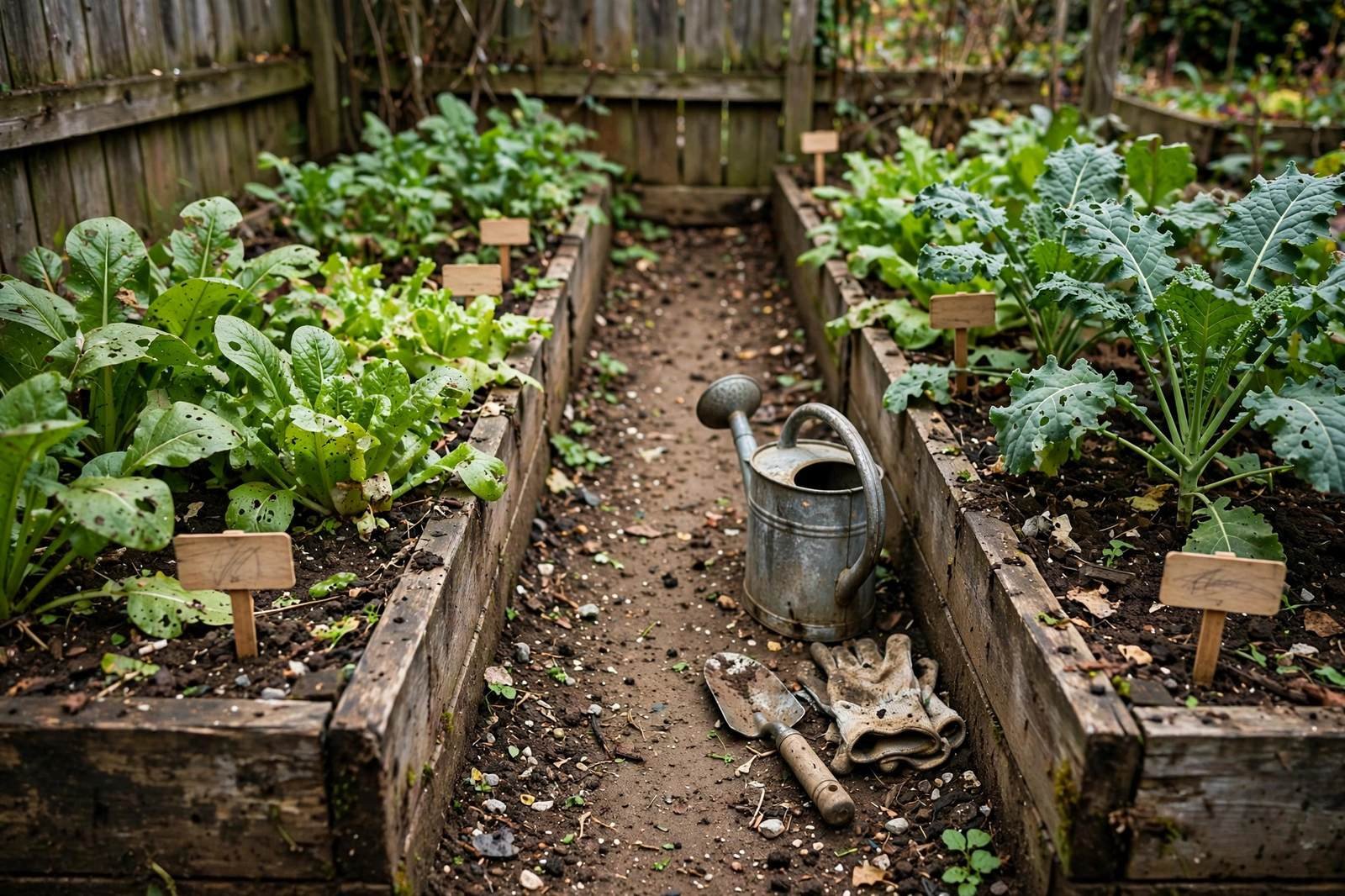
A small backyard does not rule out raised beds. It just changes the math. In a big yard we can lose six inches here and a foot there and never notice. In a compact yard, every inch of bed width eats into the path, and every inch of path eats into growing space. The beds that work best in tight spaces are not always the biggest or the cheapest per square foot. They are the ones that fit the fence line, leave a workable path, and still give roots enough depth to stay moist between waterings.
Our raised bed gardening guide for beginners covers soil and placement basics. This page stays focused on one question: which bed shapes and sizes make sense when space is tight? We compare bed types generically — narrow rectangles, corner beds, and standard small rectangles — rather than ranking specific brands, because dimensions, hardware, and materials vary by listing. Always check the listing for exact dimensions, material, and hardware before buying.
Quick Reference: Small-Space Bed Types Compared
| Bed type | Typical footprint to check | Best use | Main tradeoff |
|---|---|---|---|
| Narrow rectangle | 2 ft wide x 6-8 ft long, 11-12 in tall — check the listing | Along fences and walls | Less growing width, but reach stays easy |
| Corner / L-shape | Two wings meeting in a corner — check the listing | Dead corners that otherwise grow weeds | Harder to reach the back corner |
| Small rectangle | 3 x 4 ft or 4 x 4 ft, 11-12 in tall — check the listing | Center of a small plot | Needs path on at least two sides |
| Tall narrow bed | 2 ft wide x 4-6 ft long, 17-24 in tall — check the listing | Less bending, deeper roots | Needs much more soil to fill |
That table is a starting point, not a shopping list. Two beds can share a footprint and still differ in panel thickness, hardware, and bracing. Check the listing for those details, and measure your space before ordering.
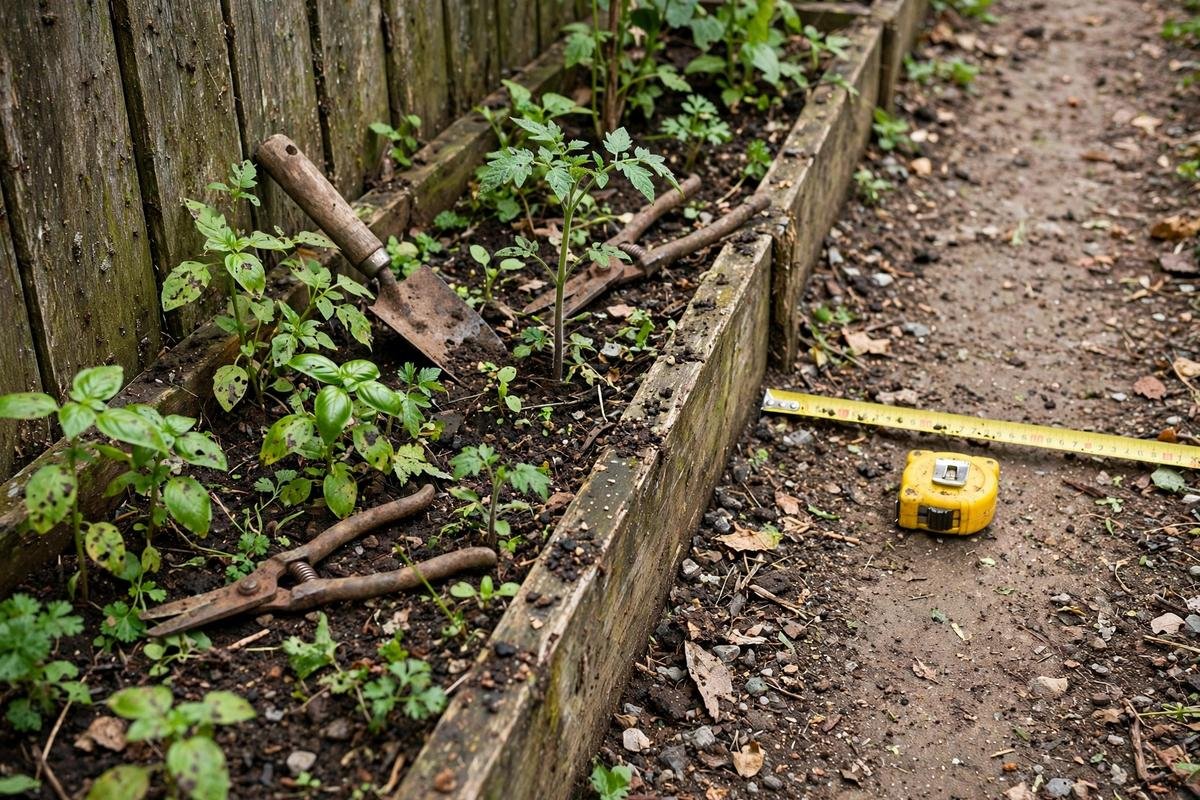
The photo above shows the measurement that matters most in a small yard: path width. A bed can be the perfect length and still fail if the remaining path is too narrow for a watering can, a wheelbarrow, or your own feet while carrying a harvest basket.
Start With the Path, Not the Bed
Most layout mistakes happen because the bed gets picked first and the path gets whatever is left. Flip that order: decide the path first, then let the bed take the rest.
For hand watering and harvesting, a path around 18-24 inches wide is a workable minimum for many gardeners. A wheelbarrow usually needs more — often 30 inches or wider, depending on the barrow. Those are planning assumptions, not standards, so test with your own tools: set two boards on the ground at your planned path width and walk it with a full watering can before you commit.
Worked example: a 10 x 12 ft yard
Here is our originality element for this article — the layout math, with assumptions stated so you can redo it with your own numbers.
Assumptions: the yard is 10 ft wide x 12 ft long (120 sq ft total). We want beds along both long fences, a center path, and we need to keep a 2 ft strip at one end for turning around and setting down tools.
Step 1 — growing length. 12 ft total length minus the 2 ft end strip leaves 10 ft of bed length on each side.
Step 2 — bed width. If each bed is 2 ft wide, the two beds use 4 ft of the 10 ft width. That leaves 10 − 4 = 6 ft… which sounds like a lot until we add access. Wait — most small yards also need a cross path. Let us keep it honest: with 2 ft beds on both sides of a 10 ft wide yard, the center space is 6 ft wide. That can hold a 3 ft center path plus a 3 ft island bed, or simply a generous 6 ft work area. Growing area: two side beds at 2 x 10 ft = 20 sq ft each (40 sq ft total), plus an optional 3 x 10 ft island (30 sq ft) if you want it, for up to 70 sq ft of growing space.
Step 3 — the tight version. If your yard is only 8 ft wide instead: two 2 ft beds use 4 ft, leaving a 4 ft center. That still works — a 24 in path with room to kneel. Below 8 ft of width, we would usually run a bed along one fence only and keep the path on the other side, rather than squeezing beds on both sides.
The lesson is the order: path first, turning space second, bed width last. Our guide to starting a vegetable garden covers layout in more detail.
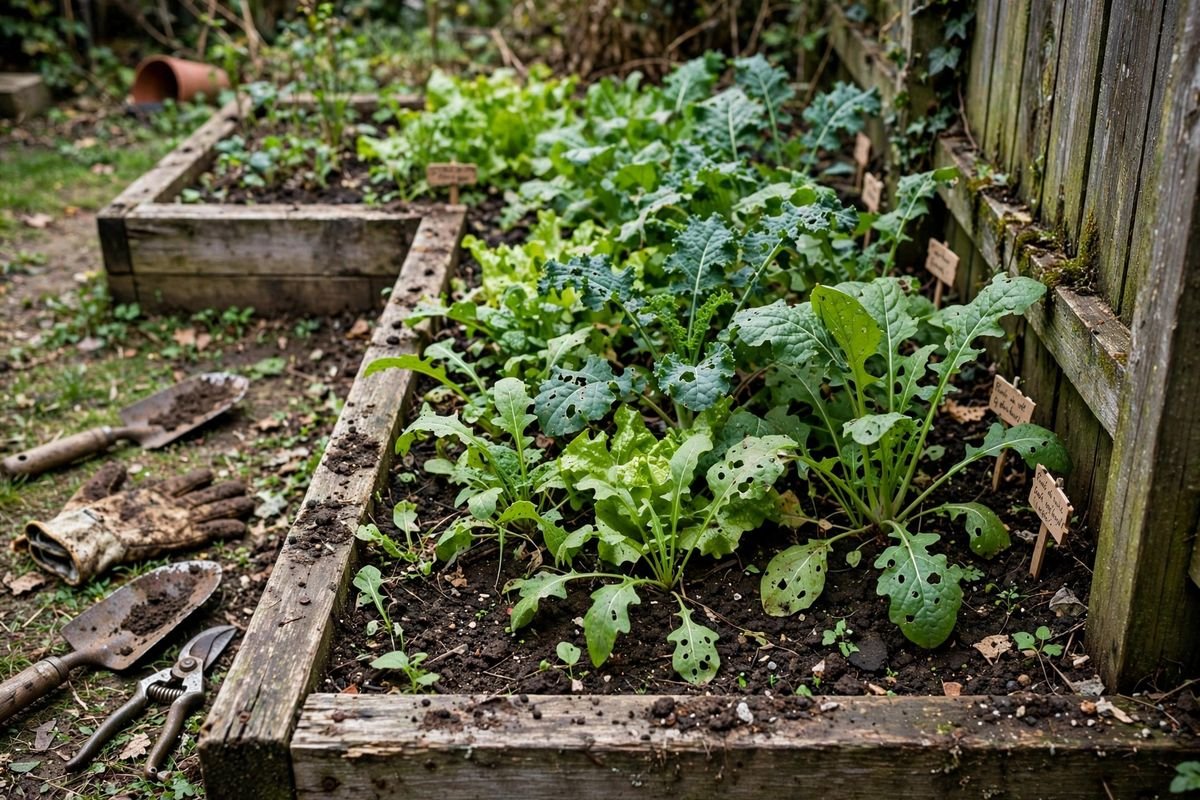
Corner beds earn their keep in yards where the corners would otherwise collect hoses and weeds. The tradeoff is reach: the back corner of an L-shaped bed can be hard to harvest without stepping into the bed, so plant that spot with something you pick less often.
Soil Volume Math for Small Beds
Small beds still need a surprising amount of soil, and underestimating it is the most common budget surprise. The math is simple: length x width x depth, all in feet, gives cubic feet.
Assumptions: bags are 1.5 cu ft each (a common bag size — check the listing or bag label, because bag sizes vary). We fill to about 1 inch below the rim, so usable depth is panel height minus roughly 1 inch. Settling will drop the level further over the first season, so most gardeners top up later.
- 2 x 8 ft bed, 12 in panels: usable depth about 11 in = 0.92 ft. Volume = 2 x 8 x 0.92 = about 14.7 cu ft. At 1.5 cu ft per bag, that is 14.7 / 1.5 = about 10 bags.
- 2 x 8 ft bed filled to the full 12 in: 2 x 8 x 1 = 16 cu ft, or about 11 bags at 1.5 cu ft each. The difference between the two rows shows why the “fill line” assumption matters.
- 3 x 4 ft bed, 12 in panels: 3 x 4 x 0.92 = about 11 cu ft, roughly 8 bags.
- 4 x 4 ft bed, 12 in panels: 4 x 4 x 0.92 = about 14.7 cu ft, roughly 10 bags — the same as the 2 x 8, which makes sense because the footprint is the same 16 sq ft.
Two takeaways. First, footprint drives soil volume more than shape: a 2 x 8 and a 4 x 4 hold about the same soil at the same depth. Second, depth is expensive. Doubling panel height roughly doubles the soil bill, which is why tall beds in small yards are often filled with a base layer strategy — our guide to bed depths and soil covers that in detail. For tight budgets, a 12 in bed grown well usually beats a 24 in bed left half empty.
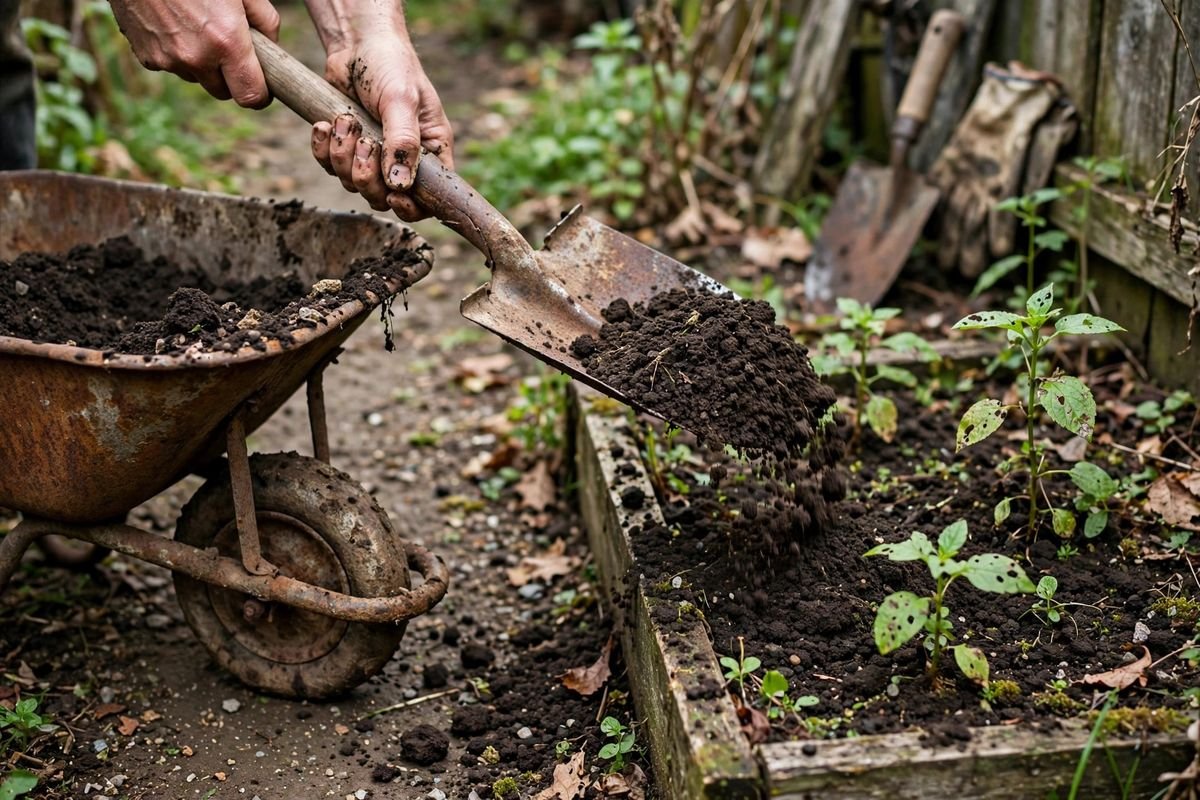
Filling day is when narrow paths get tested. If the wheelbarrow cannot make the turn, every bag gets carried further by hand. That is worth knowing before the soil arrives, not during.
Which Crops Suit Which Small Bed
Bed shape decides what grows well in it. Narrow fence-line beds suit leaf lettuce, herbs, peppers, and bush beans. Corner beds suit tall crops in the back, greens along the front. Small square beds suit intensive planting.
Use your local frost dates and regional planting guidance — not your USDA hardiness zone alone — to choose planting dates. In a small yard that timing matters even more, because a bed occupied by a slow crop is a bed that cannot take the next one. Succession planting — sowing a short row every couple of weeks rather than all at once — keeps small beds productive without a glut.
If beds still feel too big for your space, containers may fit better. Our container gardening guide for beginners covers that route, and fabric pots are another flexible option — see our roundup of the best grow bags for vegetables for how they compare on space and cost.
Going Vertical in a Tight Bed
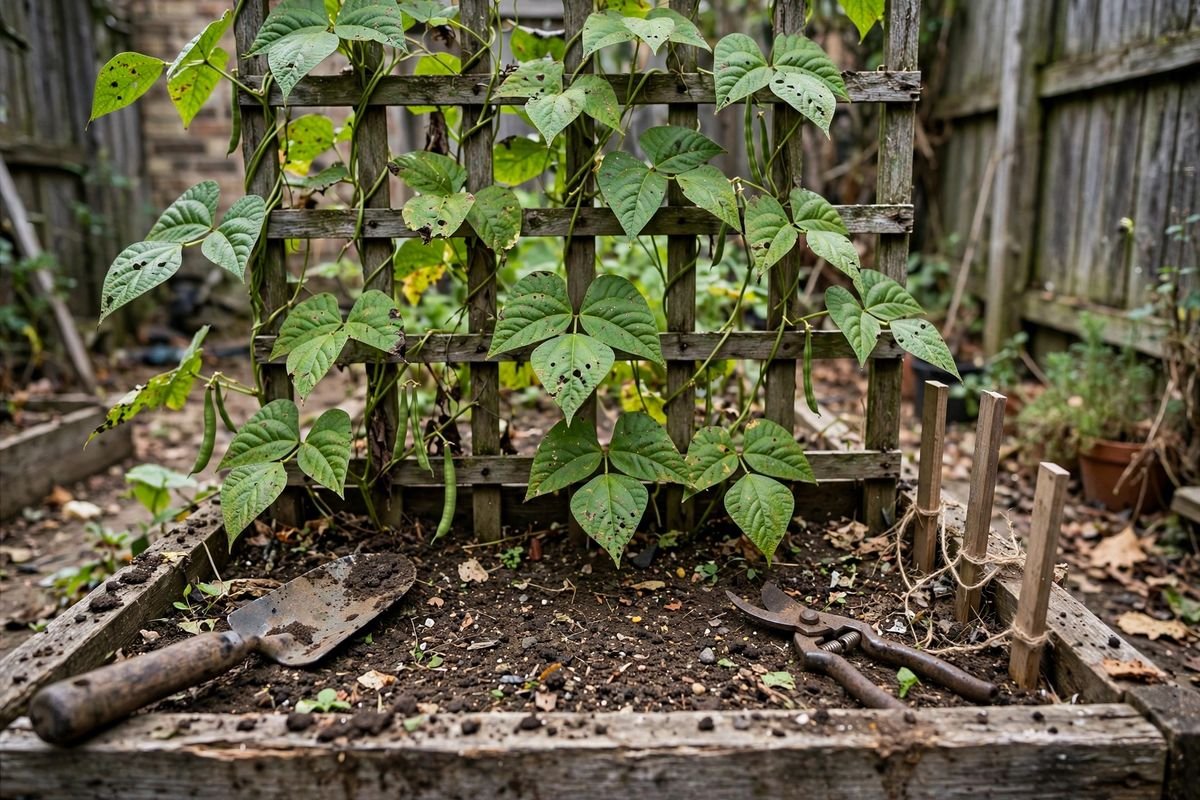
The cheapest extra space in a small yard is upward. A trellis on the north edge of a bed (so it shades the bed as little as possible in most Northern Hemisphere gardens) lets beans, peas, and cucumbers climb instead of sprawl. Check the listing for trellis height and attachment method if you buy a combined unit, or build a simple trellis separately and anchor it well — a trellis loaded with vines catches wind like a sail.
Vertical growing also helps air flow in tight, fence-bound yards. Crowded, still, wet foliage is where many fungal problems start, so spacing is worth planning for.
Pros and Cons by Bed Type
Narrow rectangle beds
Pros: easy reach from one side, fits fence lines, modest soil volume. Cons: less planting width, and long thin beds can dry at the edges faster in hot weather.
Corner and L-shaped beds
Pros: uses dead space, looks intentional, good for mixing heights. Cons: back corner reach, and odd shapes can complicate row covers and hoops — check the listing for compatible accessories if you need them.
Small square beds
Pros: efficient footprint, good for intensive planting, easy to cover. Cons: needs path access on at least two sides, which eats into the space saving.
What to Check Before You Buy
- Exact assembled dimensions — check the listing, because nominal sizes vary.
- Panel material and thickness, and any coating details — check the listing/manufacturer for coating details rather than assuming.
- Corner hardware and whether cross-bracing is included for longer beds.
- Whether the bed is bottomless (most raised beds are) and what that means for your surface — beds on concrete behave differently from beds on soil.
- Drainage: a bottomless bed on soil drains into the ground; on a patio, water exits at the base, so plan for where it goes.
When you are ready to browse, start with searches like narrow raised beds for fence lines or corner raised garden beds, and compare dimensions and hardware across listings rather than going by photos alone.
Verdict: Choosing for Your Yard
Choose a narrow rectangle if your usable space is a fence line or the side of a house and you need to keep a clear path beside it.
Choose a corner or L-shaped bed if your yard has a dead corner and you mostly grow greens and herbs you can reach from the front wings.
Choose a small square bed if you have a compact open plot and can keep path access on two or more sides.
Choose a taller narrow bed if bending is hard on your back and your budget can handle the extra soil volume shown in the math above.
Sources & Further Reading
- University of Minnesota Extension — Raised bed gardens: bed sizing, soil, and placement basics.
- USDA — People’s Garden resources: general vegetable gardening guidance.
- Colorado State University Extension — Raised bed gardening (Fact Sheet 7.841): construction and soil depth considerations.