
This post may contain affiliate links. If you buy through links on this page, we may earn a commission at no extra cost to you.
As an Amazon Associate I earn from qualifying purchases.
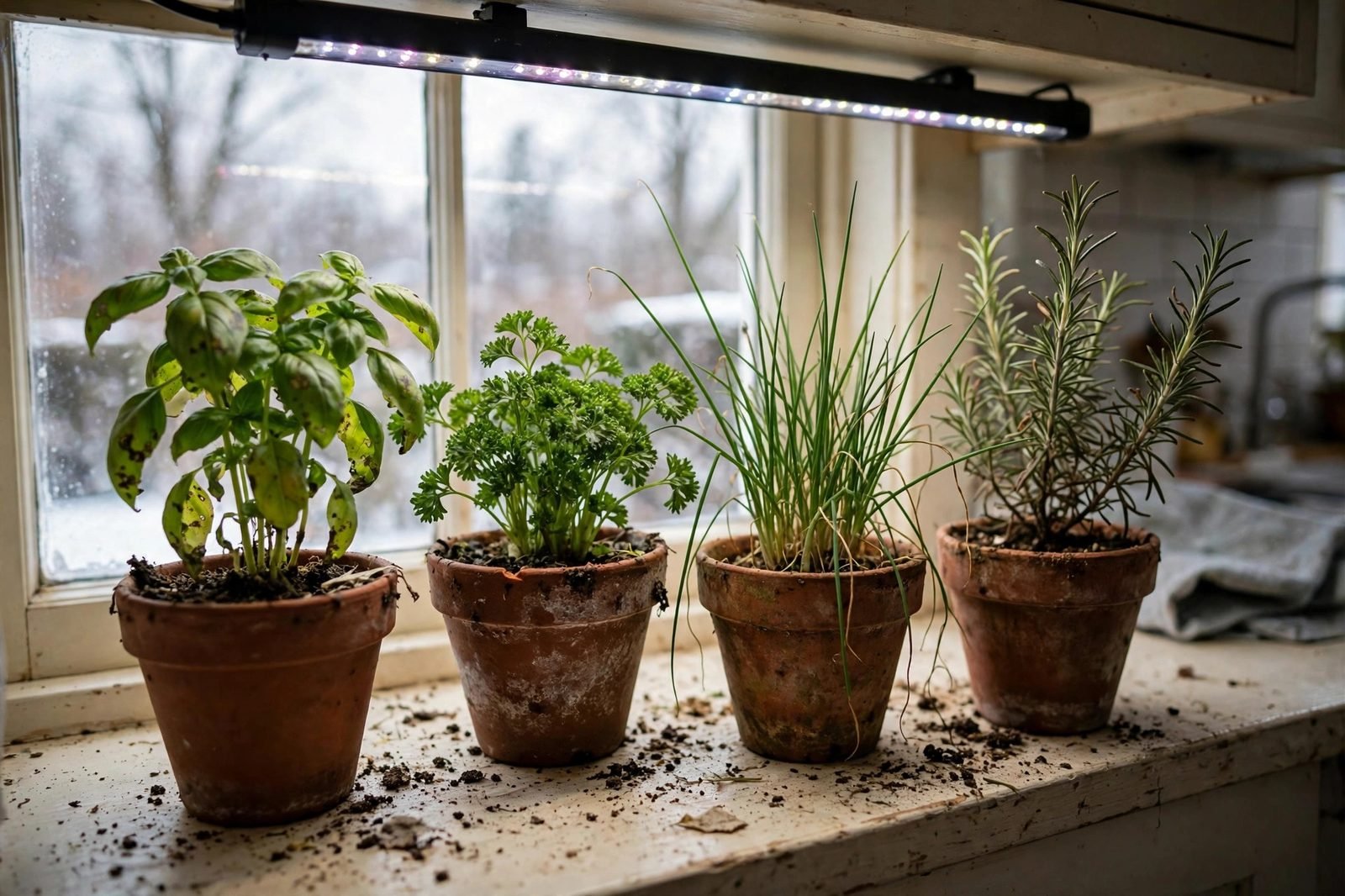
Winter does not have to mean dried herbs from a jar. With a bright setup and a steady routine, we can keep basil, parsley, chives, cilantro, and mint within reach of the cutting board all season. Indoor herbs take less space than most houseplants, and they reward regular care with fresh flavor when outdoor beds are frozen or resting.
The key is thinking like the plant. Herbs inside face lower light, drier air, and cooler windowsills than they would in June. Once we adjust for those three things, results get much more predictable. This guide walks through setup, care, best varieties for winter, and harvest habits that keep plants bushy instead of leggy. No greenhouse required — a sunny window, a simple light, and consistent watering will carry most herbs through the darkest months.
| Need | What Works Indoors |
|---|---|
| Light | 6+ hours direct sun, or 12-16 hours under LED lights 2-4 inches above leaves |
| Temperature | 65-75°F days, 55-65°F nights; keep leaves off cold glass |
| Soil | Well-draining potting mix with perlite; never heavy garden soil in pots |
| Water | When top inch feels dry; empty saucers so roots never sit in water |
| Container | 4-6 inch pots for single herbs, with drainage holes |
| Feeding | Half-strength balanced fertilizer every 3-4 weeks in winter |
| Harvest | Pinch above a leaf pair; never take more than one-third at once |
Why Grow Herbs Indoors in Winter
Fresh herbs change winter cooking. Parsley brightens soups. Basil lifts simple pasta. Chives over eggs make a weekday breakfast feel intentional. Growing them indoors also keeps our skills sharp in the off-season and gives us a protected place to size up plants before spring.
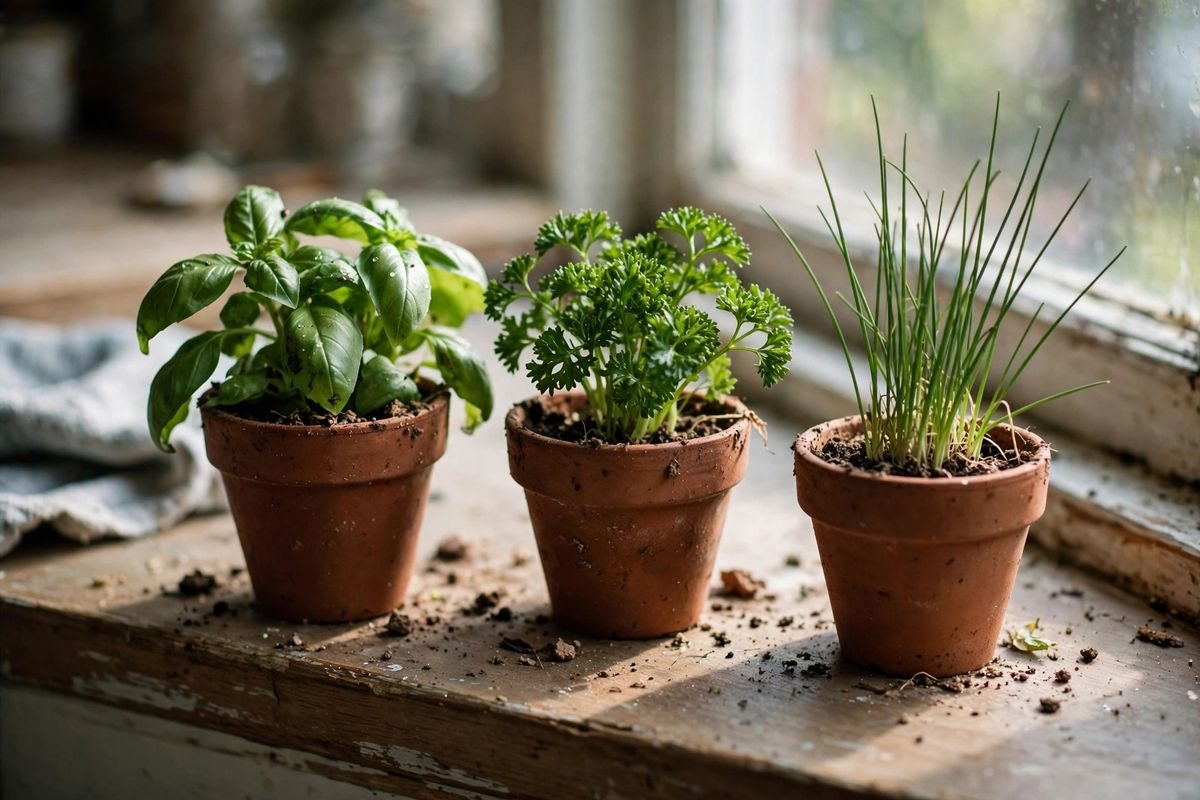
There is a practical side, too. Store-bought fresh herbs often wilt within days and come wrapped in plastic. Four or five pots indoors can replace most of those purchases from November through March. For anyone new to growing in pots, our guide to container gardening for beginners covers the basic pot and soil choices that make the whole project easier from the start.
What You Need to Get Started
We do not need specialized gear to begin. Most of us already own a suitable pot, a saucer, and a bag of potting mix. The one upgrade that makes the biggest difference in winter is light. A south-facing window can work for chives, parsley, and mint. Basil, rosemary, and thyme usually want supplemental light unless that window is exceptionally bright.
Pots and Soil
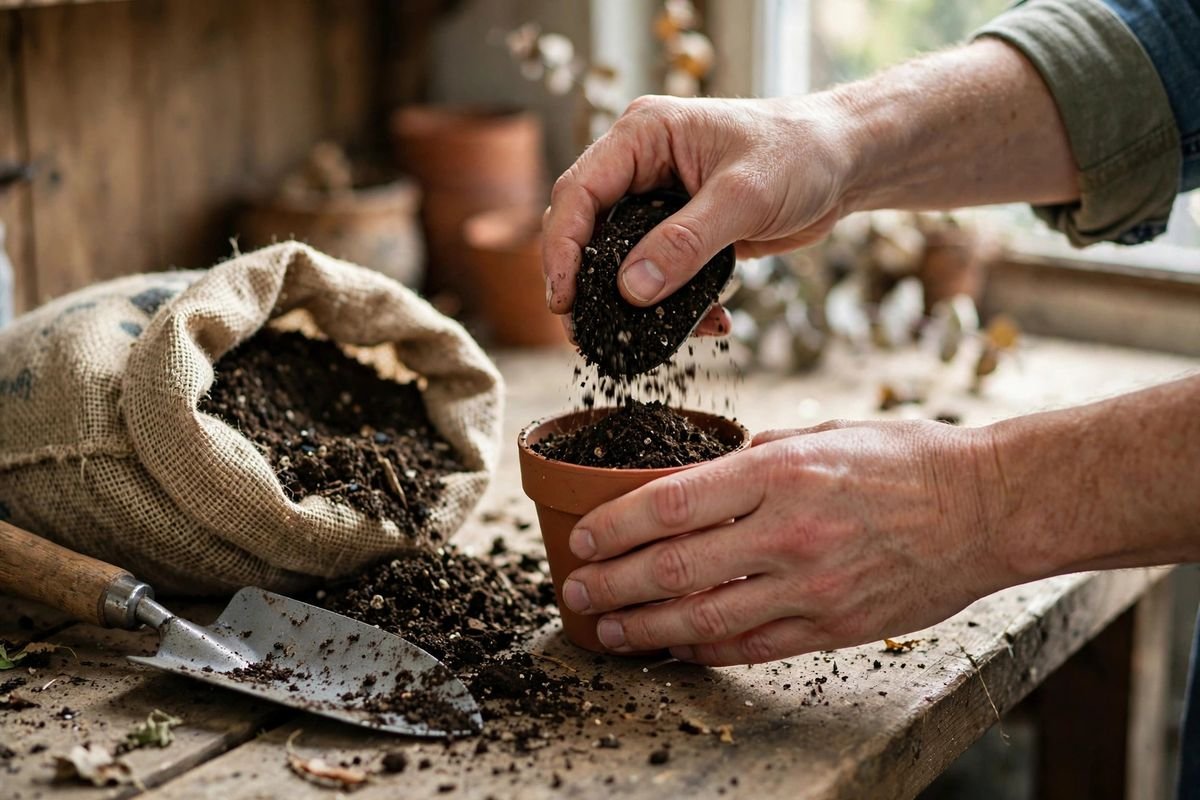
Pick pots with drainage holes. Terra cotta breathes well and helps prevent overwatering, while glazed ceramic and food-safe plastic hold moisture a bit longer. Aim for pots at least 4 inches deep for leafy herbs and 6 inches for rosemary. Use fresh, well-draining potting mix rather than soil dug from the garden, which compacts in containers and can carry pests indoors.
Light Options That Actually Work
Window light is free, but winter sun is low and days are short. Compact growth and rich color mean enough light; pale, stretched stems mean we need more. Simple LED bars stay cool, use little electricity, and cover several pots at once. For a starter setup, browse LED grow light bars for indoor herbs on Amazon and choose a length that matches our shelf.
When to Start Herbs Indoors
We can start herbs indoors any time, but timing helps. Use your local frost dates and regional planting guidance — not your USDA hardiness zone alone — to choose planting dates. For winter harvests, sow fast herbs like cilantro and basil 6 to 8 weeks before steady picking, and pot up store-bought starts as soon as we bring them home. Parsley is slower, often 2 to 3 weeks just to germinate, so we start it earlier or buy a young plant. Perennial herbs such as rosemary, thyme, oregano, and chives can come inside before the first hard freeze and return outside in spring. A September or October sowing under lights gives strong plants by the holidays; a January sowing still works, just a few weeks later.
How to Set Up Your Indoor Herb Garden Step by Step
- Pick the location first. Choose the brightest window we have, ideally south or west facing, or a shelf where lights can sit 2 to 4 inches above the plants. Keep the spot away from heating vents and drafty doors.
- Prepare pots. Wash reused pots with warm soapy water and let them dry. Add potting mix, leaving half an inch below the rim, and moisten the mix before sowing.
- Sow or transplant. Follow packet depth, usually a quarter inch for parsley and chives, barely covered for basil. For transplants, set the plant at the same depth it grew before and firm the mix gently.
- Water in. Water slowly until a little drains from the bottom, then empty the saucer after 15 minutes. The goal is evenly moist mix, not a swamp.
- Set the light schedule. Run LEDs 12 to 16 hours per day on a timer. Plants need a dark period too, so lights do not stay on around the clock.
- Label everything. A simple marker with variety and sowing date saves guesswork later, especially with slow parsley.
Spacing matters even indoors. Crowded pots compete for light and airflow, which invites mildew. Give each herb its own pot when possible. Mint always gets its own pot; its roots will take over a shared container within weeks.
Caring for Herbs Indoors Through Winter
Once the setup is in place, care becomes a weekly rhythm. We check moisture with a fingertip, rotate pots a quarter turn every few days, and pinch tips often. Those three habits solve most indoor herb disappointments.
Light and Placement
In winter, even a south window may deliver only 3 to 4 usable hours of direct sun during cloudy stretches. Herbs under lights should sit close to the bulbs, because intensity drops quickly with distance. Raise lights as plants grow, keeping tops a few inches below the LEDs. Our comparison of LED grow light versus a sunny window helps us judge when a window is enough and when a light earns its cost.
Watering Without Overdoing It
More indoor herbs die from overwatering than from thirst. We water when the top inch of mix feels dry, then water thoroughly and let excess drain away. A fingertip test every two or three days beats a calendar schedule, since sunny days and gray weeks dry pots at different rates. If consistent moisture is a struggle, look at self-watering herb pots for indoor use on Amazon and still check the reservoir weekly.
Soil, Feeding, and Air
Herbs are light feeders, and winter growth is slow. A half-strength balanced liquid fertilizer every 3 to 4 weeks is plenty for leafy herbs; rosemary and thyme prefer even less. Overfeeding pushes soft, weak growth and dulls flavor. Indoor air in winter often sits at 30 to 40 percent humidity. Basil and cilantro appreciate a little extra moisture in the air from grouping pots together or a nearby humidifier. We avoid misting leaves, since wet foliage invites disease, and a small fan on low for a few hours a day keeps air moving and stems sturdy.
Best Herbs to Grow Indoors in Winter
Easiest for Beginners
Chives tolerate lower light and cooler sills and regrow quickly after cutting. Parsley, curly or flat-leaf, stays productive for months and handles part sun better than basil. Mint is vigorous almost to a fault, which is why its pot stays solo. Green onions regrow easily from roots; our notes on how to grow green onions indoors show the simplest method.
Great With a Grow Light
Basil thrives indoors with 14 to 16 hours of light and temperatures above 65°F. Genovese gives classic flavor; Thai basil suits stir-fries. Cilantro prefers cooler rooms, 60 to 70°F, and successive sowings every 2 to 3 weeks because it bolts quickly. Dill grows fast under lights but gets tall, so dwarf varieties fit shelves best.
Perennials Worth Bringing Inside
Rosemary needs the brightest light we can give, sharp drainage, and restraint with the watering can. Thyme and oregano are compact and drought-tolerant once established. Bring perennials inside gradually — a week in a bright garage or porch helps them adjust to lower light before they settle on the shelf.
How to Harvest So Plants Keep Producing
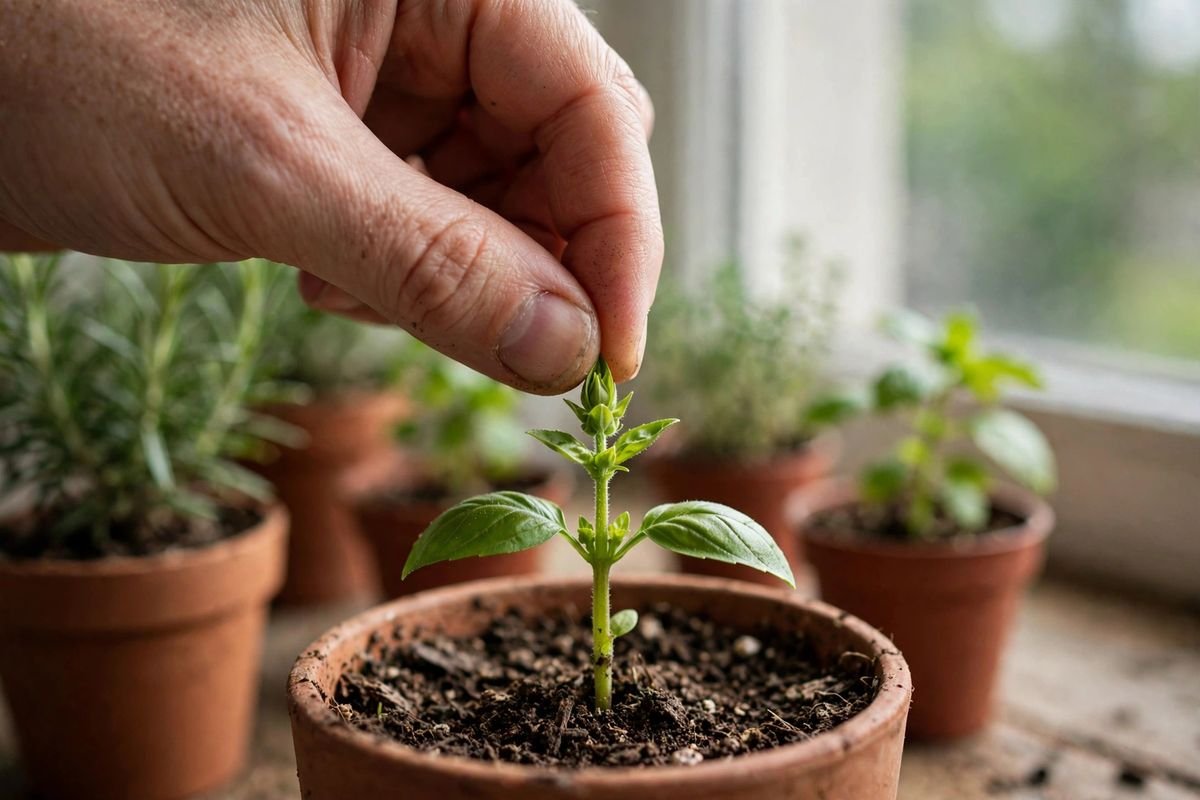
Harvesting herbs correctly is pruning with a purpose. For basil, we pinch just above a pair of leaves, and the plant sends out two new stems from that point. That one habit turns a leggy seedling into a bush. For chives and parsley, we cut outer stems at the base and leave the center growing points intact.
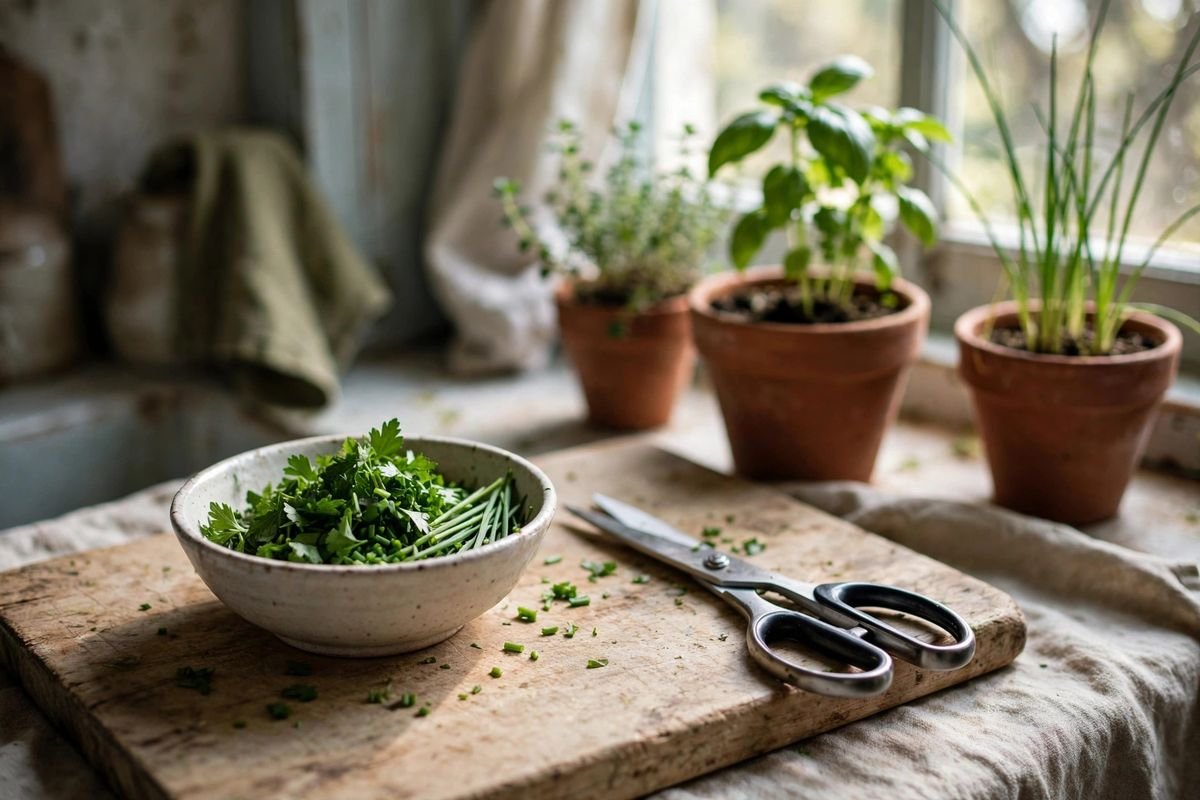
Never remove more than one-third of the plant at once in winter, when regrowth is slower. Frequent light harvests beat occasional heavy ones. Morning picking gives the plumpest leaves. If basil or cilantro starts to flower, pinch the heads off right away for leaf production; once flowering takes over, flavor turns bitter and the plant winds down.
Troubleshooting Common Indoor Herb Problems
Leggy, Stretched Stems
Long gaps between leaves mean light is too weak or too far away. Move plants closer to the source, extend LED time to 12 to 16 hours, rotate pots every few days, and pinch tips to force branching. A stretched basil cut back by one-third often rebounds bushier.
Yellow Leaves
Yellowing lower leaves usually point to overwatering or poor drainage. Check that pots are not sitting in water, let the top inch dry before watering again, and confirm new growth still looks healthy. Crispy yellow edges suggest the opposite — too little water or a blast of hot air from a vent.
Fungus Gnats
Tiny flies around pots lay eggs in moist mix. Let the top layer dry between waterings, clear dead leaves from the surface, and use yellow sticky traps for adults. A thin layer of sand on the surface deters egg laying. Fixing the watering rhythm ends most cases without sprays.
Powdery Mildew
A white powdery coating loves crowded, still air. Space pots so leaves do not touch, run a small fan, water at the base, and remove badly affected leaves into the trash, not the compost. Better light and airflow prevent most recurrences.
Basil Leaves Turning Black at the Edges
Basil hates cold. Leaves touching frosty glass or sitting in a draft below 50°F can blacken overnight. Move basil a few inches from the window on cold nights. If a plant is badly damaged, start fresh seed under lights; basil germinates in 5 to 10 days.
FAQ
Can we grow herbs indoors without a grow light?
Yes, with tolerant herbs and a bright south or west window. Chives, parsley, mint, and green onions manage on strong window light in many homes. Basil, rosemary, and cilantro usually perform better with supplemental light in winter, especially where days are short and skies stay gray.
How often should we water indoor herbs in winter?
There is no fixed schedule. We check every few days and water when the top inch feels dry. Small terra cotta pots may need water twice a week; larger glazed pots might go a full week. The fingertip test beats the calendar.
Why does store-bought basil die so quickly indoors?
Grocery basil is often many seedlings crowded into one small pot, grown fast in a greenhouse. At home they compete and stress quickly. Dividing the clump into two or three pots with fresh mix and strong light extends its life. Starting our own seed gives sturdier plants long term.
Is it better to grow herbs from seed or buy plants in winter?
Both work. Seed costs less and offers more varieties, but parsley and rosemary test our patience. Young plants give immediate harvests. Many of us do both — buy rosemary and chives for now, sow basil, cilantro, and parsley for succession.
Can indoor herbs go back outside in spring?
Perennials like rosemary, thyme, oregano, and chives usually can, after hardening off over 7 to 10 days from shade to full sun. Tender basil goes out only after all frost danger passes and nights stay above 50°F.
Sources & Further Reading
- University of Minnesota Extension — growing herbs indoors, light requirements, and common winter problems (extension.umn.edu).
- Penn State Extension — indoor herb culture, watering, and fertilizing container herbs (extension.psu.edu).
- University of Vermont Extension — herbs in containers and managing pests without sprays (uvm.edu/extension).
- Utah State University Extension — indoor herb gardening basics for low-light winter conditions (extension.usu.edu).
- Clemson Cooperative Extension — home herb gardening notes on soil, drainage, and harvest methods (clemson.edu/extension).
Keep Growing With These Guides
The same shelf that holds winter herbs can turn out fresh greens in a week or two with how to grow microgreens indoors. Which herb do we reach for most in winter cooking — basil for pasta, parsley for soups, or chives for eggs — and which one gets the first spot on our shelf this season?