
This post may contain affiliate links. If you buy through links on this page, we may earn a commission at no extra cost to you.
As an Amazon Associate I earn from qualifying purchases.
November splits gardens into two groups. In mild-winter regions, soil is still workable, garlic goes in the ground, and cold-frame greens keep growing. In cold regions, the ground is close to frozen and the smart planting moves indoors or waits until spring. Both groups have useful work to do this month, but the right list depends on frost timing and soil condition rather than on the calendar page alone.
This guide sorts November planting by method: allium sets where ground can still be dug, broad beans in mild areas, greens under cover, microgreens and herbs indoors, and cover crops for empty beds. An honesty section covers where outdoor sowing in November does not work, so effort and seed go where they have a real chance to grow.
| Garlic | Plant single cloves, point up, 2 inches deep | Regions where soil is workable and not frozen | Late spring to early summer |
|---|---|---|---|
| Shallots and onion sets | Push sets into firmed soil, tip just below surface | Mild to moderate winters, well-drained beds | Late spring, green onions sooner |
| Broad beans | Direct sow 2 inches deep, 6 to 8 inches apart | Mild-winter areas with light frost only | Late spring |
| Spinach and kale under cover | Sow or transplant into cold frame or under row cover | Cool regions with protection; mild regions outdoors | Winter leaves to early spring |
| Microgreens and herbs | Sow indoors in shallow trays or small pots | Any region, bright window or simple light setup | 1 to 4 weeks for microgreens; herbs longer |
| Cereal rye cover crop | Broadcast or drill seed 1 inch deep on empty beds | Most regions where soil is not frozen hard | Spring growth, cut before spring planting |
Start With Frost Timing, Not Just the Calendar
November means different weather in different places. A garden on the mild coast may still have diggable soil and nights in the 30s, while a garden in the upper Midwest may already face frozen ground and snow cover. The planting list that works in one place fails in the other, so the first November question is always local: has the soil frozen, and how long before hard cold settles in?
Use your local frost dates and regional planting guidance — not your USDA hardiness zone alone — to choose planting dates. The hardiness zone only reports average winter lows; planting choices need the first fall frost date, the point when soil freezes, and the last spring frost date. State extension planting calendars break those dates down by county or region and stay far more useful than a zone number for November decisions.
Soil condition matters as much as air temperature. Ground that crumbles in the hand and takes a fork without a fight can still receive garlic, sets, and rye. Ground that rings hard or cannot be opened with a fork is done for outdoor sowing until spring thaw. Our guide to fall garden cleanup helps sort beds first: spent crops out, diseased material removed, and mulch pulled back where sets will go.
Garlic, Shallots, and Onion Sets Where Ground Is Still Workable
Garlic is the classic November planting in many regions, and November is not too late as long as cloves can root before the ground freezes hard. Cloves need a few weeks of cool soil to grow roots in fall, then a cold period through winter so bulbs form properly the next year. Where soil stays workable into November or December, planting now still gives that root growth and full winter chill.
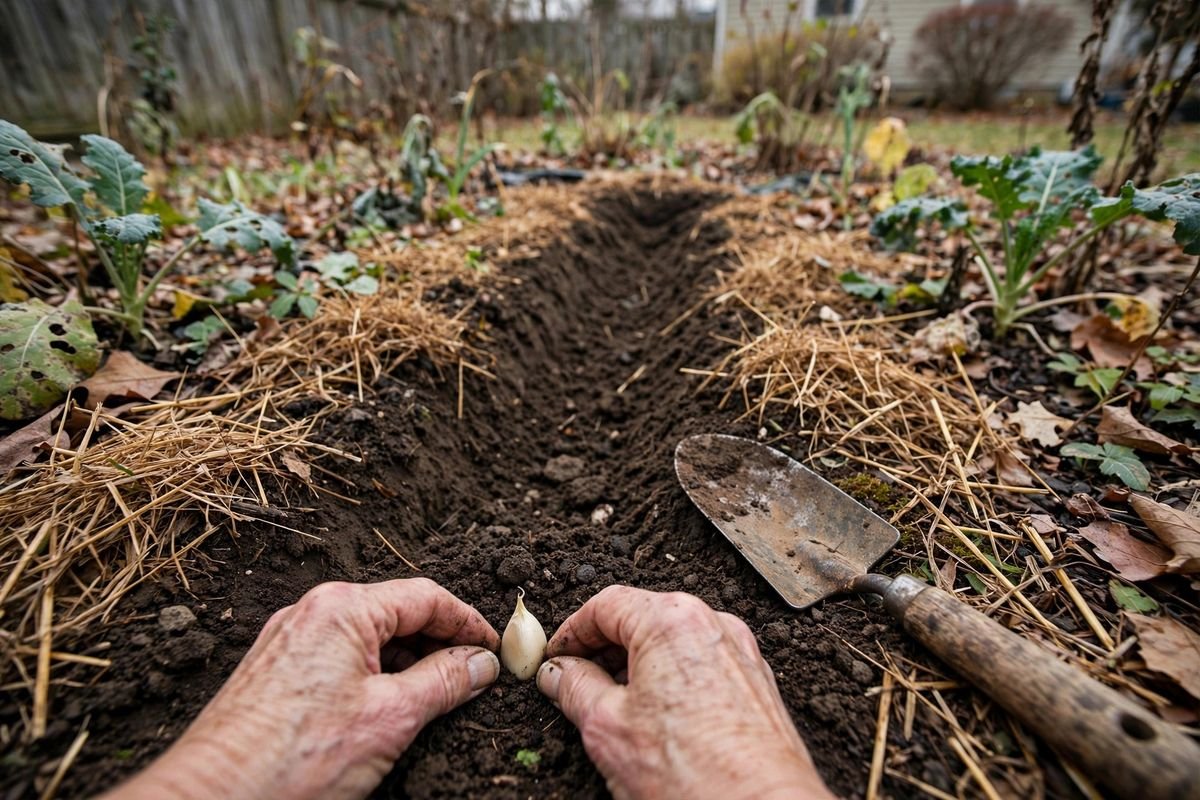
We break bulbs into single cloves the day of planting, keep the papery skins on, and plant each clove point up about 2 inches deep and 4 to 6 inches apart in rows 12 to 18 inches apart. The flat root end goes down. Shallow planting risks heaving during freeze-thaw cycles, so 2 inches of soil over the tip, followed by 3 to 4 inches of straw mulch after the ground cools, keeps cloves settled.
Shallots and onion sets follow the same ground rules. We push sets into firmed soil so the tip sits just below the surface, space shallots 6 to 8 inches apart, and space onion sets 3 to 4 inches apart for green onions or wider for bulbs. Well-drained soil matters: sets sitting in cold, soggy ground rot rather than root, so raised beds and lighter soil suit November allium planting best.
A bag of seed garlic bulbs for fall planting from a regional supplier arrives sized for planting and labeled by type. Hardneck types suit cold-winter regions and softneck types suit milder regions. Our step-by-step on how to plant garlic in fall covers spacing, feeding, and spring care in full detail. Where winters are very mild, garlic still needs enough cool weeks to form separate cloves, and regional extension offices publish local windows and variety notes that should lead the choice.
Broad Beans in Mild-Winter Areas
Broad beans, also called fava beans, are one of the few food crops that can be sown outdoors in November, but only where winters stay mild with light frost rather than hard freezes. Plants sown in fall grow slowly through winter, build strong roots, and crop earlier in spring than spring-sown plants. Where winter lows routinely drop into the teens, fall-sown broad beans often fail, and spring sowing is the honest recommendation.
We sow seed 2 inches deep and 6 to 8 inches apart in rows 18 to 24 inches apart, in soil that drains well. A bed that stays wet all winter rots seed before it sprouts. Fall plants grow 6 to 12 inches tall before cold slows them, and a loose straw mulch around stems helps during cold snaps without smothering crowns.
Wind protection matters for overwintered broad beans. Tall growth in late winter can rock in storms and loosen roots, so a sheltered bed helps, and string support lines become useful in spring when plants grow fast and pods add weight. As a legume, broad beans also add nitrogen-fixing roots to a bed that might otherwise sit empty. Regions unsure about winter survival can sow a short test row in November and keep spring sowing as the main plan.
Cold-Frame and Row-Cover Greens
Greens are where November planting still shines in cool regions, as long as plants grow under some cover. Spinach, kale, lettuce, and Asian greens sown earlier in fall keep producing under a cold frame, and a November sowing inside a frame can still germinate in mild spells for winter and early spring leaves. Growth is slow in short days, so expectations should match the season: steady small harvests rather than fast summer growth.
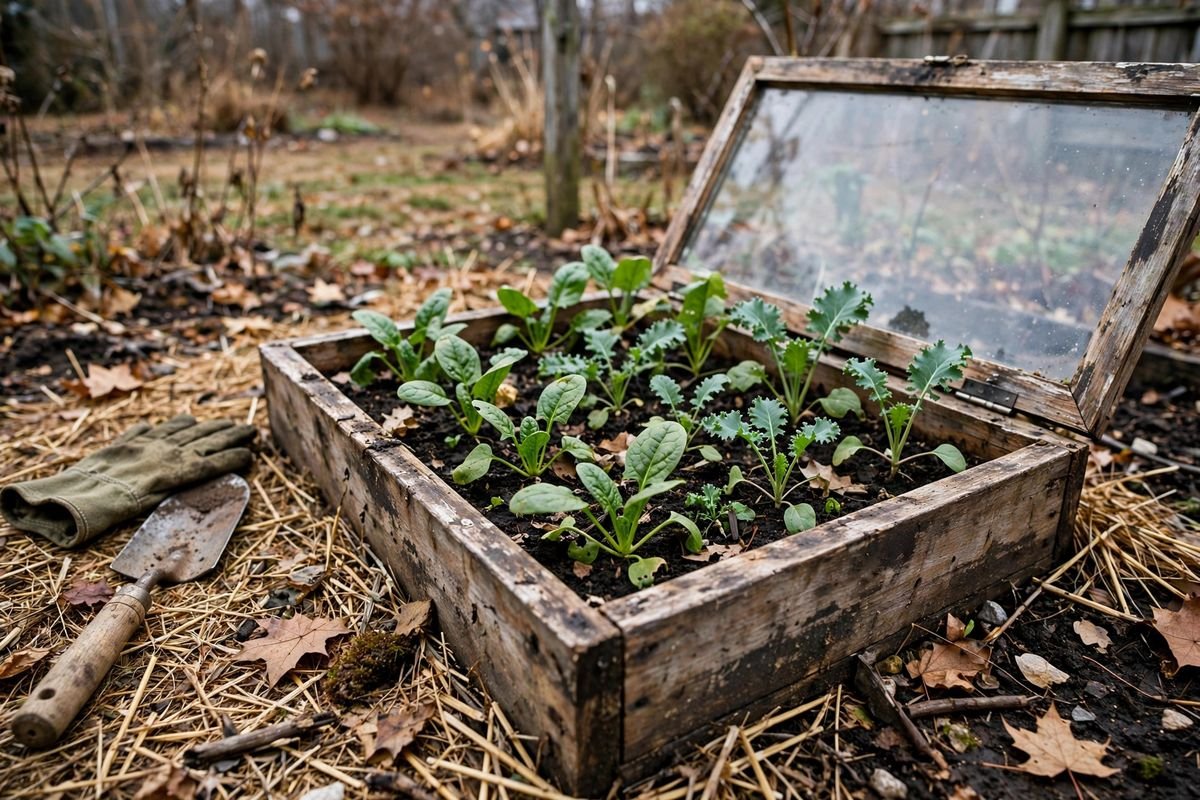
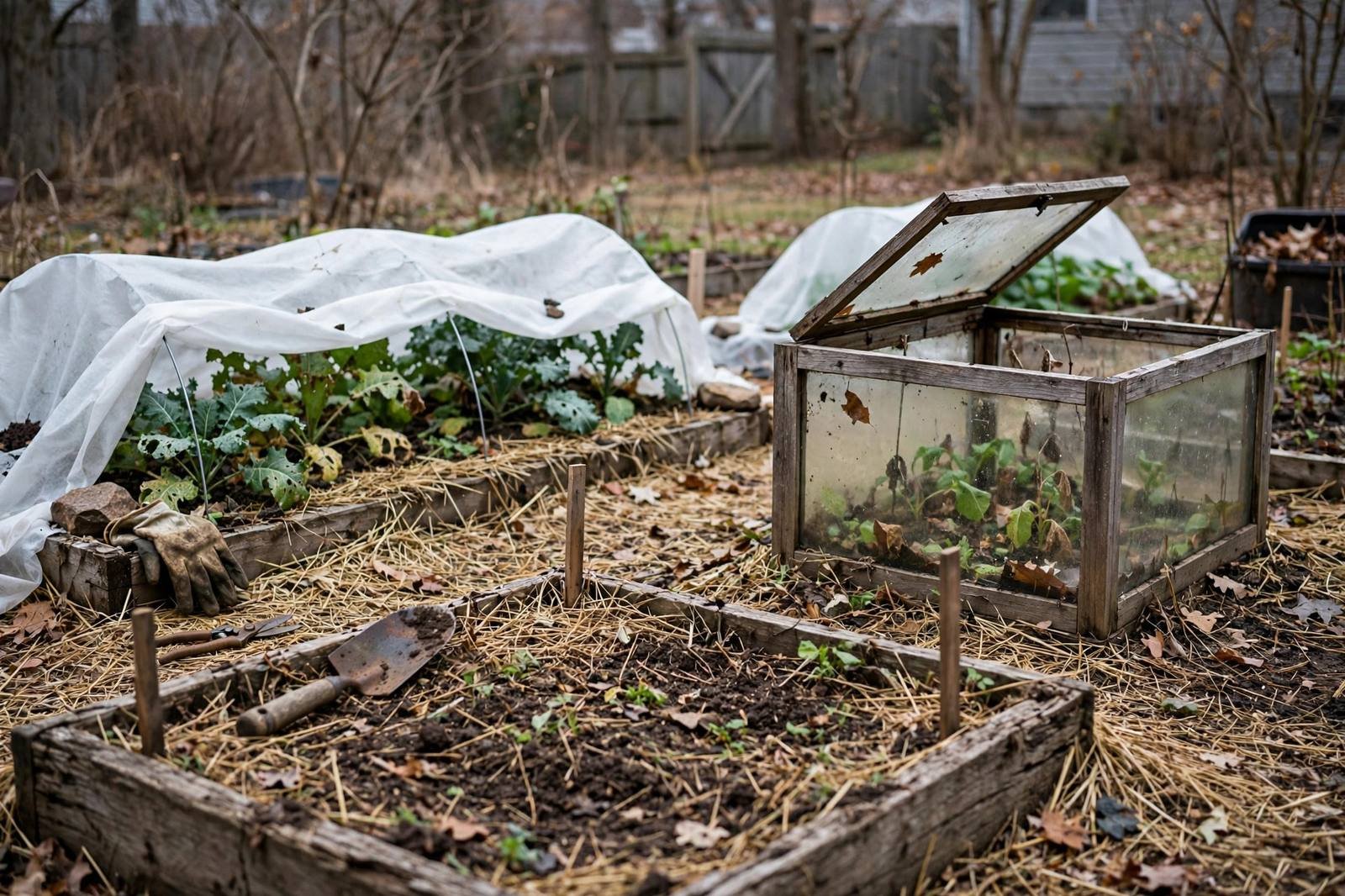
A simple cold frame for winter gardening set over an existing bed captures daytime warmth and sheds hard frost at night. We vent frames on sunny days when inside air feels warm, because even in November a sealed frame can overheat tender leaves at midday. Row cover on hoops offers lighter protection and suits kale and spinach that are already established outdoors.
Spinach is the most cold-tolerant salad green for November frames and often overwinters where other greens stall. Kale handles frost well and can stay outdoors under row cover in many regions when plants entered fall at a good size. November is late to start kale from seed outdoors in cold regions, but existing plants under cover still pay off. Watering under cover needs a hand check, since rain does not reach soil inside a frame. We water on mild mornings and keep soil evenly moist, not wet, so greens grow slowly without rotting in low light.
Indoor Starts: Microgreens and Herbs That Do Not Need a Garden
When outdoor ground is done for the year, November planting moves indoors and still produces real food. Microgreens grow in shallow trays on a bright windowsill or under a basic light, ready to cut in 7 to 14 days for many types. Radish, broccoli, sunflower, and pea shoots all suit tray growing and need only a fine seed-starting mix, steady moisture, and good light to avoid stretched stems.
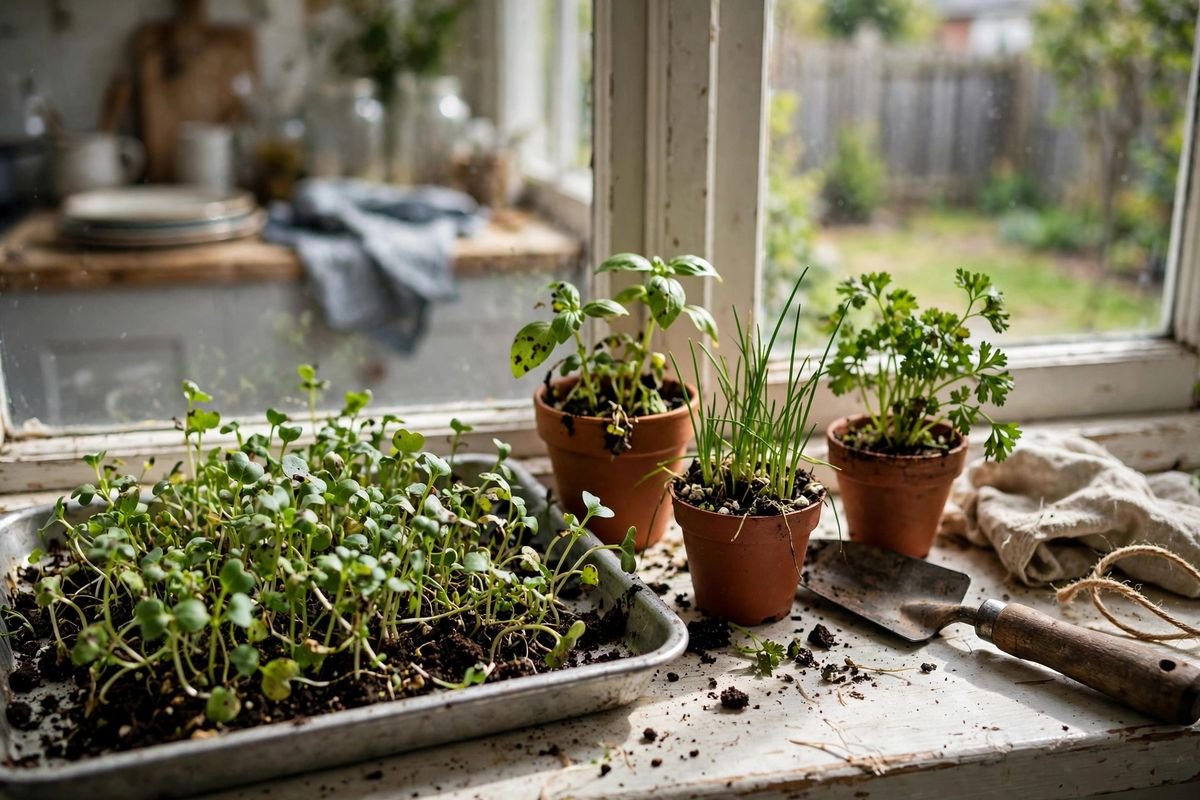
Herbs take longer but reward a November start. Parsley, chives, cilantro in a cool room, and potted rosemary or thyme give kitchen harvests through winter. Herbs need the brightest window available or supplemental light; a south-facing sill in many homes still falls short in November, and a small LED light on a timer keeps herbs compact rather than pale and thin.
Simple microgreen seeds for growing trays are sold by type, and tray sowing is dense and shallow: scatter seed on firmed, moist mix, press gently, and mist daily. Good air flow prevents mold, so trays stay uncovered or lightly covered only until sprouts lift. Harvest with clean scissors just above the mix line. November is too early to start tomatoes or peppers indoors, but weekly microgreen sowings and a small herb tray keep fresh leaves in the kitchen all winter.
Cover Crops for Empty Beds
Empty beds in November still need care, and a cover crop is planting with a purpose even when no food harvest follows this season. Cereal rye is the standard late option because it germinates in cool soil, grows roots quickly, and resumes strong growth in spring. Those roots hold soil against winter rain, take up leftover nutrients, and add organic matter when cut down before spring planting.
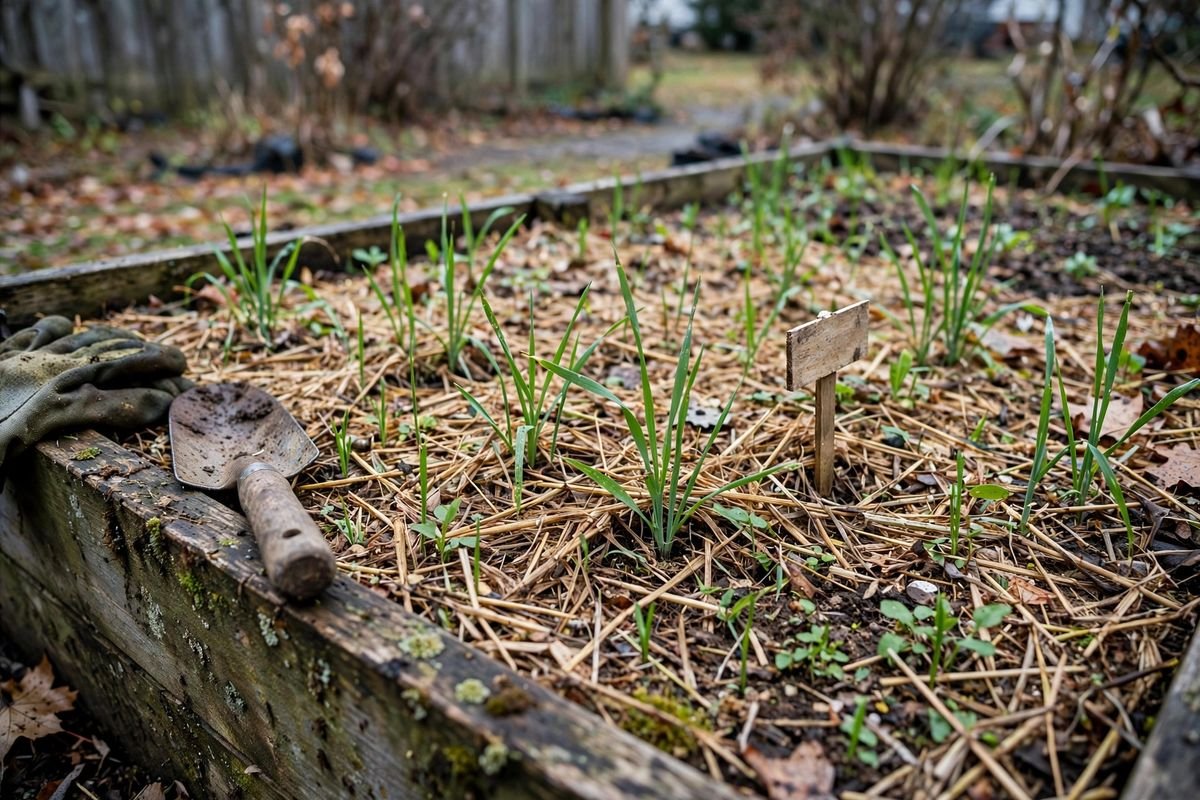
We sow rye about 1 inch deep, broadcast evenly and raked in, or dropped into shallow furrows on larger beds. November-sown rye makes less fall growth than September-sown rye, yet still covers soil far better than a bare bed. Where ground is already frozen, rye waits until spring, and a thick straw mulch is the better November choice to protect soil until then.
Timing for spring matters. Rye should be cut or turned under about 2 to 3 weeks before spring planting so residue begins to break down and does not tie up nitrogen right when new crops need it. Hairy vetch and crimson clover are common cover crops but need earlier fall sowing than November in cold areas to establish before hard frost. In mild-winter regions a November sowing of clover can still take, and local extension cover crop charts list the seeding windows that should guide the choice.
Where November Planting Does NOT Work Outdoors
Honesty saves seed and frustration: where soil freezes hard in November and stays frozen, outdoor sowing of vegetables in November does not work. Seed cannot germinate in frozen ground, sets cannot root, and transplants cannot establish. Garlic planted into ground that cannot be dug is a chore with no payoff, and broad beans sown before a winter of hard freezes usually rot or freeze out rather than crop in spring.
The same limit applies to tender crops anywhere in November outdoors. Tomatoes, peppers, beans, squash, and cucumbers cannot grow through November frosts without heated protection, and sowing them outdoors this month wastes seed that would serve better in spring. Even hardy greens have limits: a November outdoor sowing of spinach in a region already under snow cover will wait until spring at best, and often fails when seed rots during freeze-thaw cycles.
Cold alone is not the only barrier. Beds that stay waterlogged through winter rot garlic cloves, shallots, and onion sets from below. November planting in wet, poorly drained ground often loses the whole row by January, while the same sets in a raised, drained bed thrive. Short November days add a quiet limit too: far northern gardens get so little light that even hardy greens barely grow, cover or not. In those gardens November effort pays best indoors with microgreens and herbs, and outdoors with mulch, bed repair, and soil testing that sets up a strong spring.
Troubleshooting November Plantings
Garlic cloves pushed out of the soil. What happened?
Freeze-thaw cycles heave shallow-planted cloves out of the ground. Plant cloves a full 2 inches deep, firm soil over the row, and add straw mulch after the ground cools so soil temperature swings less. Pushed-up cloves can be reset by hand during a mild spell and mulched again.
Onion sets rotted in the bed. Why?
Cold, wet soil is the usual cause. Sets need drainage more than warmth in November. Plant in raised beds or the best-drained part of the garden, keep tips just below the surface rather than deep, and skip November set planting in ground that stays soggy all winter.
Broad beans sprouted, then turned black after frost. Can they be saved?
Blackened, mushy stems after hard frost usually mean the plants are lost. Broad beans handle light frost, not repeated hard freezes. In regions with hard winters, treat November broad beans as a test row and keep the main sowing for early spring.
Greens in the cold frame stopped growing. Is something wrong?
Slow growth is normal in November. Short days and cool soil slow greens even under glass, and growth resumes as days lengthen. Keep soil moist, vent sunny frames, and harvest outer leaves lightly rather than cutting plants hard in midwinter.
The rye cover crop barely grew before winter. Was the sowing wasted?
Usually not. November rye puts energy into roots first and can look small above ground while still holding soil. Spring growth is where rye shows its size. Cut it 2 to 3 weeks before spring planting so residue does not slow the next crop.
FAQ
Is November too late to plant garlic?
Not where soil is still workable. Garlic needs root growth before hard freeze and cold through winter. Plant as soon as a bed is ready, set cloves 2 inches deep, and mulch after the ground cools. Where ground is already frozen, plan for early spring planting and accept smaller bulbs.
What vegetables can be planted outdoors in November in cold climates?
Very few from seed. Garlic and shallots can go in if soil can still be dug before hard freeze, and existing kale and spinach can keep growing under row cover. Most November action in cold climates belongs indoors or in bed prep, mulch, and cover crops where soil stays open.
Can spinach be sown in November?
In a cold frame or in mild-winter regions, yes, with slow growth expected. Outdoors in cold regions, November-sown spinach often waits until spring and germination can be uneven after freeze-thaw cycles. Established fall spinach under cover is a better bet than a fresh November outdoor sowing there.
What can be grown indoors in November without special equipment?
Microgreens on a bright windowsill grow fastest, ready in about 1 to 2 weeks. Herbs such as chives, parsley, and cilantro grow in pots with the brightest light available. A basic LED light improves results, but a good south window can carry microgreens and a few herb pots through winter.
Sources & Further Reading
- Louisiana State University AgCenter — fall and winter vegetables, November planting list for mild-winter gardens (lsuagcenter.com)
- University of Delaware Cooperative Extension — Growing Garlic, fall planting timing, spacing, and cold requirements (udel.edu)
- Penn State Extension — Cereal Rye as a Cover Crop, fall seeding windows and soil benefits (extension.psu.edu)
- Colorado State University Extension — Vegetable Planting Guide, germination temperatures and frost timing (extension.colostate.edu)
- University of Maryland Extension — vegetable planting dates and storage guidance for fall crops (extension.umd.edu)
More late-season guides to explore:
November rewards the gardener who reads local frost timing honestly and plants by method rather than by hope. Which November project fits the garden at home this year: garlic in open ground, greens under cover, or trays on the windowsill?