This post may contain affiliate links. If you buy through links on this page, we may earn a commission at no extra cost to you.
As an Amazon Associate I earn from qualifying purchases.
Stand in the seed-starting aisle long enough and you’ll face the same fork in the road every gardener meets: the sturdy reusable tray that costs more today, or the cheap disposable pots you’ll toss in a few months. Both grow seedlings. But they behave very differently across a season — and the “right” pick depends on how you garden, not on which product looks better on the shelf.
This is a research-based comparison. We haven’t run a side-by-side lab trial in our own greenhouse; instead we’ve pulled together manufacturer specs, extension guidance, and the patterns experienced seed-starters report again and again. Here’s what the evidence says about reusable vs disposable seed trays — cost across seasons, waste, seedling health, and day-to-day convenience — plus our pick for four common gardener profiles.
The Two Camps, Defined
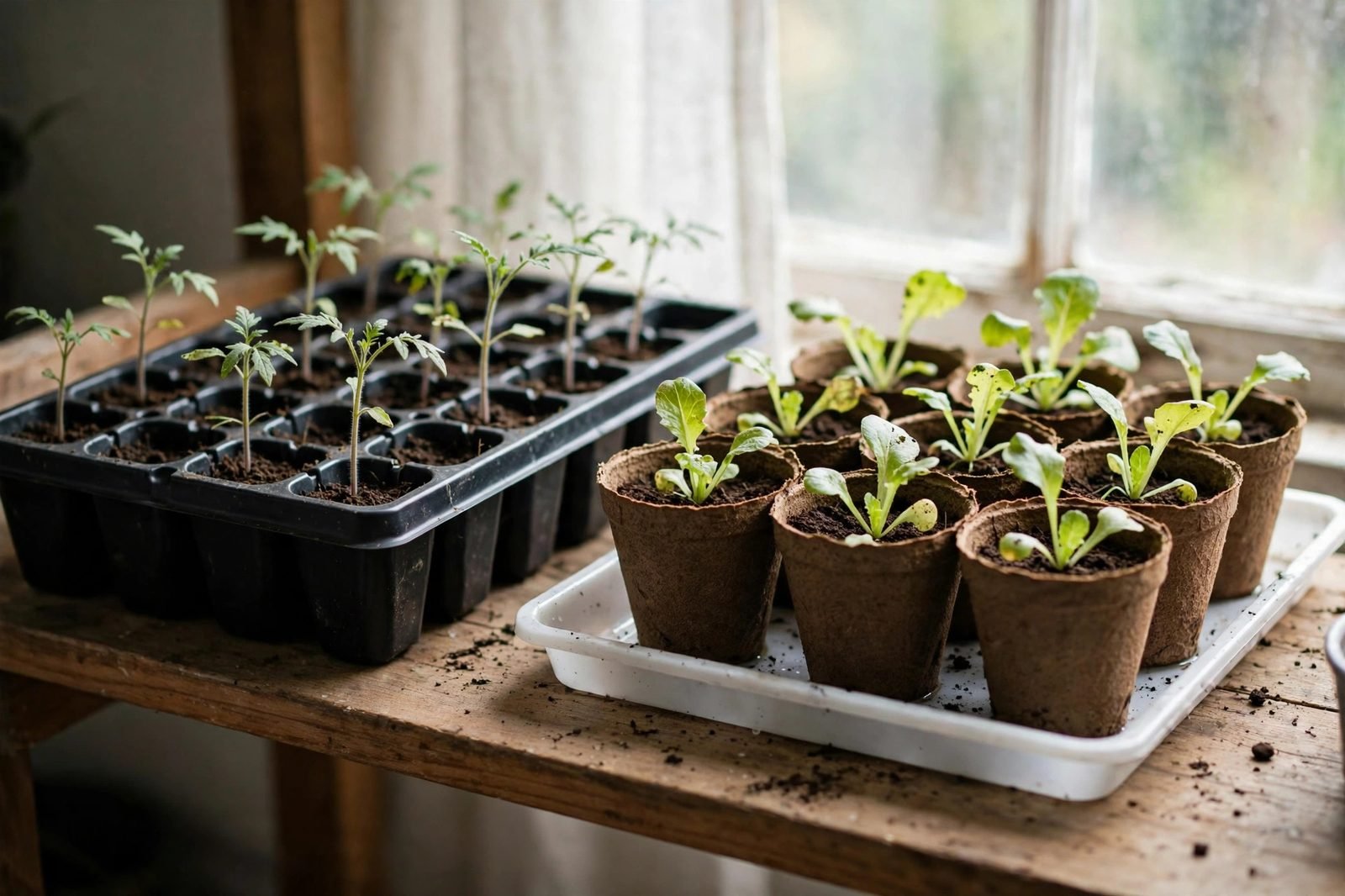
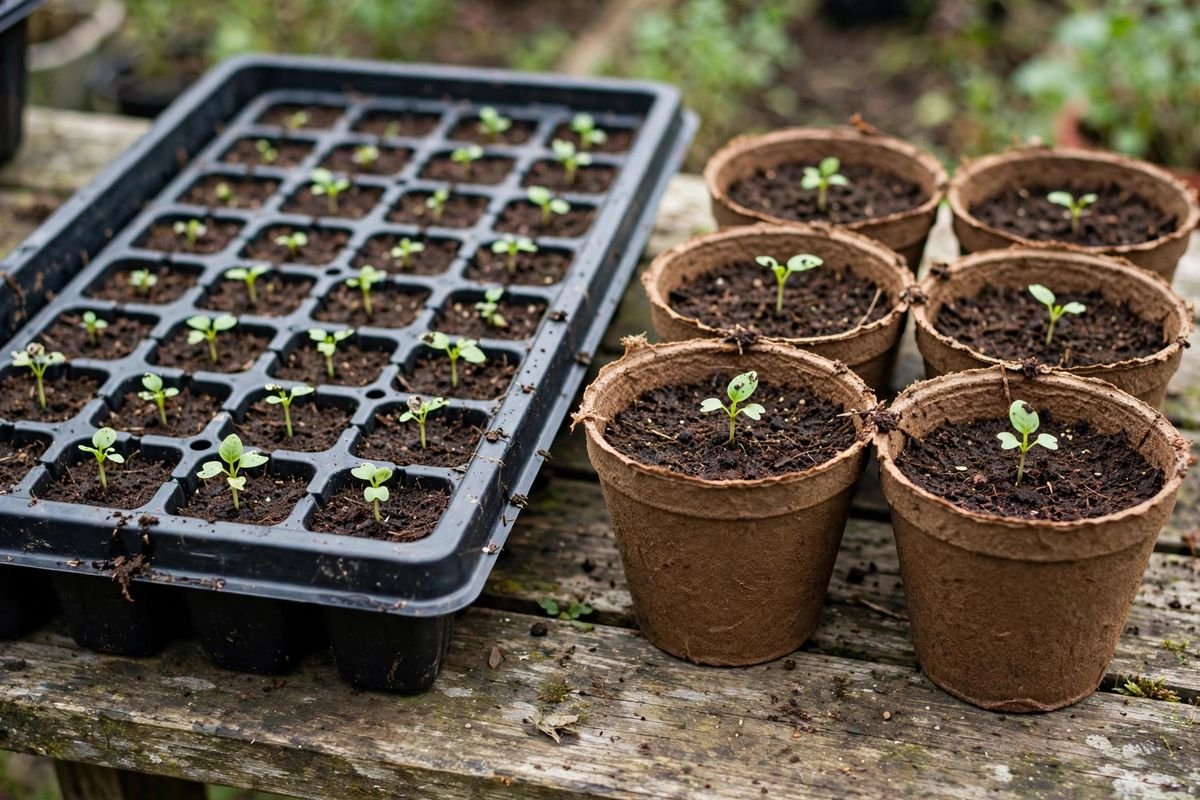
Reusable trays are built to survive many seasons. The classic version is the heavy-duty rigid plastic cell tray — thick walls, solid drainage holes, often sold with a matching leak-proof bottom tray and humidity dome. Silicone seed trays are the newer entry: flexible, easy to pop seedlings out of, and equally washable. Buy once, wash between seasons, use for years.
Disposable trays are single-season by design. Peat pots and coir (coconut fiber) pots are the plantable kind — the whole pot goes into the ground with the seedling. Thin plastic cell trays and peat-pellet kits are the other kind: cheap to buy, flimsy to handle, and generally done after one or two rounds. If you’re just getting started with indoor sowing, our complete beginner’s guide walks through the whole setup.
Cost Across Multiple Seasons
Upfront, there’s no contest. A sleeve of peat pots or a thin disposable tray costs a fraction of a heavy-duty reusable tray. If you only ever start one batch of seedlings a year and hate storing gear, disposables are genuinely the cheaper first purchase.
The math flips once you count seasons. A well-made rigid tray that’s washed and stored indoors can last many springs — gardeners routinely report five-plus years from quality trays — which spreads that higher price across dozens of batches. Peat and coir pots, meanwhile, are a fresh purchase every season, and the yearly spend adds up quietly. Thin plastic trays sit in the middle: cheap, but they crack, warp, and spill soil, so most gardeners replace them often.
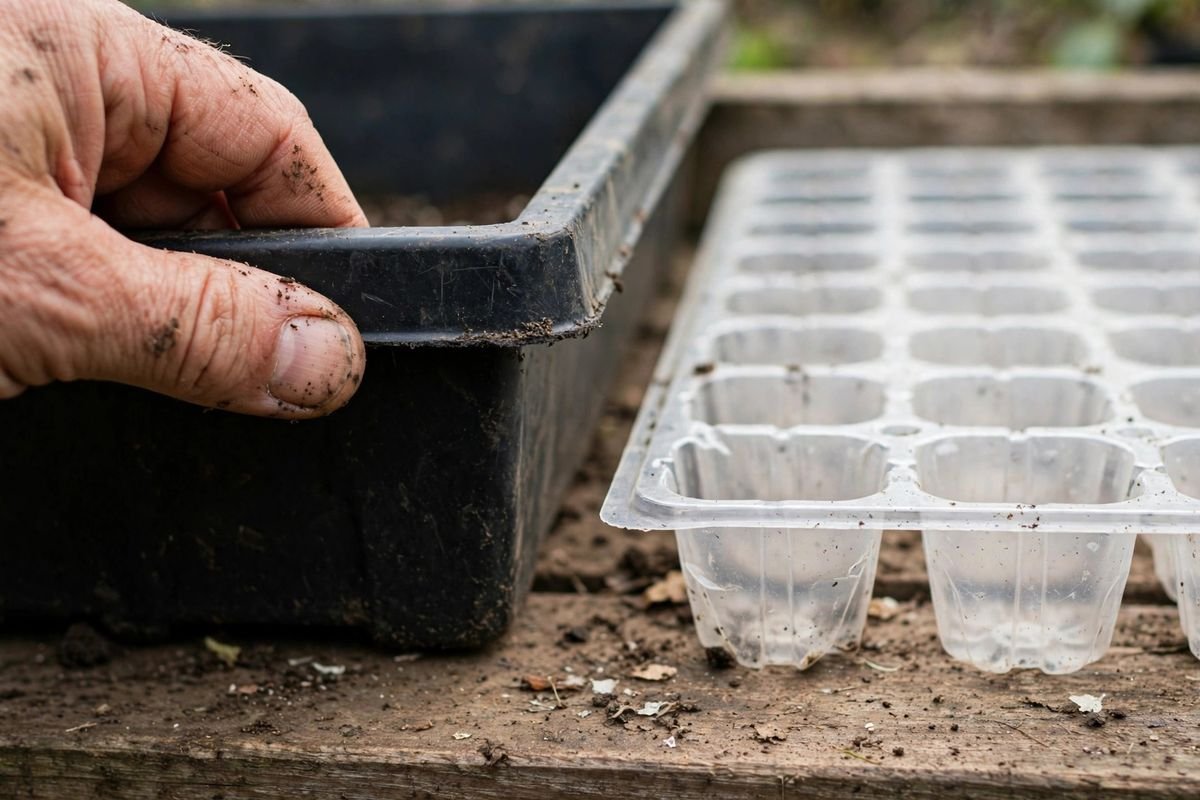
Silicone trays cost the most upfront of the reusable options, but they’re nearly indestructible in normal use and seedlings pop out with a gentle push — no prying, no cracked cells. For a gardener who starts seeds every single year, reusables win on cost by year two or three in most cases. For a one-season experiment? Disposables are the honest, economical pick.
Waste and Environmental Impact
This is where the comparison gets nuanced rather than obvious. Reusable trays are still plastic. The environmental case for them rests entirely on lifespan: one rigid tray used for eight seasons generates far less waste than eight seasons of disposable trays. But a “reusable” tray that cracks in year one and hits the trash was never really reusable — build quality matters more than the label.
Peat pots and coir pots avoid plastic waste, but they come with their own trade-offs. Peat is harvested from bogs, and while peat pots do break down in the soil, they often decompose slower than packaging suggests — gardeners frequently dig up intact pot fragments at season’s end. Coir is a byproduct of coconut processing, which sidesteps the peat-bog question, but coir pots share the same slow-breakdown habit. Either way, planting the pot whole means zero plastic in the bin and zero washing in the sink.
Seedling Health: Roots, Moisture, and Transplant Shock
Here’s where the two types genuinely garden differently. The single biggest advantage of plantable pots is transplant day: the whole pot goes into the ground, roots undisturbed. Seedlings never stall from root damage, which matters most for crops that resent transplanting — cucumbers, squash, and melons all fall in this camp. Our easiest vegetables for beginners list flags which crops prefer direct sowing versus indoor starts, and it’s worth checking before you buy anything.
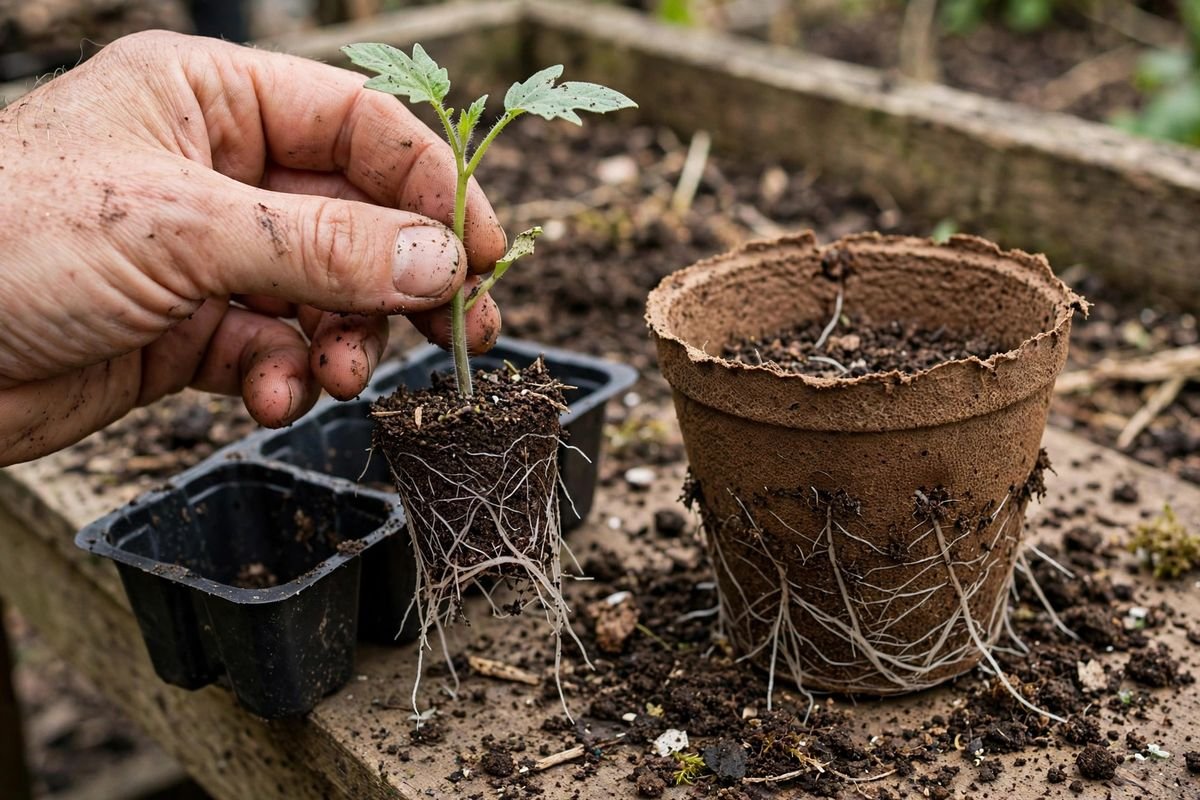
The catch: peat and coir pots are thirsty. The fiber walls wick moisture away from the soil and evaporate it, so pots dry out faster than plastic cells — sometimes dramatically faster under grow lights. They can also grow a harmless white fuzz on the outside in humid setups, which alarms beginners but is usually just surface mold on the fiber, not a plant disease. Tearing off the rim and slitting the bottom before planting is widely recommended so the rim doesn’t keep wicking moisture after transplant and roots escape freely.
Reusable plastic and silicone cells give you tighter control. Drainage is predictable, moisture stays where you put it, and you can see exactly when a cell needs water. The risk moves to transplant day: seedlings must be popped out, and rough handling tears roots. The fix is technique — water first so the root ball holds together, squeeze flexible cells gently, and never yank a seedling by its stem.
Convenience: Cleanup, Storage, and Daily Handling
Disposables win the lazy-gardener award and we’re not ashamed to say it. No washing, no disinfecting, no finding shelf space for eleven empty trays in July. Plant pot-and-all, done. For anyone starting a small first batch of tomatoes from seed, that simplicity is a real feature, not a compromise.
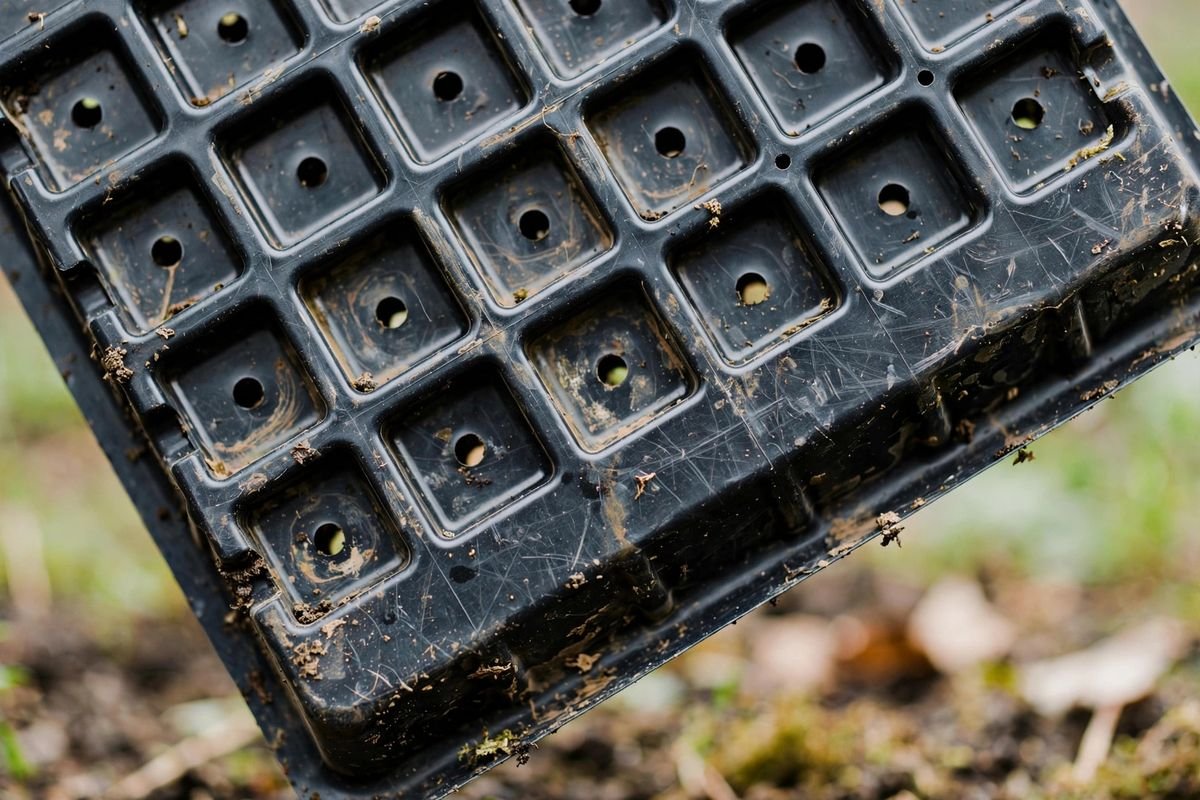
Reusables ask for a little maintenance in exchange for their longevity: knock out old soil, wash with soapy water, and disinfect between seasons (a diluted bleach soak followed by thorough rinsing is the standard guidance) to avoid carrying damping-off pathogens from year to year. They also need storage space. What they give back is sturdiness — a rigid tray full of wet soil can be carried one-handed without folding in half, which anyone who’s rescued a collapsed thin tray mid-carry will appreciate.
Head-to-Head Summary
| Reusable (rigid plastic / silicone) | Disposable (peat / coir / thin plastic) | |
|---|---|---|
| Upfront cost | Higher | Lower |
| Cost over 3+ seasons | Usually lower | Keeps adding up |
| Waste | Minimal if it lasts | Yearly, though compostable options exist |
| Transplant shock | Depends on your technique | Very low (plant pot-and-all) |
| Moisture control | Predictable | Dries faster; watch closely |
| Cleanup | Wash and disinfect yearly | None |
| Storage | Needs shelf space | None |
| Durability | Years (rigid) to near-indefinite (silicone) | One season |
Our Pick by Gardener Type
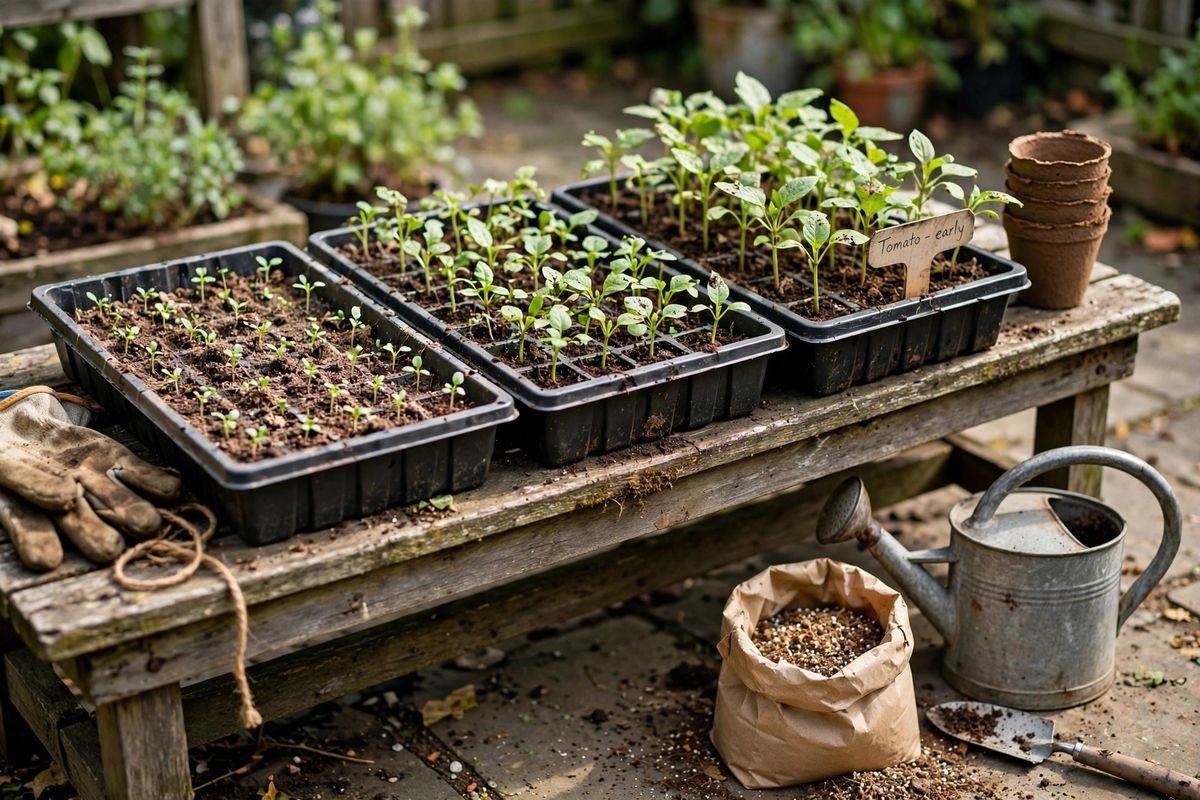
The every-year seed starter: heavy-duty reusable trays. The per-season cost drops fast, the handling is better, and you’ll appreciate the consistency. Browse our seed starting tray roundup for the types worth the investment.
The first-timer testing the waters: peat pots or a basic disposable kit. Low commitment, gentle transplants, nothing to store if you decide seed-starting isn’t for you.
The transplant-shock avoider (cucumbers, squash, melons): coir or peat pots. These crops punish rough handling, and plantable pots sidestep the problem entirely. Just remember to tear the rim and keep them watered — they dry out faster than you’d expect.
The waste-conscious gardener: reusables — but only the sturdy kind. A cheap thin tray that cracks in April is disposable with extra steps. If you go plantable, coir avoids the peat-harvest question.
Timing Your Seed Start
Whichever tray you choose, it only works if seeds go in at the right moment. Most gardeners start seeds indoors six to eight weeks before their average last frost date. Use your local frost dates and regional planting guidance — not your USDA hardiness zone alone — to choose planting dates.
FAQs
Can peat pots be reused?
Not really — that’s the trade-off. They soften, grow mold, and start falling apart after one wet season. If you want multi-season gear, that’s exactly what rigid and silicone trays are for.
Do roots really grow through peat pots?
Yes, but slowly, which is why experienced gardeners tear or slit the pot at transplant time. An intact pot left fully closed can act like a little wall around the roots for weeks.
Are silicone trays worth the higher price?
For gardeners who start seeds every year, usually yes. Seedlings release with a gentle push, the trays survive drops and stacking, and there’s nothing to crack. For occasional use, rigid plastic gives most of the benefit for less money.
Which is better for the environment?
A long-lived reusable tray generally creates less waste than many seasons of disposables. But the greenest tray is the one you actually reuse — buy quality once rather than replacing flimsy trays every spring.
More Seed-Starting Help
- Best Seed Starting Trays for Home Gardeners — our research-based roundup of reusable and disposable picks
- How to Start a Vegetable Garden for Beginners — the full setup, from soil to transplant day
Which side are you on — team wash-and-reuse, or team plant-pot-and-all? Tell us in the comments what you’re starting this season.