
This post may contain affiliate links. If you buy through links on this page, we may earn a commission at no extra cost to you.
As an Amazon Associate I earn from qualifying purchases.
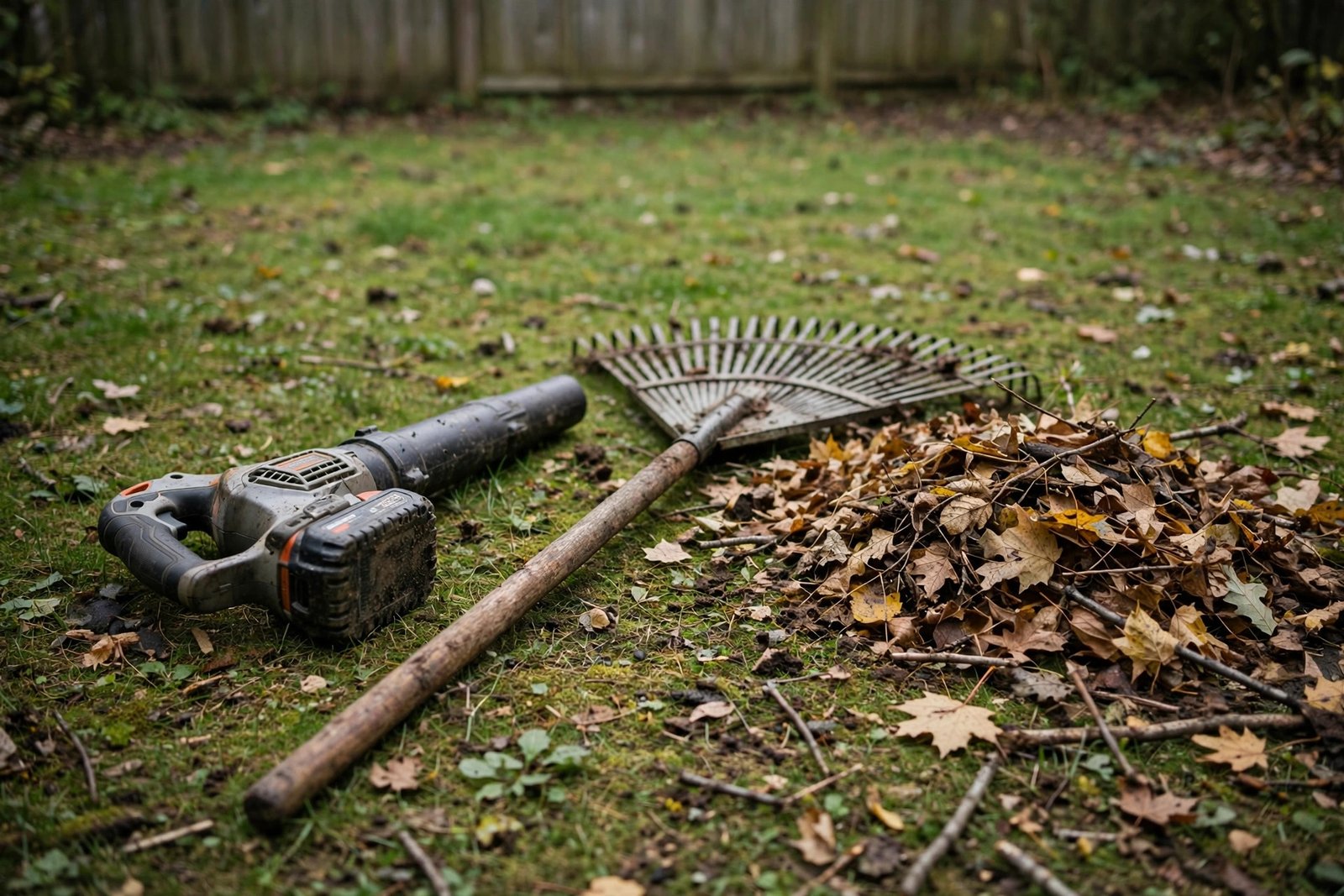
Every fall, the same choice waits in the garage: pick up the rake or fire up the blower. Both tools clear leaves from a lawn, and both have loyal fans, yet they suit different yards, different leaf loads, and different bodies. A blower moves leaves fast across hard surfaces and open lawns. A rake moves leaves with control, costs almost nothing to run, and treats the grass more gently. The right pick depends on the size of the yard, the trees above it, and how much noise and effort feels acceptable on a Saturday morning.
Fall cleanup sets up the whole garden for winter, and our guide to fall garden cleanup covers the full job, from cutting back perennials to putting beds to rest. This article settles one part of that job: which tool clears leaves better, and when the other one still wins.
Leaf blower vs rake at a glance
| Leaf blower | Rake | |
|---|---|---|
| Speed on an open lawn | Fast, clears a wide path in each pass | Slower, about 2 feet per stroke |
| Speed on paths and driveways | Very fast, pushes leaves off hard surfaces in minutes | Slow, tines skip and leaves scatter |
| Noise | Loud, hearing protection helps | Nearly silent |
| Cost to buy and run | Higher upfront cost, plus fuel or charging | Low upfront cost, no fuel |
| Effect on the lawn | Can blow soil and small plants if aimed too close | Gentle, lifts leaves without disturbing grass |
| Wet leaves | Struggles, wet leaves stick and clump | Works, though heavier and slower |
| Storage | Needs shelf space, battery care, or fuel storage | Hangs on a hook, needs almost no care |
| Exercise | Light, mostly walking and aiming | Real work for arms, shoulders, and back |
What a leaf blower does well
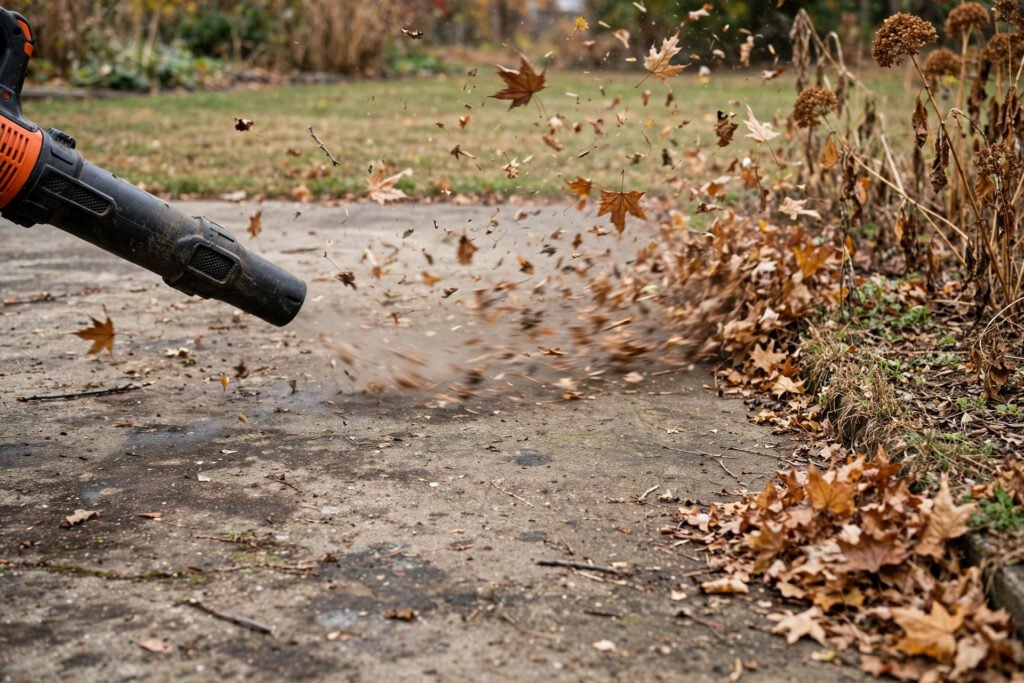
A blower shines where leaves sit on hard surfaces. A driveway, a patio, a sidewalk, or a deck clears in minutes with a blower, while a rake chases the same leaves around and leaves a thin scatter behind. A blower also covers open lawn fast. One steady sweep moves a wide band of leaves toward a pile, and a second pass catches the stragglers. For a yard with several large trees, that speed turns a three-hour job into a one-hour job.
Blowers reach spots a rake cannot. Leaves wedged under a hedge, caught in a fence corner, or blown against a foundation come out with a short blast of air. A blower also clears light snow dust, grass clippings, and sawdust from paths, so it earns its shelf space in more than one season. Battery models start with a button press, need no fuel mixing, and run quietly enough for a morning session without waking the whole street, though they still make more noise than a rake.
Pros of a leaf blower
- Clears large lawns and hard surfaces fast
- Reaches leaves trapped under hedges and against fences
- Light physical effort, mostly walking and aiming
- Works for more than leaves, such as clippings and light debris on paths
Cons of a leaf blower
- Loud, and gas models are louder still, so hearing protection and neighbor-friendly hours matter
- Costs more to buy, and needs batteries, charging, or fuel
- Blows dust, pollen, and small debris into the air
- Can strip topsoil and disturb small plants if aimed too close to beds
What a rake does well
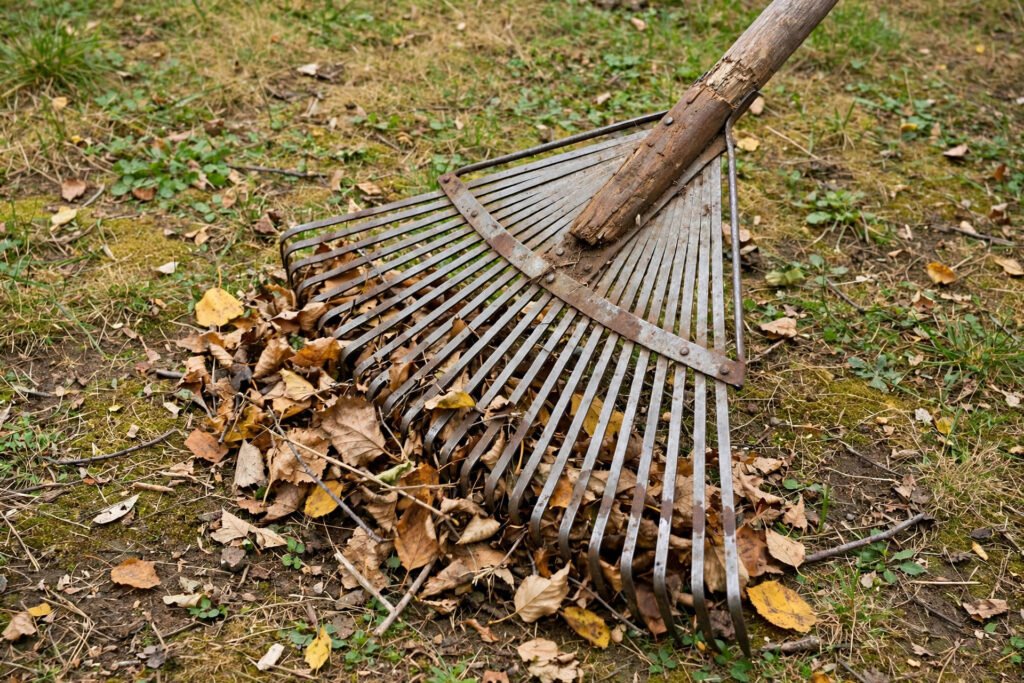
A rake gives control that no blower matches. Each stroke gathers leaves into a neat pile, and the pile stays where it was put. A rake pulls leaves out of flower beds without tearing plants, lifts wet leaves that a blower would only flatten, and works in wind that would scatter a blower pile across the yard. A rake also costs very little, needs no charging or fuel, and lasts for years with almost no care beyond a dry hook in the shed.
The quiet matters too. Raking makes no noise, so it fits early mornings, shared fences, and neighborhoods with rules about powered tools. Many gardeners find the steady rhythm of raking pleasant work, and the exercise is real: an hour of raking works arms, shoulders, and core without the vibration and weight of a powered tool. For small yards, the rake often finishes before a blower would be unpacked, fueled, and put away again.
Pros of a rake
- Precise, gathers leaves into piles that stay put
- Handles wet leaves and leaves tucked into beds
- Nearly silent, with no fuel, charging, or upkeep
- Cheap to buy and lasts for years
Cons of a rake
- Slow on large lawns, where the job can take hours
- Hard on shoulders, wrists, and lower back over a long session
- Struggles on hard surfaces, where tines skip and leaves scatter
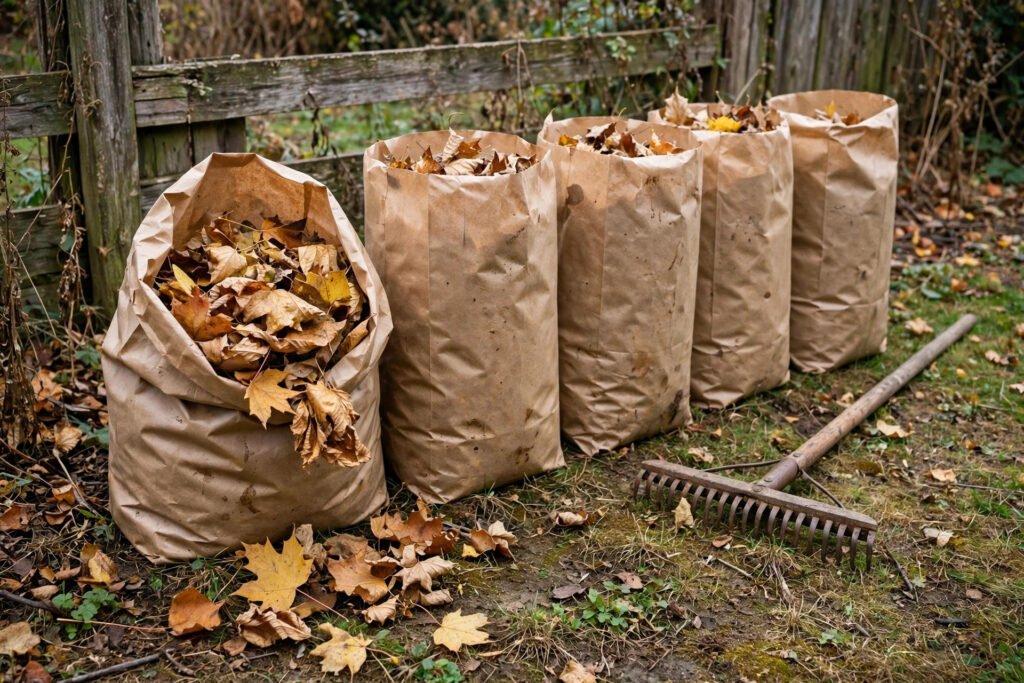
- Needs the user to bend and lift piles into bags or a wheelbarrow
Time and effort on a quarter-acre yard
The speed gap between the two tools grows with the size of the yard, so it helps to run the numbers on a concrete example. Take a quarter-acre lot with about 5,000 square feet of lawn under two mature maples. Assume a heavy leaf fall that leaves the lawn covered about 2 inches deep, a steady working pace with short breaks, and one trip to the curb for every full wheelbarrow load.
With a handheld blower, moving the leaves into piles takes about 40 minutes, and bagging adds about 20 minutes, for a total near one hour. With a 24-inch fan rake, the same lawn takes about 2 hours of raking plus the same 20 minutes of bagging, for a total near 2 hours and 20 minutes. The gap comes from pass width: a blower clears a path several feet wide in one sweep, while a rake covers about 2 feet per stroke, so the rake needs far more strokes to cross the same lawn.
On a small yard with one tree, the gap shrinks to minutes, and the rake often wins on simplicity, since there is no battery to charge and no machine to clean and store. On a half-acre lot under several oaks, the gap widens the other way, and the blower saves an afternoon. Our guide to the best leaf rakes for large yards runs the pass-count math for wide rakes, for readers who want to close the gap from the rake side.
Cost, noise, and upkeep
A decent fan rake costs about as much as a bag of potting soil, while a battery blower costs many times more, and a gas blower costs more again. The rake has no running costs beyond the occasional replacement of a cracked handle or a bent tine. A blower needs batteries that wear out over a few seasons, or fuel, oil, and spark plug care for a gas model. Over five seasons, the rake stays the cheaper tool by a wide margin, even if it is replaced once.
Noise is the other running cost, paid by the neighborhood. Gas blowers are the loudest garden tool most people own, and many towns limit their hours or ban gas models outright, so check local rules before buying one. Battery blowers run quieter, though still louder than any hand tool. A rake makes no noise at all, which makes it the safer pick for early mornings and close neighbors. For a deeper look at what each tool costs to keep, a search for leaf blower models shows the spread from small battery handhelds to large gas backpack units.
Which one should you pick
Choose a leaf blower if you have a large yard with heavy leaf fall from several mature trees, and clearing it by hand would take most of a day. Choose a leaf blower if your yard has long driveways, wide patios, or big decks, since hard surfaces are where a blower earns its price. Choose a leaf blower if lifting and pulling aggravate your shoulders or back, since the blower does the moving while you walk and aim.
Choose a rake if your yard is small or has a single tree, since the job finishes fast by hand and the tool costs almost nothing. Choose a rake if you clear leaves from beds full of perennials and bulbs, since tines lift leaves without tearing plants or blowing soil around. Choose a rake if you work early in the morning or live close to neighbors who value quiet, since a rake makes no sound at all.
Many gardeners end up owning both, and that is often the best answer. The blower handles the big open lawn and the driveway, the rake handles beds, corners, and wet leaves, and each tool covers the ground where the other struggles. Leaves gathered by either tool make fine material for the garden: our guide to how to make leaf mold turns a season of raked or blown leaves into dark, crumbly soil conditioner.
Sources & further reading
University of Minnesota Extension, fall yard and garden cleanup guidance; Cornell Cooperative Extension, leaf management and lawn care guidance; USDA Natural Resources Conservation Service, backyard conservation guidance for leaves and mulch.