
This post may contain affiliate links. If you buy through links on this page, we may earn a commission at no extra cost to you.
As an Amazon Associate I earn from qualifying purchases.
Rooting cuttings in water is one of the cheapest ways to multiply your houseplants, and a propagation station is simply a vessel built to make the job tidy. The tubes or carafes hold stems upright, keep the submerged nodes visible, and sit somewhere you will actually notice when the water needs changing. Be honest with yourself about one thing: the station does not make roots grow faster. Light, warmth, and the health of the cutting do that work. What a good station does is remove the friction that makes cuttings fail, which is reason enough to pick the right one.
What a propagation station actually does
A cutting roots from the nodes, the small bumps where leaves meet the stem. Those nodes have to stay under water while the leaves stay dry and the stem stays upright instead of sliding into a soggy heap. A purpose-built station solves the geometry: narrow tubes grip thin stems, wide-mouth carafes give thick cuttings room, and self-watering planters hold moisture steady for people who forget weekly chores. None of these designs changes plant biology. When sellers imply their glass shape “boosts” rooting, treat that as decoration talk, not horticulture.
Three station styles compared
Almost every propagation station on the market falls into one of three styles. The table below lines them up by the specs sellers actually list, so you can see the real tradeoffs before you buy.
| Style | How it holds cuttings | Typical capacity | Water per change | Best for | Watch out for |
|---|---|---|---|---|---|
| Wall-mounted test-tube rack | Wood or metal frame with removable glass tubes | 3 to 10 tubes | 80 to 100 ml per tube | Small spaces, kitchens, display | Tubes are narrow and fiddly to scrub; adhesive mounts fail on textured walls |
| Countertop carafe or vase | Single glass vessel, wide mouth | 5 to 10 cuttings | 300 to 800 ml per vessel | Rooting in bulk on a budget | Cuttings flop together; takes counter space |
| Self-watering propagation planter | Reservoir plus wick or water-level float, often with grow medium | 4 to 8 cuttings | Reservoir of 500 ml to 1 liter, refilled as needed | Forgetful waterers, longer rooting cycles | More parts to clean; costs two to three times more than glass |
Wall-mounted test-tube stations
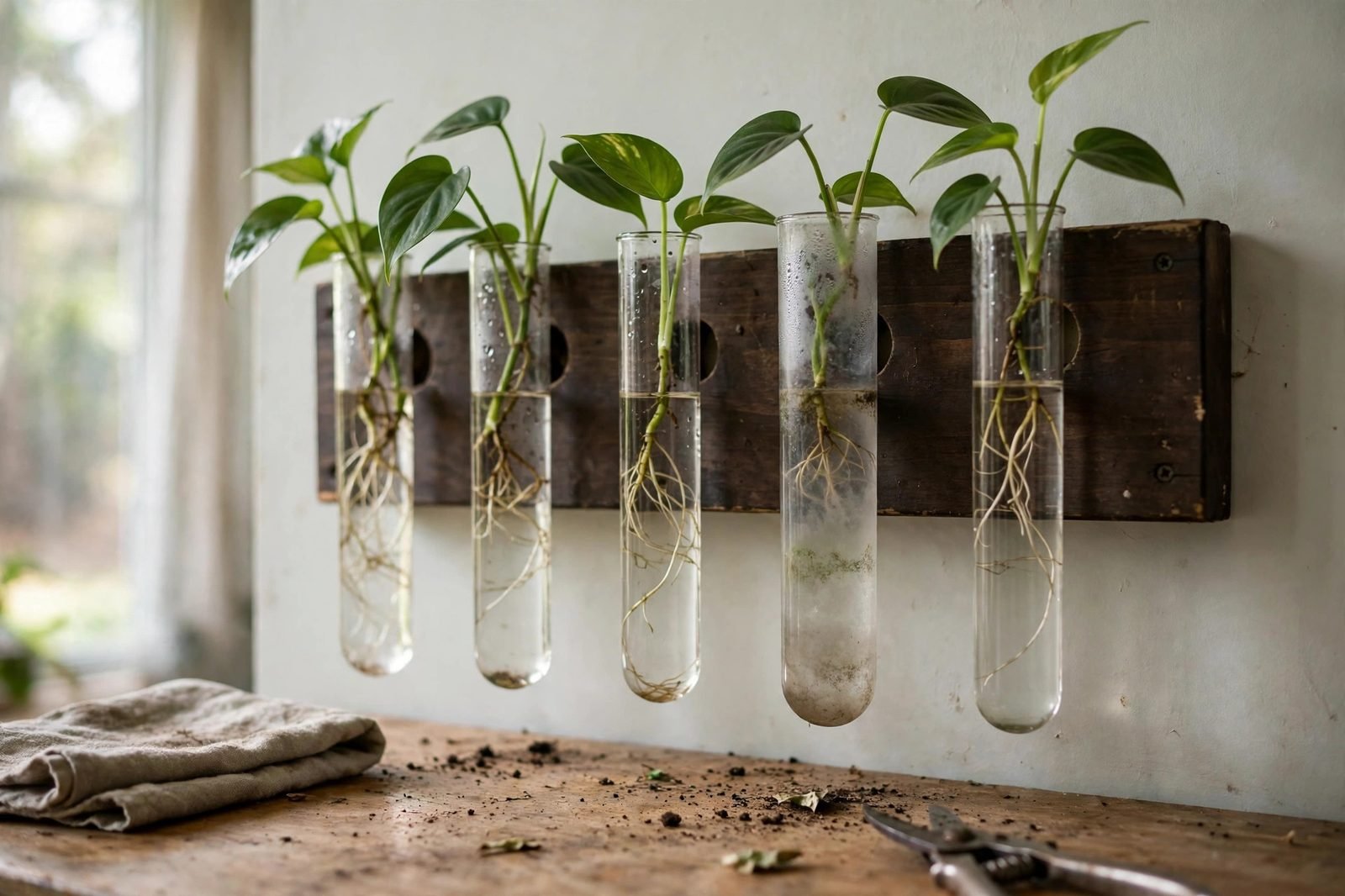
The wall-mounted rack is the style all over home-decor feeds: a stained-wood or black-metal frame with a row of slim glass tubes, hung by screws or adhesive strips. Each tube holds one cutting, or two if the stems are thin, and the whole thing turns a blank wall into a living display. For small apartments this is the practical win, since it uses vertical space and keeps glass off counters where cats and elbows roam.

The tradeoffs are maintenance-shaped. Narrow tubes grow algae faster than wide vessels, and a bottle brush barely fits inside them. Adhesive-mounted frames look clean but let go on textured or humid bathroom walls, so if you rent or your walls are rough plaster, pick a screw-mounted frame or a standing rack instead. Shop by tube count and tube diameter: tubes under an inch wide suit pothos and philodendron, while thicker monstera stems need wider openings.
Browse wall-mounted propagation stations on Amazon
Countertop carafes and vases
A carafe or a wide-mouth vase is the least fussy option and often the cheapest. A 500 ml carafe holds five to eight cuttings, the wide opening makes water changes a ten-second job, and you probably already own something that works. Mason jars, thrifted vases, and lab-style beakers all do the same job as a product labeled “propagation vase.”
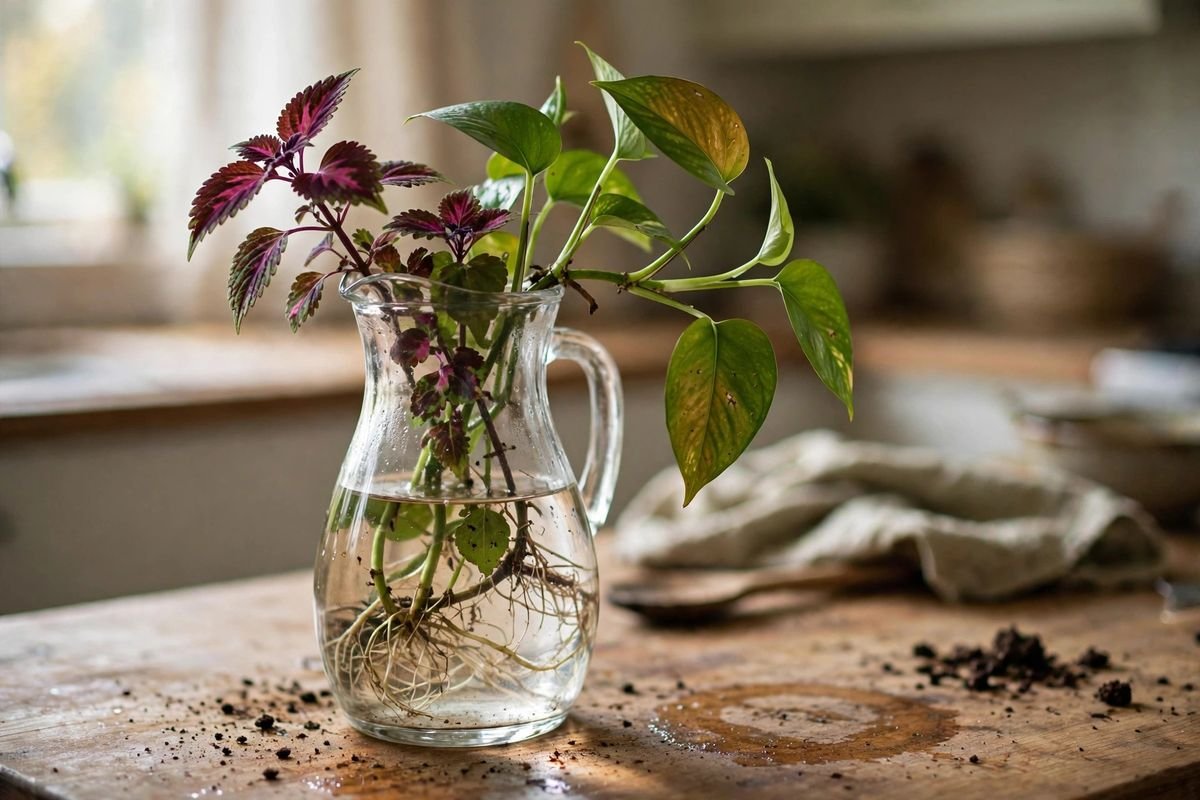
The downside is crowding. Stems lean on each other, leaves dip into the water and rot, and a bumped carafe dumps half a liter on your counter. If you go this route, change the water fully rather than just topping it off, and keep the vessel where it will not get knocked. For sheer volume of cuttings per dollar, nothing beats this style, and beginners should probably start here before buying anything specialized.
Browse propagation carafes and vases on Amazon
Self-watering propagation planters
Self-watering planters add a reservoir under or beside the rooting chamber, feeding water through a wick or keeping a constant level with a float indicator. Some designs root cuttings directly in a light medium like perlite sitting above the reservoir. The promise is fewer water changes and steadier moisture, which suits slow rooters like hoya and zz plant that sit for weeks before showing roots.

Two cautions before you pay the premium. First, a reservoir left for weeks grows biofilm, so you still clean it, just less often. Second, the wick and float add failure points: a clogged wick starves the cutting silently, which a plain glass tube would never do. Buy this style if you travel or genuinely forget chores, not because it roots faster. Nothing about a reservoir changes how quickly a plant builds roots.
Browse self-watering propagation planters on Amazon
Worked example: cutting capacity and water budget
Here is our own planning math so you can size a station before you buy. These are arithmetic estimates with stated assumptions, not lab measurements.
Take a 10-tube wall rack with tubes that each hold about 90 ml. Assumptions: one cutting per tube is comfortable, two fit only for thin stems like pothos; water gets fully changed once a week in a warm room.
- Capacity: 10 tubes gives 10 cuttings comfortably, up to 20 thin-stemmed ones.
- Water per change: 10 tubes times 90 ml = 900 ml, just under one liter.
- Monthly water: 0.9 liters times 4 changes = about 3.6 liters per month.
Now a 500 ml countertop carafe holding 8 cuttings, changed weekly: 0.5 liters times 4 = about 2 liters per month, roughly half the water chore of the big rack for a similar number of cuttings. The rack wins on display and organization; the carafe wins on simplicity and water changes you will actually finish. If you run two racks in a warm kitchen, budget a full watering can of changes per month and put the station near the sink, because distance to the tap is what kills the habit.
Where to put the station
Cuttings root best in bright, indirect light at normal room temperature, roughly 65 to 75 degrees Fahrenheit. A spot two to three feet from an east-facing window is the classic answer: gentle morning light, no harsh midday sun baking the tubes. Direct afternoon sun heats small tubes fast and grows algae on the glass within days.
Here is a simple placement check you can do today. Stand where the station will hang at midday and look at the shadows: soft, visible shadows mean decent indirect light, while a dark corner with no shadow at all is too dim and will stall rooting. If you have a free phone light-meter app, readings in the low hundreds to low thousands of foot-candles are a useful sanity check for “bright enough without direct sun.” Too dim, and cuttings sit for months; too bright, and you are cleaning algae weekly. Our guide to growing herbs indoors in winter covers the same light logic for plants that stay inside all season.
Caring for cuttings while they root
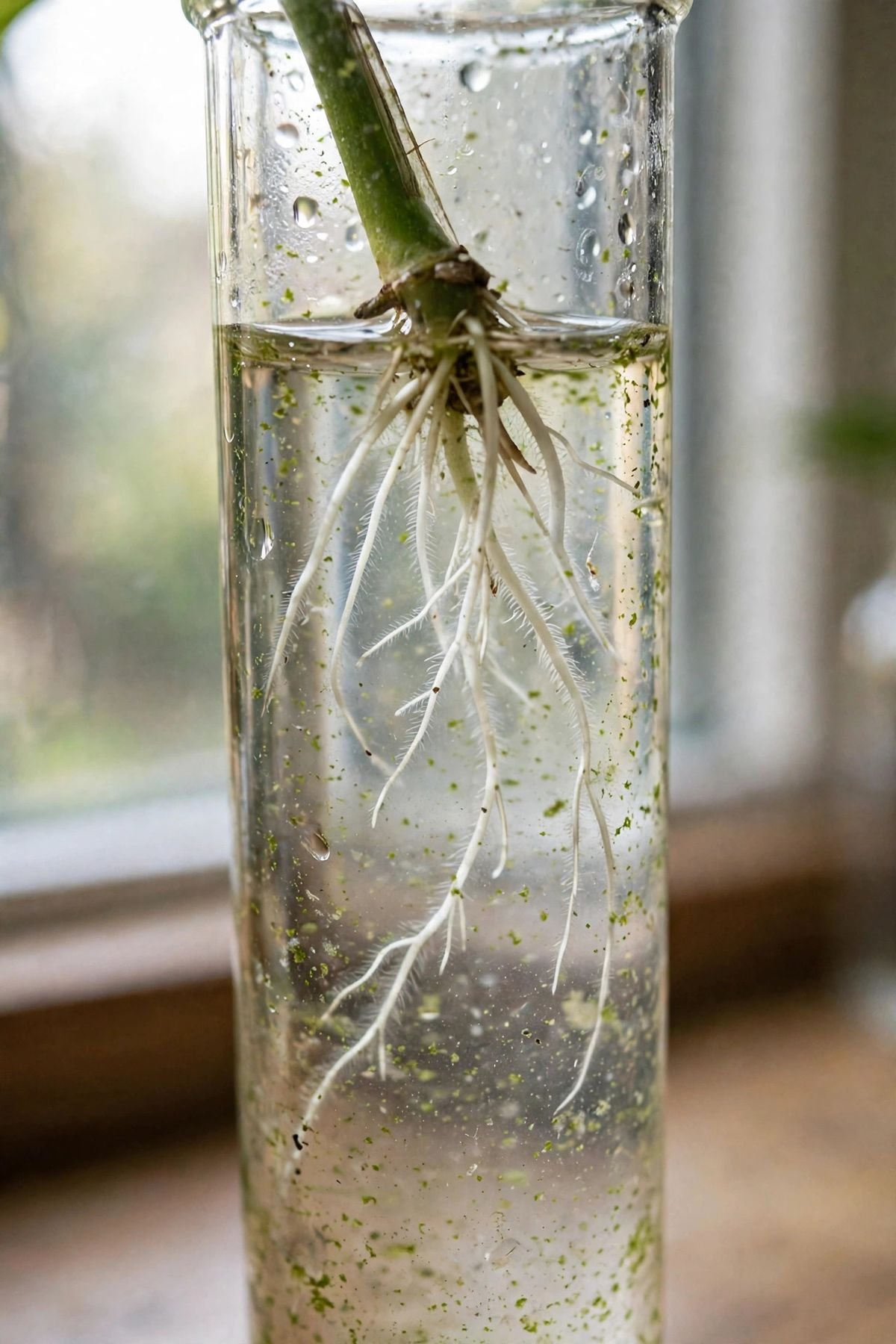
Change the water when it looks cloudy or smells off, and top it up in between so nodes never sit exposed to air. Snip the cutting just below a node with clean shears, strip any leaves that would sit underwater, and trim away any stem section that turns mushy instead of waiting to see if it recovers. Most pothos, philodendron, and coleus cuttings show roots in two to four weeks; woody herbs take longer. When roots reach an inch or two, pot the cutting into soil and keep that soil damp for the first week while the water roots adjust. Water-rooted green onions follow the same rhythm, which is why a station doubles as a kitchen scrap garden.
Our take: match the station to your habits
Choose a wall-mounted test-tube station if you are short on counter space and want the cuttings visible as decor. Choose a countertop carafe if you root in bulk, change water weekly without complaint, and would rather spend the money on plants. Choose a self-watering planter if you travel or know you will skip water changes, and accept the extra cleaning the reservoir needs. Whichever style you pick, put it within arm’s reach of the sink and in bright indirect light, because placement decides success more than the vessel does.
Sources & further reading
- NC State Extension, Extension Gardener Handbook, Chapter 13: Propagation, content.ces.ncsu.edu/extension-gardener-handbook/13-propagation
- Virginia Cooperative Extension, Gardener Handbook, Chapter 8: Plant Propagation, pressbooks.lib.vt.edu/emgtraining/chapter/8/