
This post may contain affiliate links. If you buy through links on this page, we may earn a commission at no extra cost to you.
As an Amazon Associate I earn from qualifying purchases.
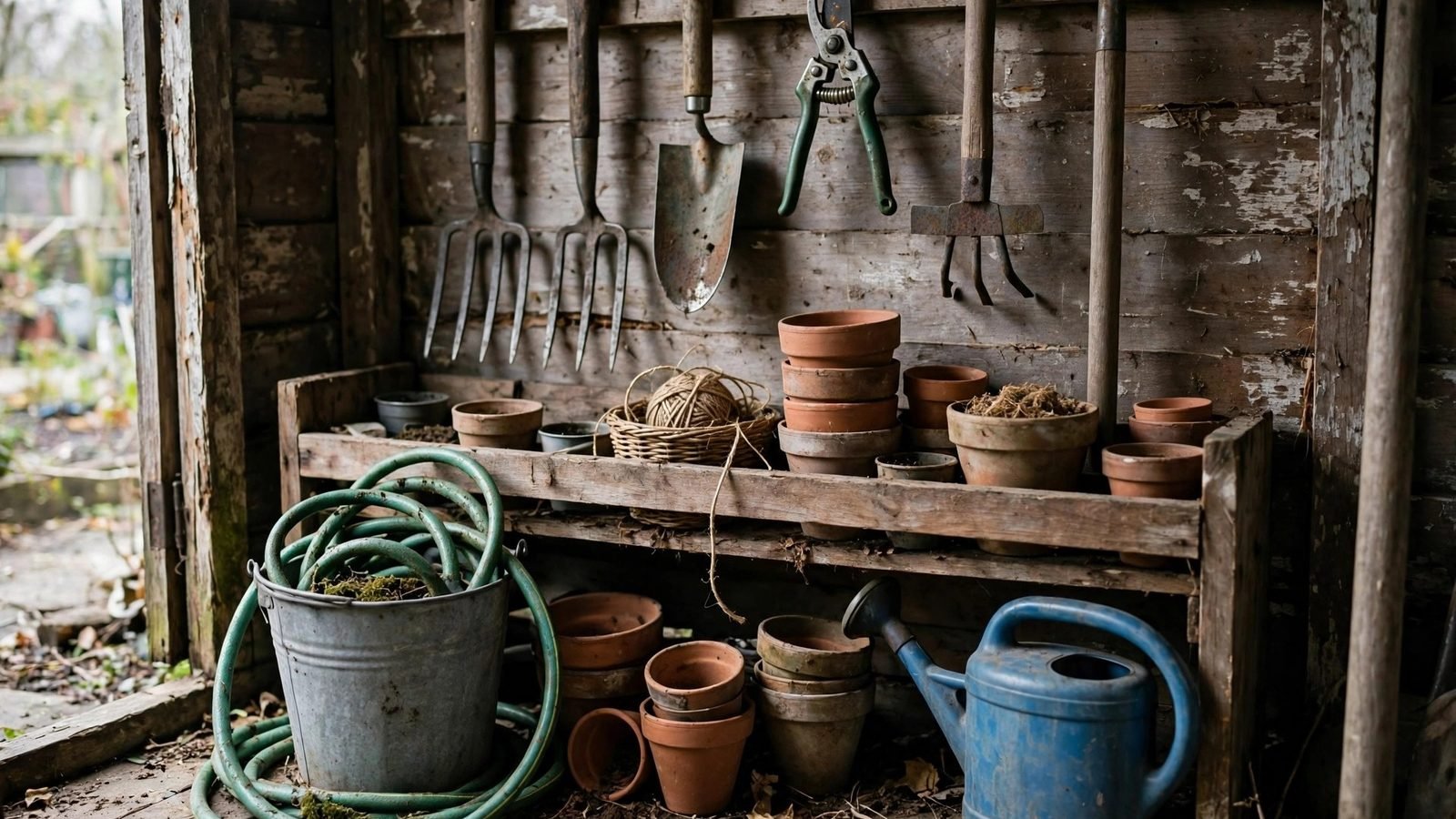
Winter is hard on garden tools. Damp air rusts steel, freeze-thaw cycles split wooden handles, and a tool left leaning against a fence comes back in spring with a pitted blade and a loose head. The short answer: a wall-mounted rack inside a dry shed or garage is the best garden tool storage for winter for most gardeners. It keeps tools off the floor, out of standing water, and in moving air, which is what stops rust.
That said, the rack is not the only storage that works. A freestanding cabinet suits a gardener with no wall space. A deck box suits a small patio. A shed suits the gardener with a lot of tools and room to put them. This guide compares four storage options, with honest tradeoffs for each, so you can match the storage to the tools and the space you have.
We have not run side-by-side trials of these storage options, and this guide does not pretend otherwise. It is research-based: how each type works, what it holds, where it fails, and the cost math for a typical tool collection. If your tools are still in a pile by the back door, our guide to how to store garden tools in a small garage covers the small-space version of the job.
Four tool storage options at a glance
Capacities are typical ranges for each storage type, not figures for one single product, since sizes vary. Prices assume common retail sizes for bought storage, and zero for storage built from scrap wood and hooks you already own.
| Storage | What it holds | Cost | Best for | Watch out for |
|---|---|---|---|---|
| Wall-mounted rack and hooks | 6 to 12 long-handled tools | A few dollars to tens of dollars | Garages and sheds with a free wall | Needs solid wall fixings; tools can fall if hooks are loose |
| Freestanding tool cabinet | 10 to 20 tools plus small gear | Tens to hundreds of dollars | Gardeners with no free wall | Takes floor space; cheap cabinets warp in damp air |
| Garden shed | A full tool collection plus mower and pots | Hundreds of dollars and up | Large gardens with many tools | Needs a dry floor and ventilation, or it traps damp air |
| Deck box | 4 to 8 hand tools plus small gear | Tens of dollars | Patios and renters | Seals vary; some boxes let rain in at the lid |
Wall-mounted rack and hooks
A wall rack is a rail, a board, or a set of hooks fixed to a garage or shed wall, with long-handled tools hung in a row. The tools hang in the air, off the floor and away from standing water, and you can see every handle at a glance. It is the simplest storage on this list, and the one that does the most for rust prevention per dollar spent.
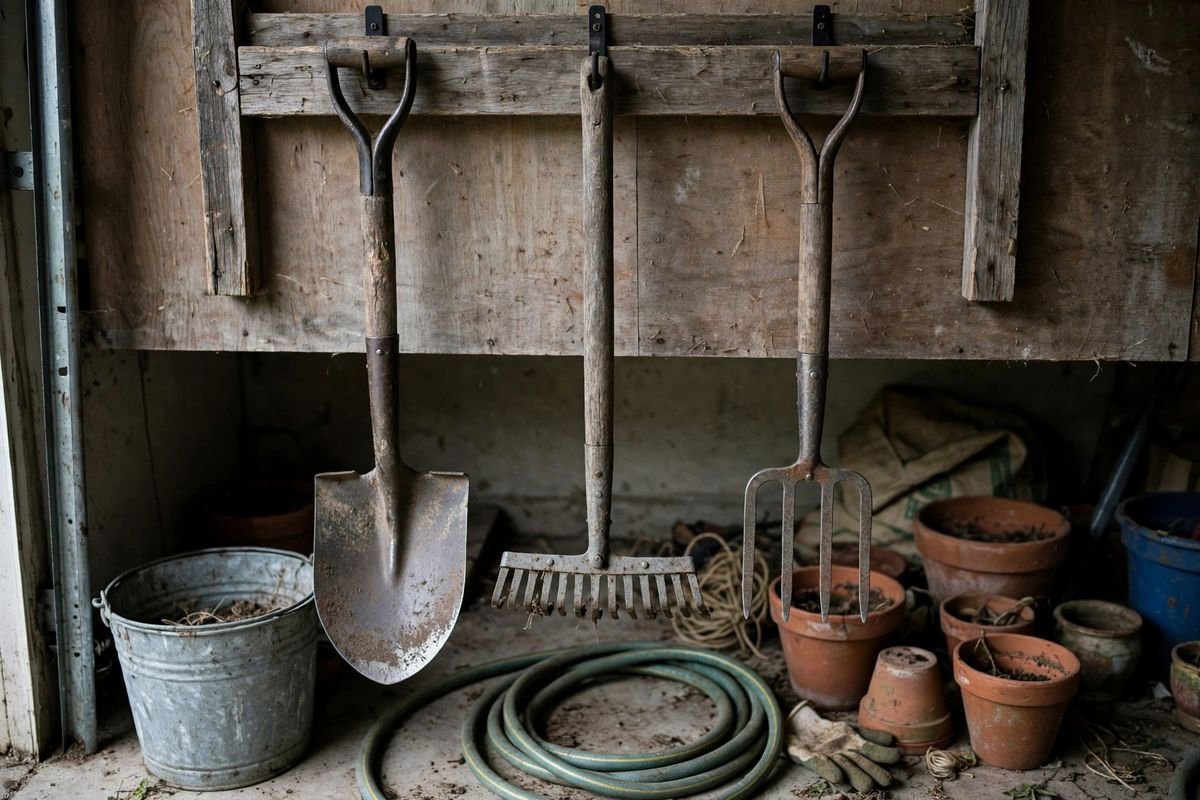
A rack suits any gardener with a free stretch of wall. It holds shovels, rakes, forks, hoes, and brooms, and a small shelf above it holds hand tools in a bucket. The whole setup can be built from a scrap board and hooks in an afternoon.
Pros of the wall-mounted rack
Cheap, since a board and hooks cost little. Tools dry in moving air instead of sitting in a damp corner, which is the main defense against rust. Every tool is visible, so a missing tool is noticed at once.
Cons of the wall-mounted rack
It needs a solid wall and solid fixings: hooks screwed into plasterboard without anchors pull out under the weight of a shovel, and a falling tool can dent a car or a foot. The rack also leaves tools in the open, so it suits a locked garage or shed better than an open carport. If you need the hardware, a wall mounted garden tool rack search shows the common rail and hook sets.
Freestanding tool cabinet
A freestanding cabinet is a tall cupboard with doors, shelves, and hooks inside, made for garden tools. Long-handled tools stand upright inside, hand tools sit on shelves, and the doors close over the whole collection. It is the pick for gardeners who want the tools out of sight.
The cabinet suits a garage or a covered porch where wall space is taken and floor space is free. It also suits households that want the tools locked away from children.
Pros of the freestanding tool cabinet
Doors keep dust and rain off the tools, and a locked cabinet keeps tools out of small hands. Shelves hold small gear like twine, gloves, and seed packets beside the tools, so everything for the garden lives in one place.
Cons of the freestanding tool cabinet
A closed cabinet traps damp air, and damp air rusts steel. A cabinet in an unheated garage needs ventilation holes or a door left ajar on dry days, or the tools inside will rust faster than tools hanging in the open. Cheap cabinets made from thin board warp in damp air and the doors stop closing. A cabinet also takes a real patch of floor, and a tall one can tip if it is top-heavy.
Garden shed
A garden shed is the largest storage on this list: a small building with room for every tool, the mower, the pots, and the bags of mix. Tools hang on the walls, sit on shelves, or stand in a corner rack, and the shed door locks the whole collection away.
The shed suits anyone whose tool collection has outgrown the garage, and gardeners who work in the garden daily, since the tools sit steps from the beds instead of across the house.
Pros of the garden shed
Room for everything, including the tools a rack cannot hold: the mower, the wheelbarrow, and the bags of soil. A shed keeps rain off the tools entirely.
Cons of the garden shed
A shed costs the most on this list by a wide margin, and it needs a level base, a dry floor, and ventilation to do its job. A shed with no vents traps damp air, and a shed with a leaking roof is worse than no shed at all, since it holds the rain in with the tools. A shed also needs upkeep: the roof felt, the door hinges, and the floor all wear. Our guide to how to winterize a raised garden bed covers the outdoor side of the same winter prep.
Deck box
A deck box is a low, lidded box that sits on a patio or balcony, holding hand tools, gloves, twine, and small gear. It is not built for long-handled tools, which will not fit, but it holds everything a container gardener uses in a day.
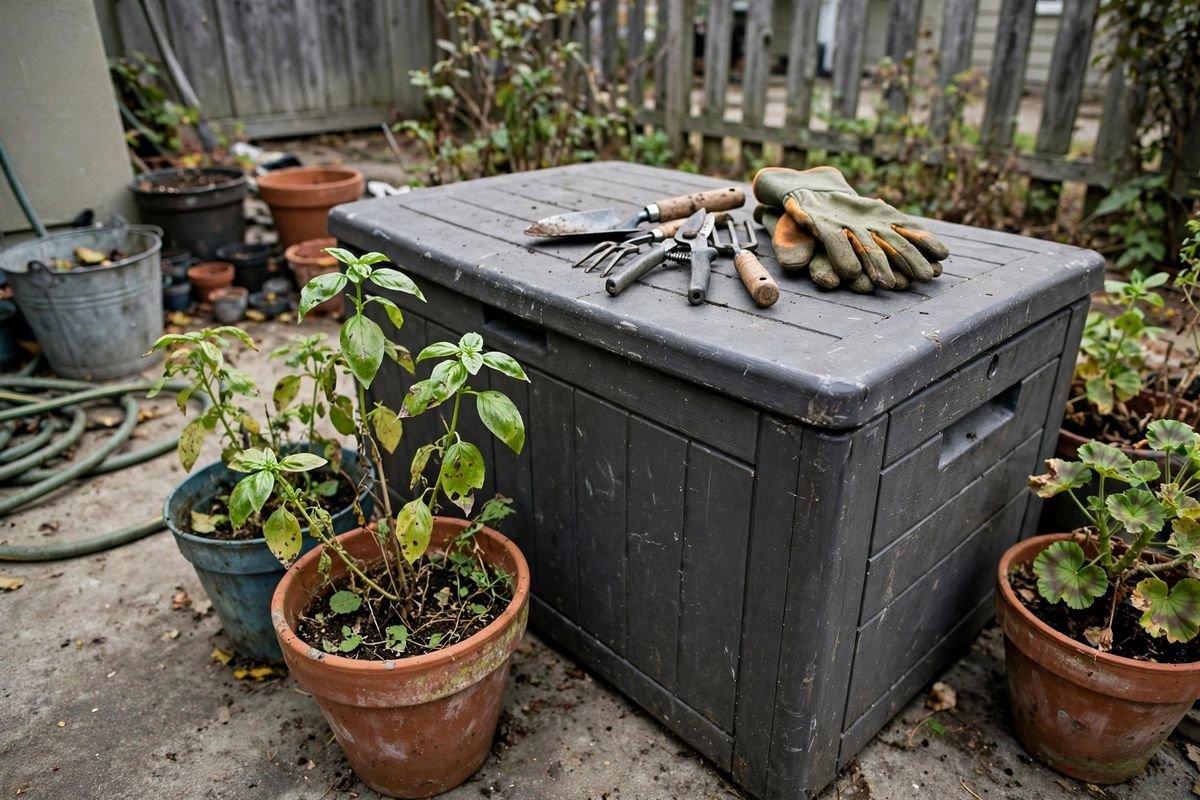
The box suits small gardens where the tool collection is a trowel, a pair of secateurs, a hand fork, and a few small items. It also suits households that want the tools out of sight on a tidy patio.
Pros of the deck box
Cheap, movable, and needs no fixings, which is why renters like it. The lid keeps rain off the tools inside, and the box doubles as a seat or a side table.
Cons of the deck box
Seals vary widely, and some boxes let rain in at the lid seam, which leaves the tools sitting in a puddle all winter. The box holds hand tools only, so long-handled tools still need somewhere else. A box left in the sun goes brittle over a few seasons. Check the lid seal before you buy, and drill a small drainage hole in the bottom if the box has none. A deck box search shows the common sizes, but read recent reviews for notes on the lid seal before you choose one.
Prep the tools before they go away
Storage only works if the tools go in clean and dry. A tool stored dirty rusts from the soil left on it, and a tool stored wet rusts from the water left on it. The prep takes an afternoon, and it decides whether the tools come back in spring ready to use.
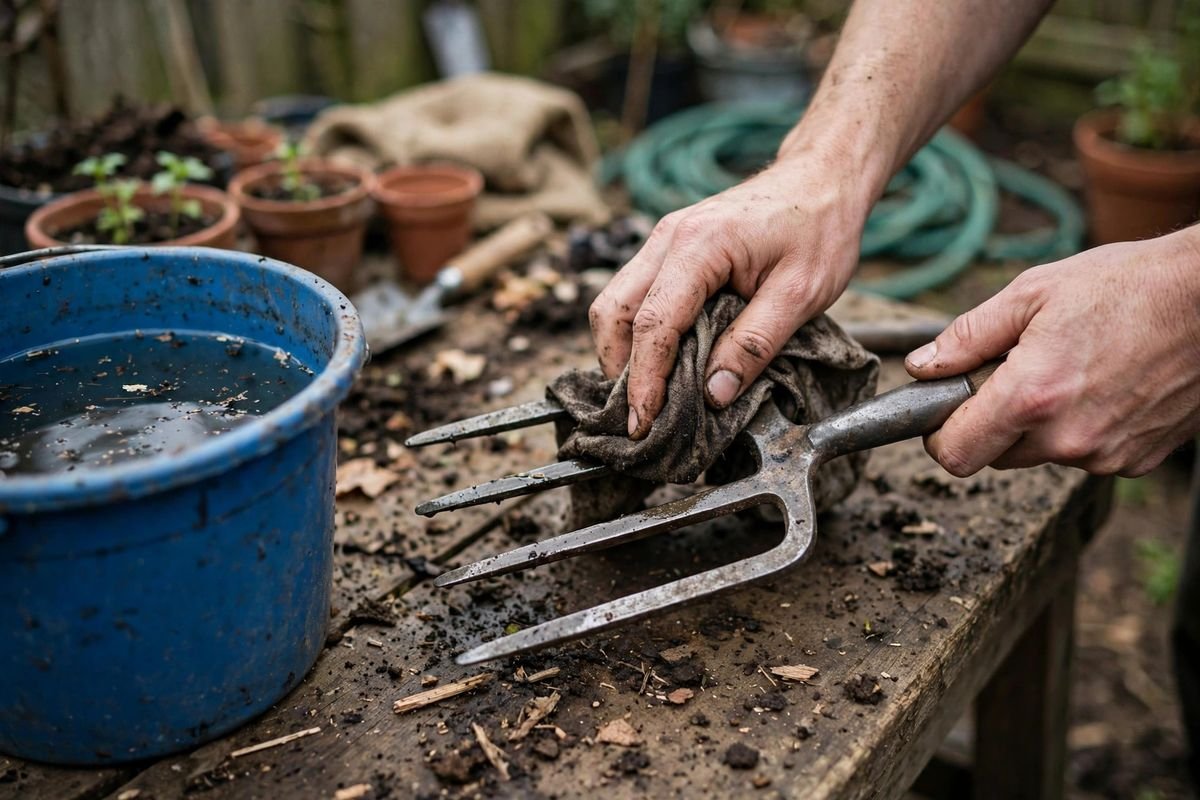
Scrub the soil off every blade and tine with a stiff brush, then wash with water and dry at once. A wire brush takes rust off a blade, and a mill file takes the nicks out of a spade edge. Wipe a thin coat of oil onto every metal surface, and oil the wooden handles with boiled linseed oil.
Sharpen the cutting tools before storage, not in spring. A sharp secateur and a sharp spade edge are easier to sharpen in an afternoon at the bench than in a rush on the first sowing day. Tighten loose heads and handles now, and replace a cracked handle before it breaks in use. A tool that goes into storage in good shape comes out in good shape, and a tool that goes in broken stays broken.
Store the tools with the blades down or covered. A spade hung head-down cannot cut a passing shin, and a secateur in a pocket cannot cut a hand reaching for the trowel. A blade cover, a piece of old hose slit along its length, or a simple cloth wrap all do the job. For a small-space version of the same setup, our guide to garden tool storage ideas for renters covers racks and boxes that need no drilling.
A worked example: cost per year, worked out
The numbers below are our own workings from stated assumptions, not prices from a listing. Suppose a gardener owns 8 long-handled tools and 6 hand tools, and the collection cost about $240 to buy. Without winter storage, damp and rust wear the collection out in about 4 years, so the tools cost $60 per year to replace.
Now add a wall rack that costs $30 in hooks and board, plus an afternoon of prep with oil and a brush that costs about $10 in supplies. The rack and the prep stretch the life of the same tools to about 8 years, which is a fair expectation for tools that are cleaned, oiled, and kept dry. The tools then cost $30 per year, plus the rack spread over its own life at $5 per year. Total cost comes to $35 per year, against $60 per year without storage.
The saving is $25 per year, and the rack pays for itself in under two years. The same math works for a deck box: a $40 box that stretches a $120 hand-tool collection from 4 years to 7 years cuts the yearly cost from $30 to about $17, plus the box itself at about $6 per year, for a total near $23 per year. Keep the math honest: the life figures are estimates, and a tool left wet in a sealed box will not last 8 years.
Moisture and freeze protection
Moisture is the enemy, and freeze is its partner. Water left on a blade rusts it, water left in a wooden handle swells the wood, and water left in a hose splits it when it freezes. Drain every hose, sprayer, and watering can before storage.
Ventilation beats sealing: leave a cabinet door ajar on dry days, drill vent holes near the top of a shed, and keep tools off the floor, since a floor that floods in a storm ruins tools that sit on it.
The verdict
Choose a wall-mounted rack if you have a garage or shed wall and a mix of long-handled and hand tools. It is the default for a reason: tools dry in the air, every tool is visible, and the cost is a board and a handful of hooks.
Choose a garden shed if your collection has outgrown the garage and you own a mower and bulky gear. A shed holds everything, but only if the roof is sound and the air moves.
Choose a deck box if you garden on a patio, you own hand tools only, and you cannot fix anything to a wall. It keeps the small tools dry and out of sight.
Many gardeners end up with a mix: a rack on the garage wall for the long tools and a deck box on the patio for the hand tools. The right mix is the one that keeps every tool clean, dry, and easy to reach when spring comes.
Frequently asked questions
Should I oil garden tools before winter storage?
Yes. A thin coat of oil on every metal surface keeps damp air off the steel, and oil rubbed into wooden handles keeps the wood from drying and splitting. Wipe it on after the tool is clean and dry, and wipe off the excess.
Can I store garden tools outside under a tarp?
It is the worst option on the list. A tarp traps damp air against the tools, and wind lifts it and lets rain in. Tools under a tarp rust faster than tools left in the open. If you have no indoor space, a deck box with a sound lid beats a tarp every time.
Do I need to sharpen tools before storing them?
Yes, if you have the time. A sharp edge is easier to keep than to restore, and a tool sharpened in autumn is ready on the first sowing day.
Sources and further reading
- Cornell Home Gardening: garden tool care and growing guidance from Cornell Cooperative Extension.
- Royal Horticultural Society: garden tool care and storage guidance.
Related reading: How to store garden tools in a small garage, Garden tool storage ideas for renters, Fall garden cleanup.
By the Pot and Plot Team