
This post may contain affiliate links. If you buy through links on this page, we may earn a commission at no extra cost to you.
As an Amazon Associate I earn from qualifying purchases.
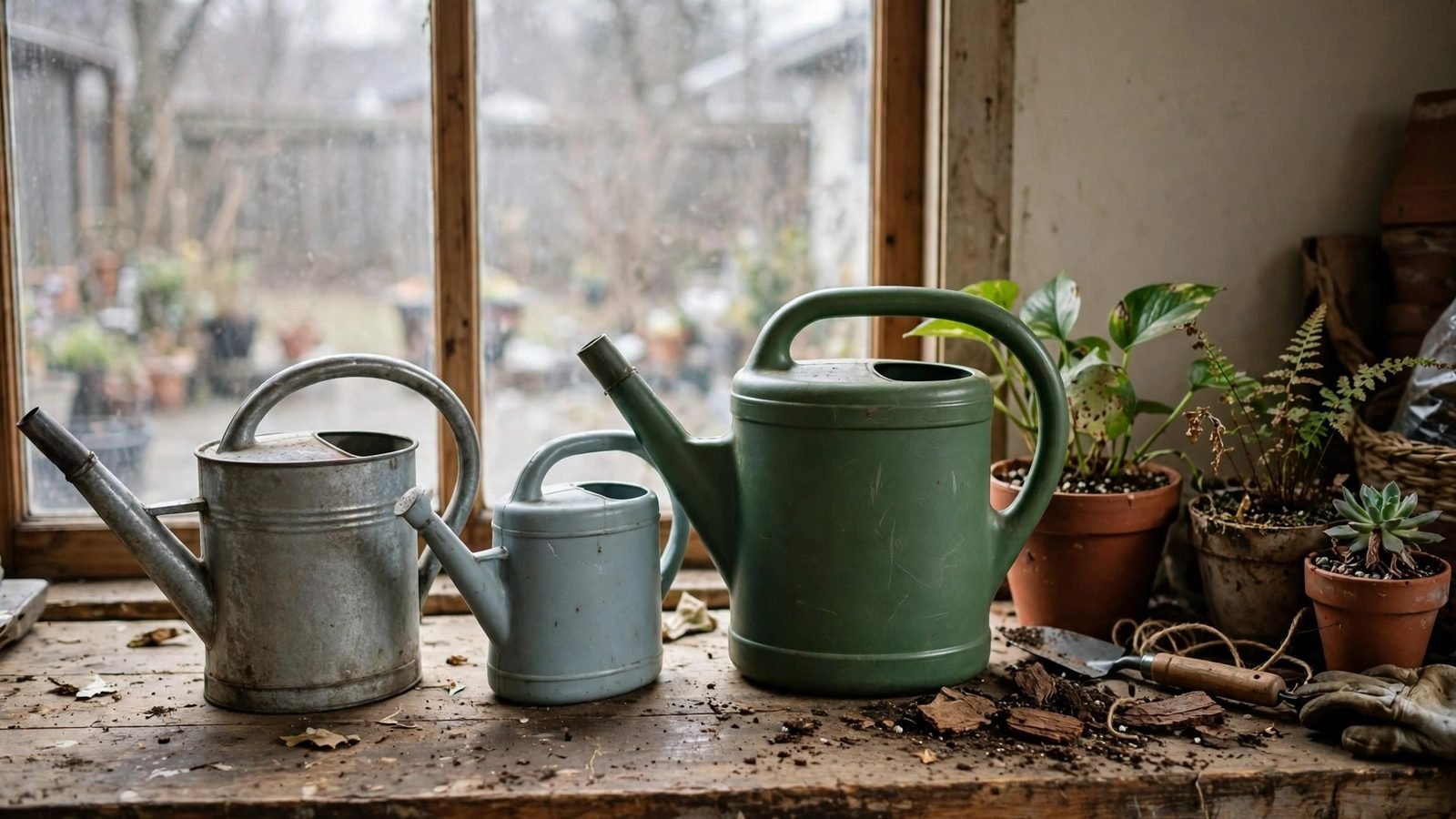
Winter changes how indoor plants drink. The air is dry, the light is weak, and the plants grow slowly, so they need less water than they did in summer, but they still need it delivered precisely. A big outdoor can floods a small pot, splashes soil onto the leaves, and leaves a puddle on the shelf. A small indoor can with a long, narrow spout puts water exactly where the roots are, at a rate the mix can absorb. That is the whole job of a winter watering can: small enough to control, narrow enough to aim, and balanced enough to pour without shaking.
This guide compares the types of indoor watering cans by capacity, spout shape, material, and price, and it works out the water budget for a typical indoor collection so you can pick a can size that fits your plants instead of guessing. It is a research-based guide: we compared published specifications, materials, and capacities, and we did not test these products ourselves. For the watering routine the can serves, see our guide on how to water indoor plants in winter.
What makes a good winter watering can for indoor plants
Four features decide whether a can works indoors. The first is the spout. A long, narrow spout reaches into a crowded shelf, aims between leaves, and pours a thin stream the mix can absorb without flooding. A short, wide spout dumps water fast and is hard to aim. The second is capacity. A can that holds half a gallon is heavy when full and awkward on a shelf, while a can that holds a quart needs refilling every few plants. The third is balance. A can with the handle over the center of gravity pours smoothly; a can with the handle at the back tips forward as it empties. The fourth is the material: plastic is light and cheap, metal lasts longer and pours more steadily, and both need a spout that does not drip after you stop pouring.
A removable rose head is a useful extra for seedlings and small pots, since it spreads the water into a gentle shower instead of a single stream. A fill opening wide enough for a hand matters too: a narrow neck is hard to fill under a tap and hard to clean when algae grows inside. A can you cannot clean is a can you will replace within a year.
The types compared at a glance
| Type | Typical capacity | Best for | Price range |
|---|---|---|---|
| Small plastic can, long spout | About 1 quart | Small pots and crowded shelves | About 8 to 15 dollars |
| Medium plastic can | About half a gallon | Mixed collections of 10 to 20 plants | About 12 to 25 dollars |
| Metal long-spout can | About 1 to 1.5 quarts | Precise watering, houseplants and bonsai | About 20 to 40 dollars |
| Large indoor can | About 1 gallon | Large collections, fewer refills | About 15 to 30 dollars |
Prices are the ranges these types usually sell in, and they move with sales and seasons. Check each listing for the current price before buying. The table is a guide to what each type costs relative to the others, not a quote.
Small plastic cans with a long spout
A small plastic can is the cheapest way into precise watering, and it is the right pick for a collection of small pots on a windowsill or a shelf. The capacity is about a quart, which waters four to six 4-inch pots before it needs a refill. The plastic body is light even when full, and the long spout reaches past leaves without moving the pots. The trade is durability: thin plastic cracks if it falls off a shelf, and a cheap spout can drip after you stop pouring.
Look for a can with a thick wall and a spout that ends in a narrow tip rather than a wide mouth. A narrow tip gives you a thin stream you can stop and start cleanly. Avoid cans with a decorative shape that puts the handle off-center: they look good on a shelf and pour badly in the hand. You can search small watering cans with long spouts on Amazon. We have not tested the products linked here, and we give no current store prices. Check each listing for current capacities and spout lengths.
Medium plastic cans for a mixed collection
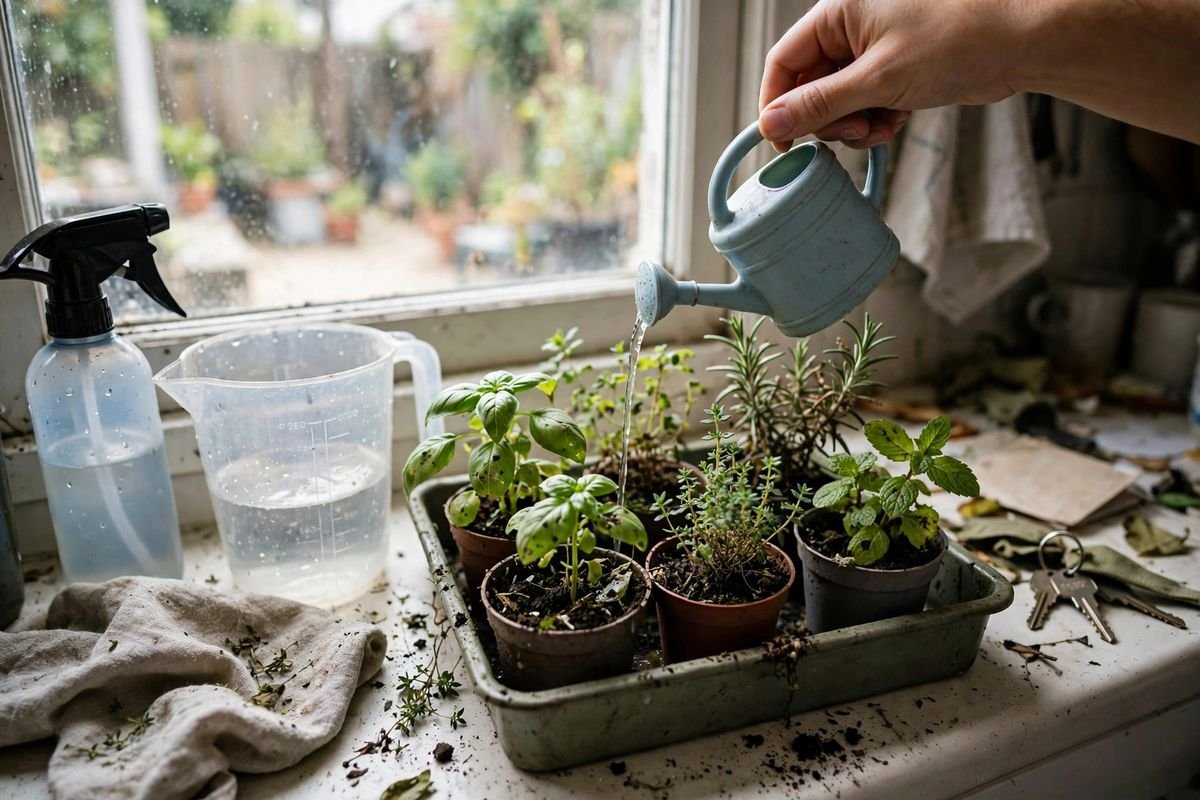
A medium can holding about half a gallon is the workhorse size for most indoor gardeners. It waters a dozen small pots on one fill, which means one trip to the sink instead of three. The body is still light enough to hold at arm’s length over a shelf, and most medium cans have a handle placed to balance the can as it empties. The spout is usually shorter and wider than on a small can, so the pour is faster: fine for 6-inch and 8-inch pots, less good for tiny seedlings.
The weakness of a medium plastic can is the seam where the spout meets the body, which is where cheap cans leak first. Check the listing photos for a clean, thick joint, and read the recent reviews for mentions of leaking. A can that leaks from the spigot joint wastes water on the shelf and in your hand.
Metal long-spout cans
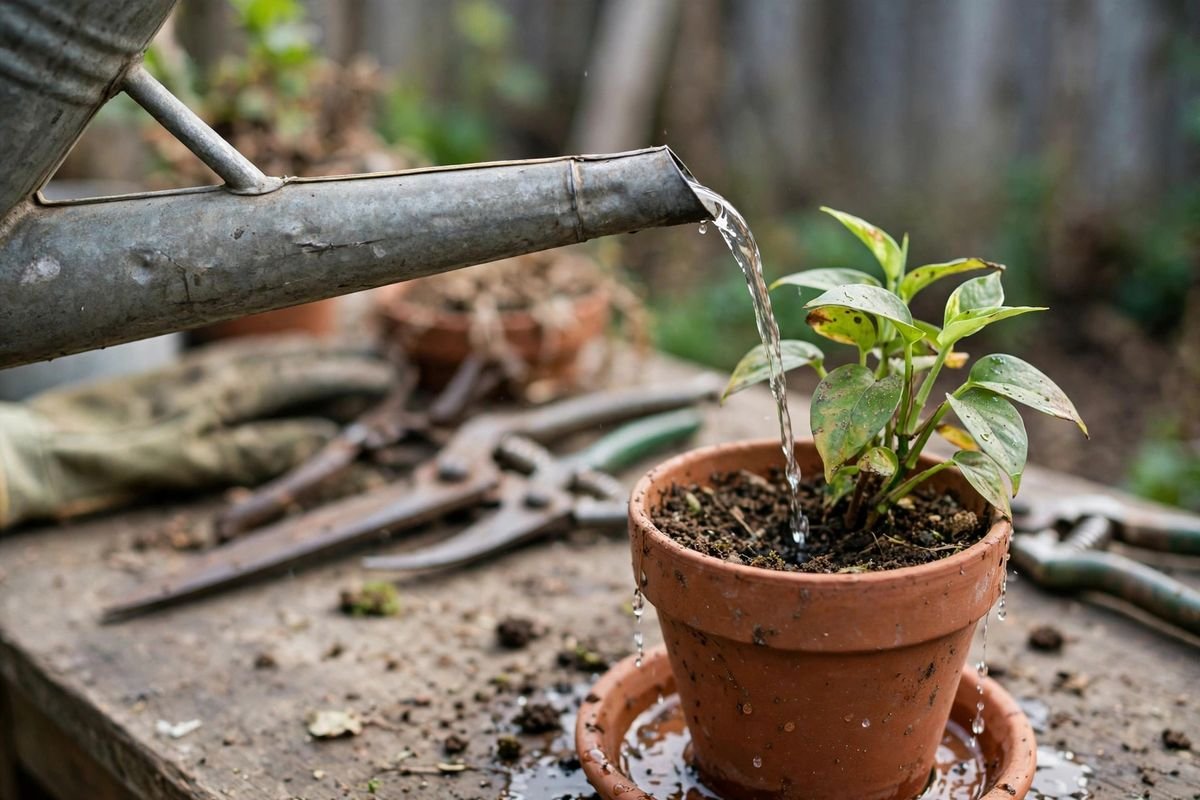
A metal can with a long, thin spout is the most precise tool in this guide, and the one most indoor gardeners end up keeping for years. The narrow spout pours a thin, steady stream that you can aim at the base of a single plant without wetting its neighbors. The metal body holds its balance as it empties, and it does not crack when it tips over. The cost is higher, usually 20 to 40 dollars, and the can is heavier than plastic at the same capacity.
Metal cans suit plants that need careful watering: bonsai, African violets, orchids, and anything in a small pot where a flood would rot the roots. The spout on a good metal can is soldered cleanly to the body, and the handle is positioned so the can stays level in your hand. If you water a lot of small pots and you want one can that lasts, this is the type to buy. For the small-pot routine it serves, see our guide on best watering cans for seedlings.
Large indoor cans for big collections
A one-gallon indoor can suits a collection of 20 or more plants, or a home with several large floor plants that each take a quart at a watering. The advantage is fewer refills: one fill waters the whole collection. The cost is weight: a gallon of water weighs 8.34 pounds, and a full can plus the can itself is close to 9 pounds held at arm’s length. That is too much for a high shelf, and it is tiring if you water every week.
Buy a large can only if you water at floor level or on a low bench, where the weight is easy to manage. Look for a can with two handles, one on top and one at the back, so you can lift it with both hands and pour with control. A single-handle gallon can is hard to aim and easy to spill.
Our worked example: matching can size to a 12-plant collection
Here is a weekly water budget for a typical indoor collection in winter: twelve plants in a bright room, watered when the top inch of mix feels dry. These are our own computed numbers, with the assumptions stated so you can adjust them for your own collection.
| Plant group | Pots | Water per watering | Water per week |
|---|---|---|---|
| Small pots, 4-inch | 6 | About 1 cup each | About 6 cups |
| Medium pots, 6-inch | 4 | About 2 cups each | About 8 cups |
| Large pots, 8-inch and up | 2 | About 1 quart each | About 2 quarts |
| Total for the collection | 12 | About 3.5 quarts a week |
The total, about 3.5 quarts a week, decides the can. A quart can needs four fills to water the collection, which means four trips to the sink. A half-gallon can needs two fills. A one-gallon can does the whole job on a single fill, but weighs about 9 pounds when full. For this collection, a half-gallon can is the practical pick: two fills, a manageable weight, and a spout that suits both small and medium pots.
Scale the numbers to your collection by counting pots, not by guessing. A collection of six small pots needs about 1.5 quarts a week and suits a quart can. A collection of twenty mixed pots needs about 6 quarts a week and suits a gallon can used at floor level. The can should hold about half the weekly total, so each watering takes two fills at most.
Features worth paying for, and ones to skip
A removable rose head is worth paying for if you water seedlings or small pots: it turns the stream into a shower that does not displace the mix. A wide fill opening is worth paying for too, since it makes the can easy to fill and easy to clean. A built-in water level window is useful on an opaque can, so you can see how much is left without lifting the lid.
Skip a can with a decorative shape that puts the spout and the handle on the same side: it pours badly and spills when full. Skip a can with a spout so short it cannot reach past the leaves of a crowded shelf. Skip a can with no handle at all, which some small decorative cans lack: you will drop it the first time your hands are wet.
Care and storage through winter
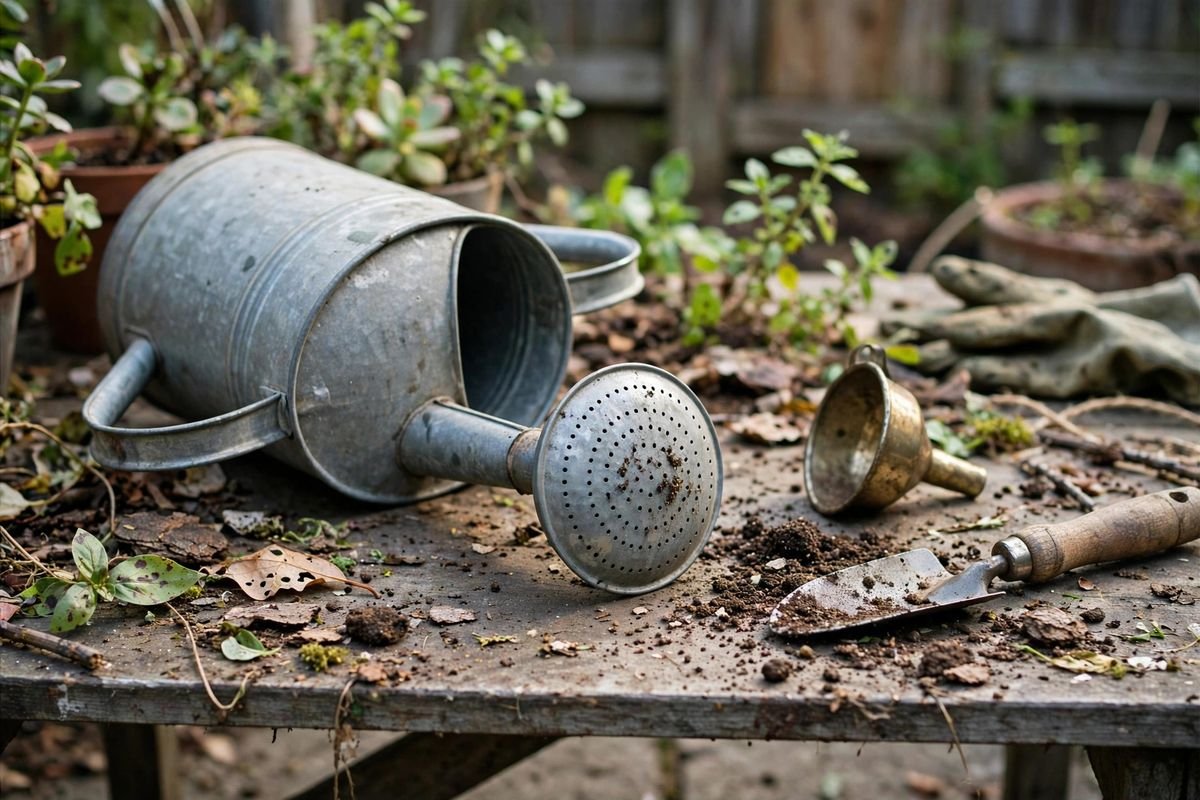
Empty the can after every watering session. Water left standing in a can grows algae within a week, and algae clogs the spout and smells bad. Rinse the can once a month with hot water and a bottle brush, and let it dry upside down on a rack. A metal can left damp inside will rust at the seam, and a plastic can left in sunlight will grow algae faster than one kept in a cupboard.
Store the can where you use it, not in a garage. A can kept beside the plants gets used; a can kept two rooms away gets forgotten, and forgotten plants get watered late. A small tray under the can catches the drips from the spout and keeps the shelf dry.
Frequently asked questions
What size watering can do I need for indoor plants?
Match the can to the weekly water total of your collection. A half-gallon can suits most collections of 10 to 20 mixed pots, needing about two fills per watering. Count your pots and use the table above: a quart can suits six small pots, a gallon can suits twenty or more.
Is a metal watering can better than plastic for indoor plants?
Metal pours more precisely and lasts longer, but it costs more and weighs more. Plastic is lighter and cheaper, and a good plastic can with a long spout waters just as well for most plants. Pick metal if you water many small pots and want one can for years; pick plastic if weight or price matters more.
Do I need a rose head on an indoor watering can?
Only for seedlings and very small pots, where a single stream displaces the mix. For pots 4 inches and up, a plain narrow spout gives you better aim. A removable rose head is the best of both: use it for seedlings, take it off for everything else.
Why does my watering can drip after I stop pouring?
Water left in the spout runs out after you tip the can back. Hold the can tipped for a second after you finish pouring, or lift the spout above the water line in the can before you set it down. A can with a well-made spout drips less than a cheap one, but every can drips a little.
Sources and further reading
- University of Minnesota Extension, Watering Houseplants
- University of Georgia Extension, Growing Indoor Plants
- Clemson Cooperative Extension, Indoor Plants: Watering
Related reading: How to Water Indoor Plants in Winter, Best Watering Cans for Seedlings, How to Grow Herbs Indoors in Winter, Best Humidifiers for Houseplants, Best Spray Bottles and Misters for Seedlings
By the Pot and Plot Team