
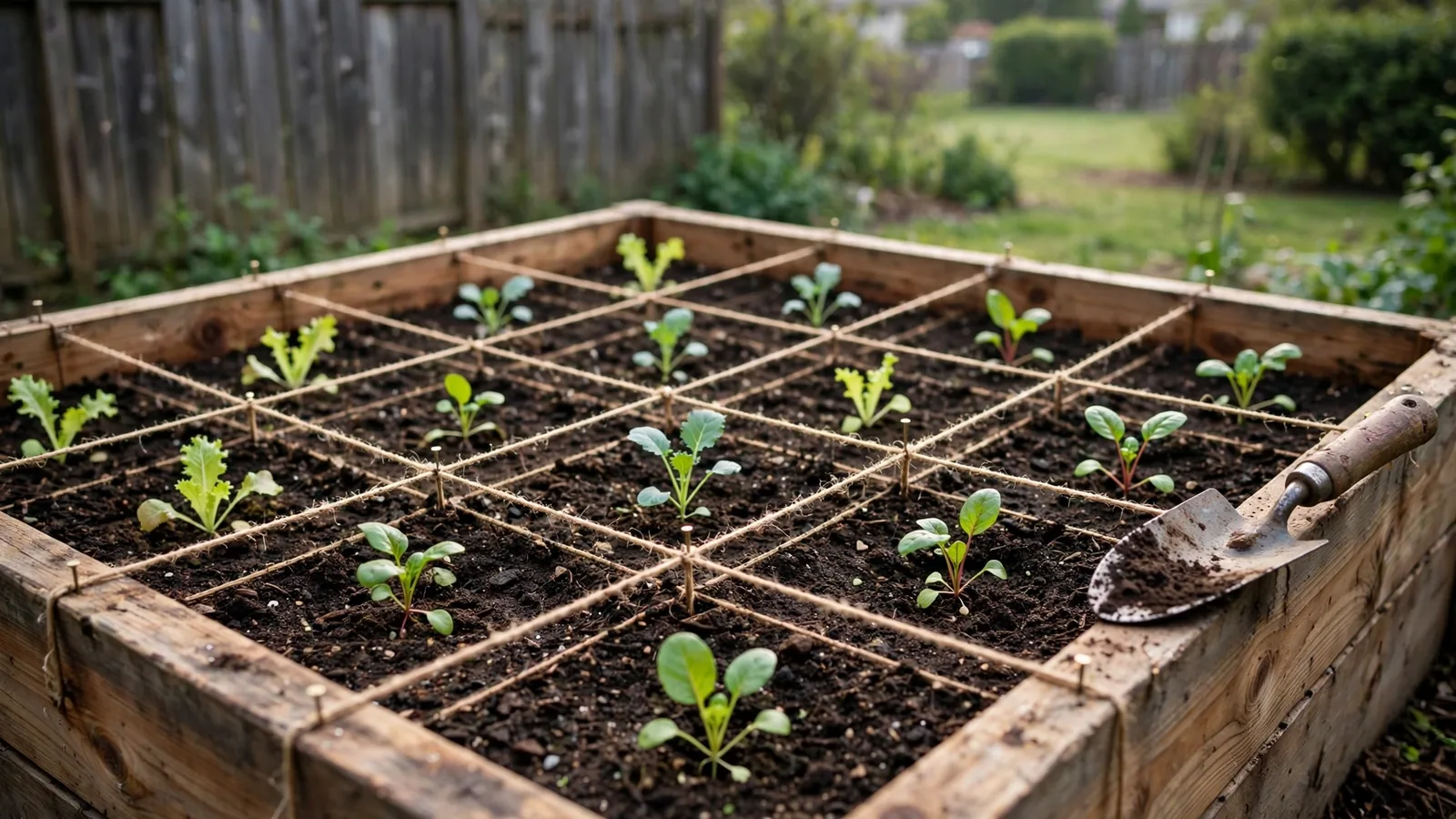
The 4-by-4-foot raised bed is the classic first garden for a reason: it’s big enough to grow a real variety of vegetables, small enough to reach the middle from any side without stepping on the soil, and cheap enough to build in a single weekend. This plan covers the bed, the soil math, and a square-foot layout that fits 8 crops into 16 square feet.
This is a planning guide, not a grow log. The layout diagram and header image are AI-generated illustrations (labeled as such) — they show the arrangement, not a real garden.
Who this setup is for
A beginner with a sunny patch of yard — or a large patio that can hold a bed — who wants to grow vegetables the standard way, once, and correctly. If you’ve never gardened and want one project that teaches you spacing, soil, watering, and timing all at once, this is it.
Space required
You need a 6×6-foot area: the 4×4 bed plus 2 feet of working room on at least two sides (all four is better). Choose the spot before you buy anything — moving a filled bed is miserable. The site should be:
- Level. A bed on a slope will have soil wash out one side.
- Near water. You’ll water this bed a lot in its first summer. Every extra 50 feet of hose is friction against actually doing it.
- Not under a tree. Roots invade from below; shade and falling leaves cause their own problems.
Sun requirements
6–8 hours of direct sun for the layout below (tomatoes, peppers, beans). Morning sun is the most valuable — it dries dew off leaves fast, which cuts disease pressure. If your spot gets 4–5 hours, you can still use this bed, but swap the fruiting crops for the leafy greens in our shady patio plan.
The layout: square-foot planting
Divide the bed into sixteen 1-foot squares (run string between nails, or lay a simple grid). Each square gets one crop at its proper spacing. Here’s the map as a 4×4 grid, viewed from the north side — tall crops go north so they don’t shade the rest. The tomato takes a 2×2 block in the northwest corner (rows 1–2, west side); every other crop gets one square.
Rows run north (top) to south (bottom):
| West | East | |||
|---|---|---|---|---|
| North row | Tomato (2×2 block starts) | Tomato | Cucumber (trellis) | Marigold |
| Row 2 | Tomato | Tomato | Pepper | Pepper |
| Row 3 | Basil | Basil | Bush beans | Bush beans |
| Row 4 (south) | Lettuce | Lettuce | Carrots | Marigold |
Spacing within squares: tomato 1 per 4 squares; cucumber 2 plants per square on a trellis; peppers 1 per square; basil 1 per square (or 4 small); bush beans 9 per square; lettuce 4 per square; carrots 16 per square; marigolds 1 per square.
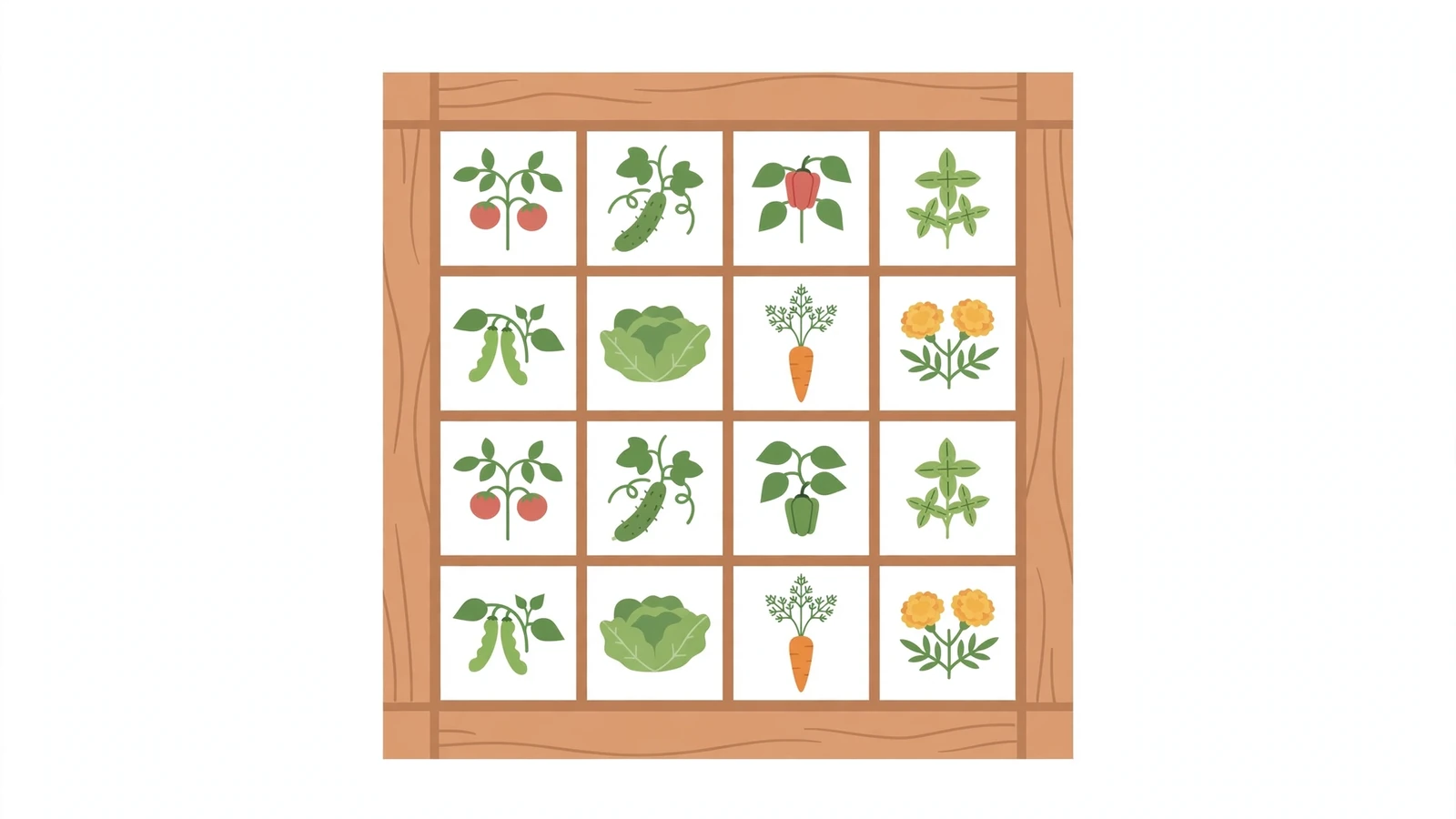
Illustration: overhead diagram of a 4×4 raised bed divided into 16 squares, each shown with its crop: tomatoes, cucumbers, peppers, basil, beans, lettuce, carrots, and marigolds.
What to plant: specific varieties
| Crop | Variety | Notes |
|---|---|---|
| Tomato | ‘Celebrity’ | Determinate-ish, disease-resistant, reliable for beginners nationwide |
| Cucumber | ‘Marketmore 76’ | Disease-resistant slicer; needs the trellis |
| Pepper | ‘California Wonder’ | Classic bell; or ‘Lunchbox’ for snacking peppers |
| Basil | ‘Genovese’ | Pinch flower heads all summer |
| Bush beans | ‘Provider’ | Germinates in cool soil; very forgiving |
| Lettuce | ‘Salad Bowl’ | Cut outer leaves; replant in late summer for fall |
| Carrots | ‘Danvers 126 Half Long’ | Shorter roots suit 10–12 inch bed depth |
| Marigold | ‘Crackerjack’ mix | French marigolds; the pest-repelling claims are overstated, but they attract pollinators and look good doing it |
Start the tomato, pepper, and cucumber as transplants; sow beans, lettuce, carrots, basil, and marigolds directly. For exact sowing dates in your climate, run your ZIP through Start Seeds.
The bed, soil, and the math
The bed. A 4×4 cedar kit (10–12 inches deep) runs about $70–$75 — the Greenes Fence 4×4 is the common reference point. Galvanized steel kits cost less per bed (around $25–$50 for a 4×4). Or build it: four 2×6×8 boards cut in half, screwed at the corners. Use untreated cedar, redwood, or fir — never pressure-treated lumber from before 2004 (it contained arsenic); modern ACQ-treated lumber is considered safe for vegetable beds, but many gardeners still prefer untreated.
The soil math. For a 4×4 bed filled 12 inches deep:
4 ft × 4 ft × 1 ft = 16 cubic feet
Bagged raised-bed mix comes in 1.5-cu-ft bags: 16 ÷ 1.5 = 10.7, so buy 11 bags. At roughly $10 per bag, that’s about $110 — the single biggest cost of this project. Two honest ways to cut it:
1. Bulk delivery. A cubic yard (27 cu ft) of garden soil from a landscape supplier often costs $40–$70 plus delivery — far cheaper per cubic foot if you have other uses for the extra. 2. Fill the bottom. The bottom 3–4 inches can be logs, branches, and leaves (hugelkultur-style) — free, and they break down over a season or two. Don’t do this if you’re growing carrots this year; they need the full depth.
Top the bed with 2–3 inches of straw or shredded-leaf mulch after planting. It cuts watering roughly in half and keeps soil off your lettuce.
Watering
A new 4×4 bed in summer needs about 1–1.5 inches of water per week — roughly 10–15 gallons. Water deeply 2–3 times a week rather than a little daily; deep watering grows deep roots. A tuna can on the soil surface is the classic rain gauge: when it holds an inch, you’ve watered an inch. Drip irrigation on a timer is the upgrade that pays for itself in the first heat wave — the Container Garden Builder covers watering plans, and a simple soaker hose snaked through the bed works fine for year one.
Equipment list
- 4×4 raised bed kit (or lumber + screws)
- 16 cu ft raised-bed soil mix (eleven 1.5-cu-ft bags)
- 1 bale straw or 1 bag shredded mulch
- String + nails (for the square-foot grid)
- Tomato cage or stake, small trellis for cucumber
- Slow-release vegetable fertilizer
- Transplants: 1 tomato, 2 peppers, 2 cucumbers
- Seeds: bush beans, lettuce, carrots, basil, marigolds
- Trowel, hand cultivator, watering can or hose nozzle
Estimated budget
Typical US retail, September 2026:
| Item | Est. cost |
|---|---|
| Cedar 4×4 bed kit | $72 |
| 11 bags raised-bed mix (1.5 cu ft) | $110 |
| Straw mulch | $10 |
| Tomato cage + small trellis | $18 |
| Fertilizer | $13 |
| Transplants (5) | $20 |
| Seed packets (5) | $20 |
| Basic hand tools (trowel + cultivator) | $18 |
| Total | ~$281 |
Yes, the soil costs more than the bed. That’s normal — and it’s the reason the bulk-delivery tip above exists. If the total stings, our under-$150 plan grows real food for half of it.
Must buy / Nice to have / Skip
Must buy: the bed, the soil, fertilizer. Everything else can be improvised except these.
Nice to have: a soil thermometer ($10 — tells you when it’s actually warm enough to transplant), a kneeling pad, a second bag of mulch mid-season.
Skip: weed fabric under the bed (it blocks earthworms and drainage; cardboard smothers grass just as well and rots away), “raised bed corner brackets” sold separately at markup (the kit includes what you need), and expensive glass cloches for year one.
What changes the plan
- Heavy clay or tree roots underneath? Lay cardboard first, then build — the bed’s own soil does the work.
- Deer or rabbits? A 4×4 bed is a salad bar. Budget for fencing before you plant, not after the first raid.
- Short season (Zone 5 and colder)? Swap ‘Celebrity’ for an early variety like ‘Early Girl’, and start peppers indoors or buy bigger transplants.
- Blazing-hot climate (Zone 9–10)? Plant the tomato and peppers in late summer for a fall garden instead of fighting July — Garden Pulse tracks your local windows.
- Only a patio, no soil access? Same layout works in a 4×4 bed sitting on pavement — just make sure it has drainage gaps and a way for excess water to escape.
Want the computer to do the soil and lumber math for your exact dimensions? The Raised Bed Builder handles custom sizes in about two minutes.
Related guides and tools
- Raised Bed Builder — custom bed sizes, soil volume, lumber, and spacing
- Container Garden Builder — pots, plants, and care plans for patios
- Start Seeds — sowing and transplant dates for your ZIP code
- All garden tools — browse every free tool
- Garden Pulse — what to do in your garden right now
- Garden Inbox — your planting windows, tracked week by week